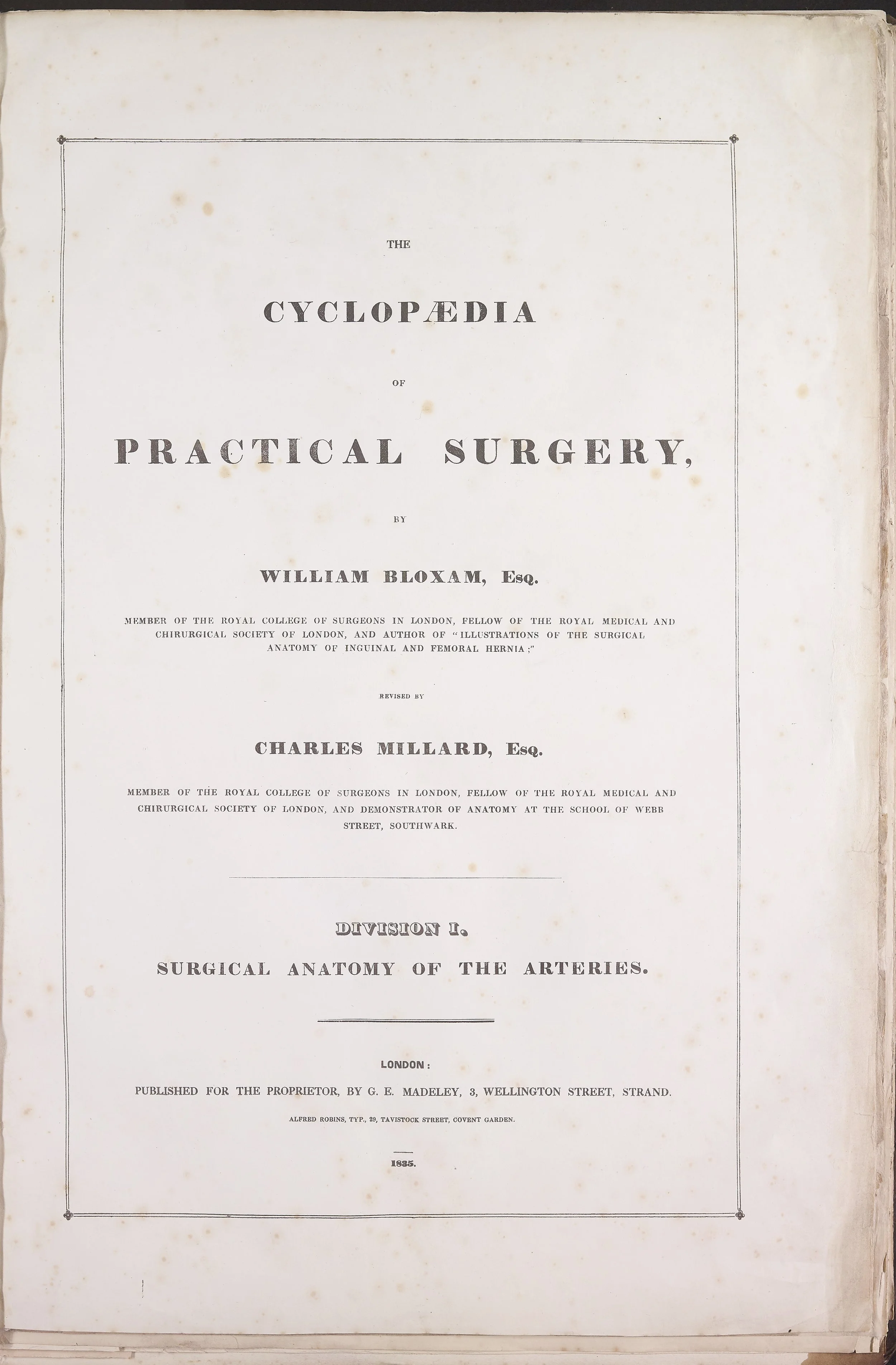
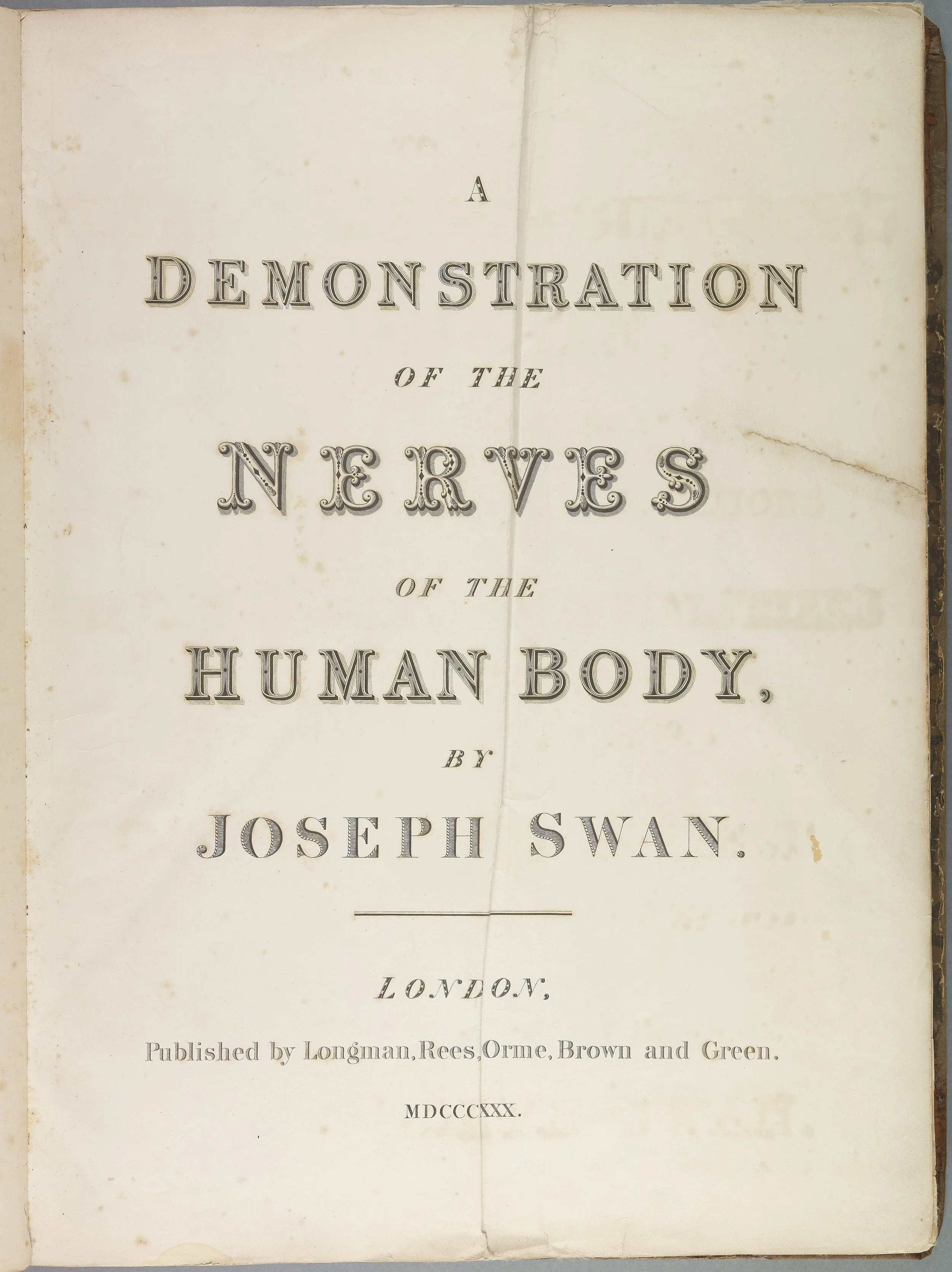
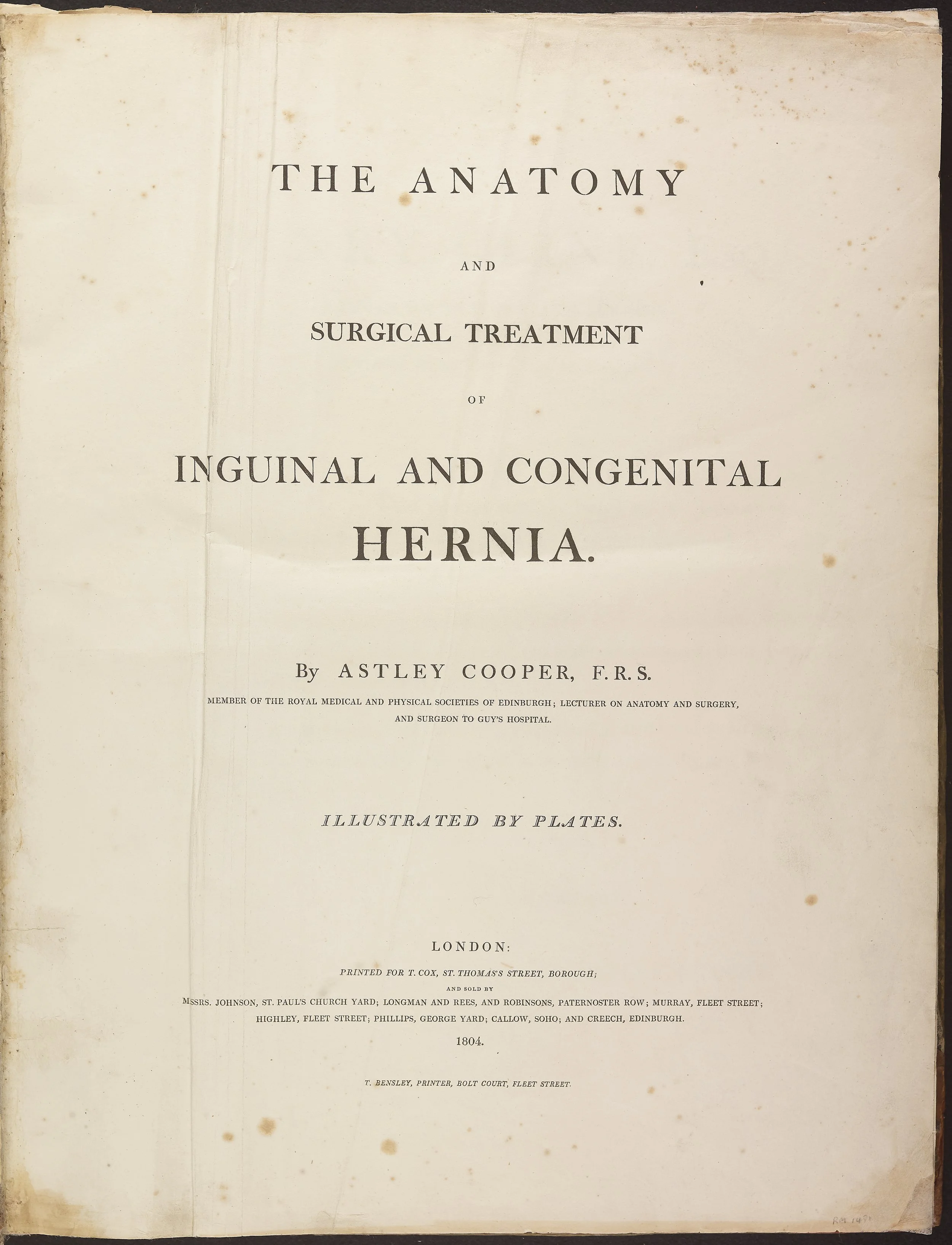
A number of these volumes, Bloxam’s Cyclopaedia of Practical Surgery, Cooper’s The Anatomy and Surgical Treatment of Hernia, and Swan’s Demonstration of the Nerves of the Human Body, were gifted to the Worcestershire Medical Society by Henry Douglas Carden.
Henry Douglas Carden was born in c. 1806 to parents John and Mary Carden. His grandfather, Thomas Carden was a wool draper and clothier in the City of Worcester, who became a prominent member of society and served as Mayor in 1790. His portrait was placed in the Guildhall in February of 1828. Henry’s father John was also in the medical profession, serving as surgeon to the Worcester Infirmary.
Henry married Mary Ann Hammond on 15 May 1832 in Bedwardine, Worcester. Carden was appointed Surgeon to the Gloucestershire Regiment of the Yeomanry Cavalry in 1834. Carden was surgeon to the Worcester Infirmary for twenty three years, and is known for the invention of the “single-flap” amputation. He was appointed as surgeon to the Worcester Infirmary in 1838. At one time, Henry Douglas Carden treated Worcester-born novelist Ellen/Mrs Henry Wood for spinal trouble, who returned to the city specifically to be treated by Carden. A notice in Perry’s Bankrupt Gazette, a financial publication, noted the dissolution of a partnership between Fleming St. John, Martin Barr, George Barr, George Allies, and Henry Douglas Carden, in the business of encaustic tile manufacturing in Worcester. St John, and the Barrs were well known in Worcester for their connection to the Chamberlain & Co. porcelain factories. Carden’s involvement is unclear, but it suggests a connection to the thriving china manufacturing industry in Worcester.
The 1851 Census lists that Henry Douglas Carden was living at 21 Foregate Street, Worcester, with wife Mary Ann Carden, and her widowed mother Mary Hammond. His occupation was listed as ‘Fellow of College of Surgeons of England, practising’. In both 1861 and 1871, Henry was still living at Foregate Street with his wife, and working as a surgeon. His obituary in the British Medical Journal announced his death on 22 December 1872, from an attack of apoplexy, and that even in the week before he died he was actively committed to his work.