WILLIAM HUNTER
William Hunter was born on 23 May 1718, in Long Calderwood, Lanarkshire, to parents John Hunter and Agnes Paul. William was the brother of Scottish surgeon John Hunter, who taught and later collaborated with Edward Jenner, inventor of the smallpox vaccine.
He studied divinity at University of Glasgow, but left without graduating, and went into medicine in 1737. He became resident pupil to William Smellie in 1741, and was trained in anatomy at St George’s Hospital, specialising in obstetrics.
1764, became physician to Queen Charlotte in 1764, elected as fellow of Royal Society in 1767, and Professor of Anatomy to Royal Academy in 1768. Hunter buuilt famous anatomy theatre and museum in Great Windmill Street, Soho, where many of the best British anatomists and surgeons were trained. In his lifetime, Hunter amassed a large collection of books, prints, coins, zoological specimens and much more, which he bequeathed to the University of Glasgow. His namesake, the Hunterian Museum and Art Gallery, is based at the university. Hunter died in London at the age of 64 in 1783.
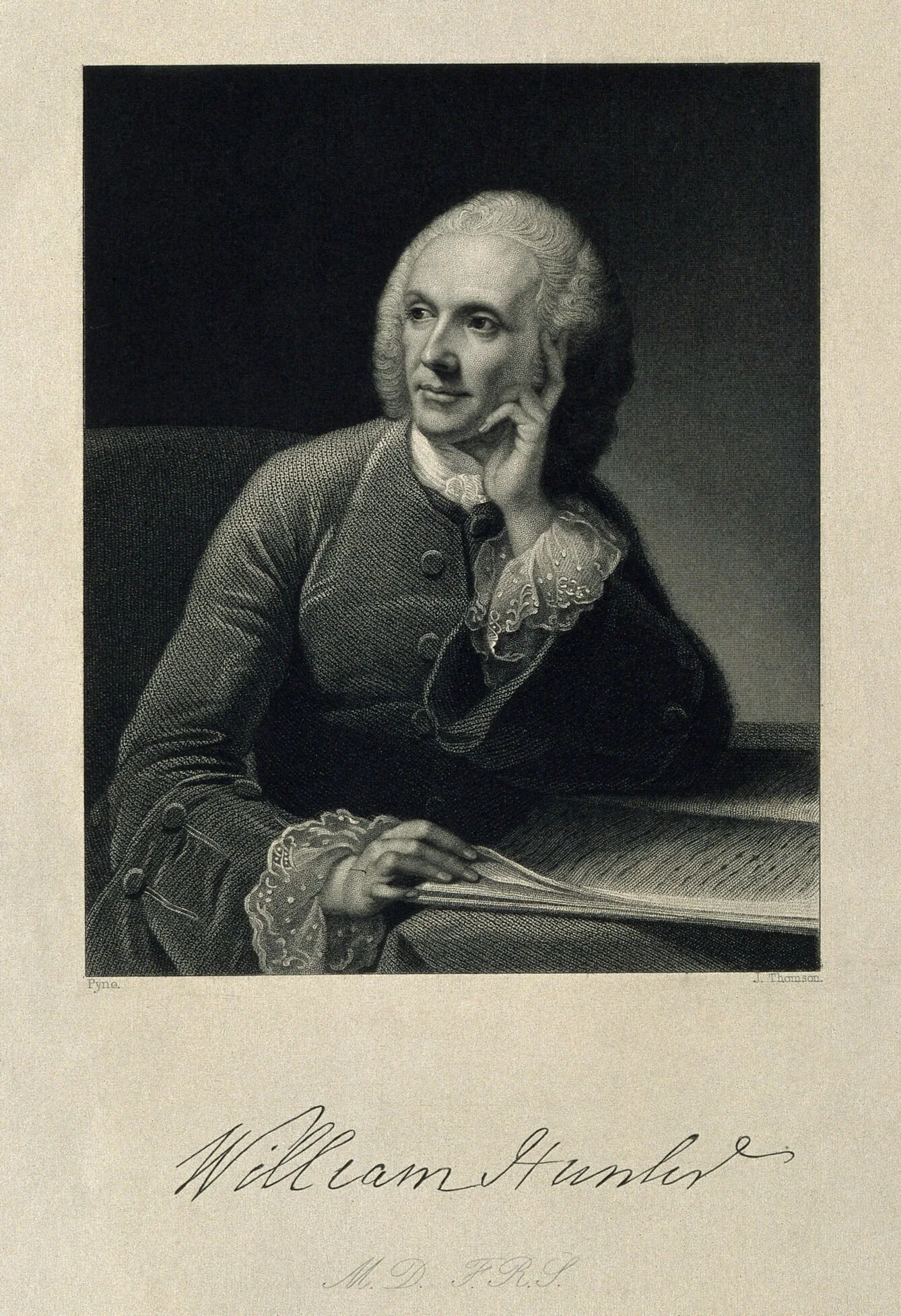
William Hunter. Stipple engraving by J. Thomson, 1847, after R. E. Pine. Wellcome Collection. Source: Wellcome Collection.
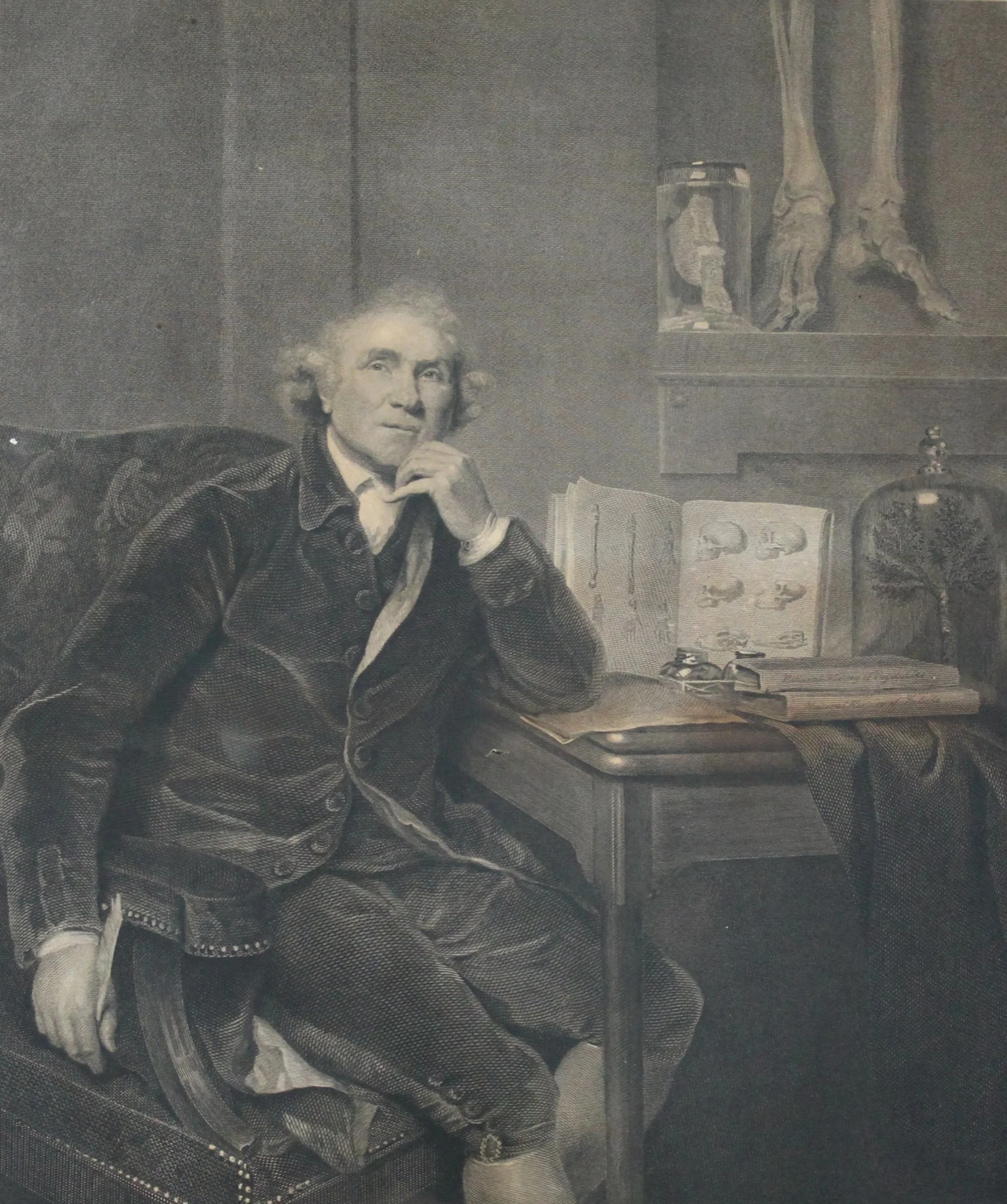
John Hunter, brother of William. © 2026 Charles Hastings Education Centre.
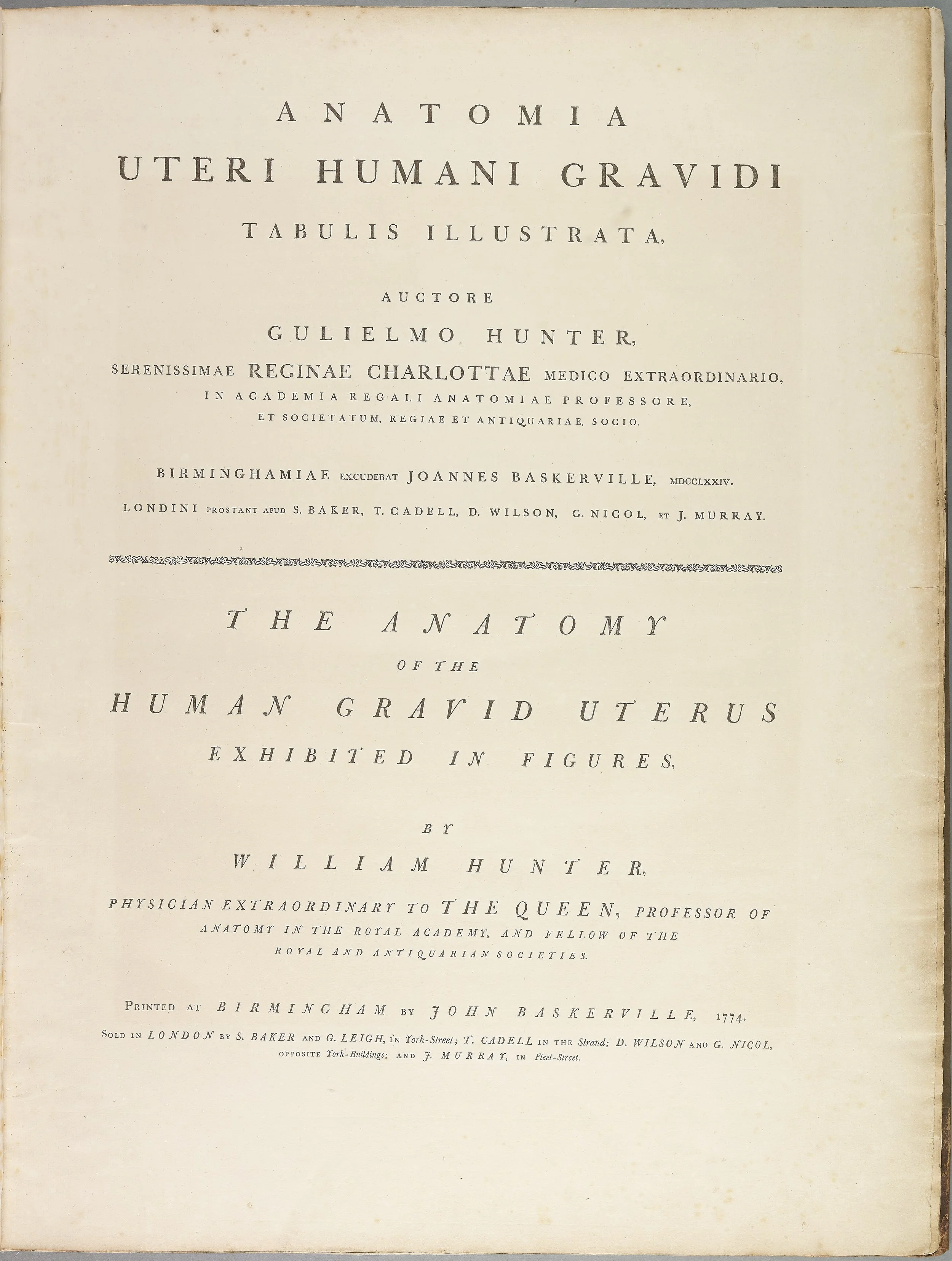
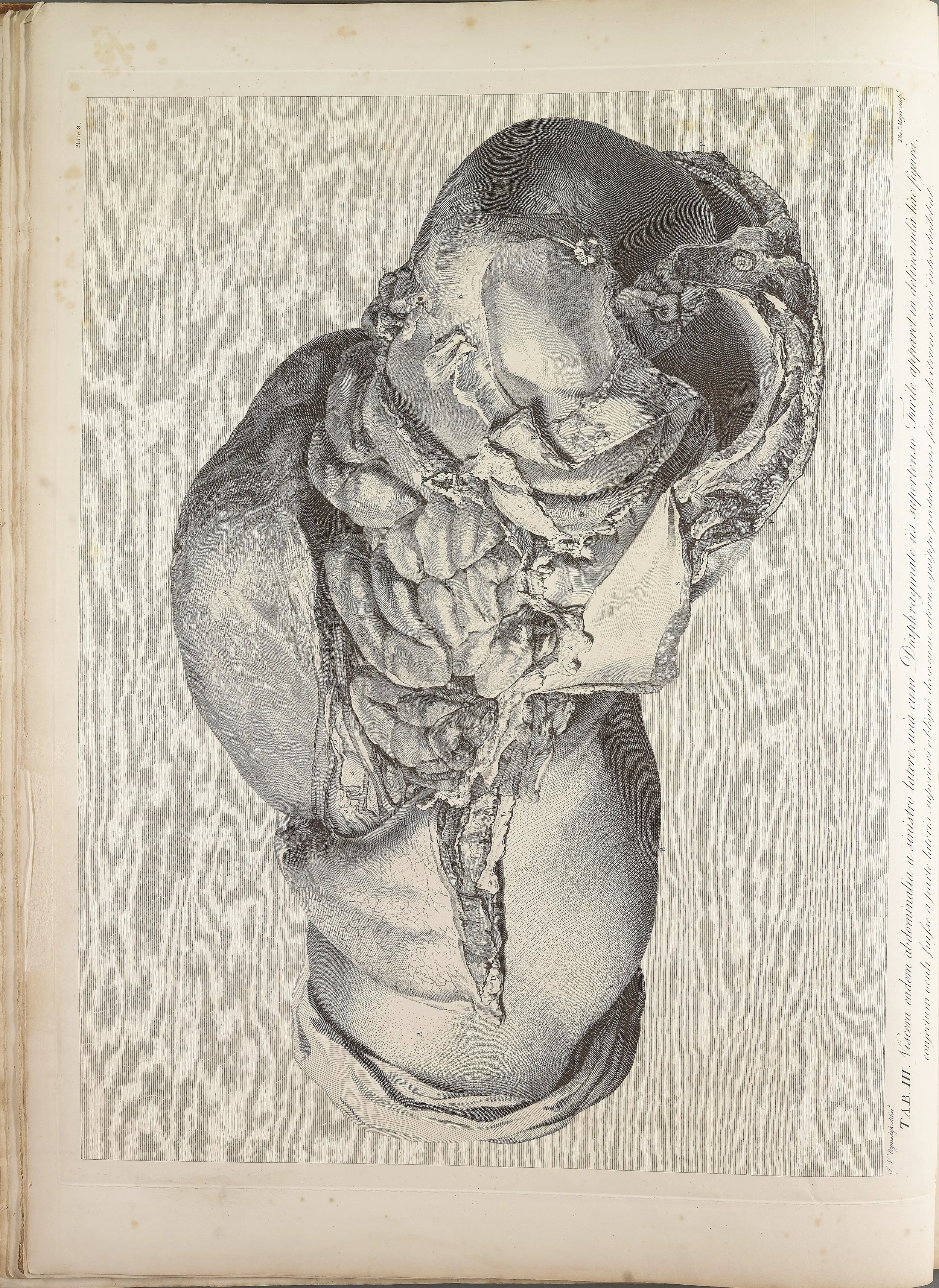
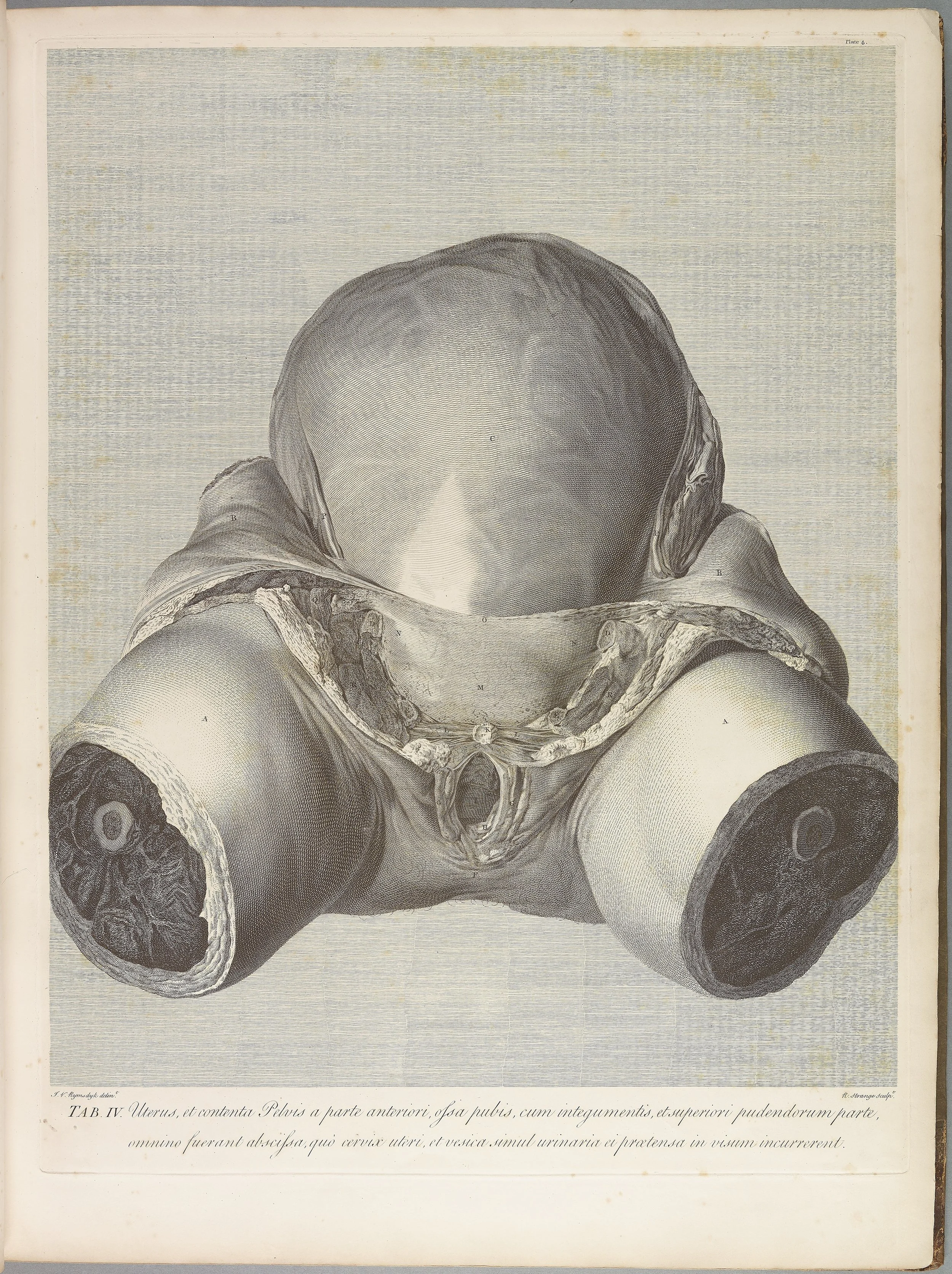
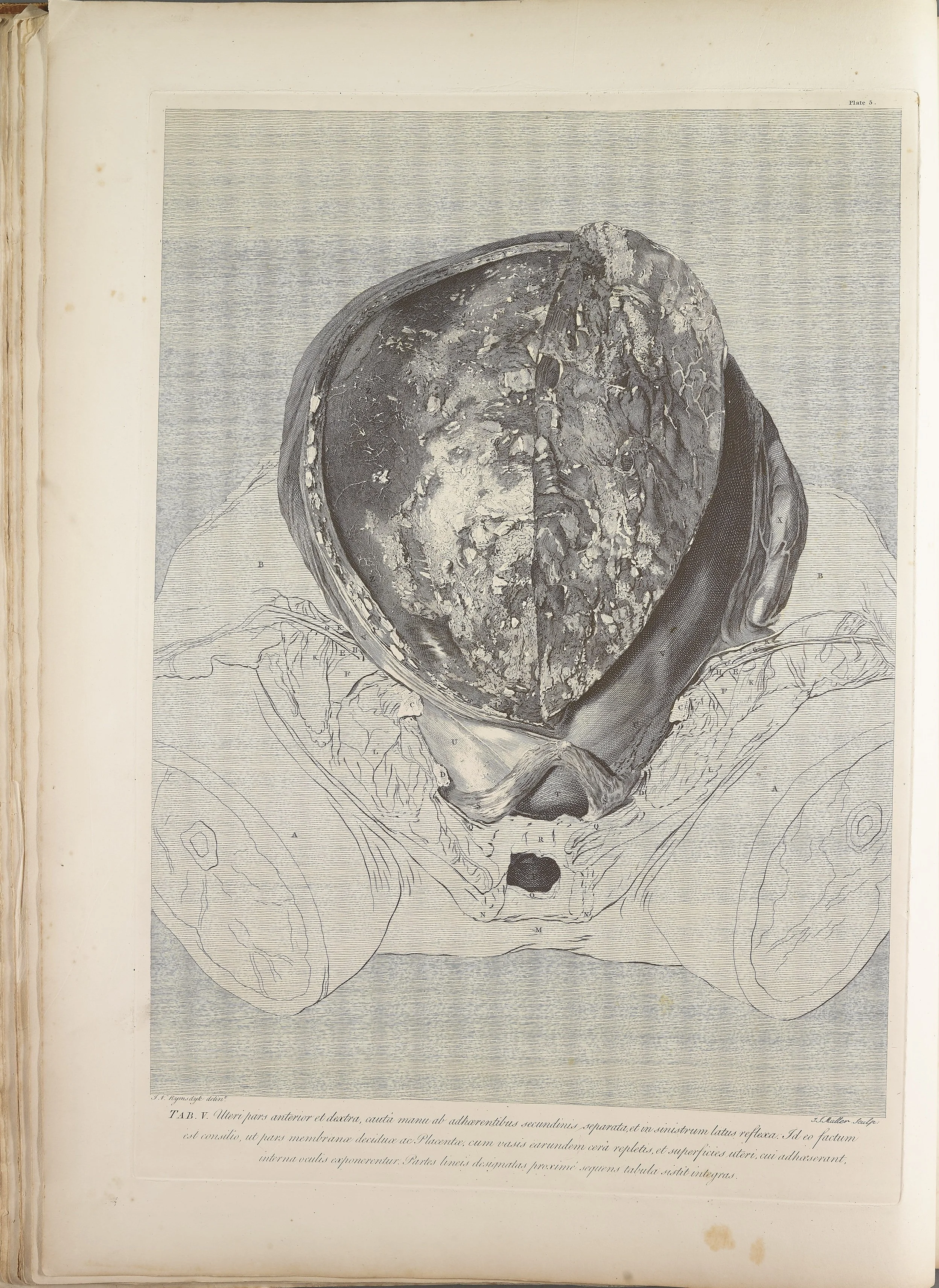
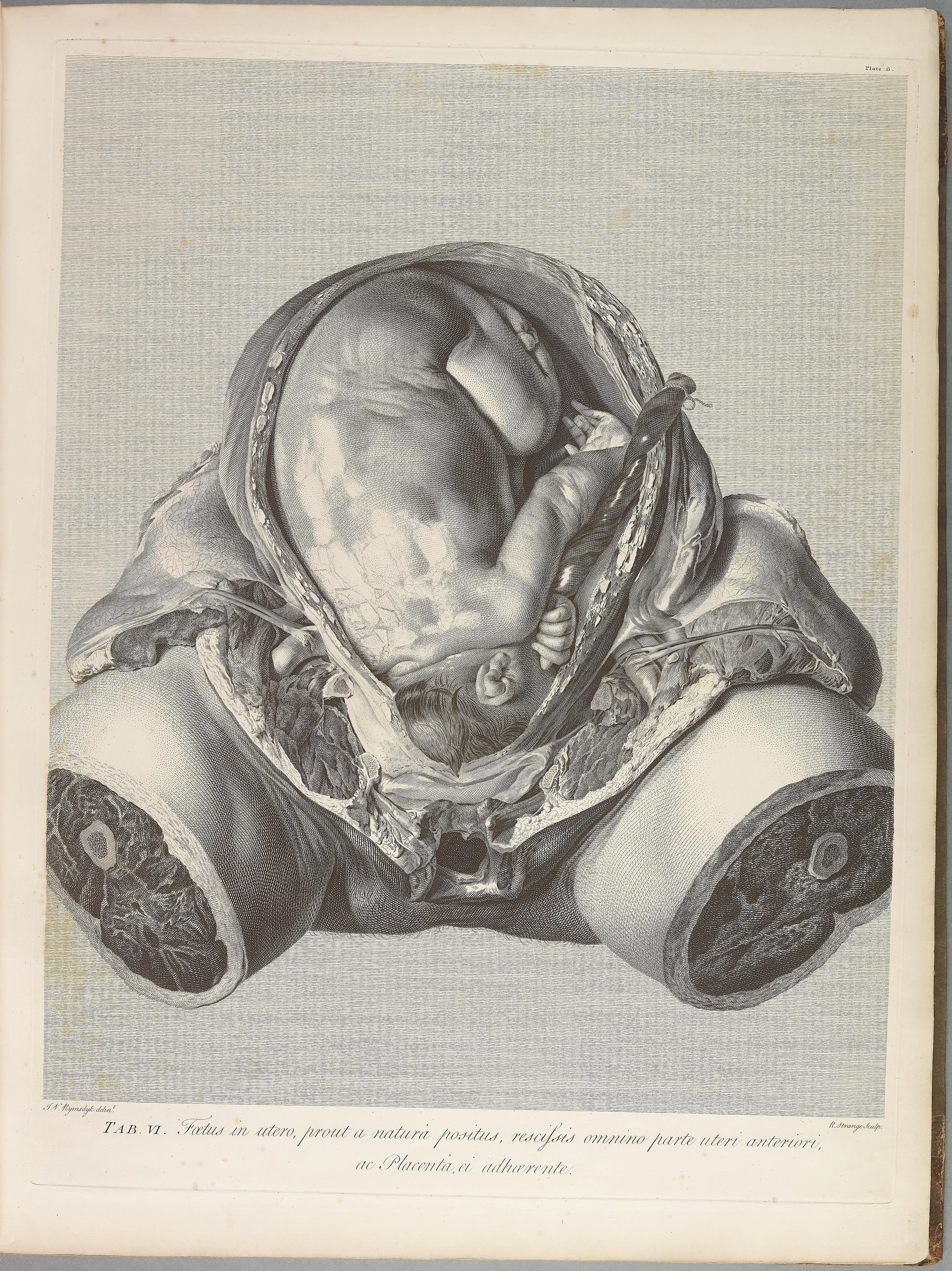
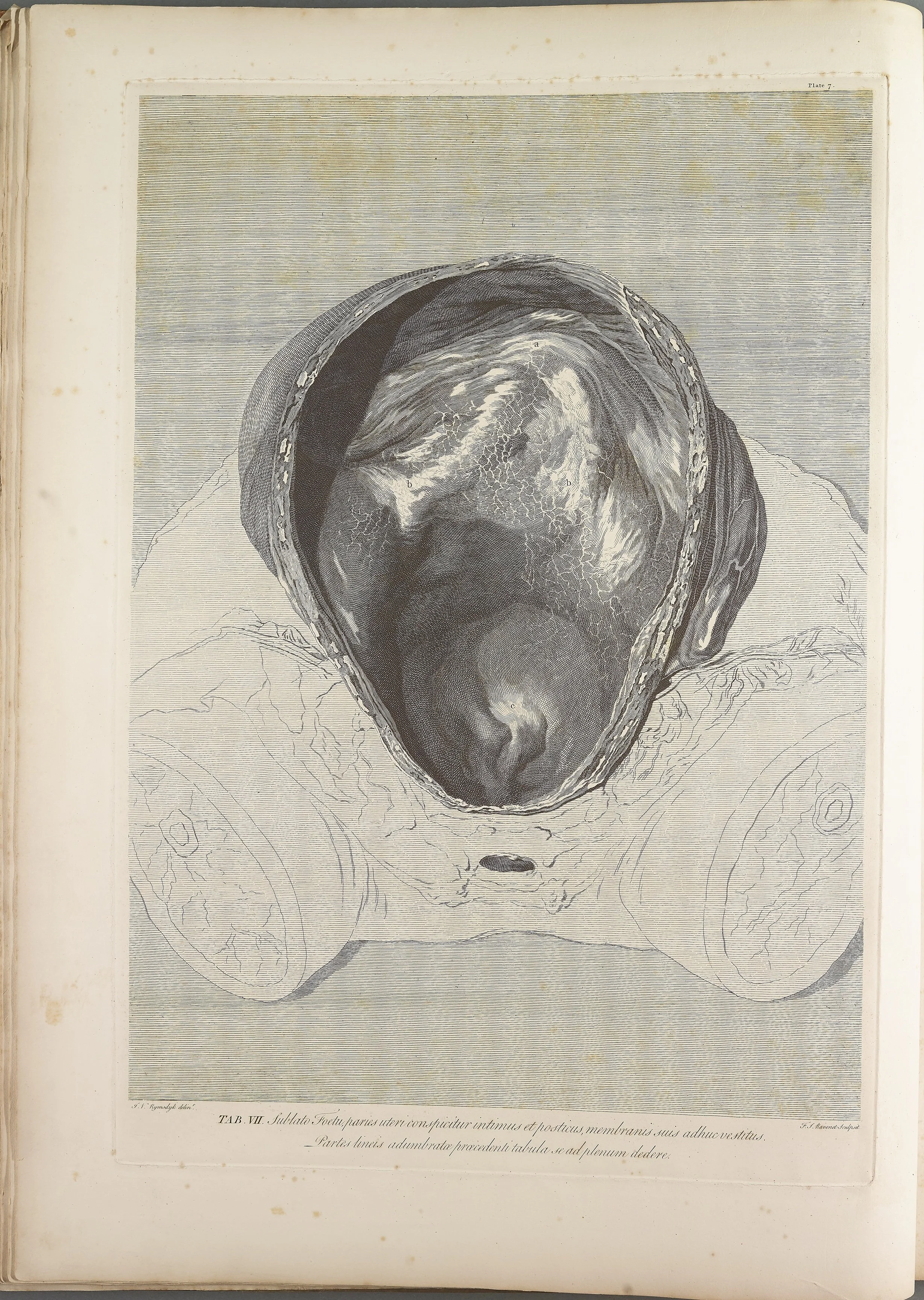
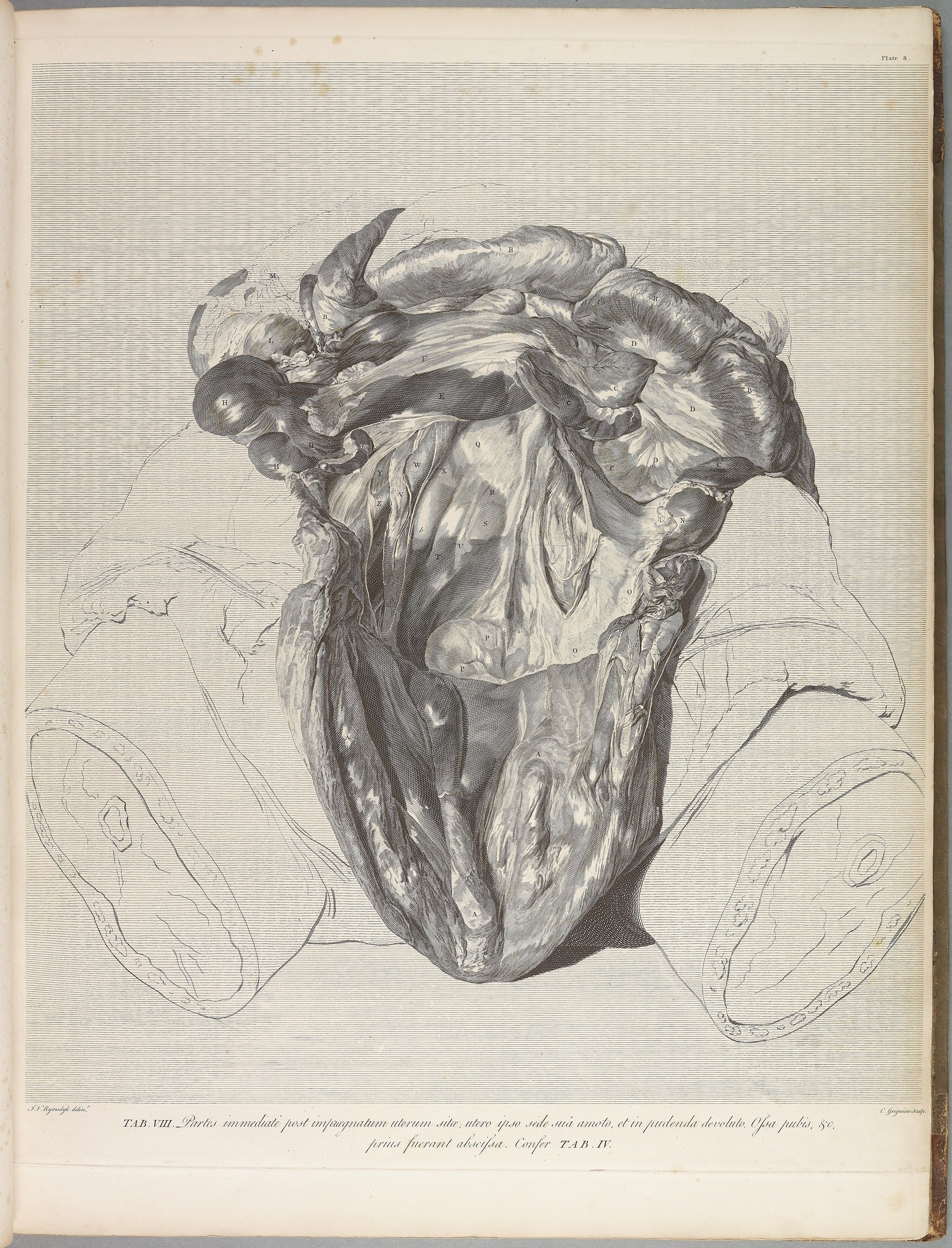
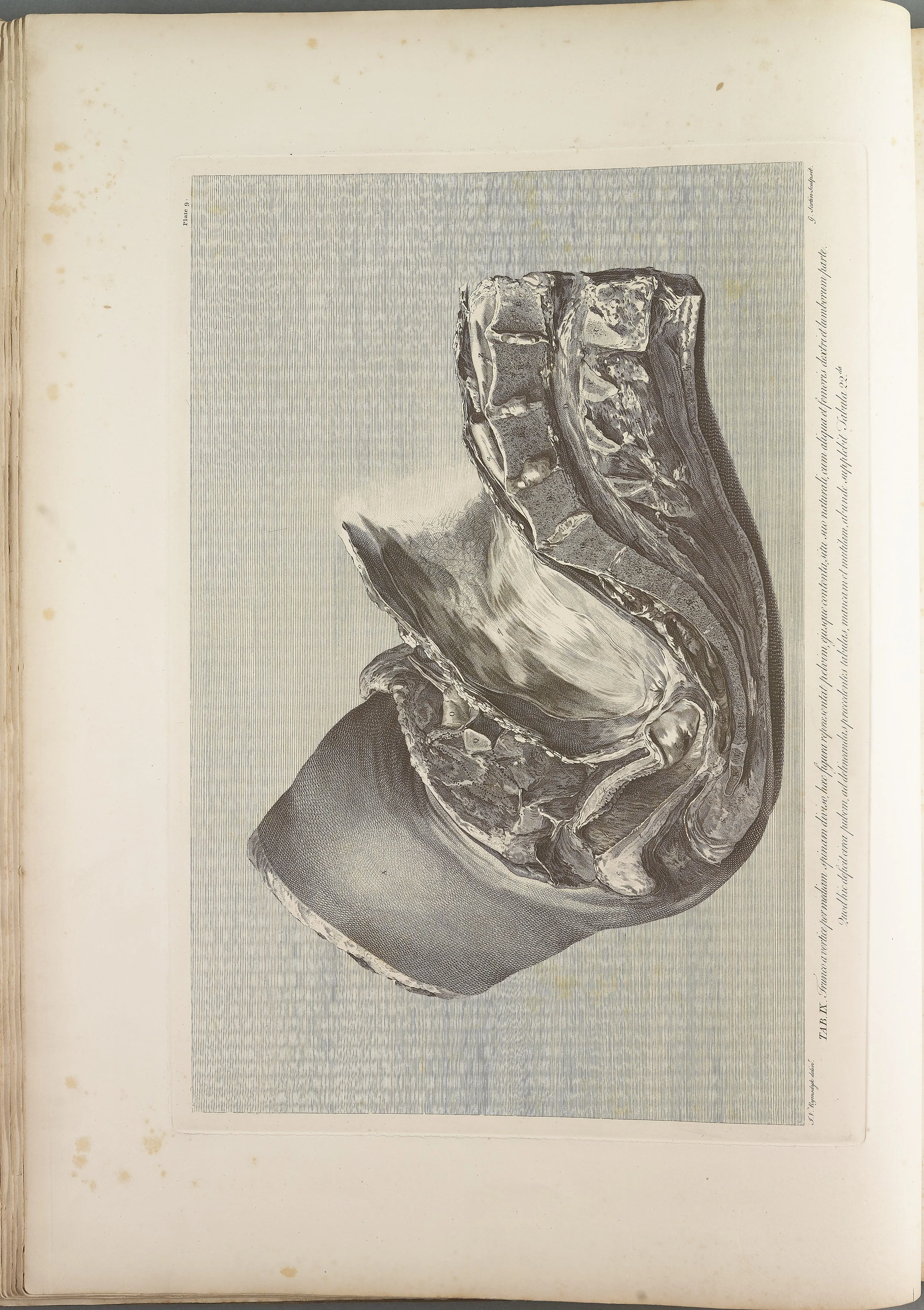
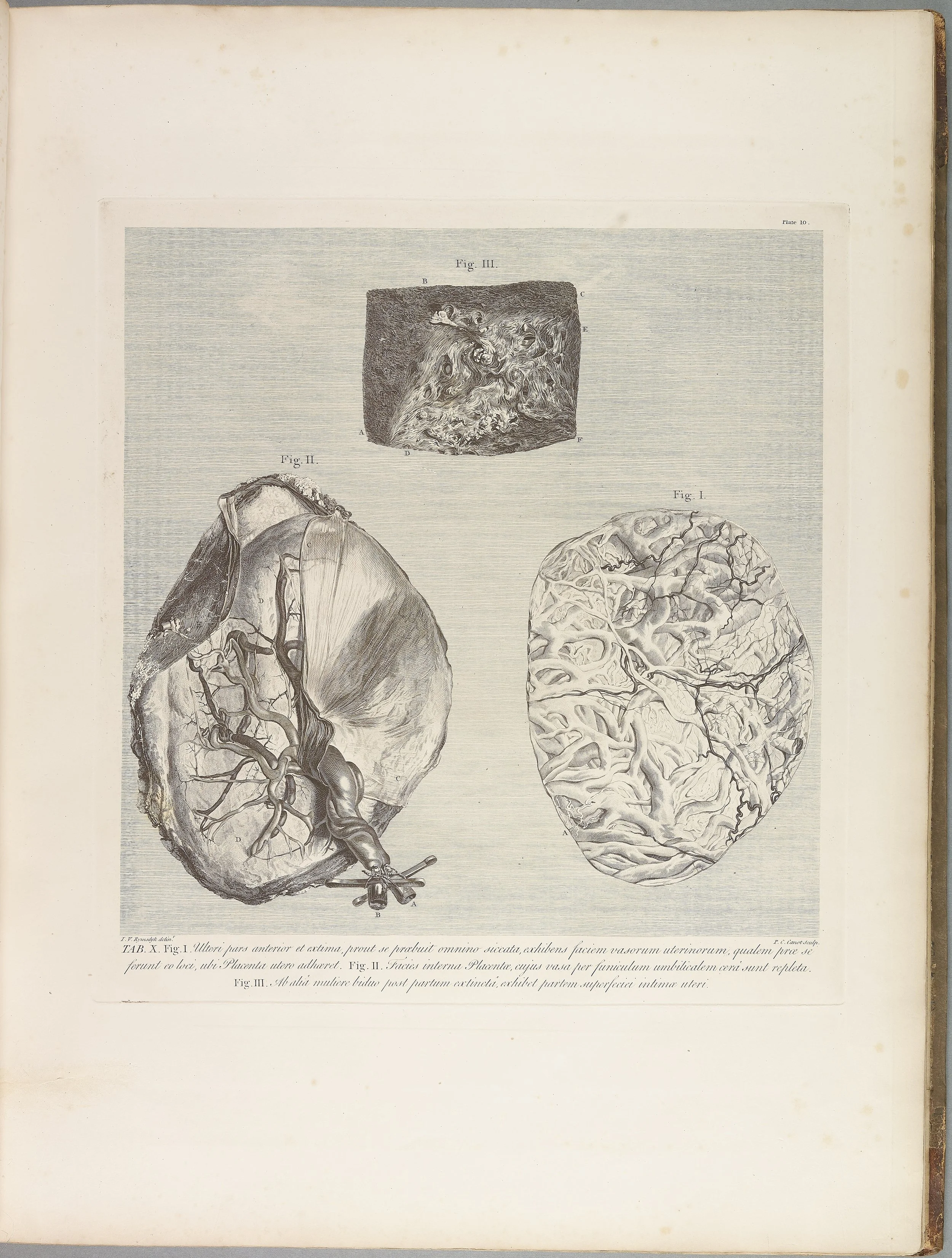
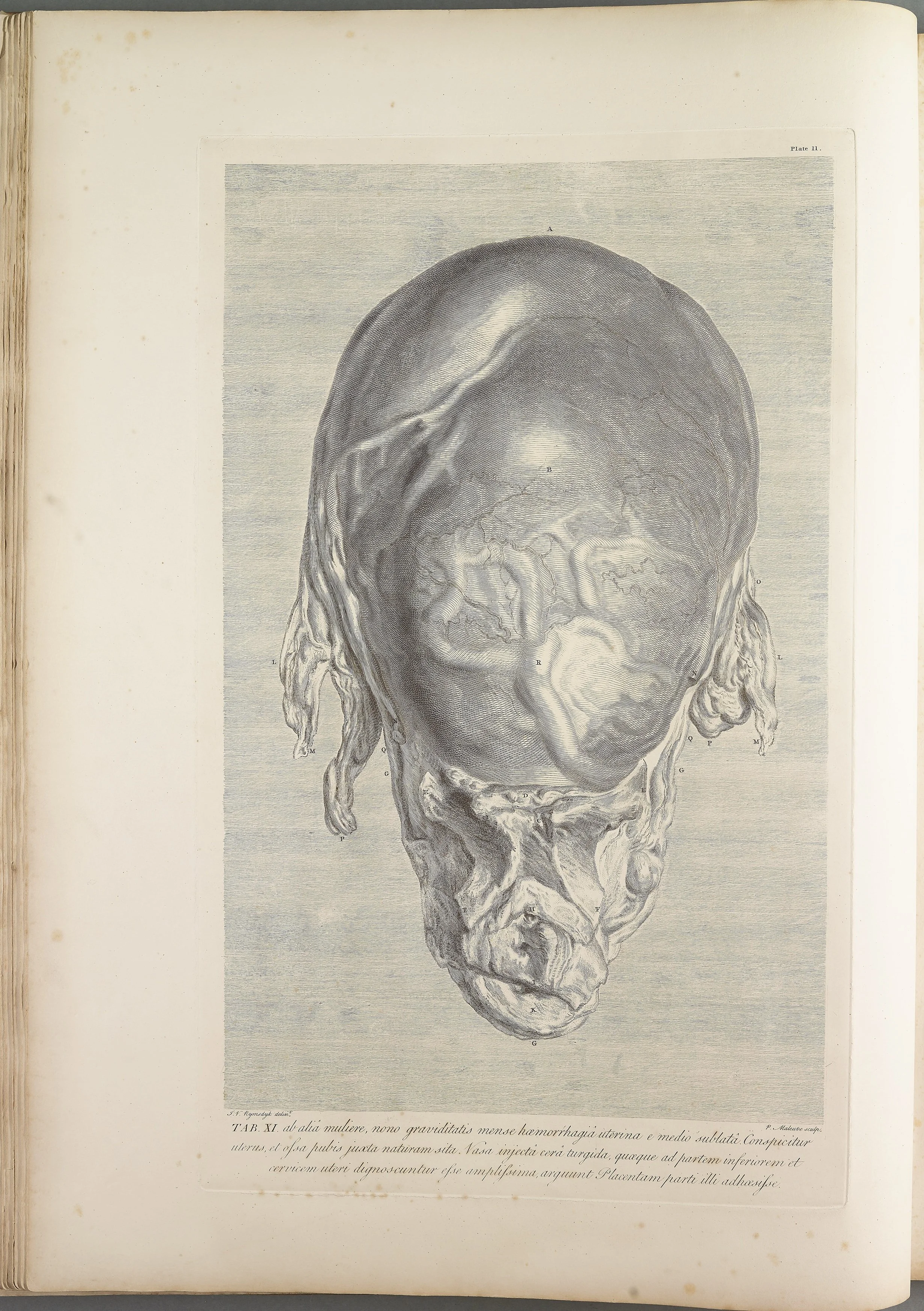
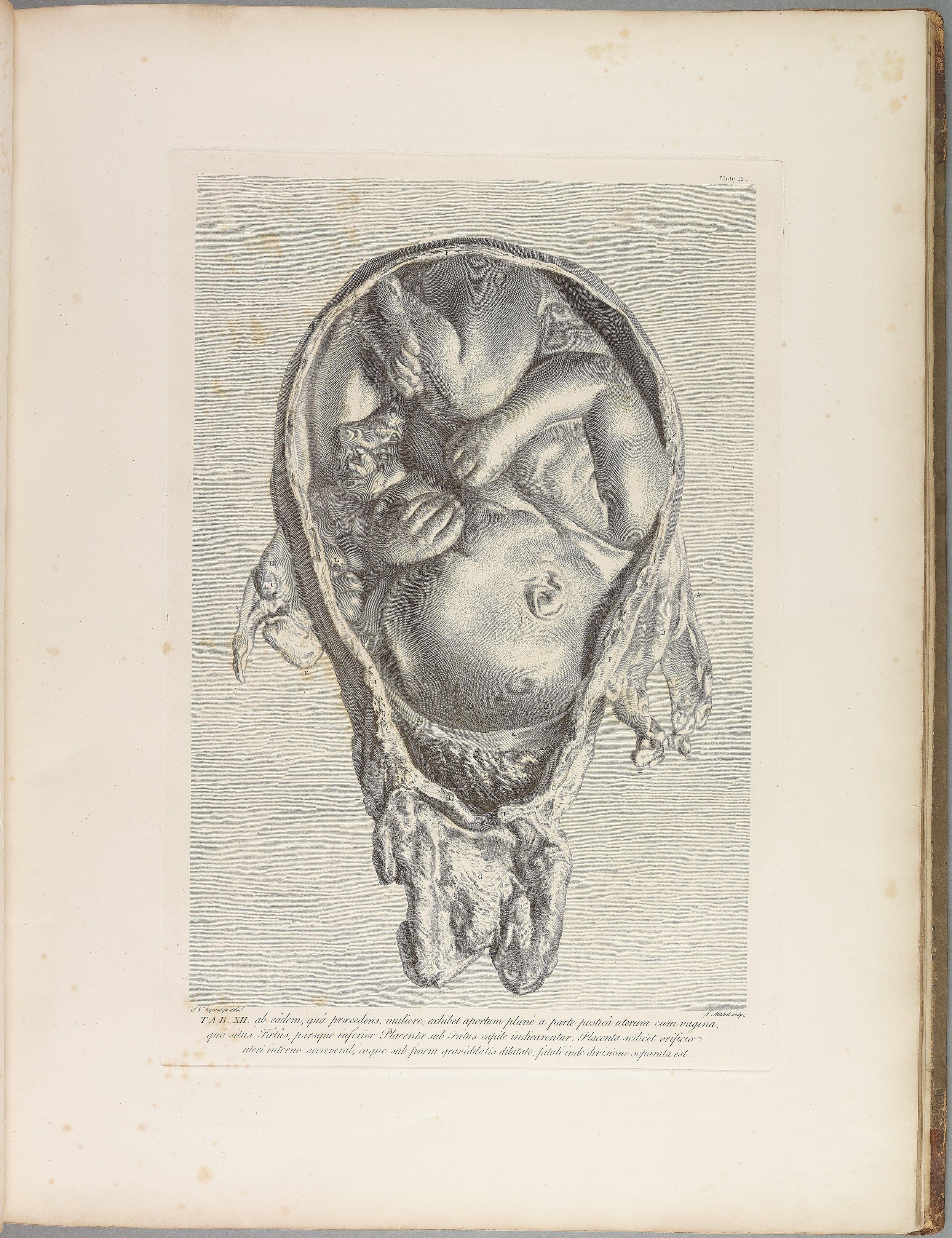
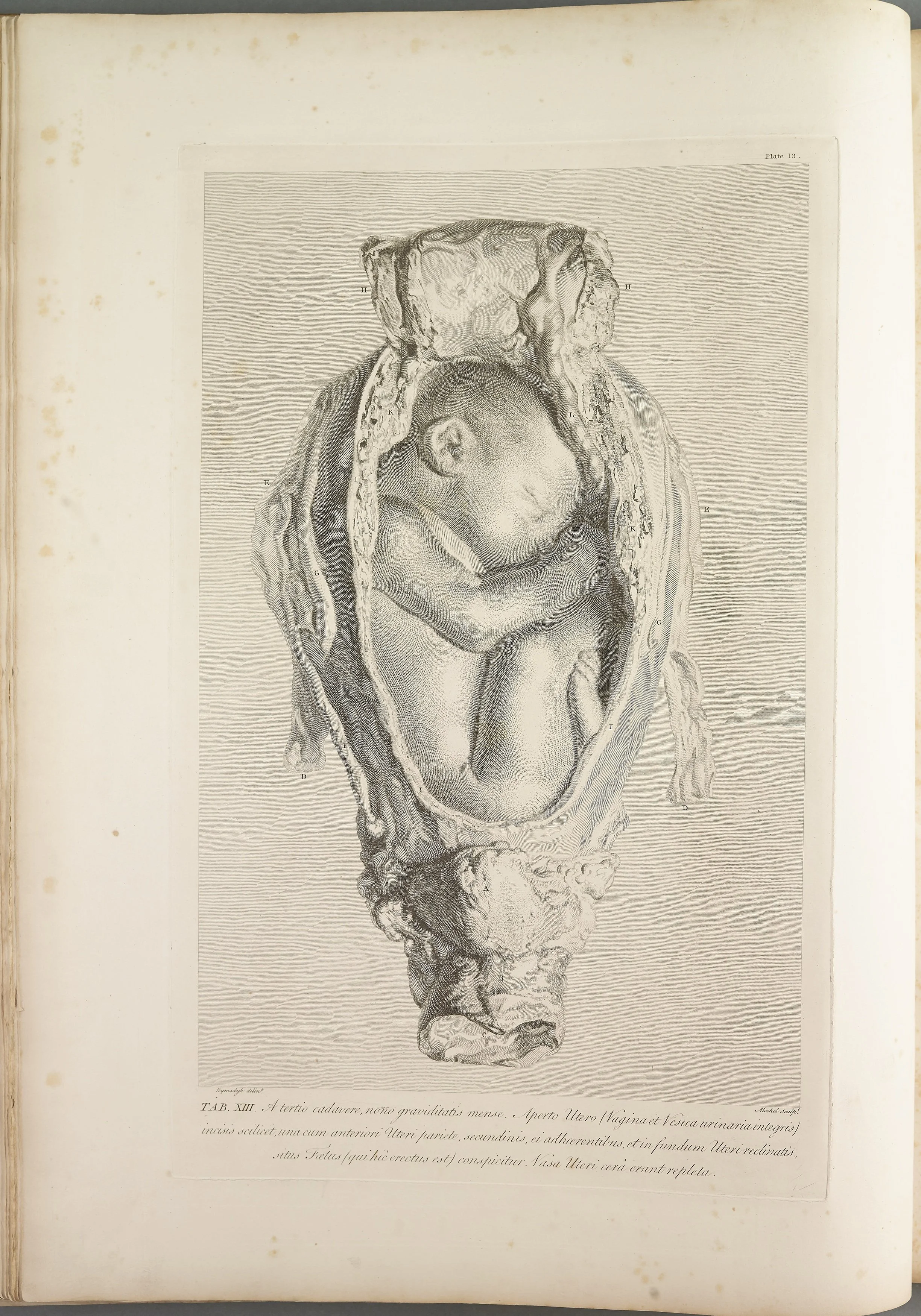
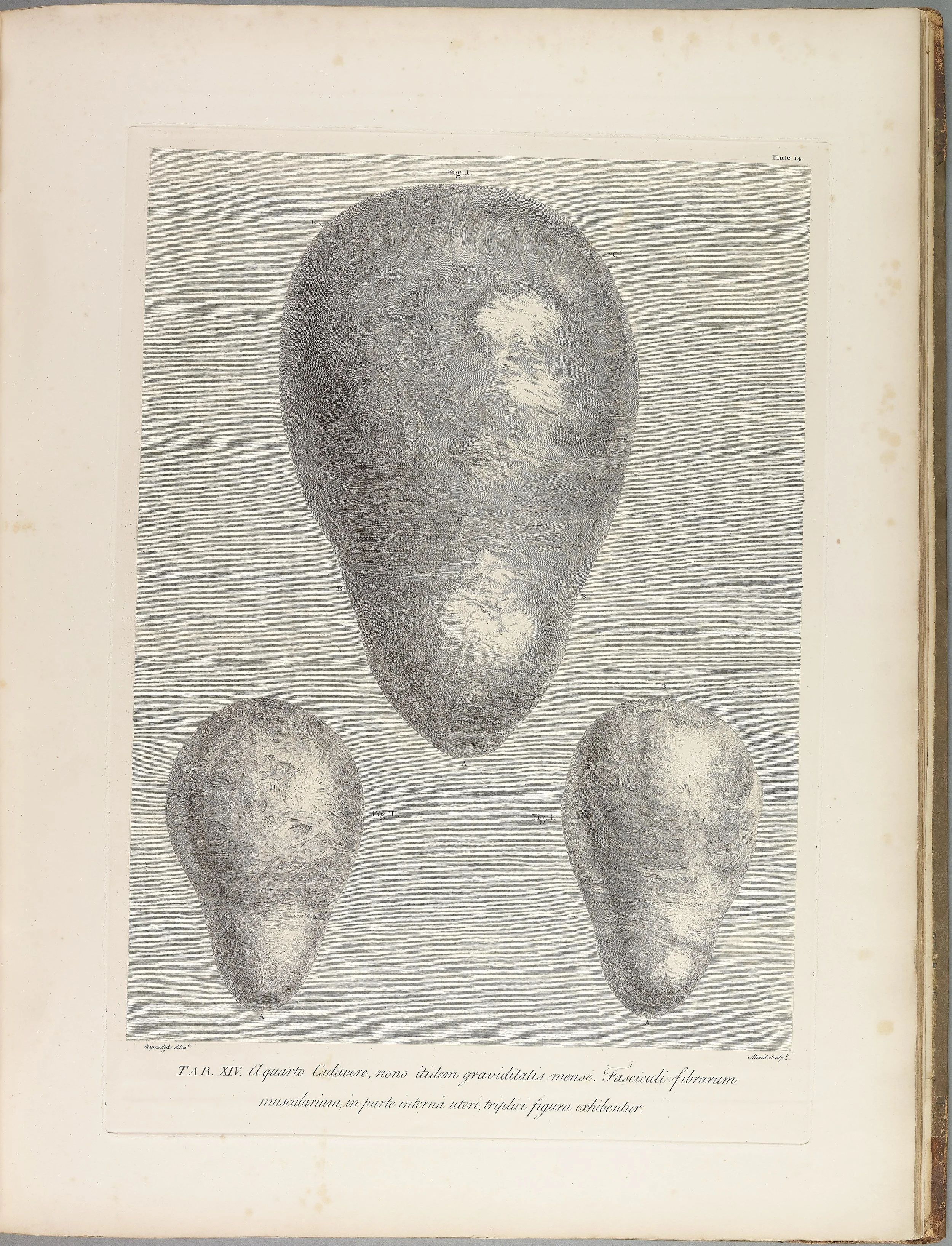
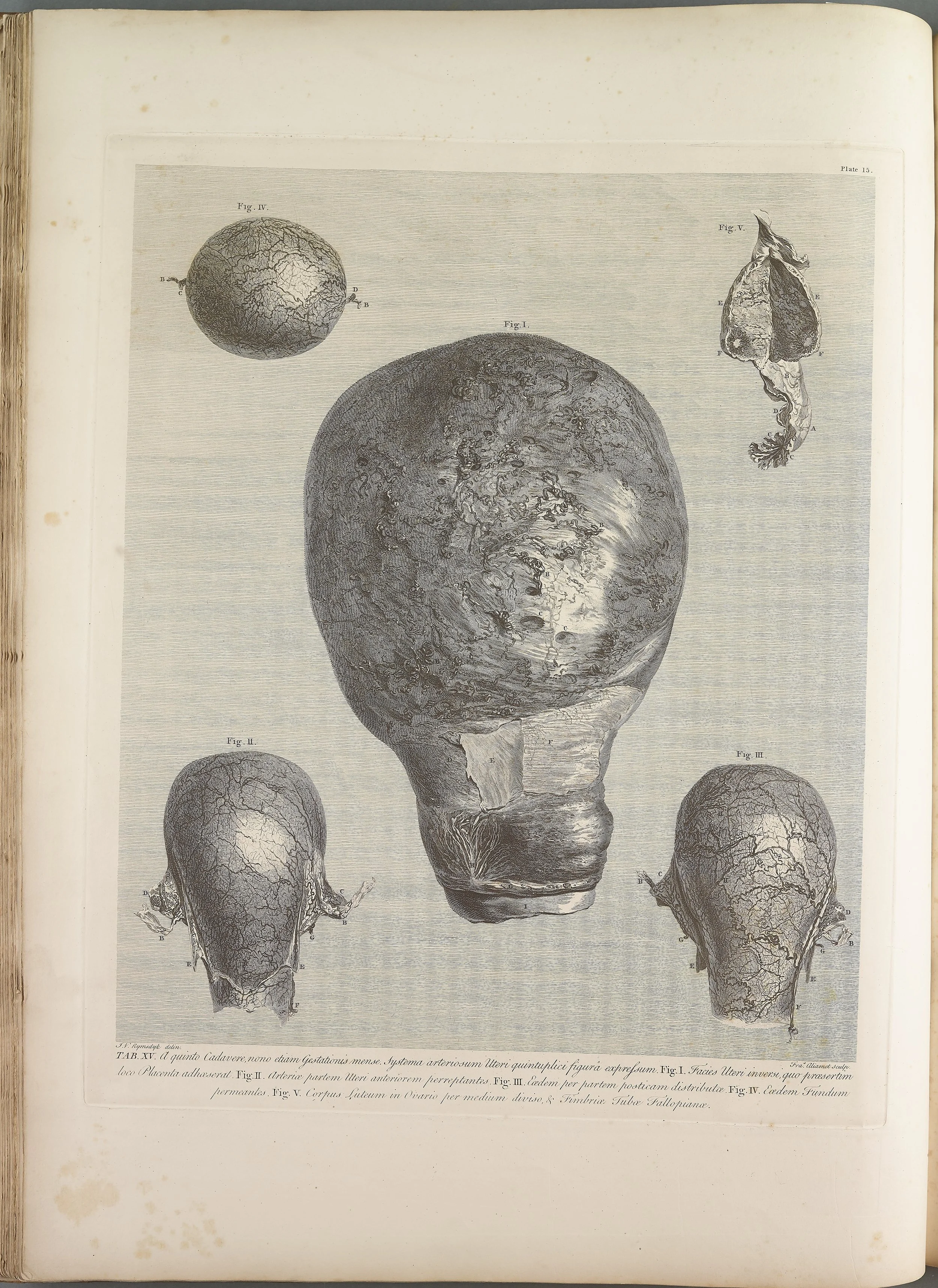
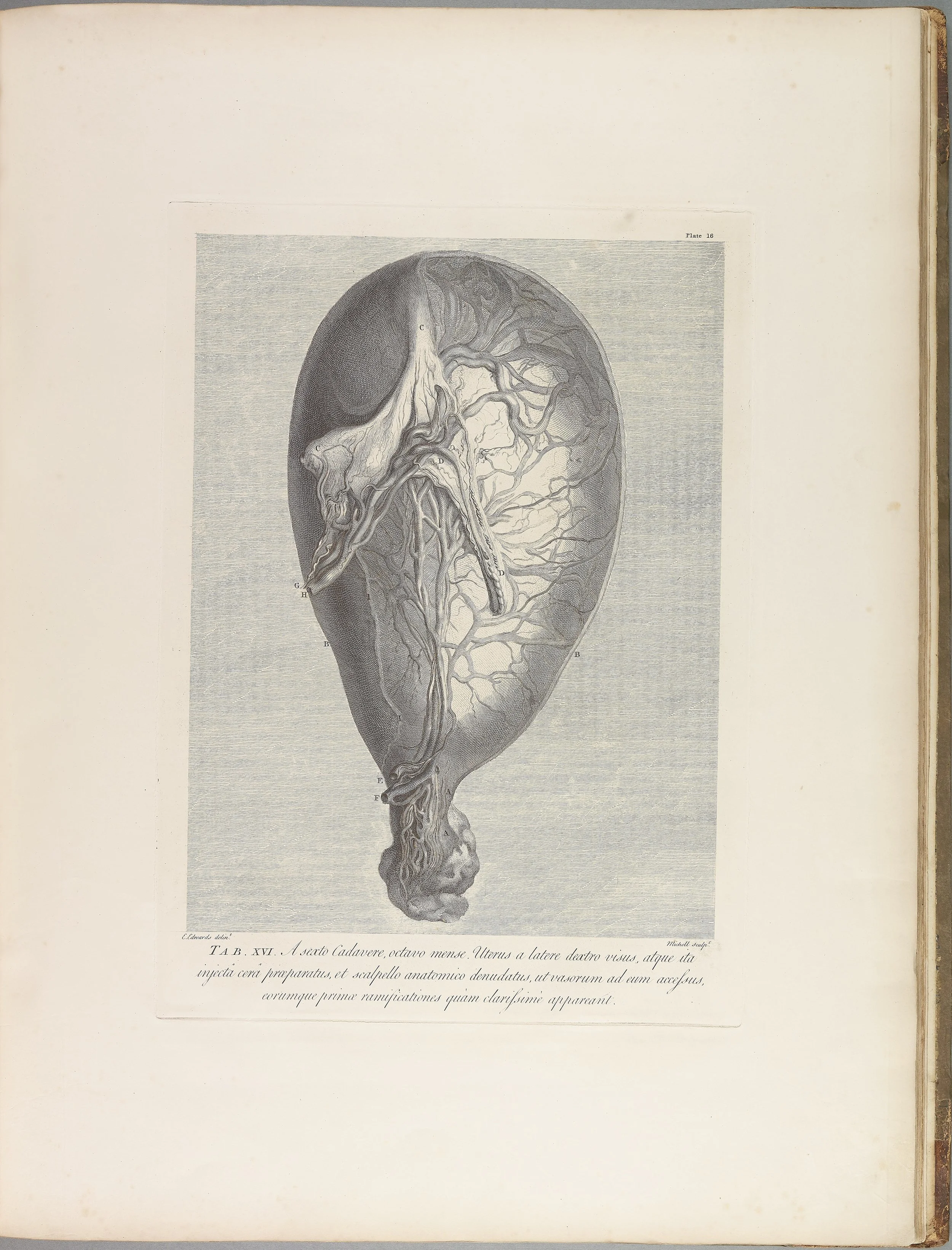
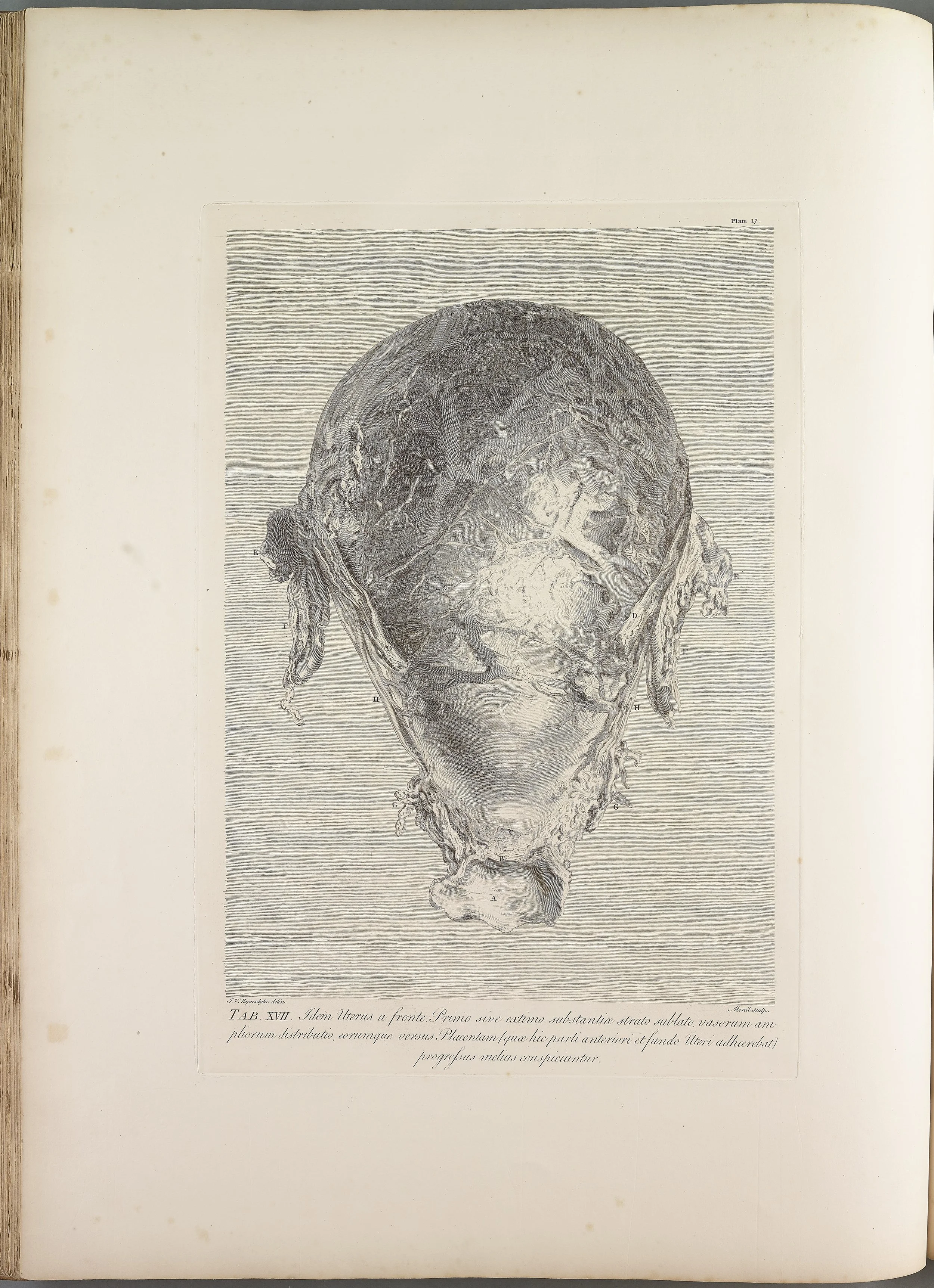
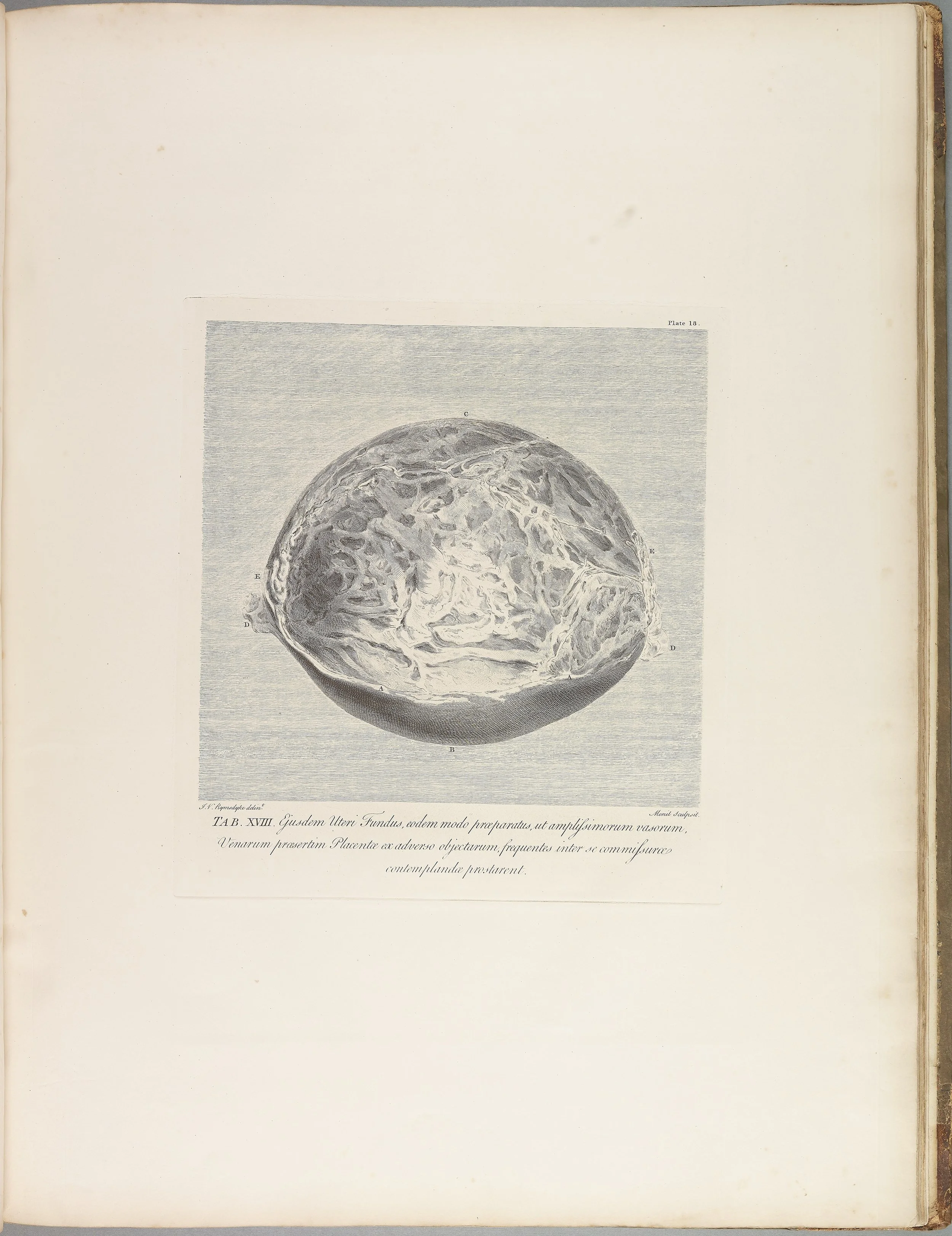
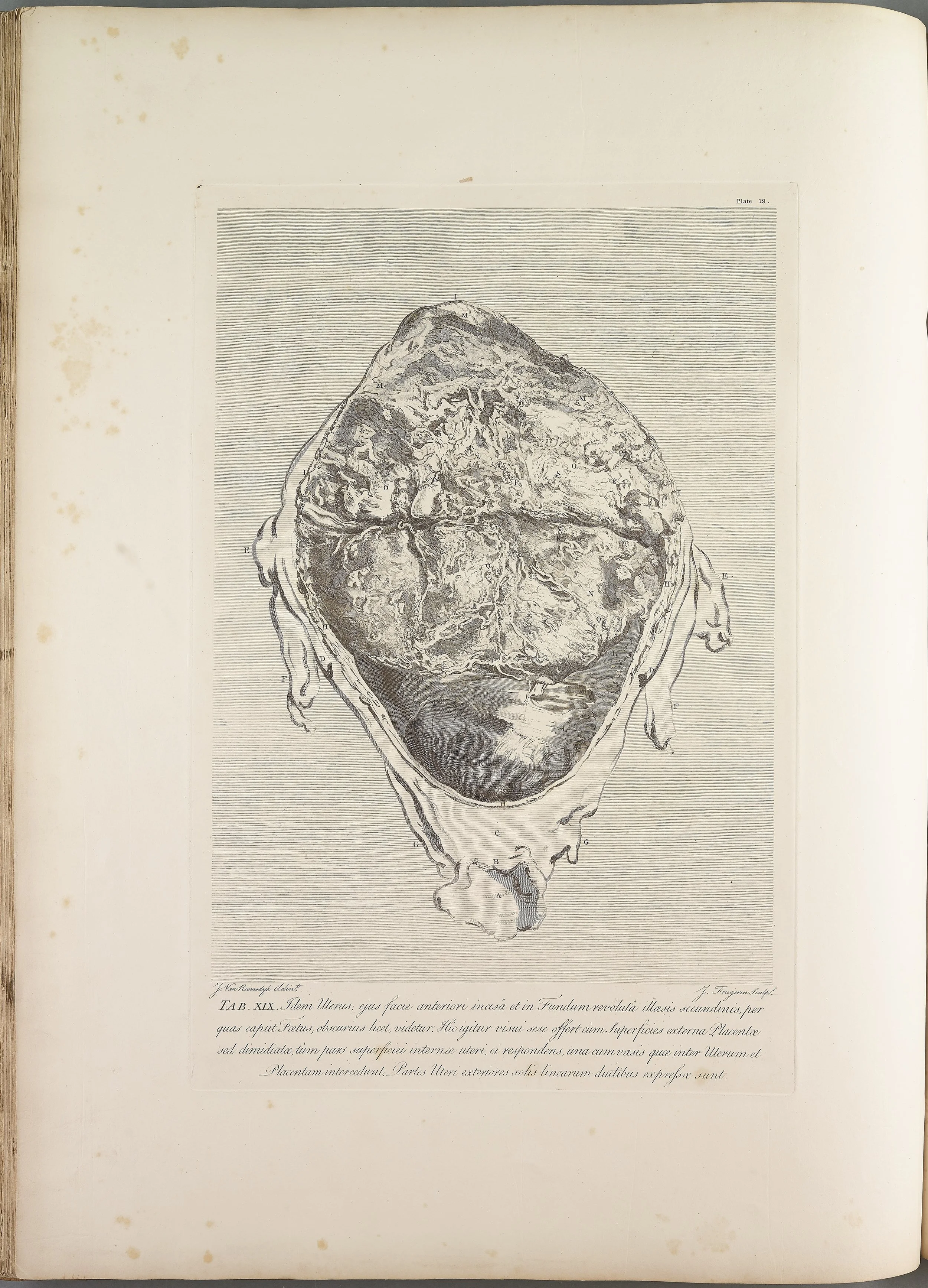
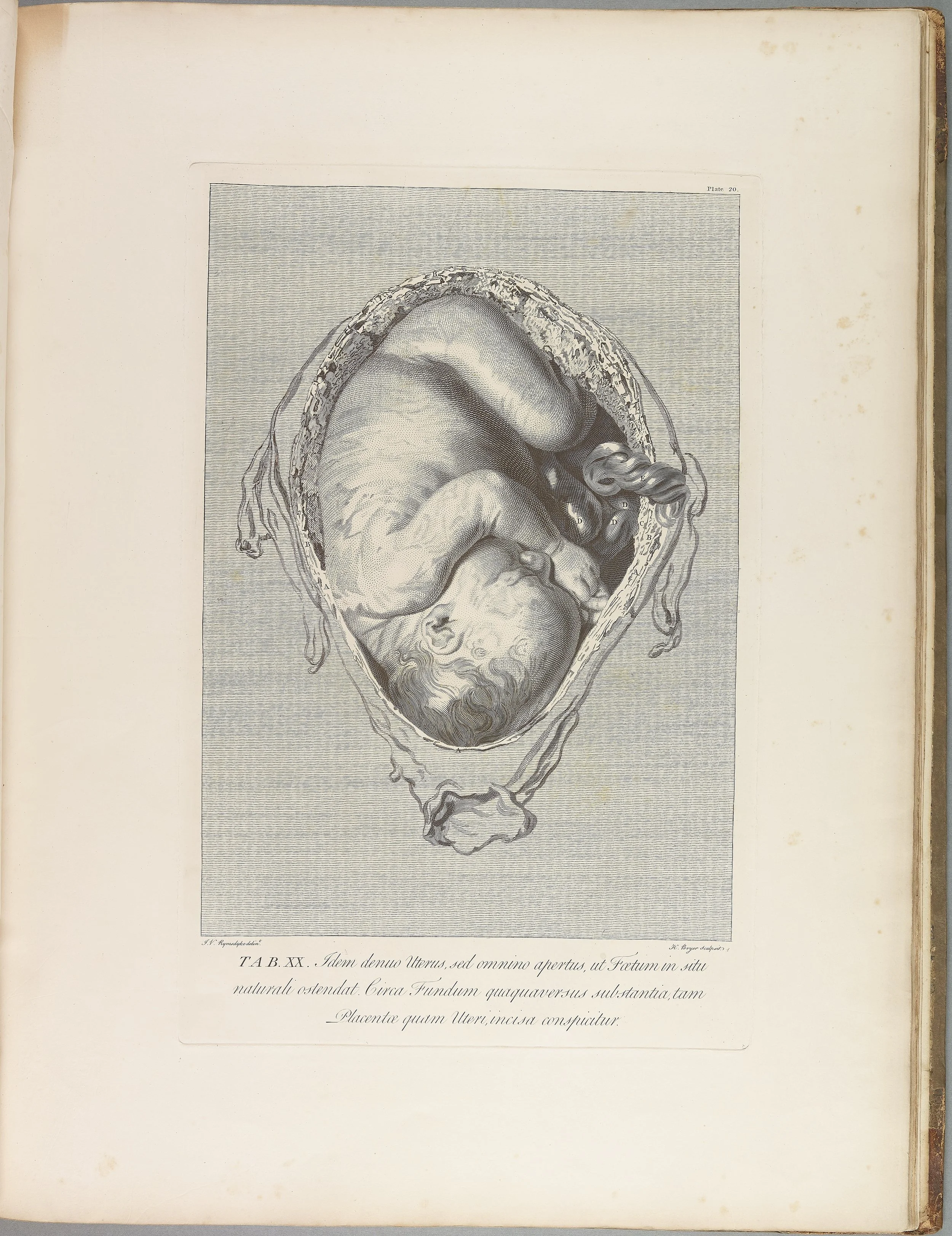
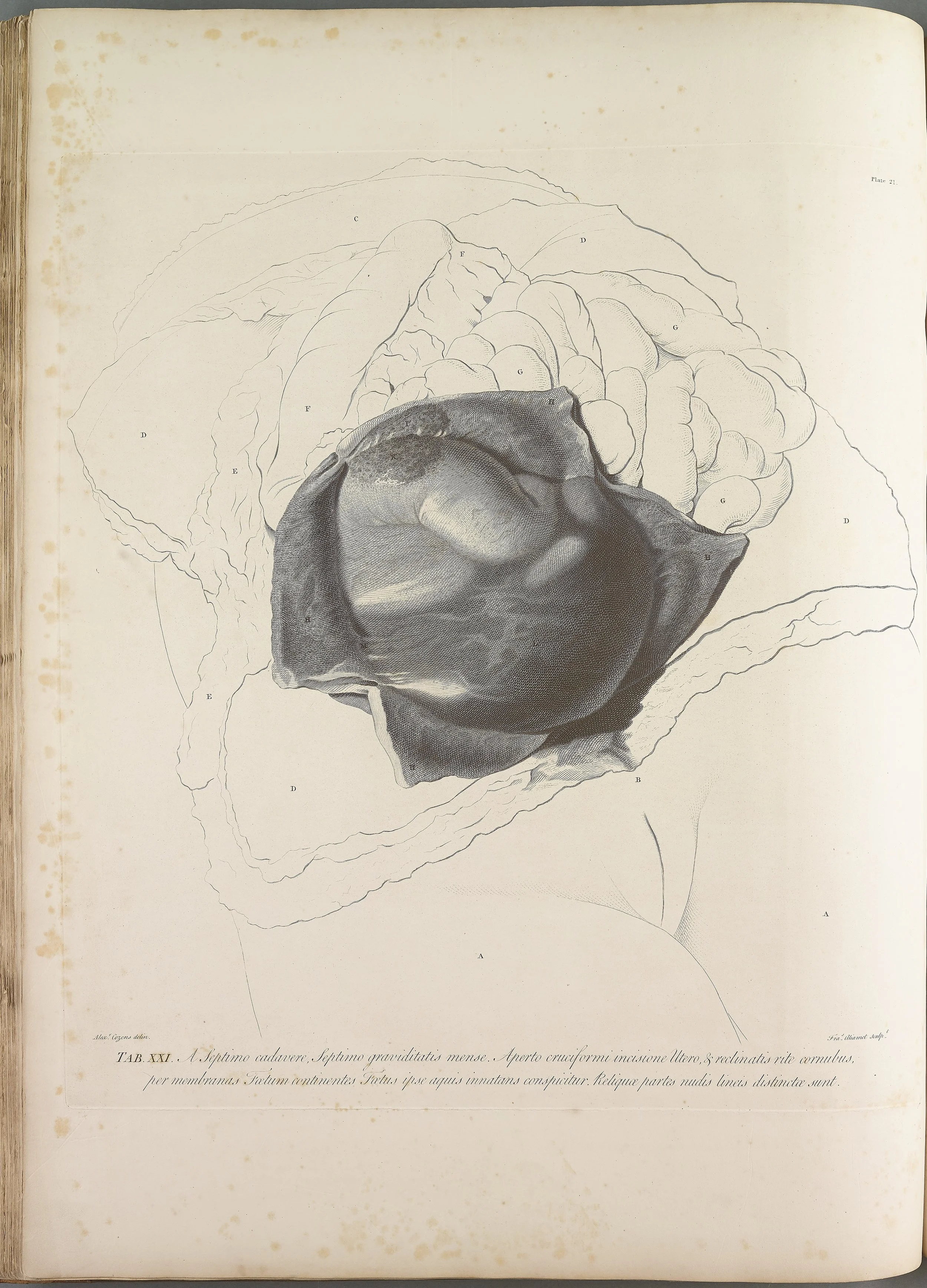
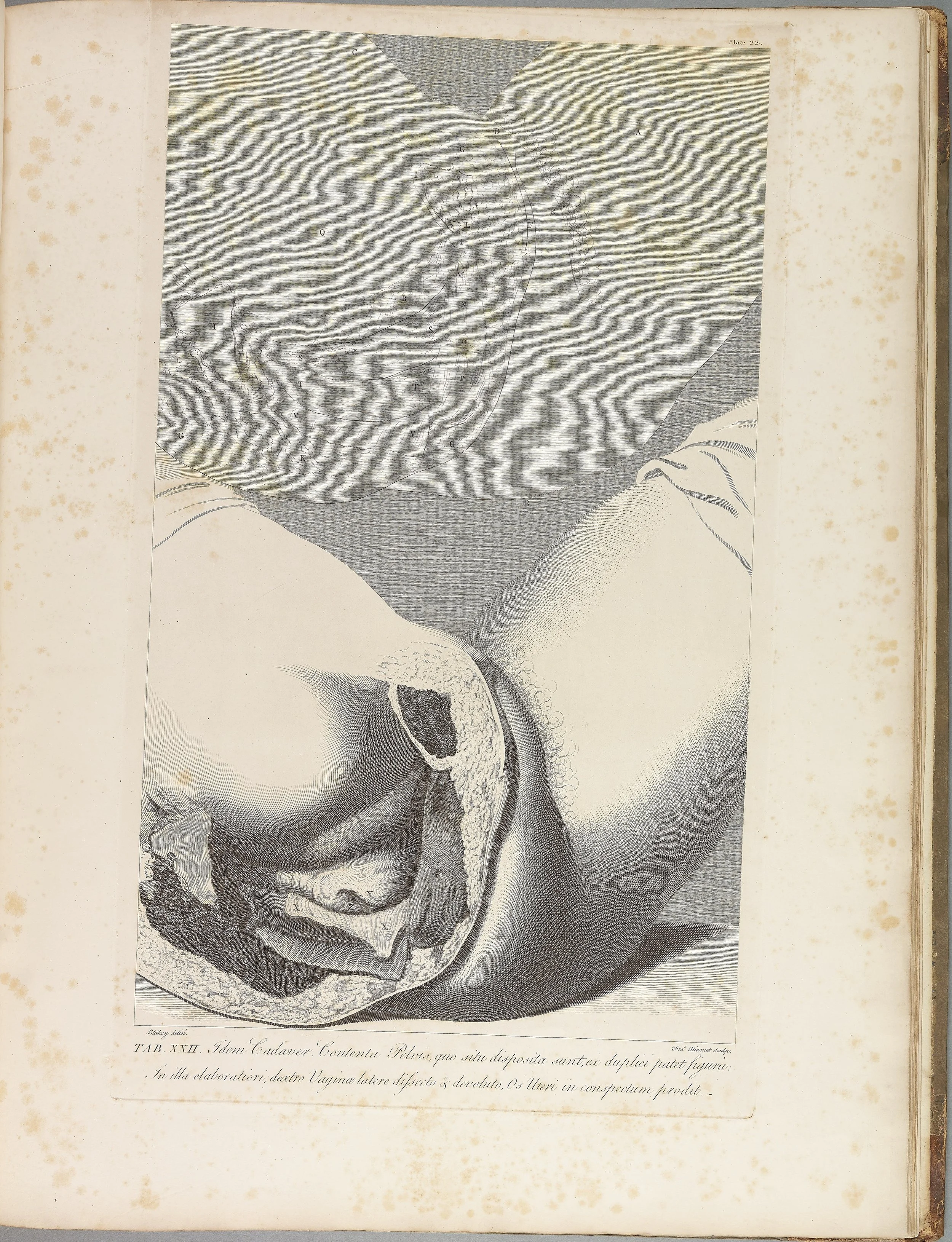
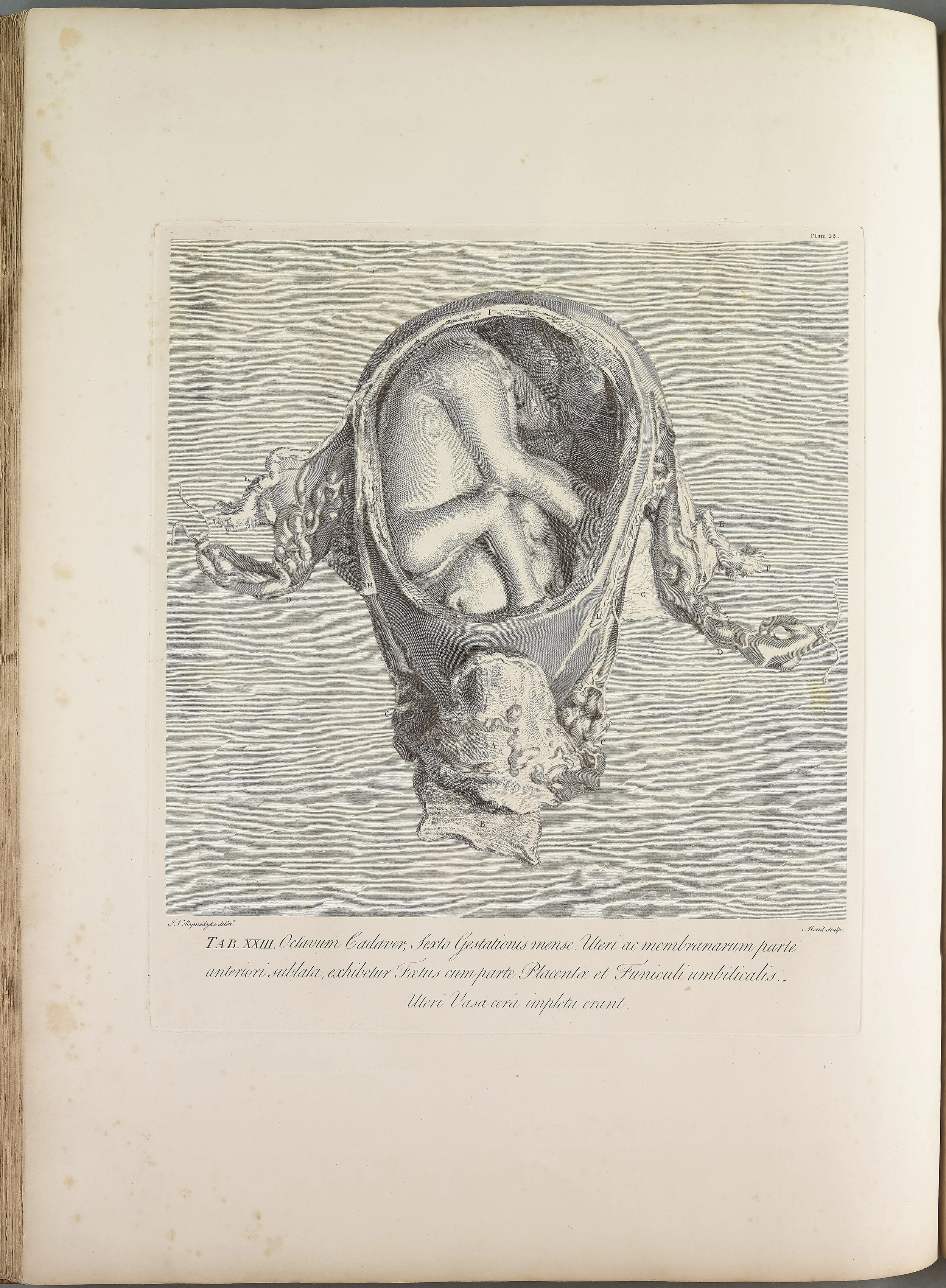
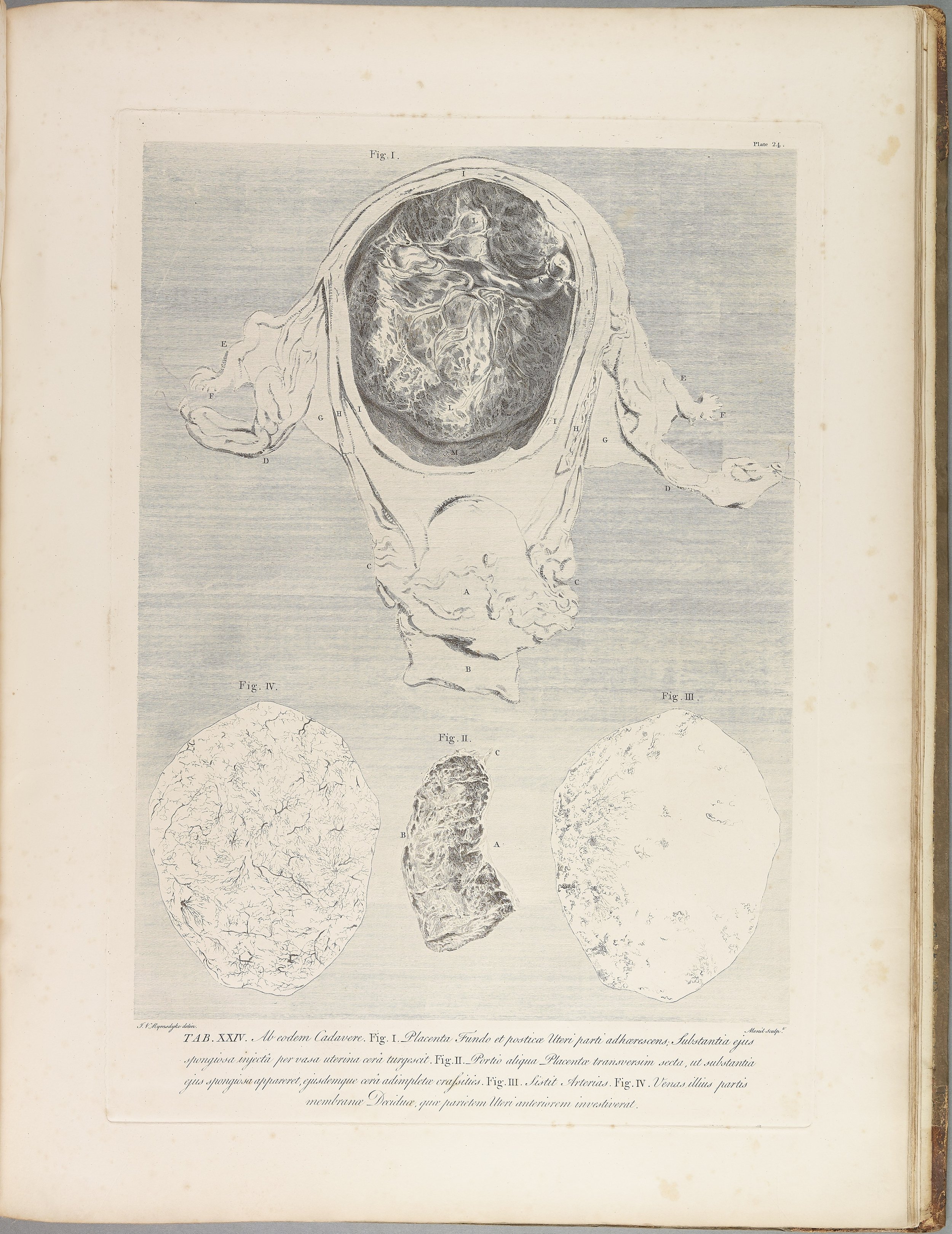
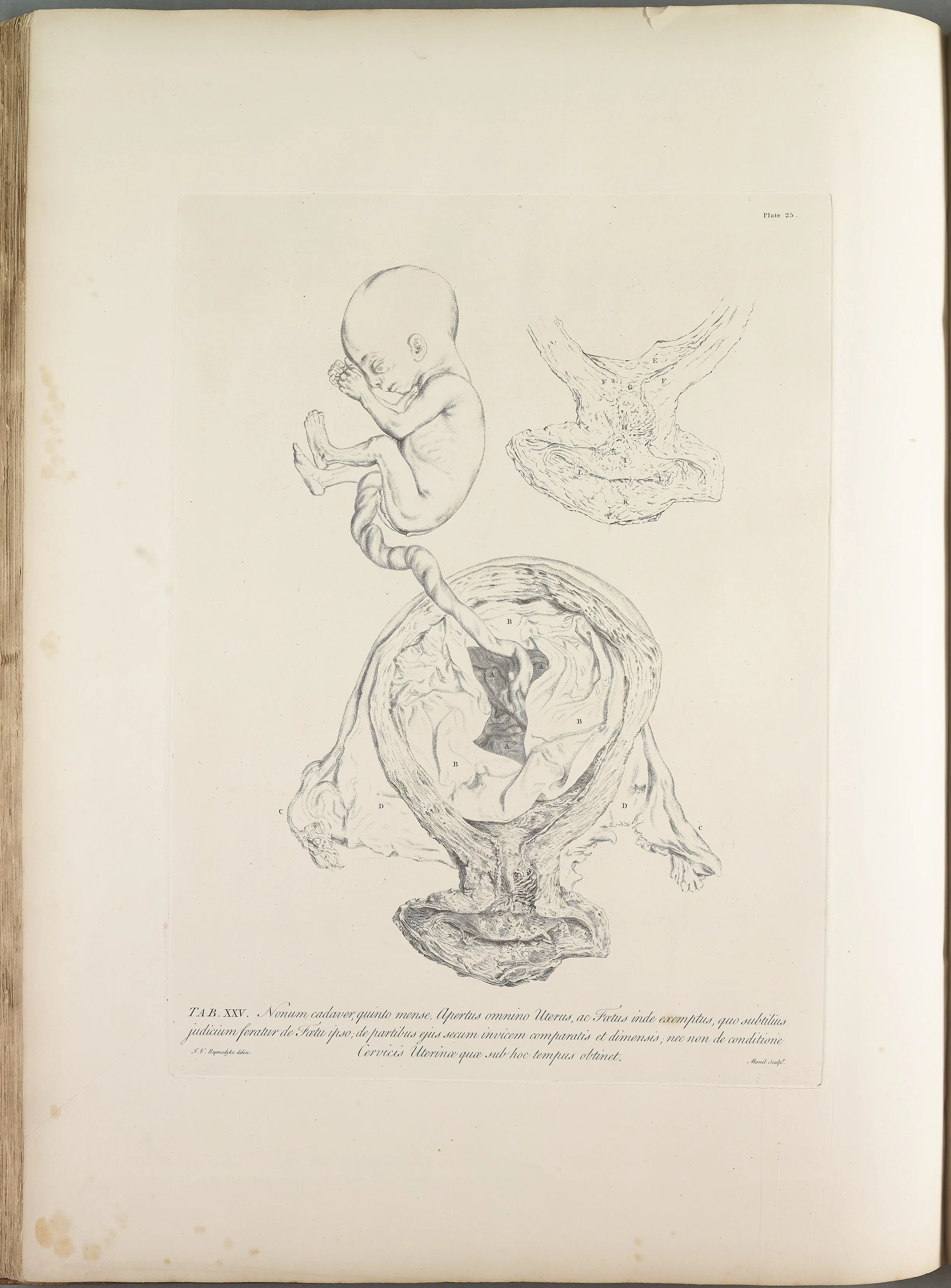
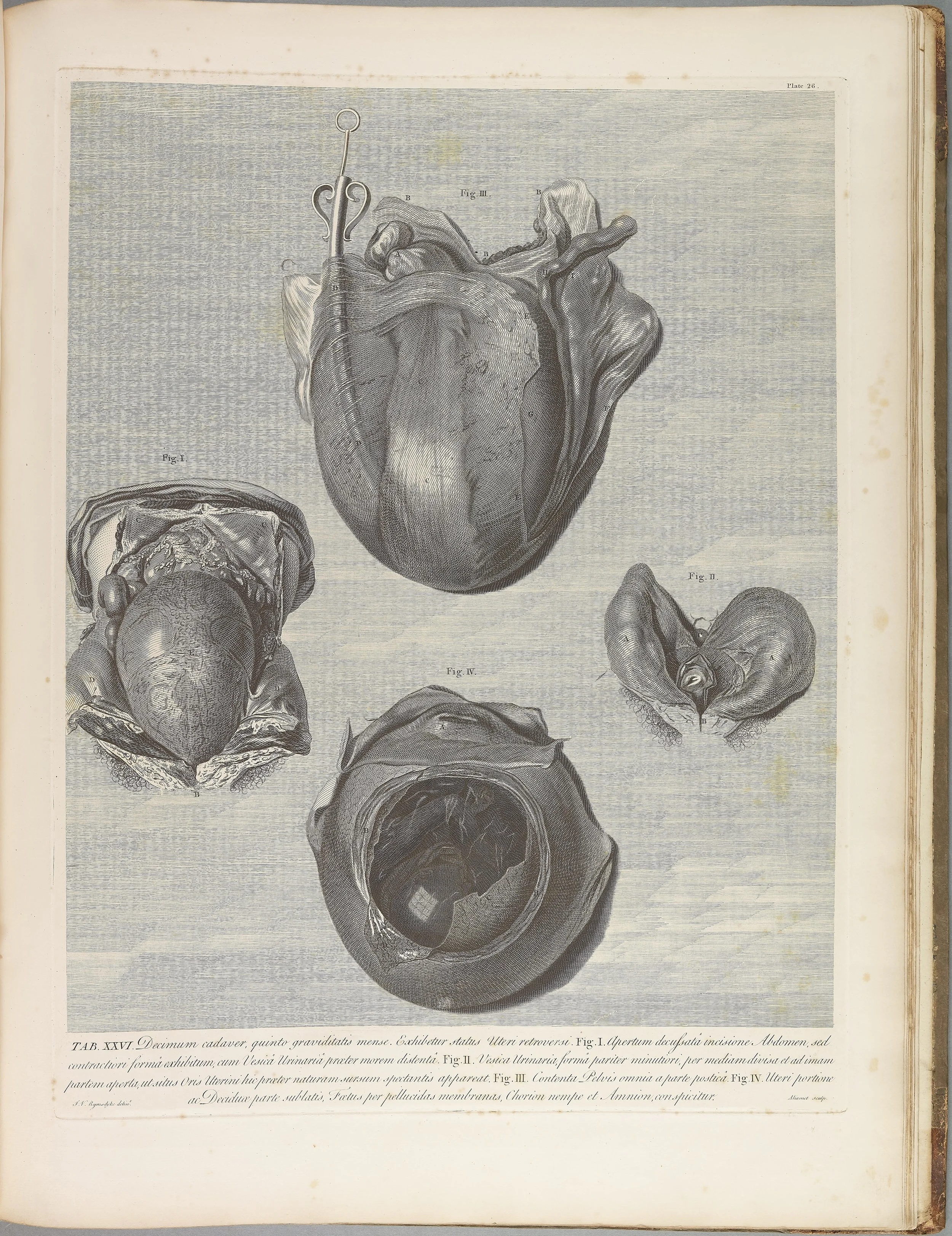
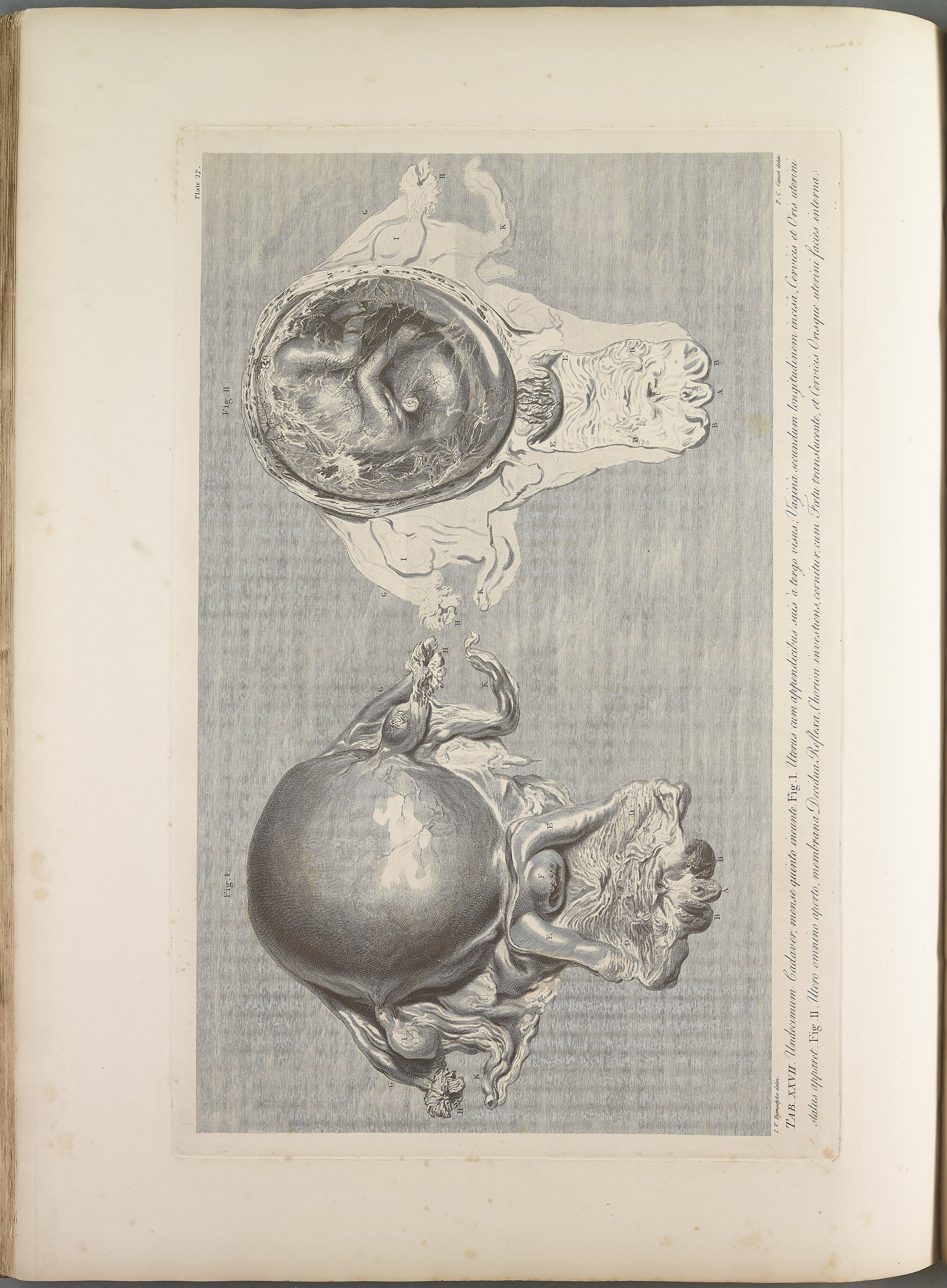
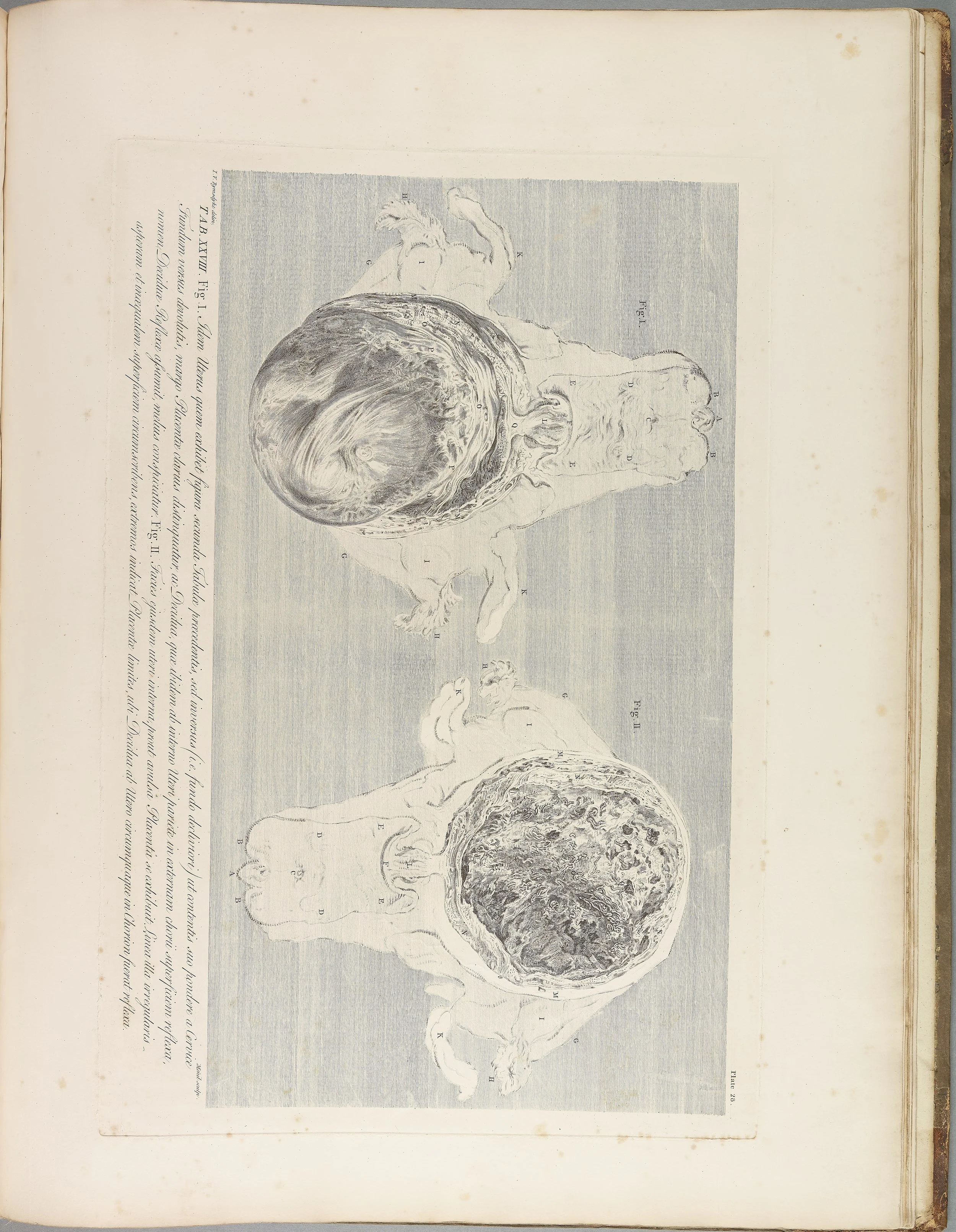
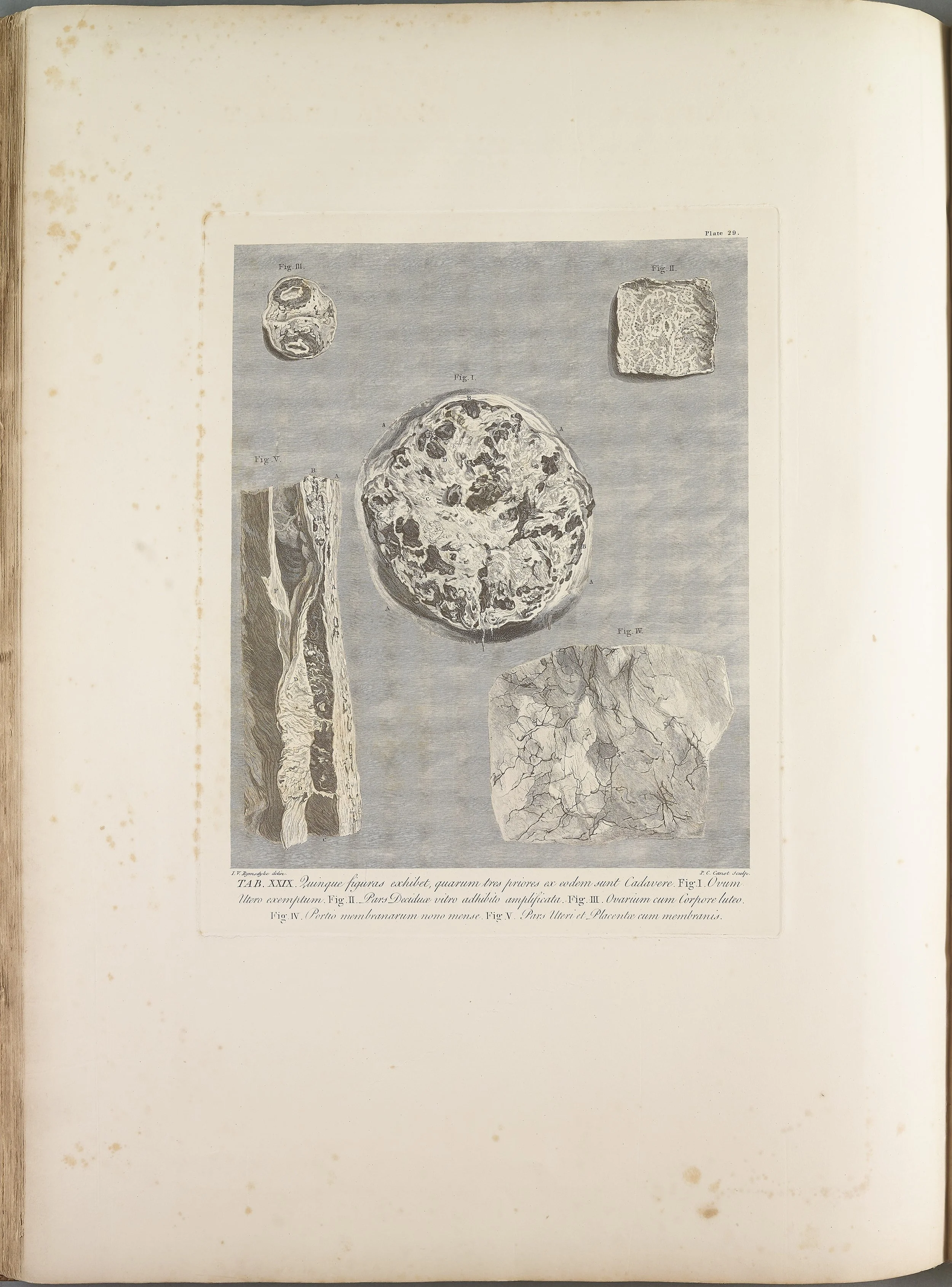
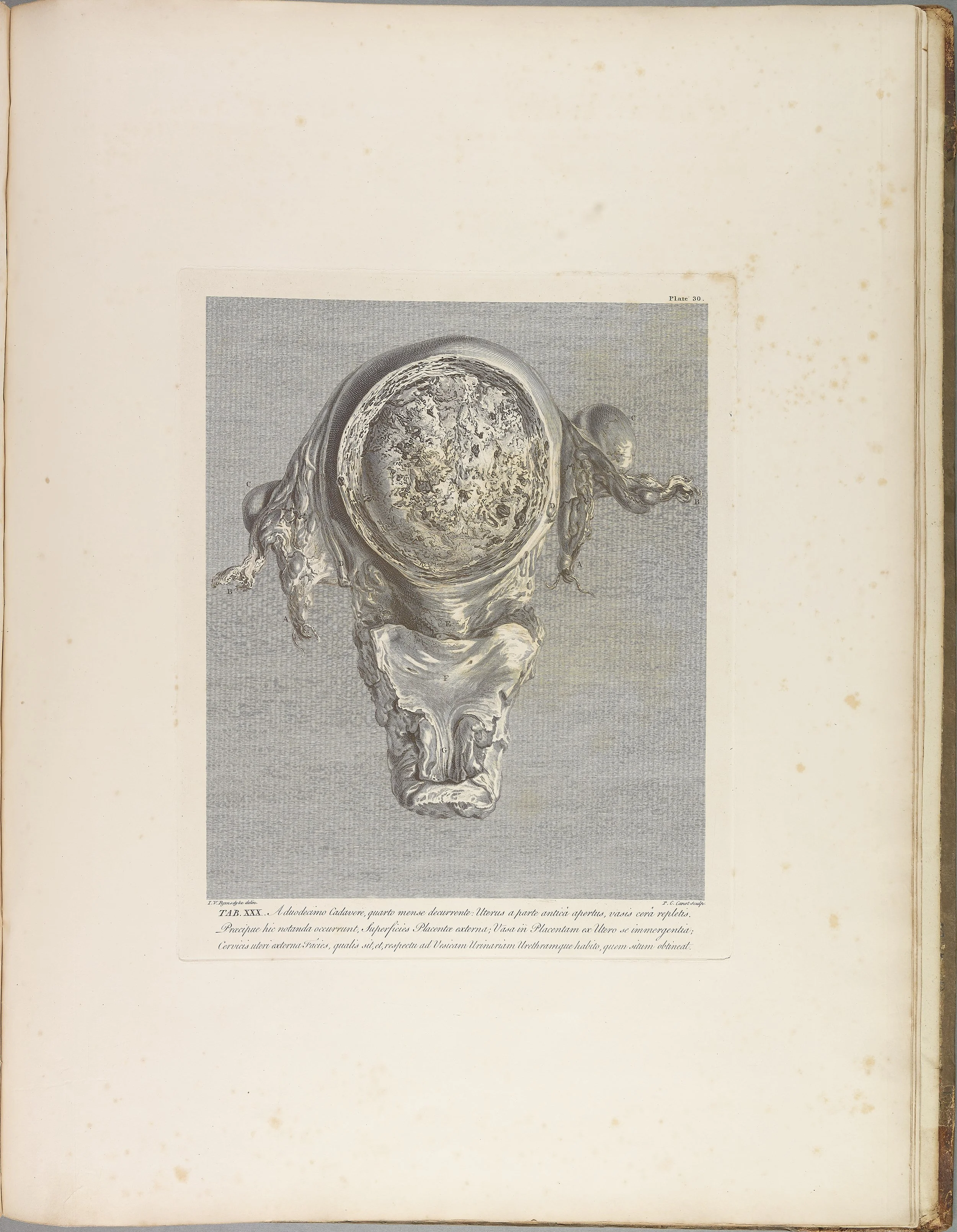
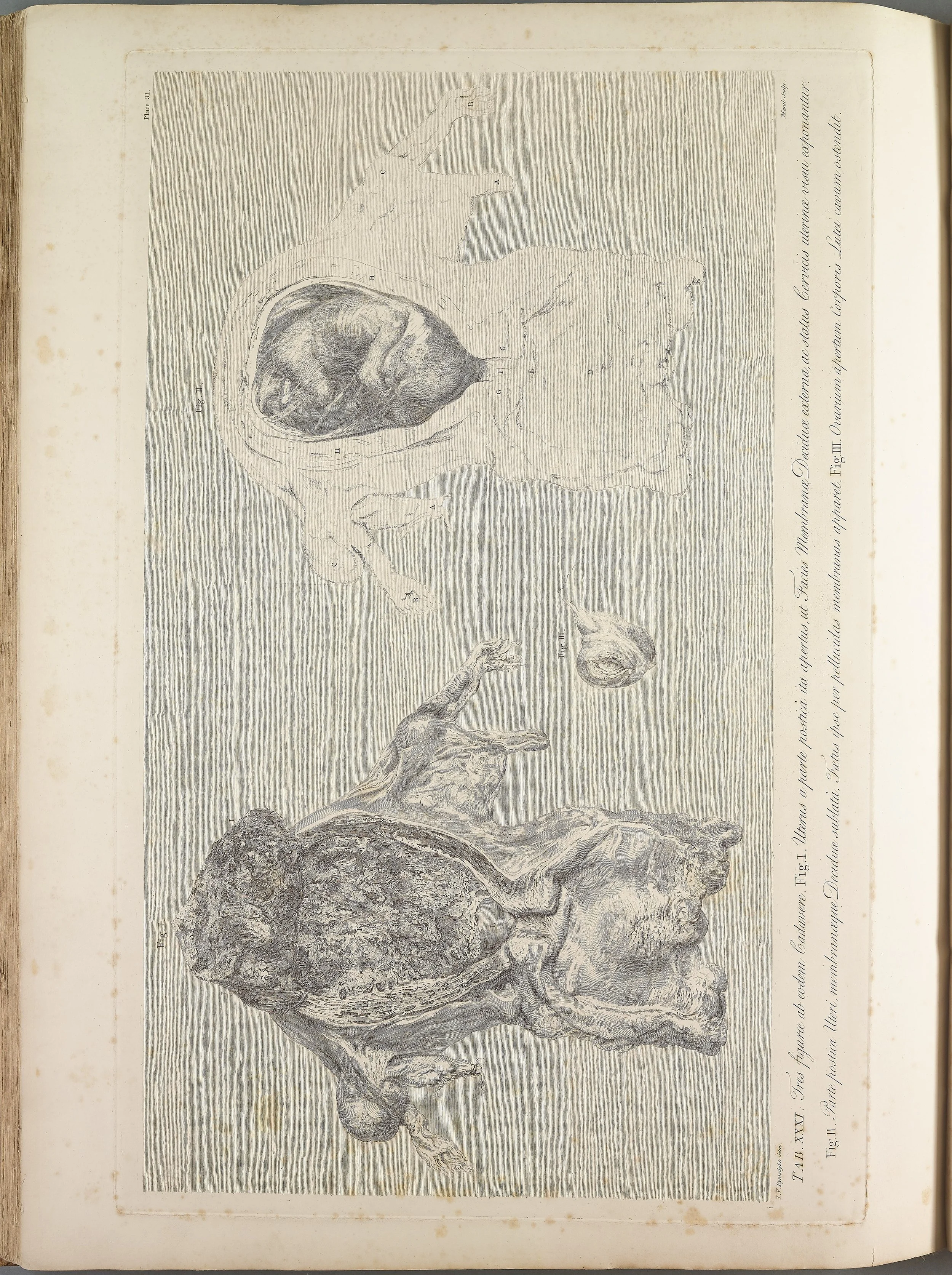
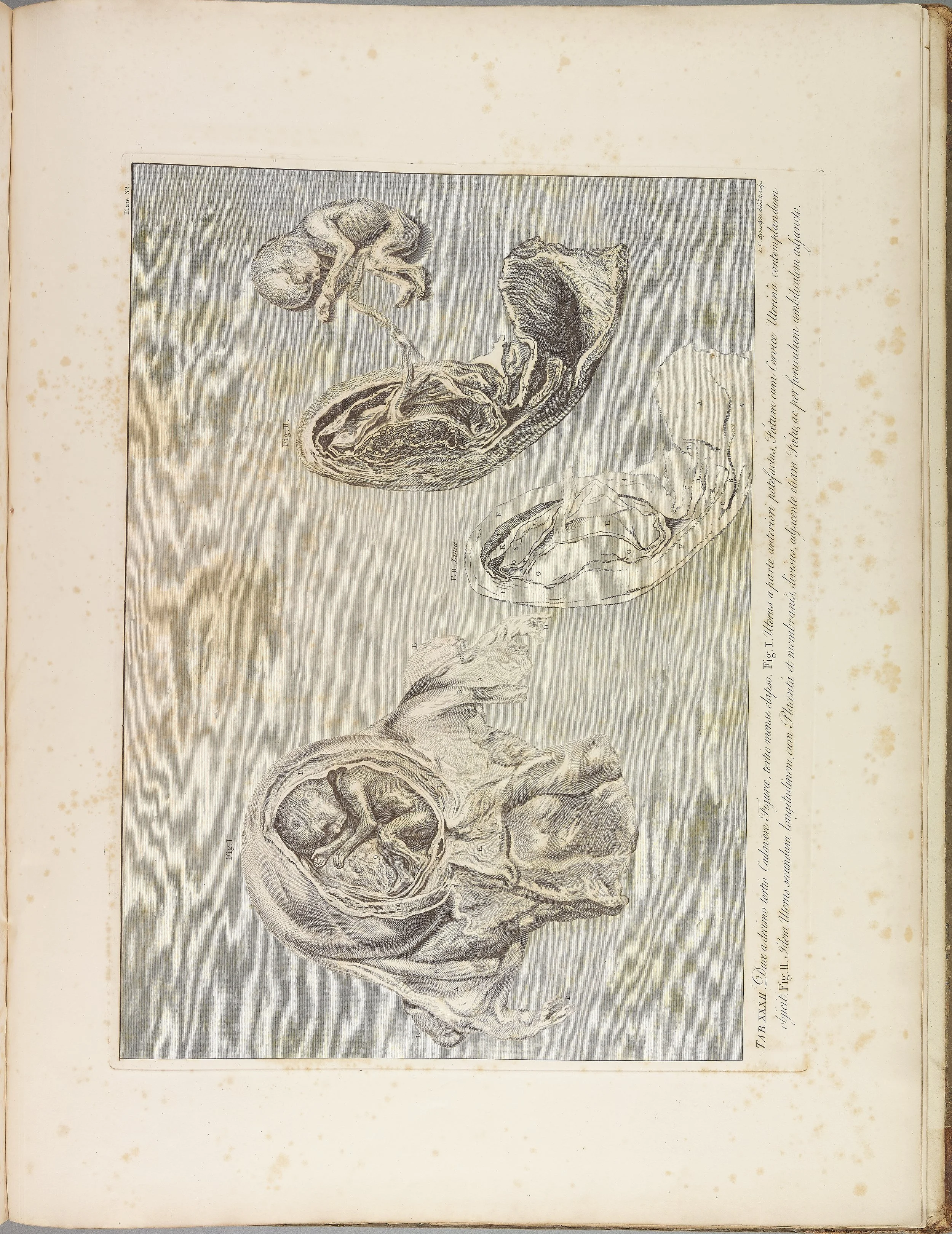
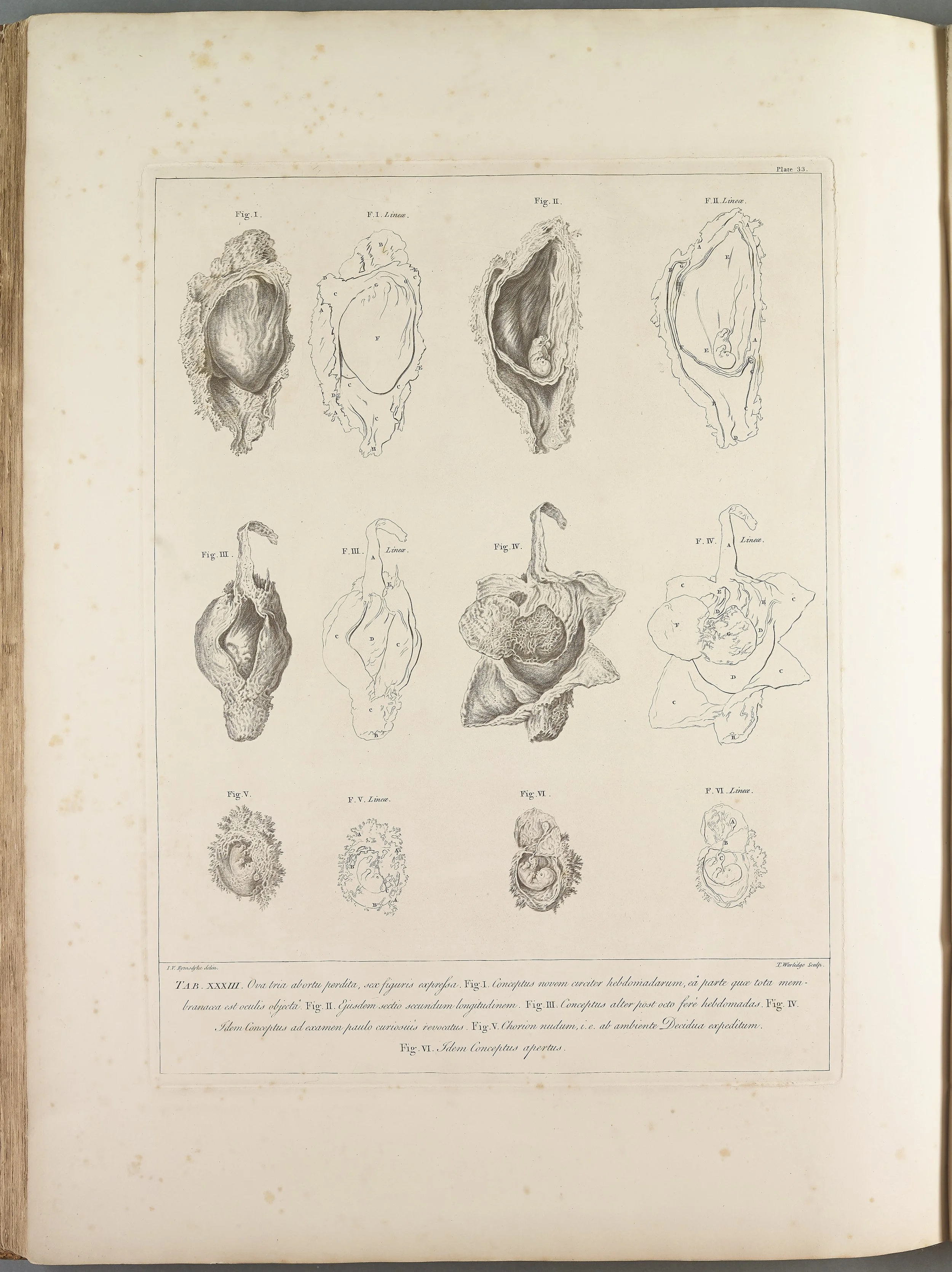
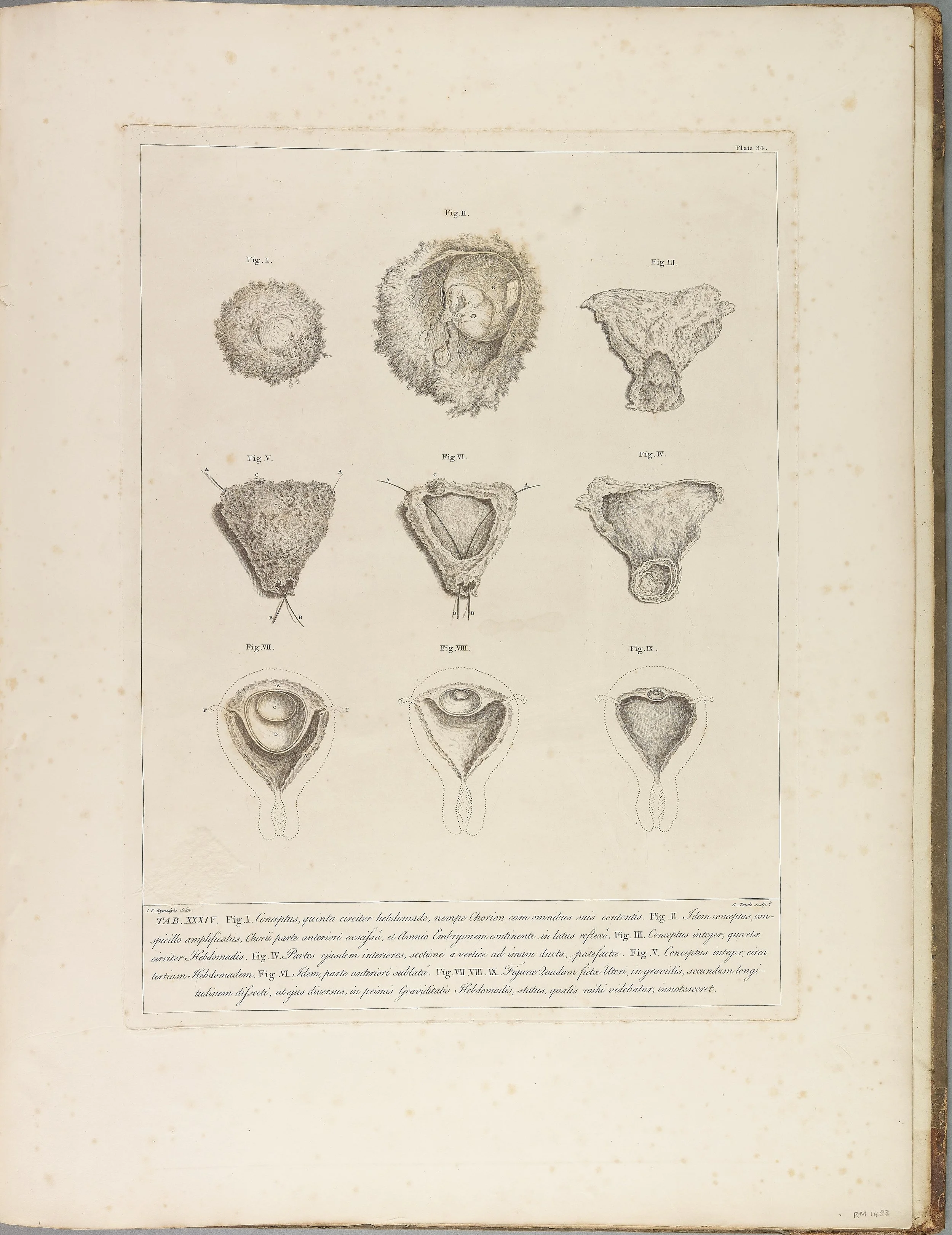
William Hunter’s The Anatomy of the Human Gravid Uterus was published in 1774. The title page describes Hunter as ‘Physician Extraordinary to The Queen, Professor of Anatomy in the Royal Academy, and Fellow of the Royal and Antiquarian Societies’.
‘The art of engraving supplies us, upon many occasions, with what has been the great desideratum of the lovers of science, an universal language. Nay, it conveys clearer ideas of most natural object, than words can express; makes stronger impressions upon the mind; and to every person conversant with the subject, gives an immediate comprehension of what it represents’.
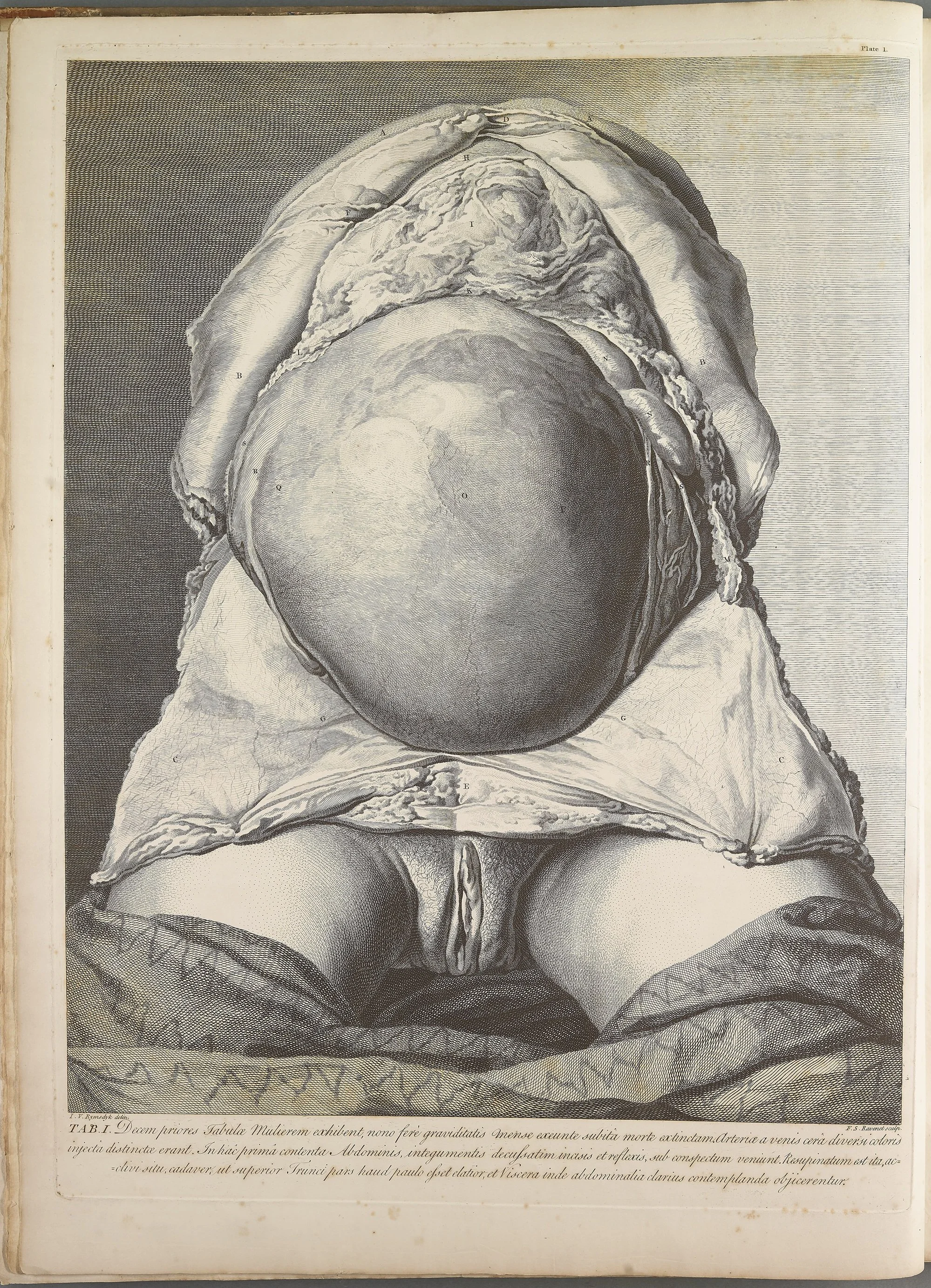
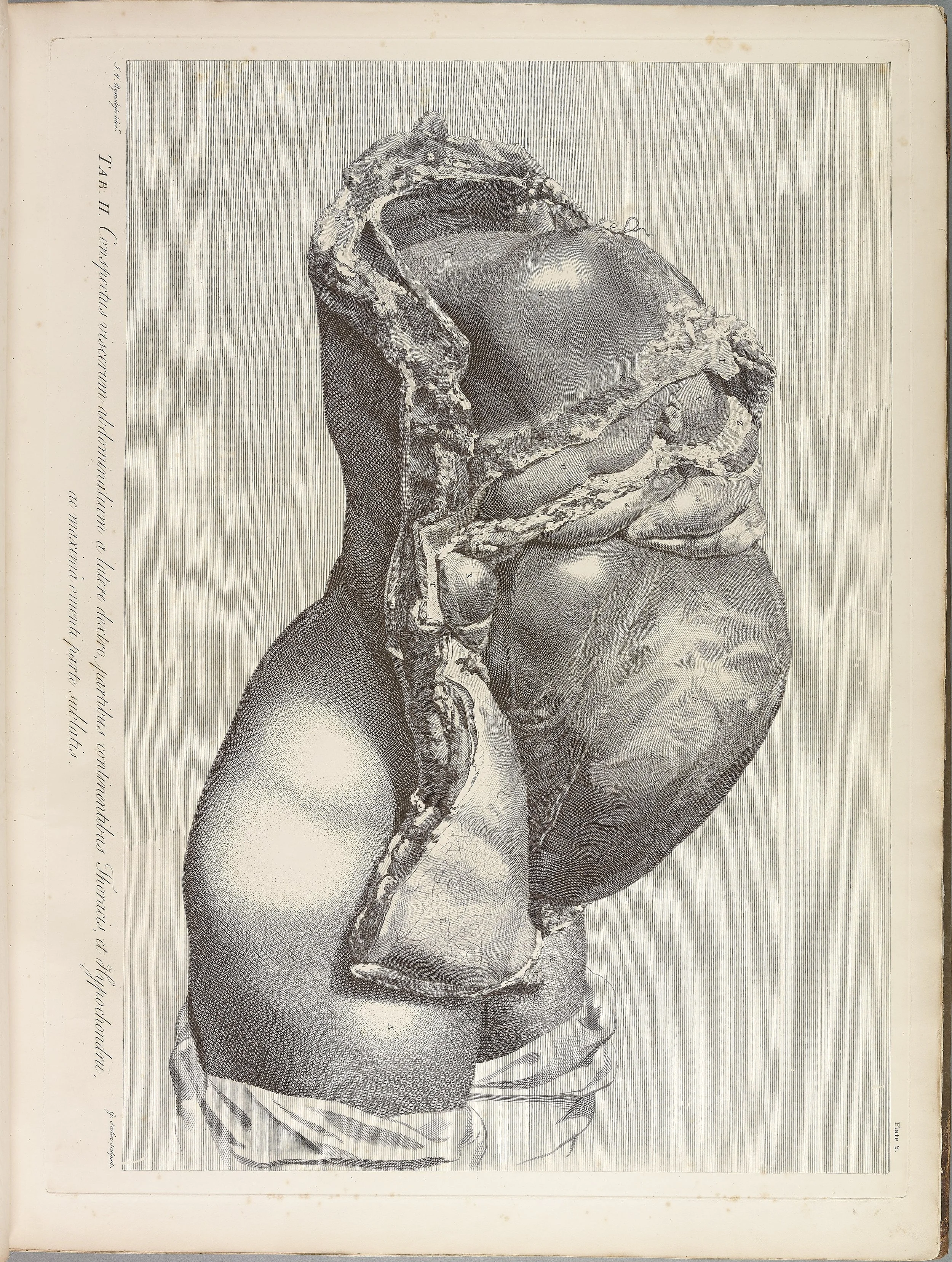
In the book’s preface, Hunter acknowledges that the study of pregnancy had not been successfully researched, due to a lack of available subjects. He was able in 1751 to examine the body of a pregnant woman, which was the subject of The Anatomy of the Human Gravid Uterus. He aimed to write a more complete and in-depth work, but was unable to achieve this in his lifetime.
JAN VAN RYMSDYK
Jan van Rymsdyk was born in c. 1730 in the Netherlands. He worked as an anatomical illustrator in London in the 1750s, providing drawings for The Anatomy of the Gravid Uterus. Rymsdyk also provided illustrations for John Hunter for The Natural History of the Human Teeth.
Little is known about Rymdsyk’s early life, but during his artistic career, he felt that his talents were not adequately recognised. He moved to Bristol, advertising himself as a portrait painter and a teacher of drawing, but was not able to achieve the success he wanted. In 1764, he returned to London, where he lived on Drury Lane, and worked again with William Hunter as an anatomical artist. Rymsdyk died in London on 20 February 1790.