George henry ford
George Henry Ford was born on 20 May 1808 in London, to parents James Edward Ford and Frances Murray Stransham. George moved with his family to Cape Town, South Africa in 1820, including six siblings: Frances Jane (b. 1804), James Samuel (b. 1805), Edward Stransham (b. 1811), Adelaide Elizabeth (b. 1812), Jane Murray (b. 1814), and John Henry (1817). The family sailed on the Chapman, amongst a number of British settlers who colonised African land in the 1820s.[1]
As a child, George was injured by a cow, suffering with a broken hip that affected him for the rest of his life. His family was visited by Sir Andrew Smith, who interviewed farmers to find specimens of interest. Whilst George was convalescing, he was encouraged by Smith to create illustrations of the animals. His adept work impressed Smith, who recommended him to the South African Museum in 1825, and worked with him between 1834-1836 on an expedition that led to the publication of Illustrations of the Zoology of South Africa.
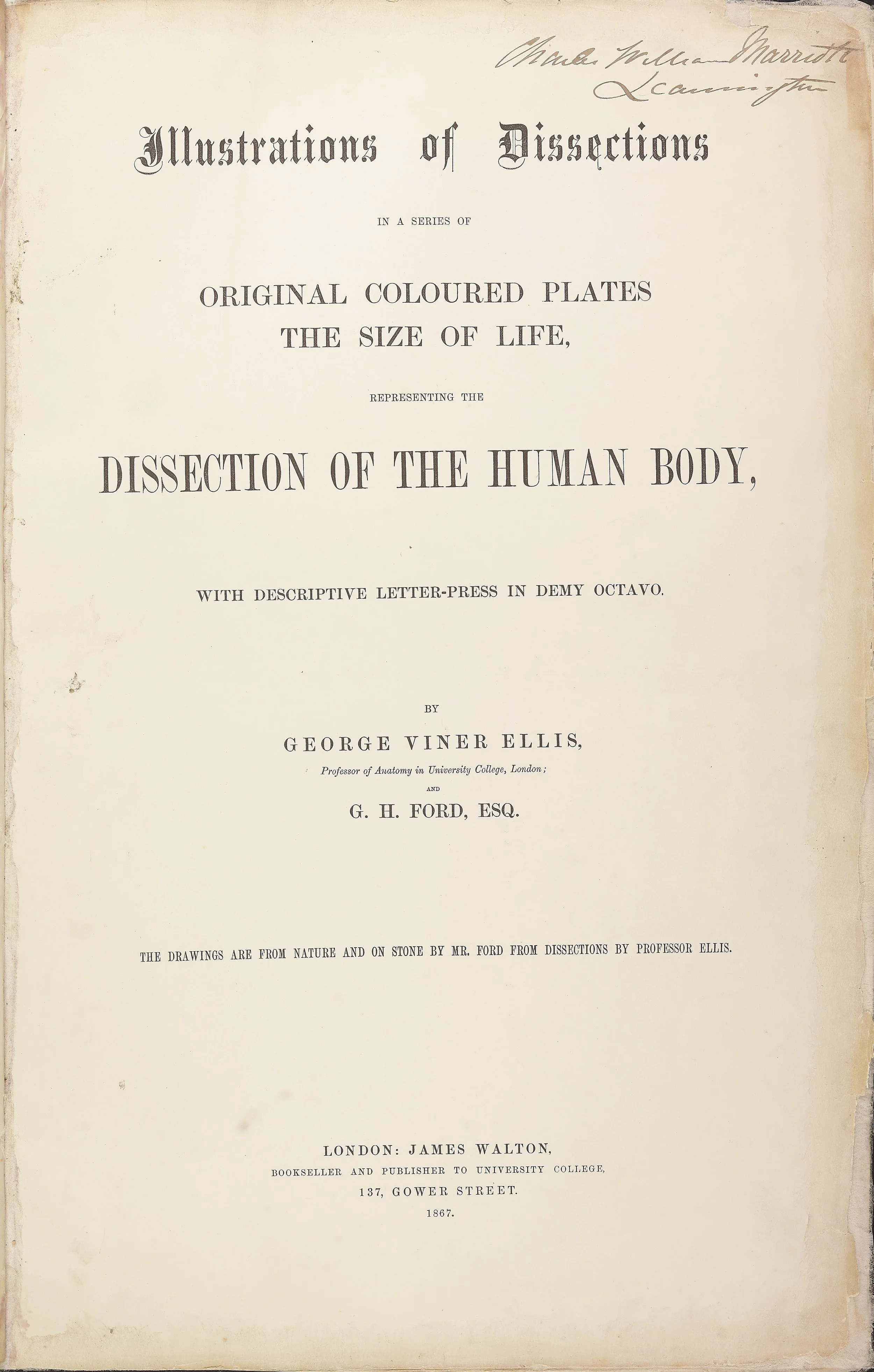
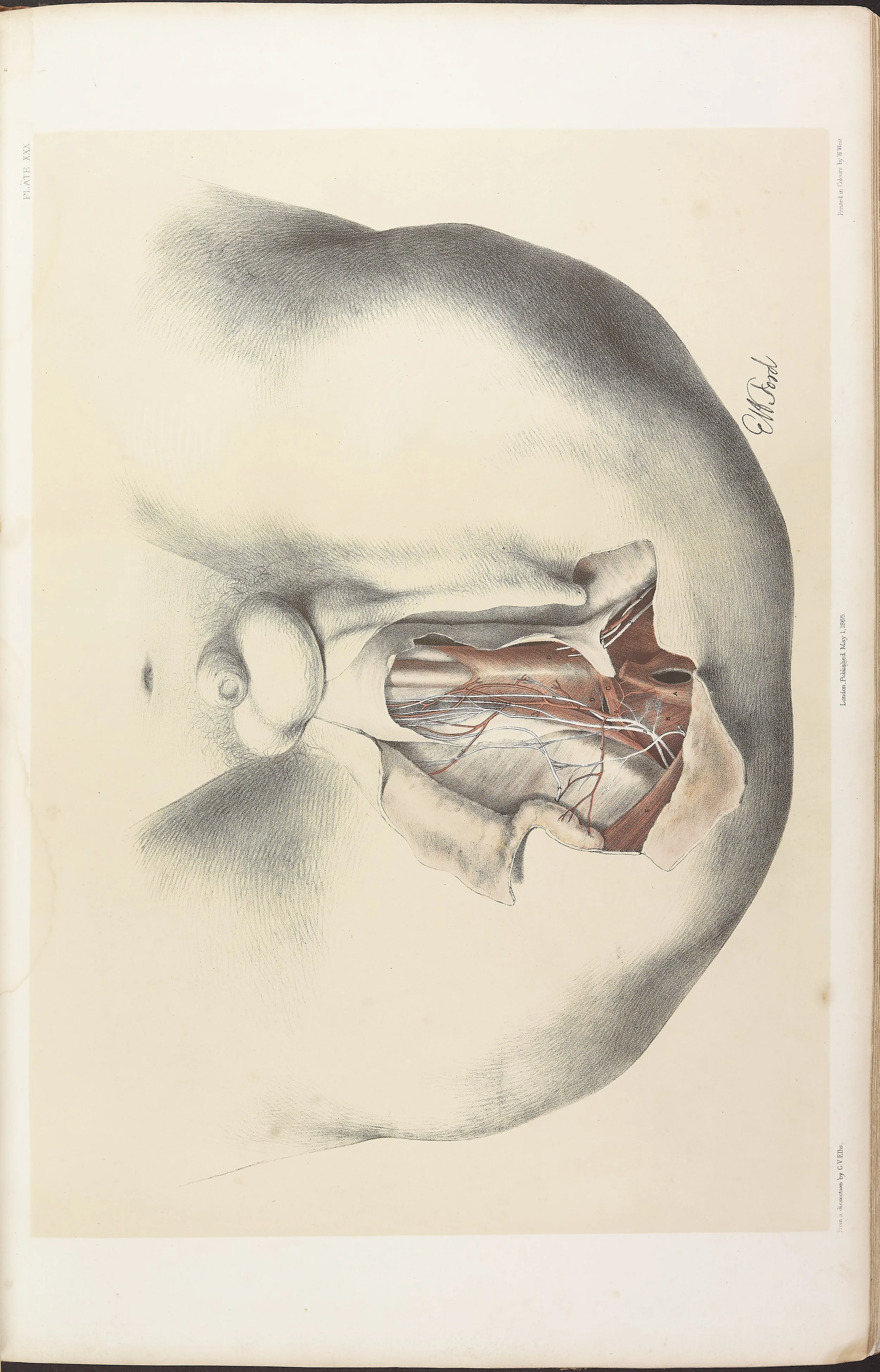
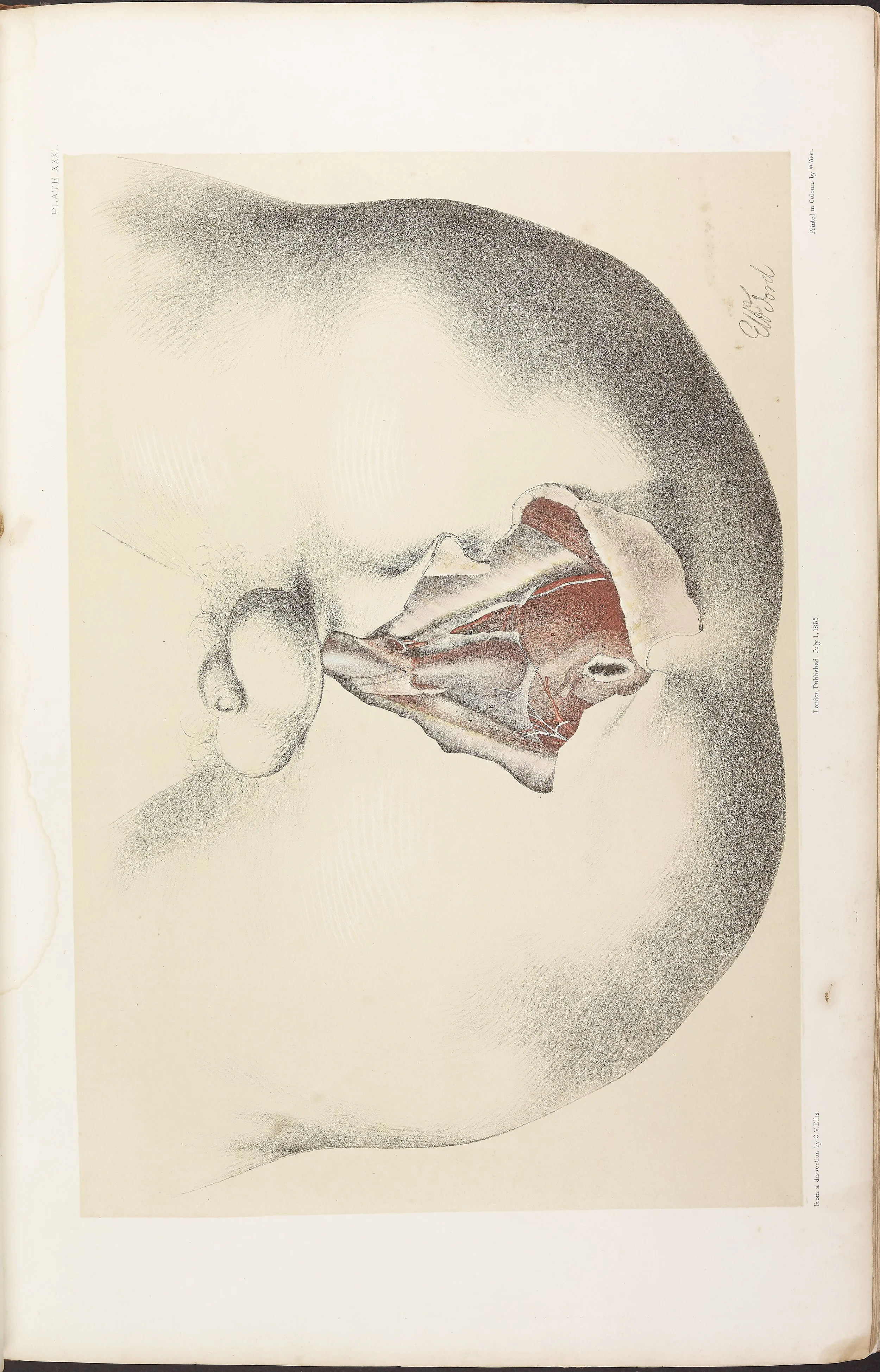
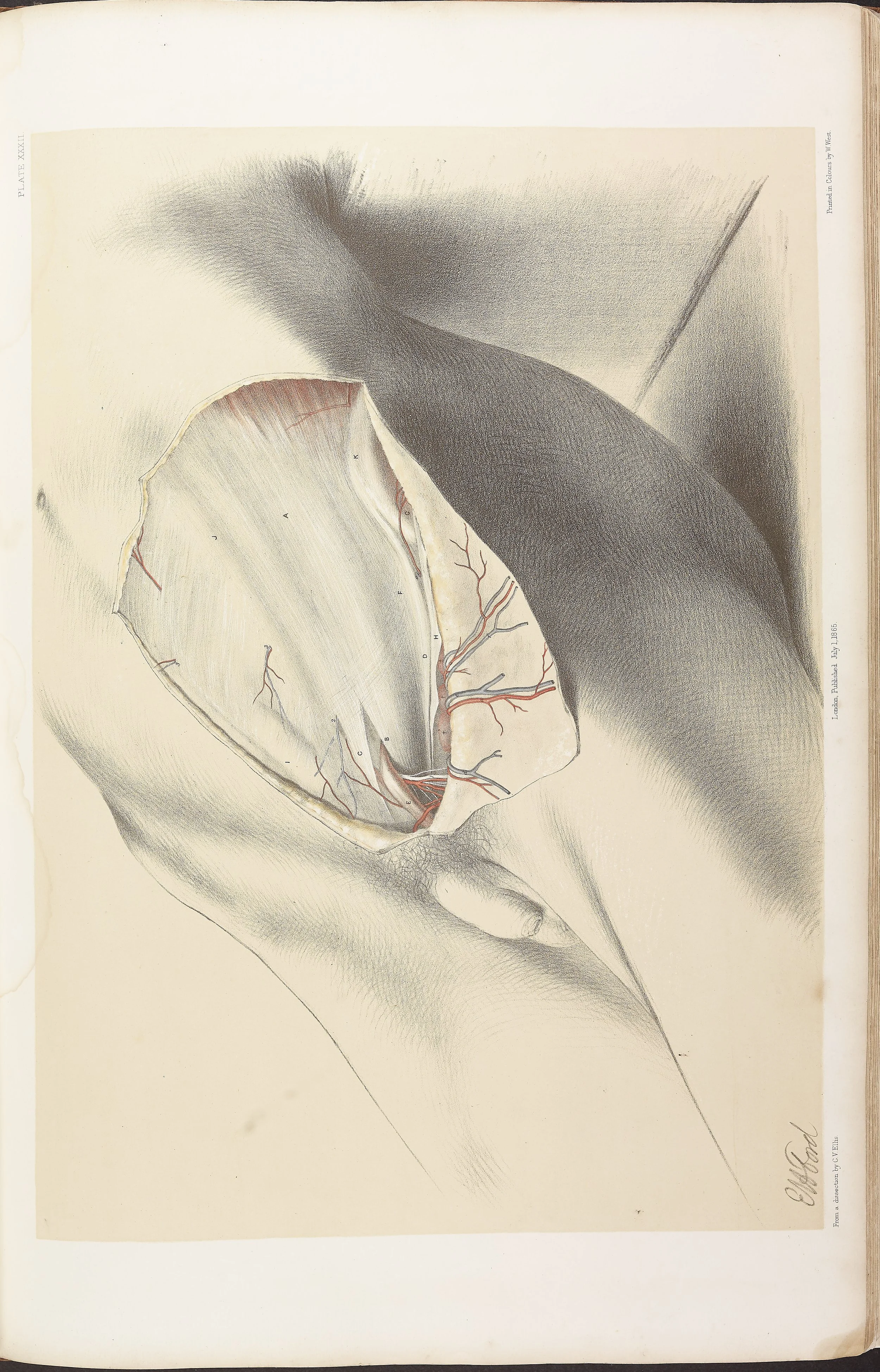
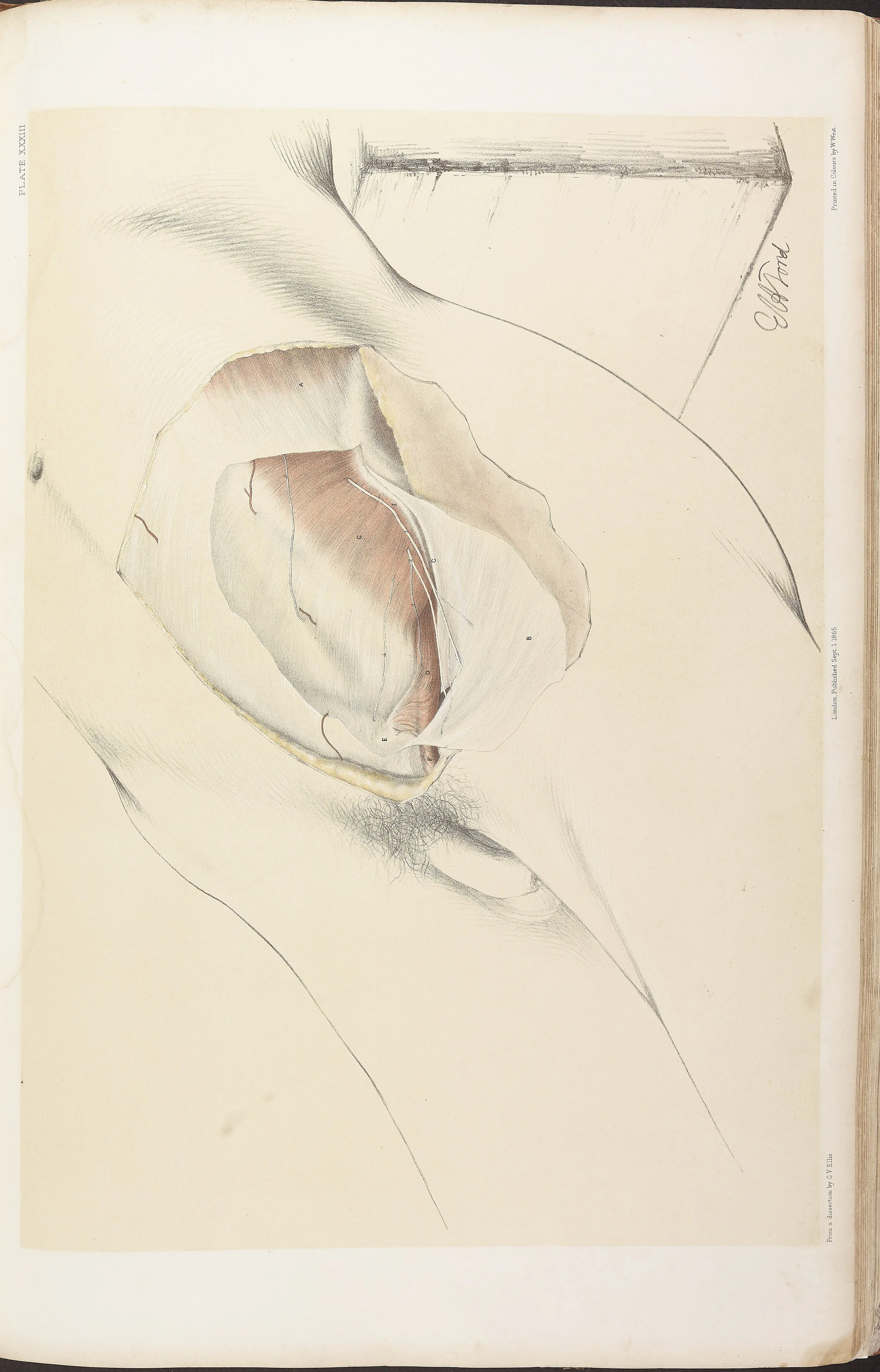
Upon his return to England in 1837, Smith was accompanied by Ford, who later took up an appointment at the British Museum, under the hand of John Edward Gray, and later Albert Günther. At some point, Ford came to the attention of George Viner Ellis, and the two collaborated on Illustrations of Dissections in 1867. George Henry Ford died on 23 July 1876 at 29 Hart Street in Middlesex, his effects amounting to around £2,000.
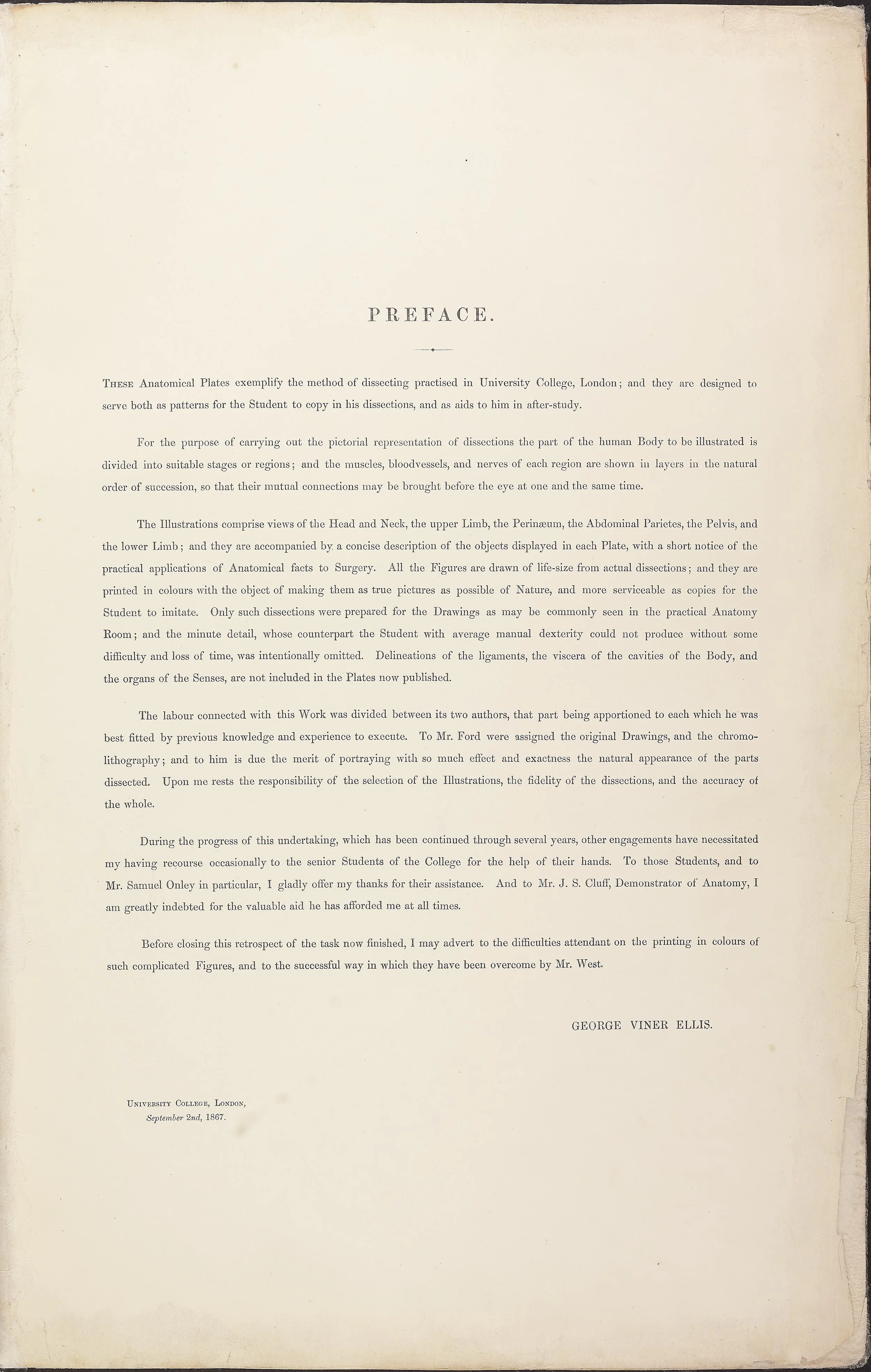
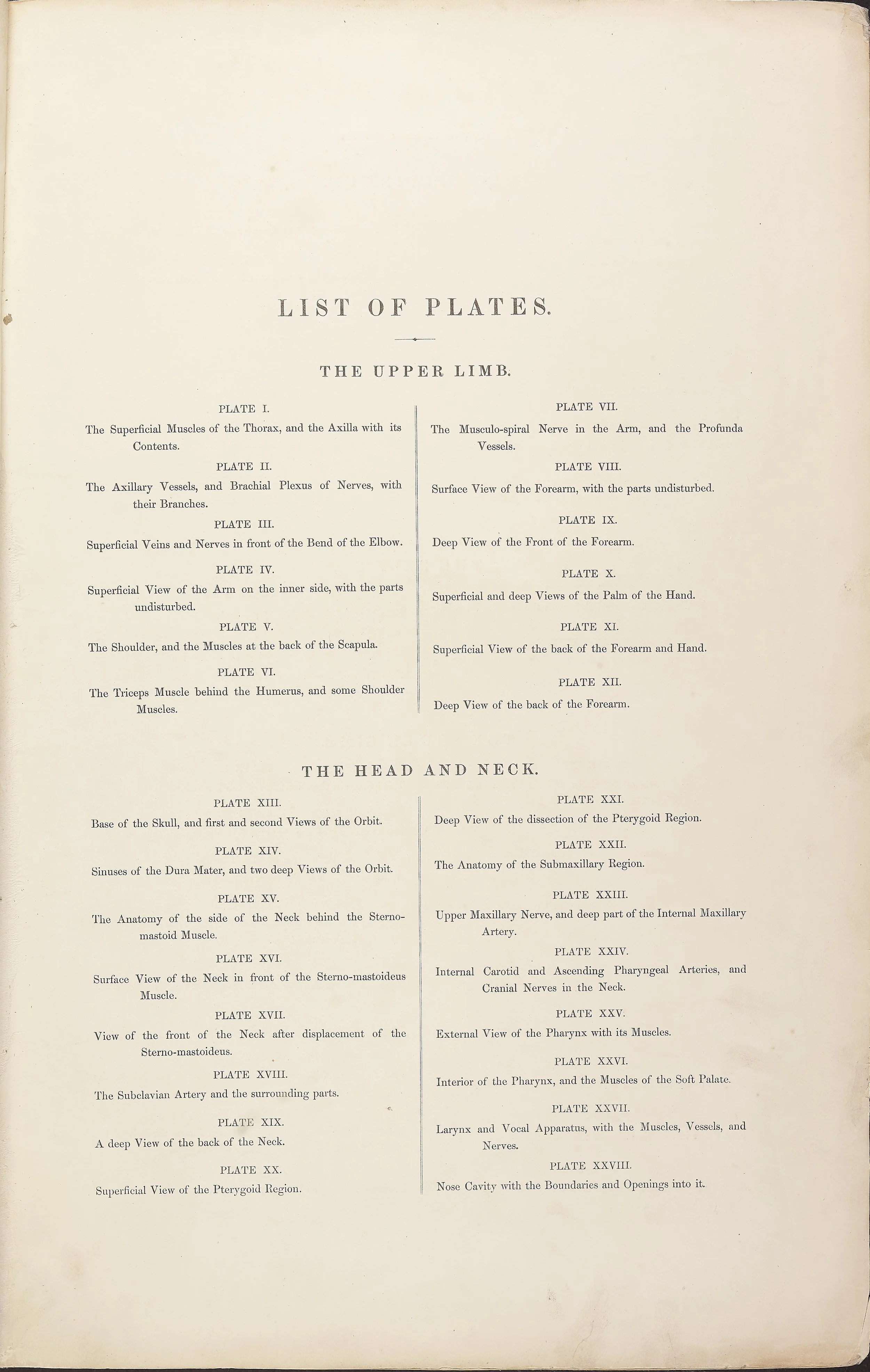
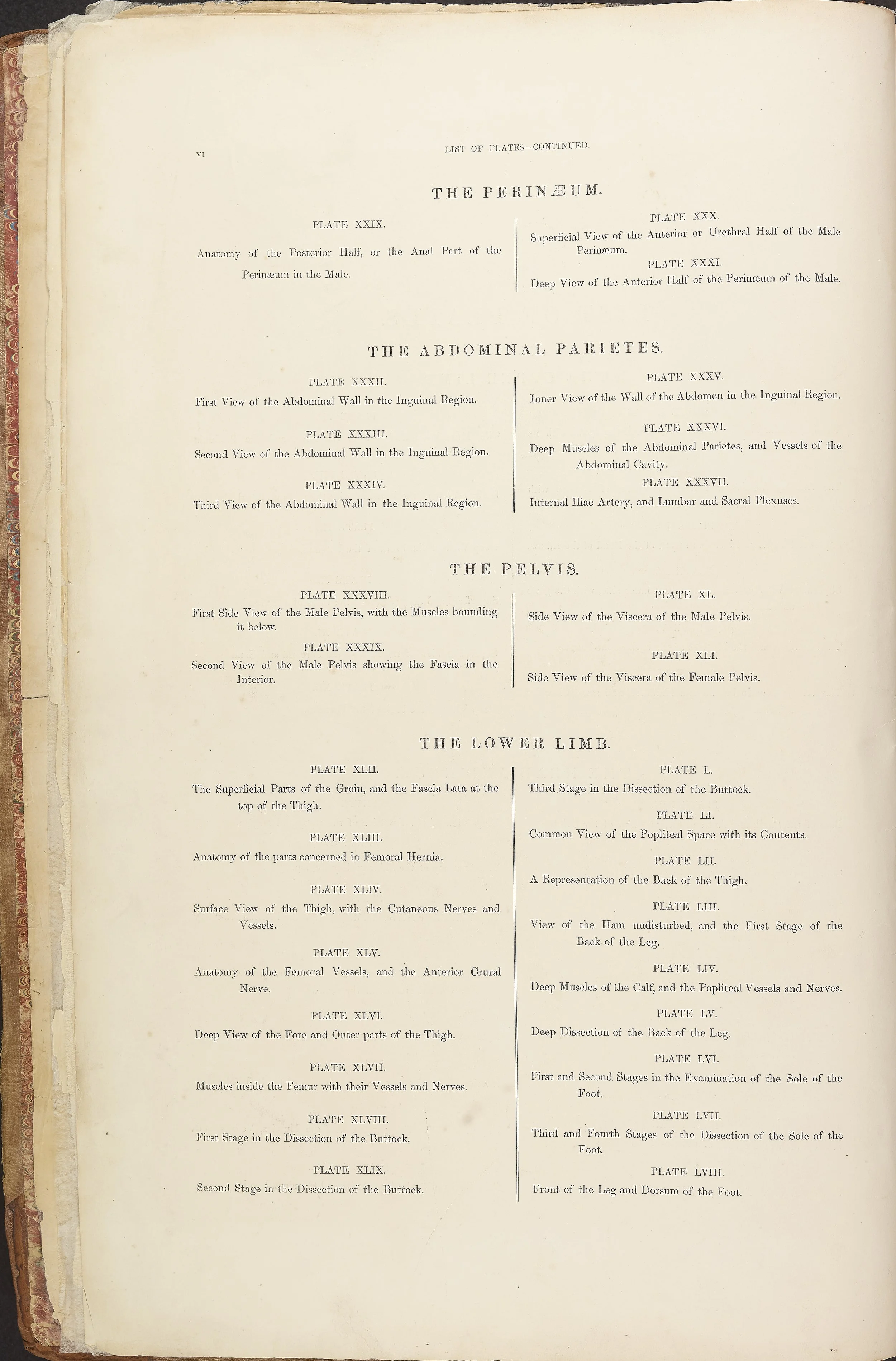
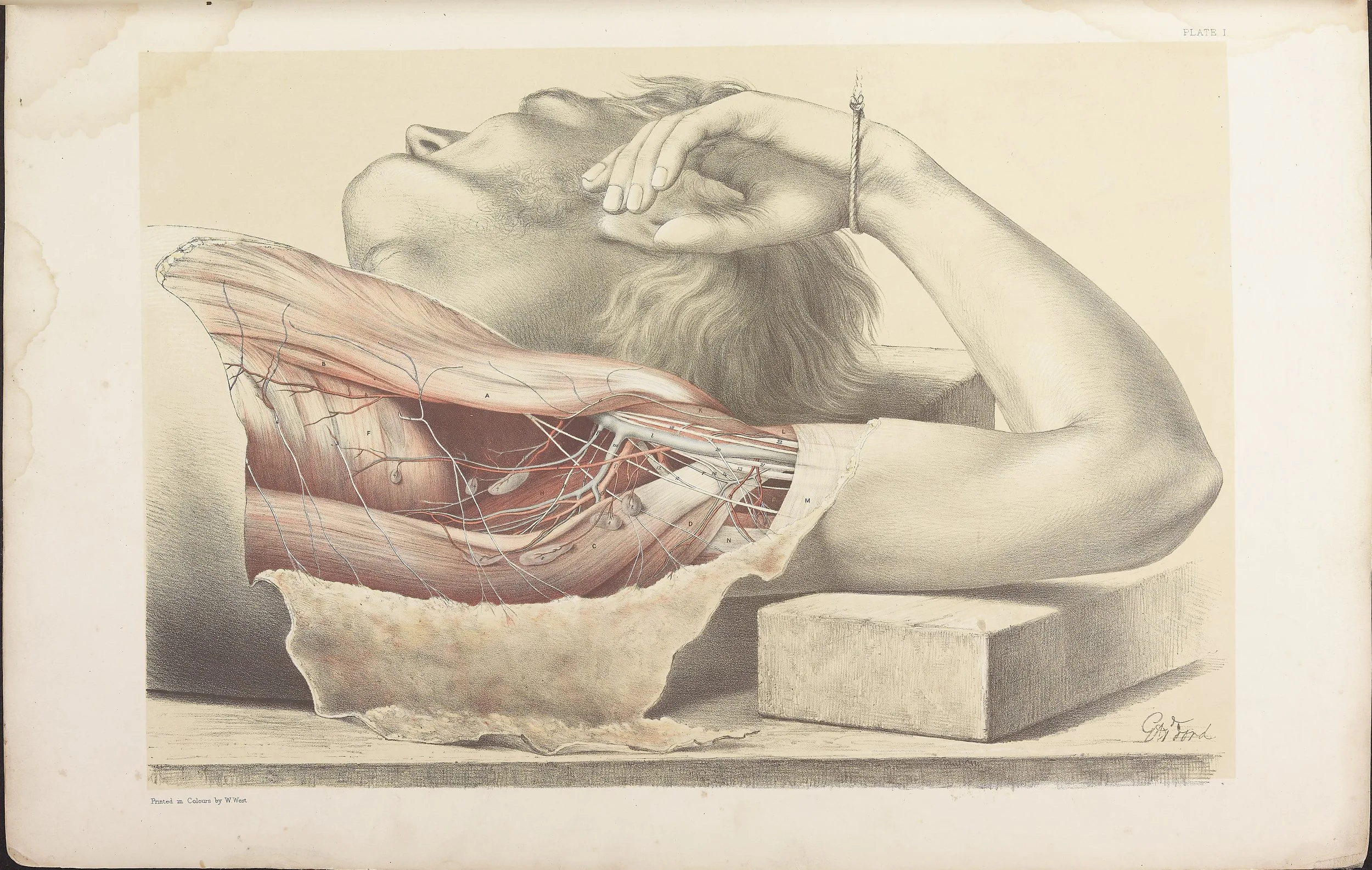
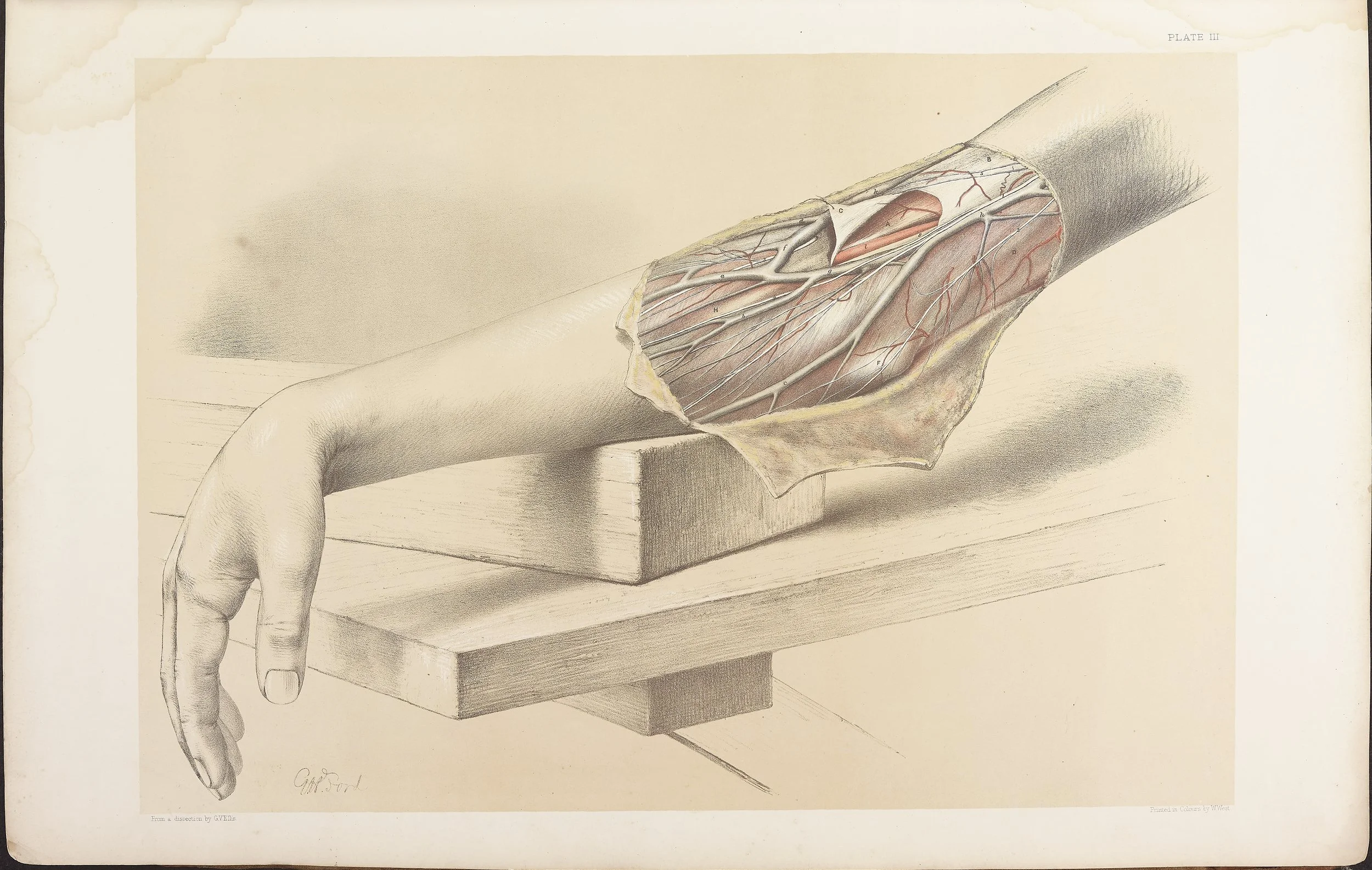
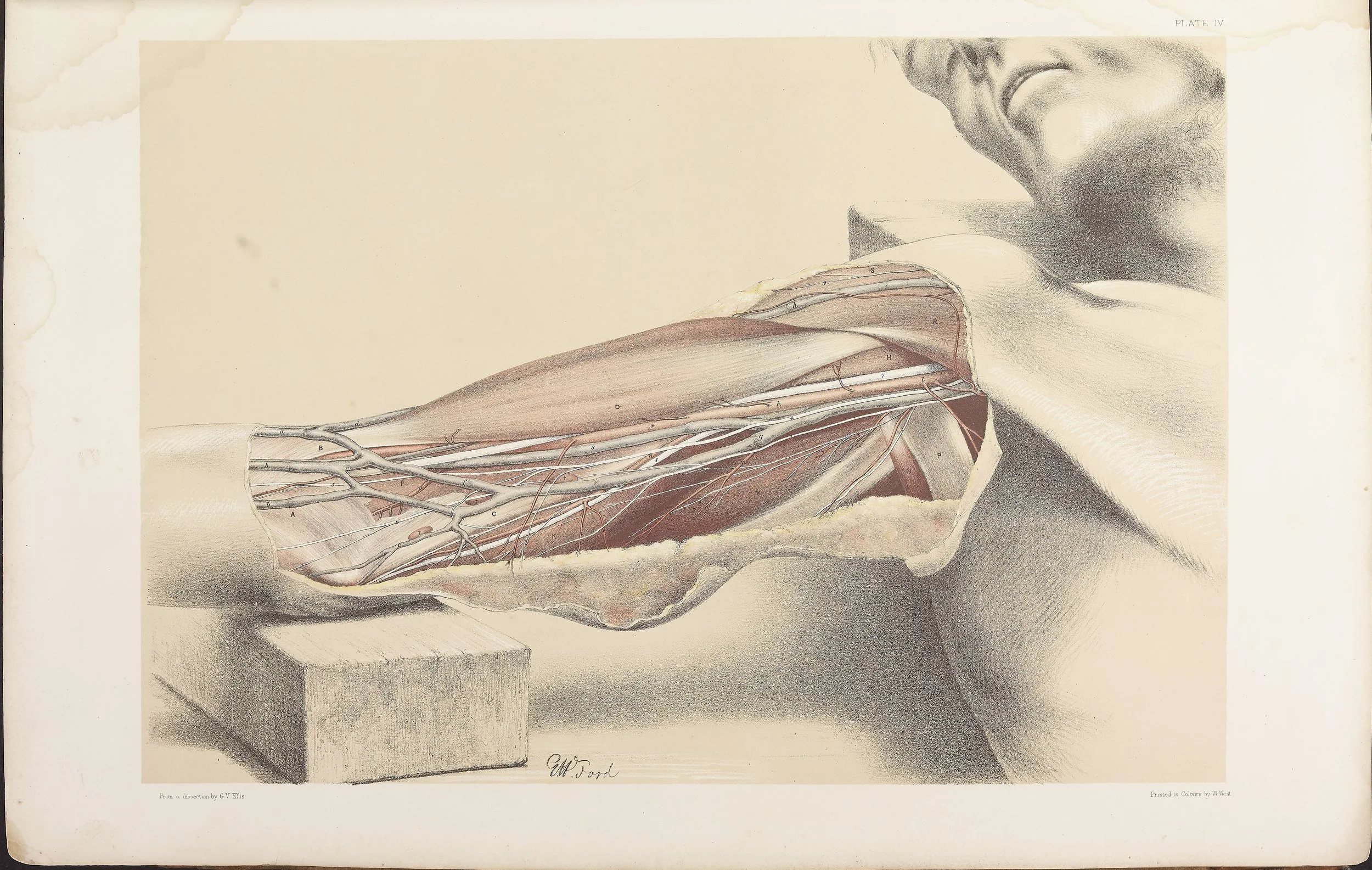
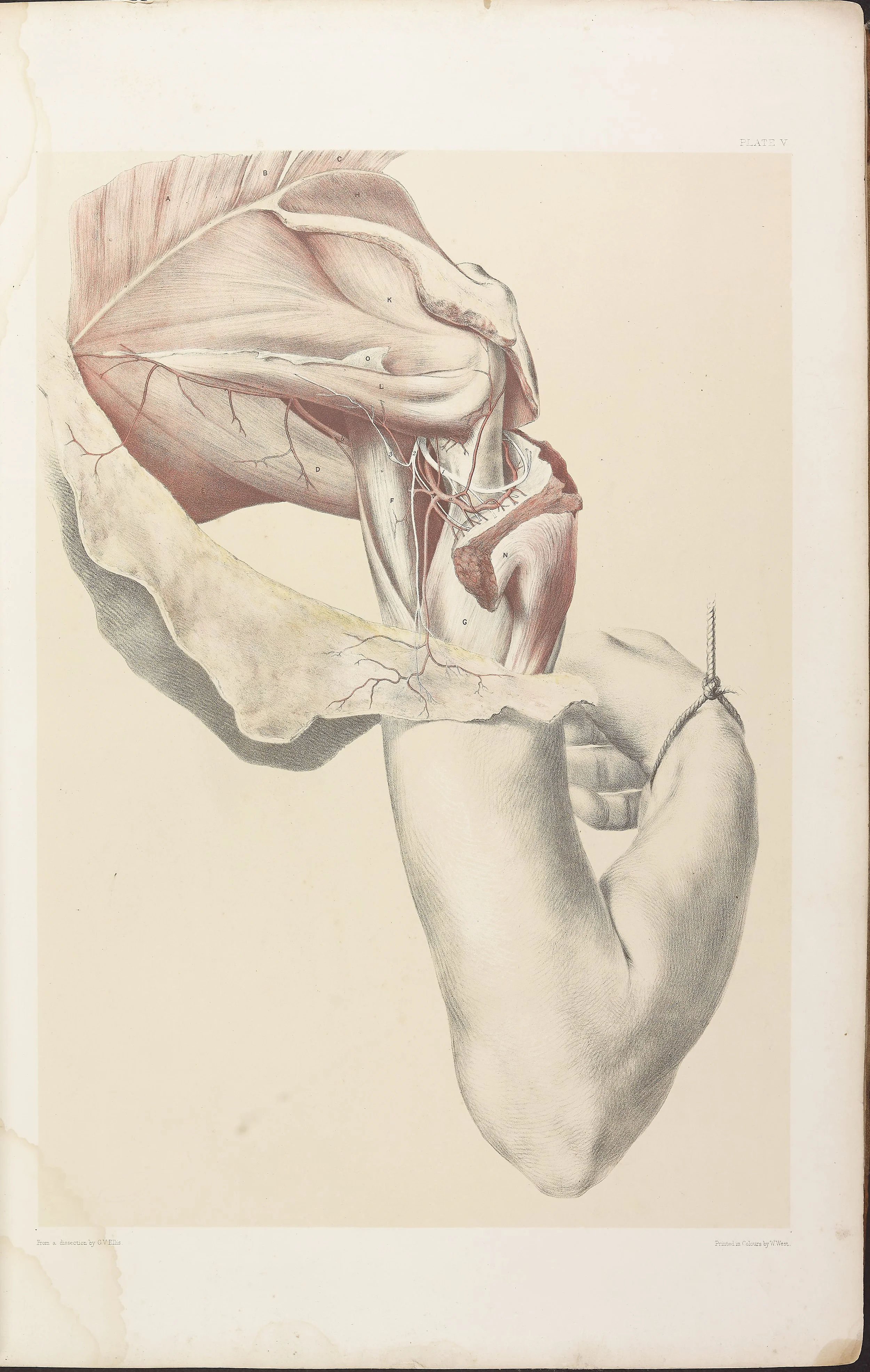
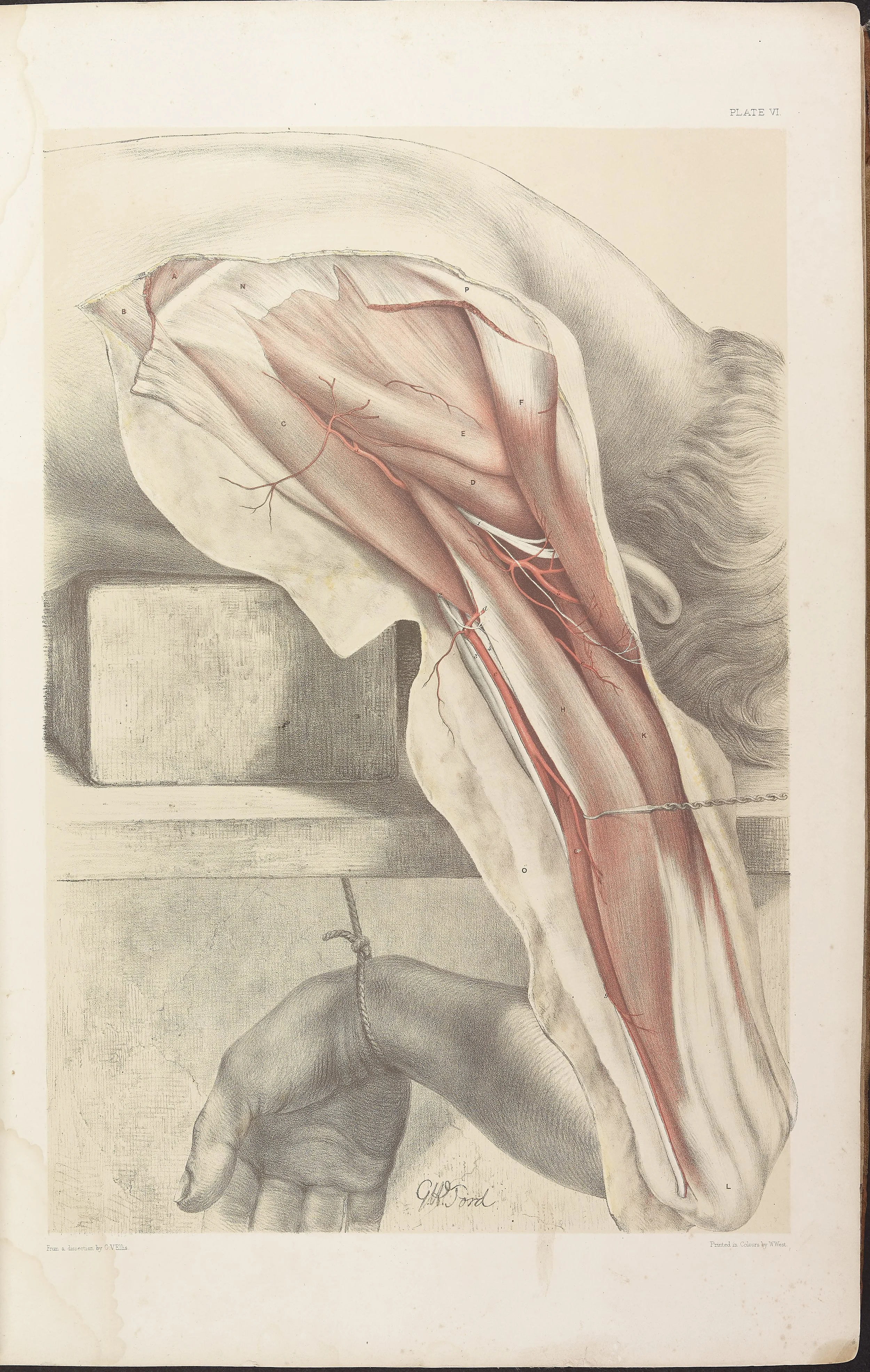
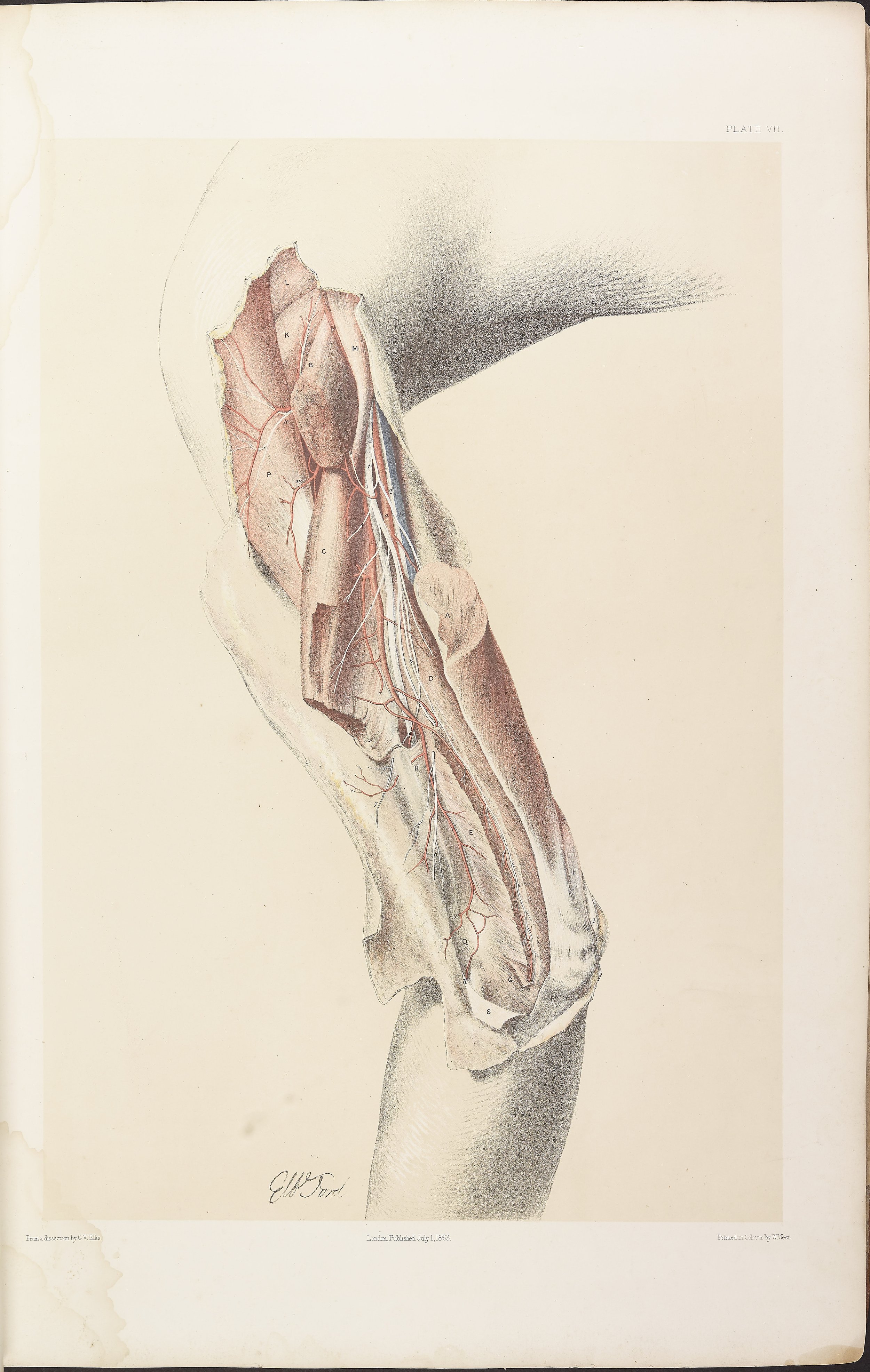
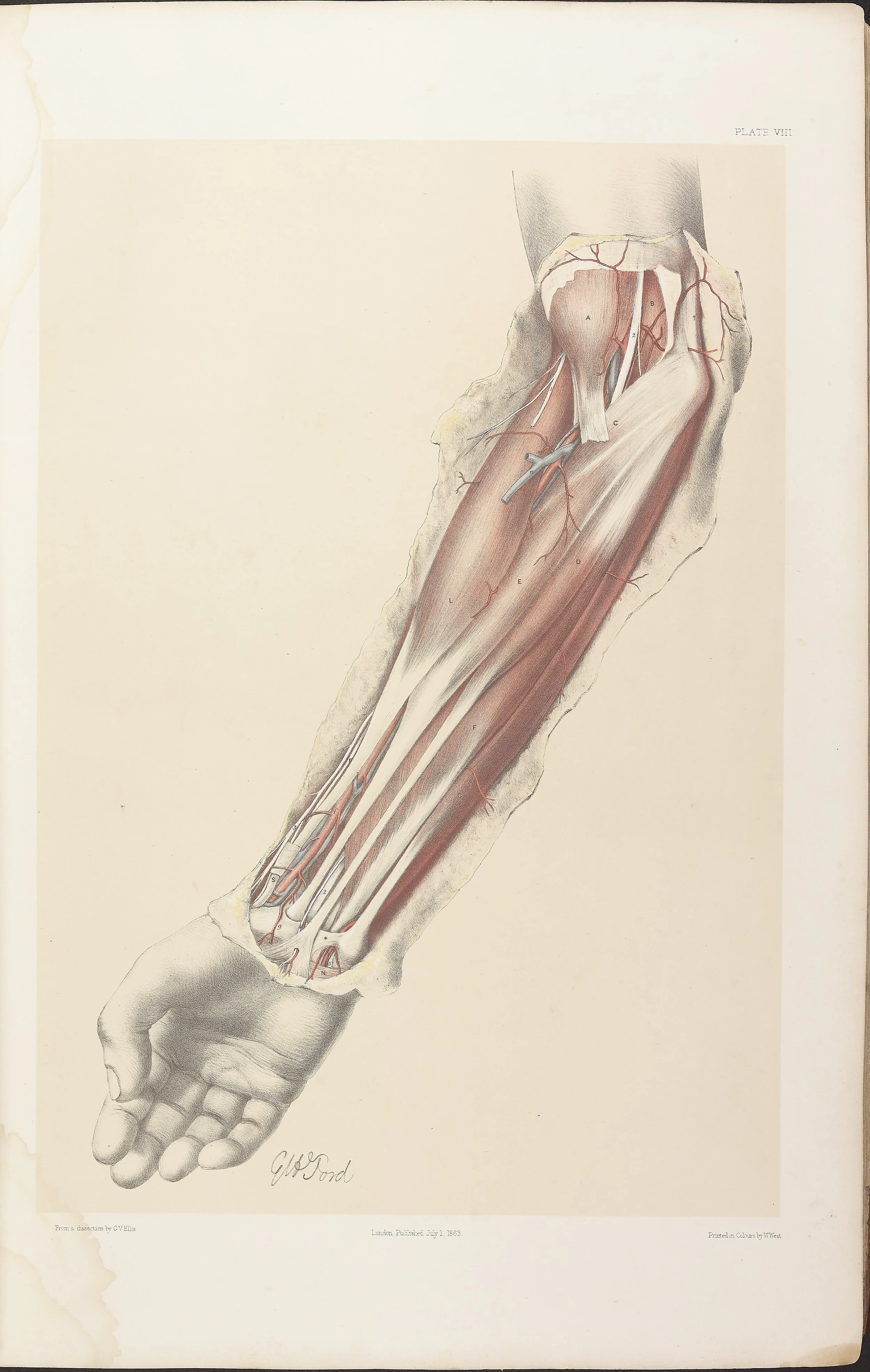
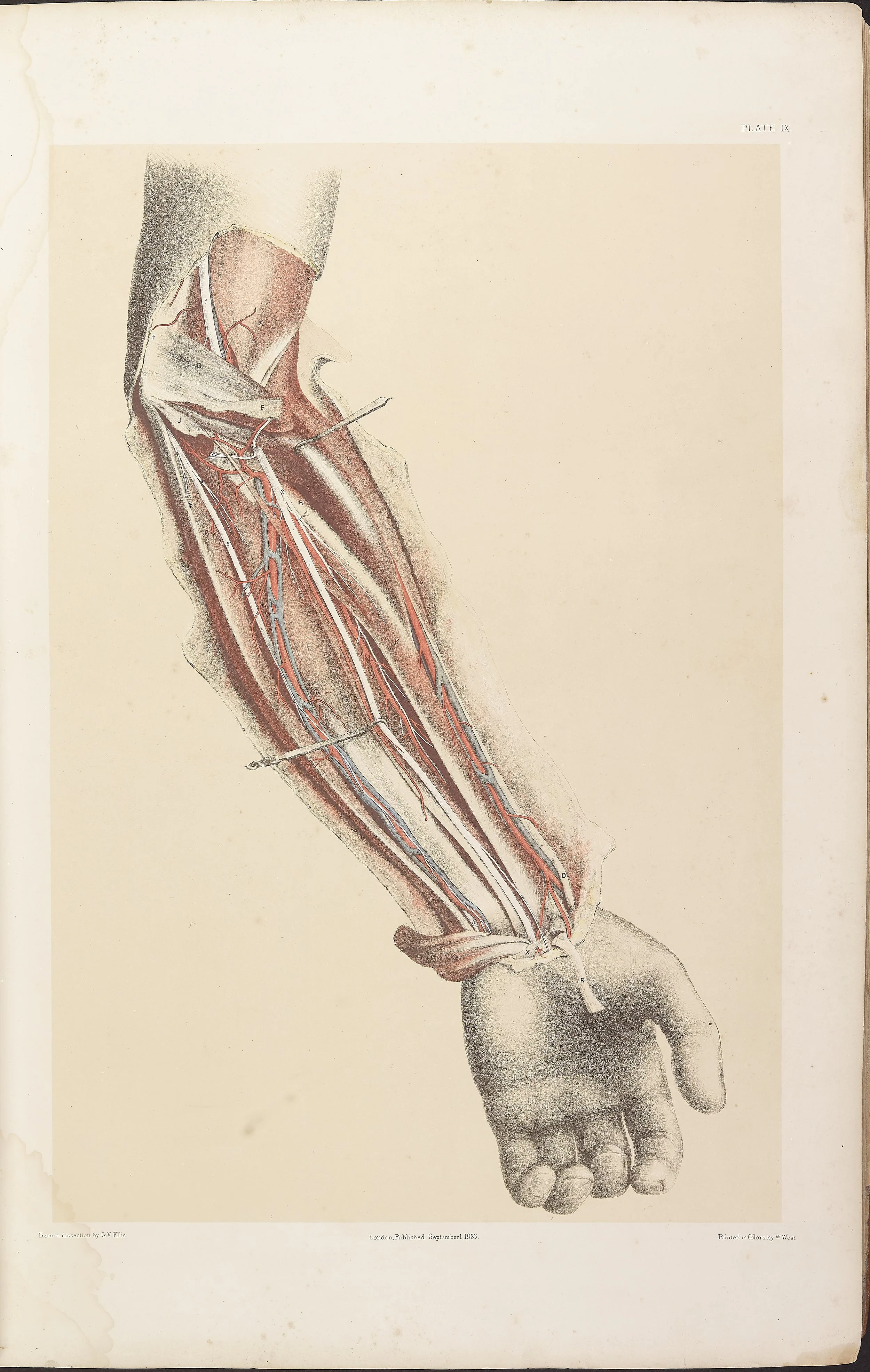
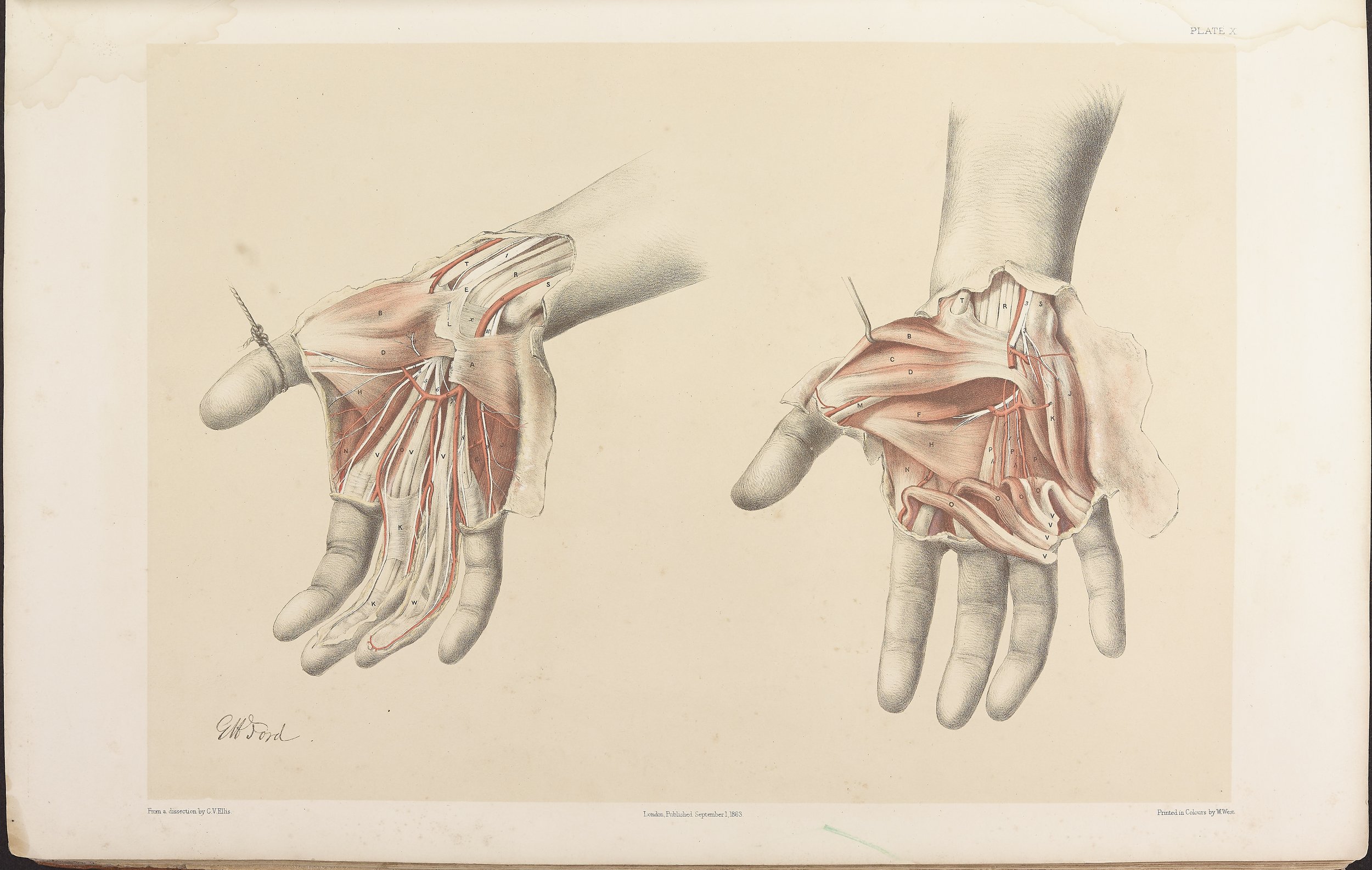
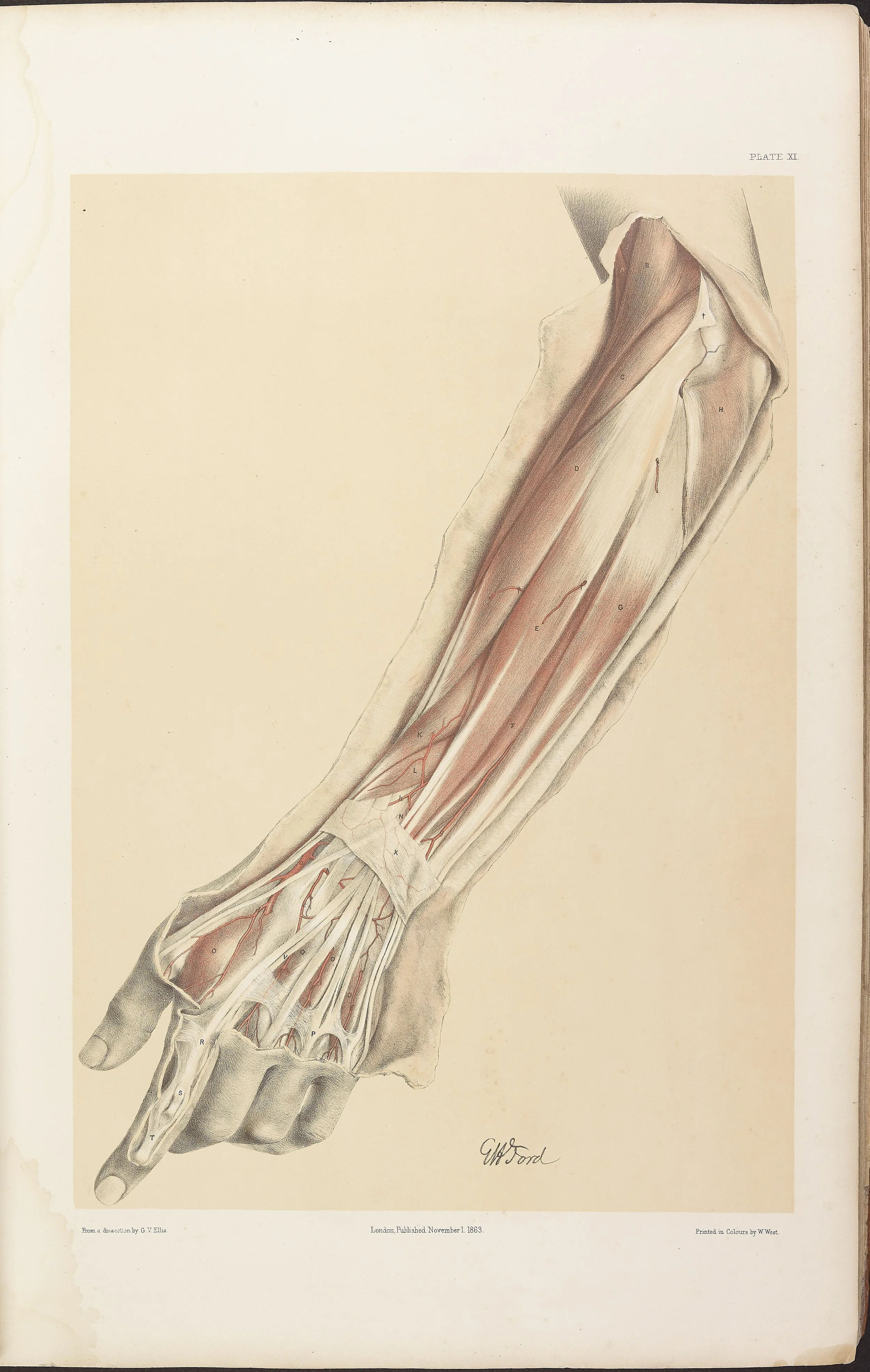
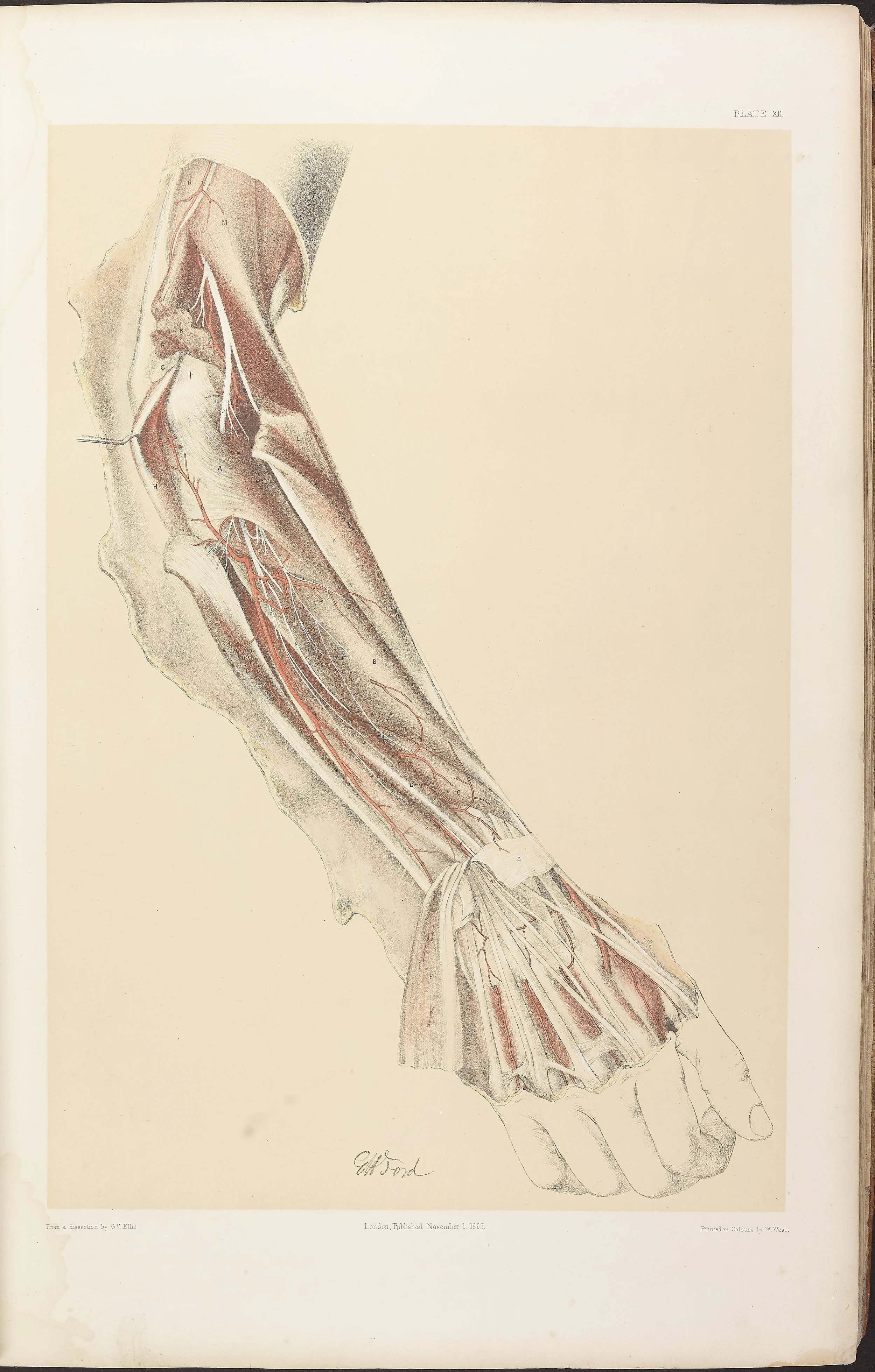
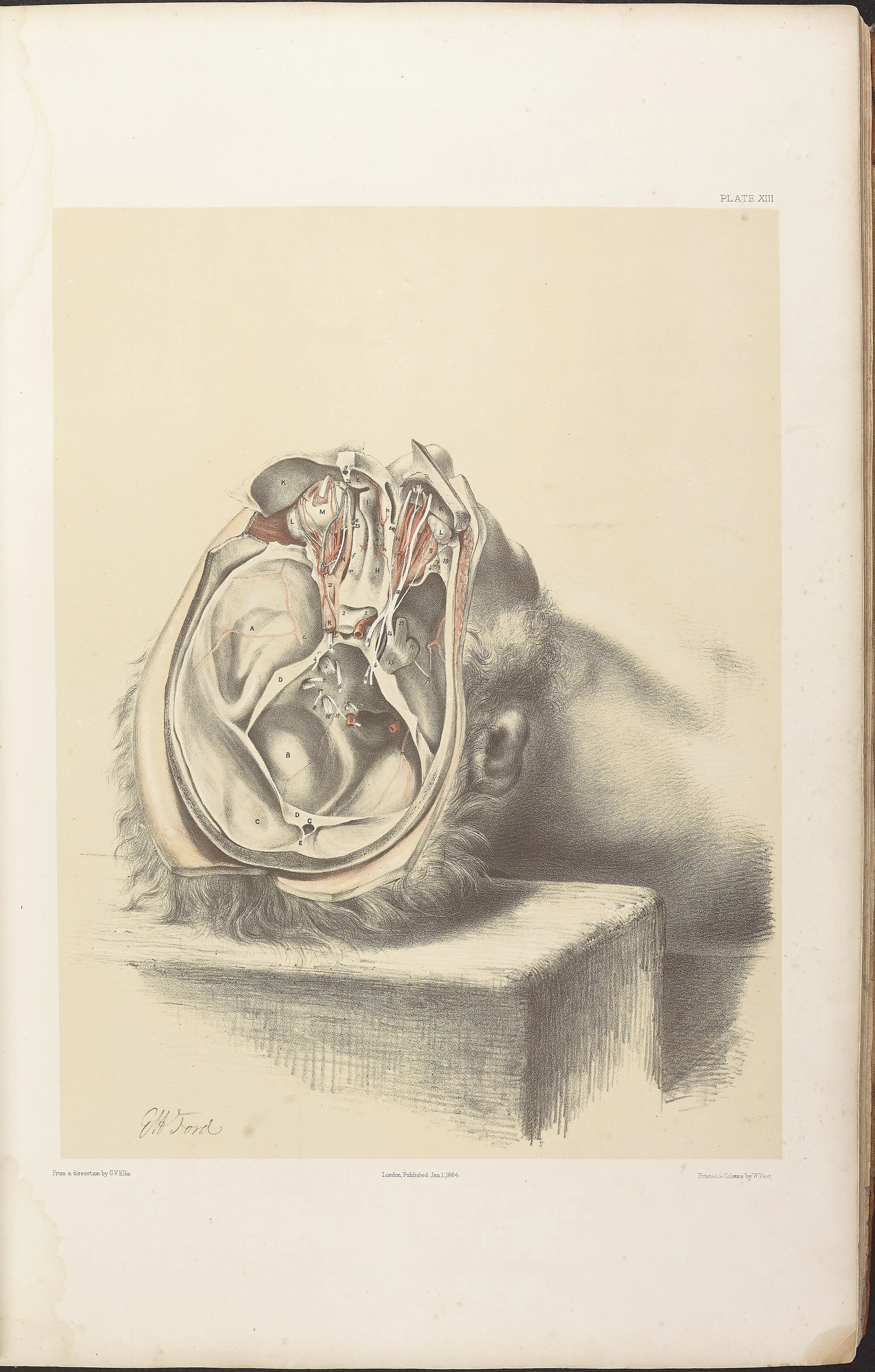
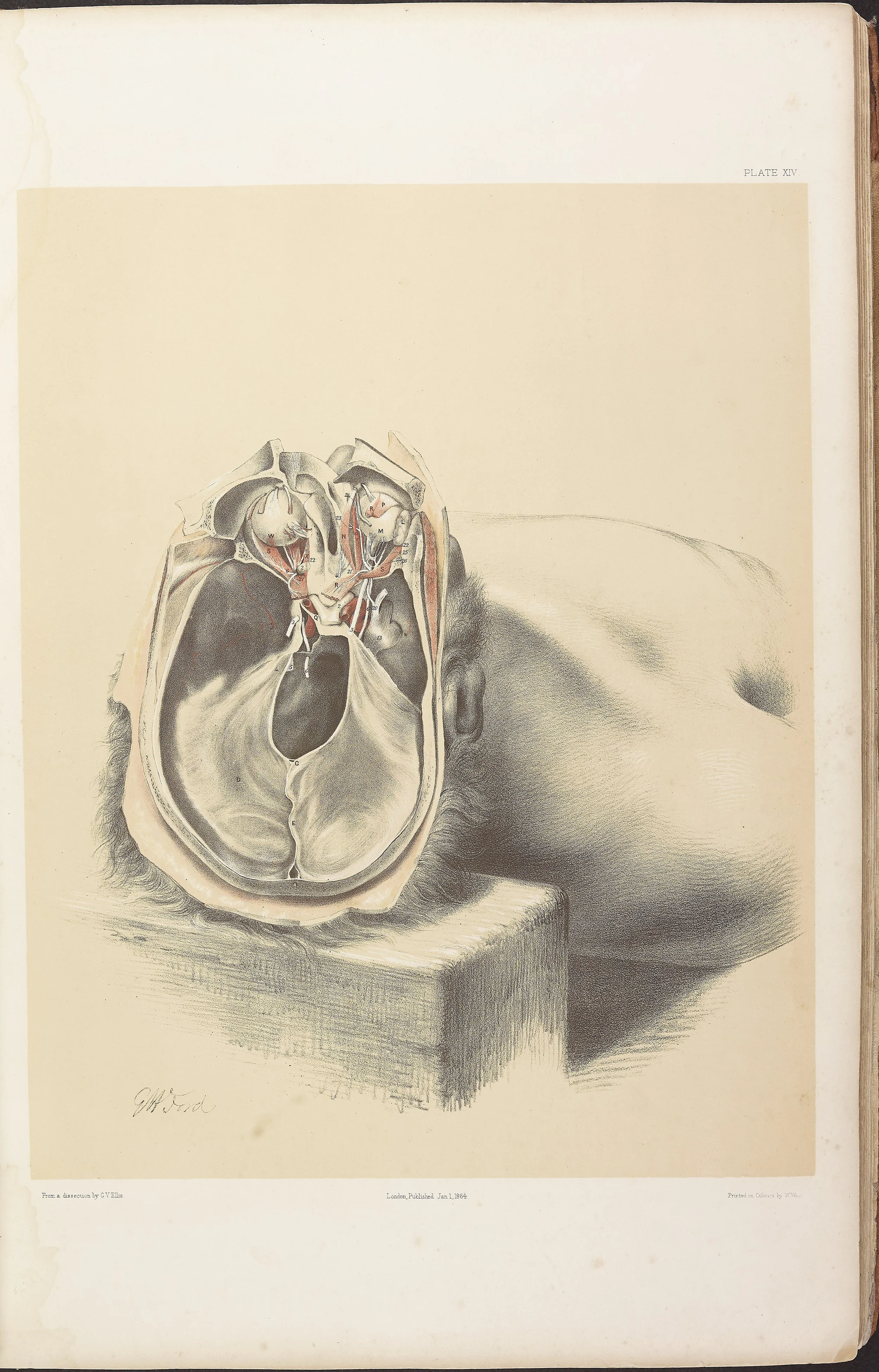
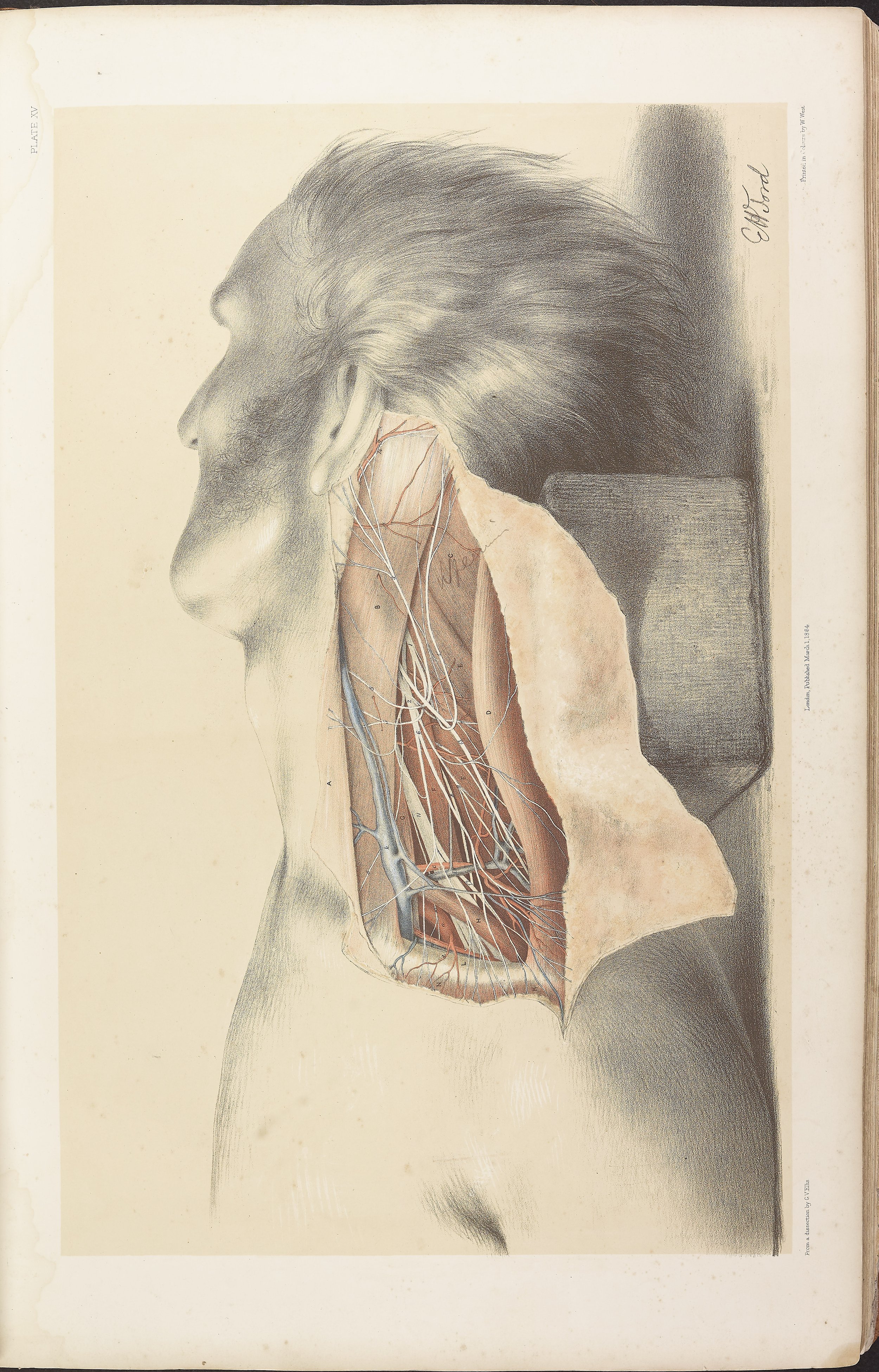
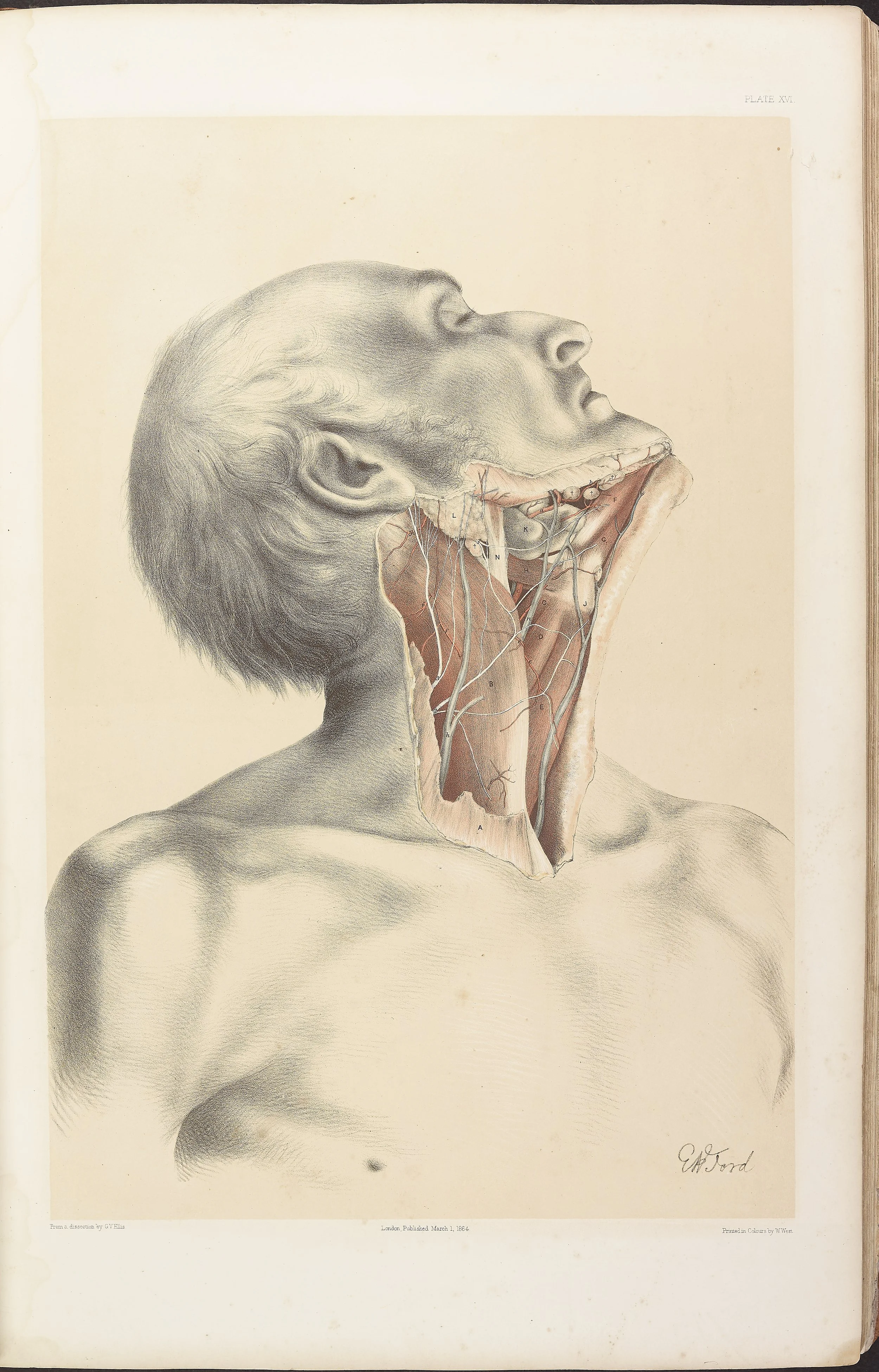
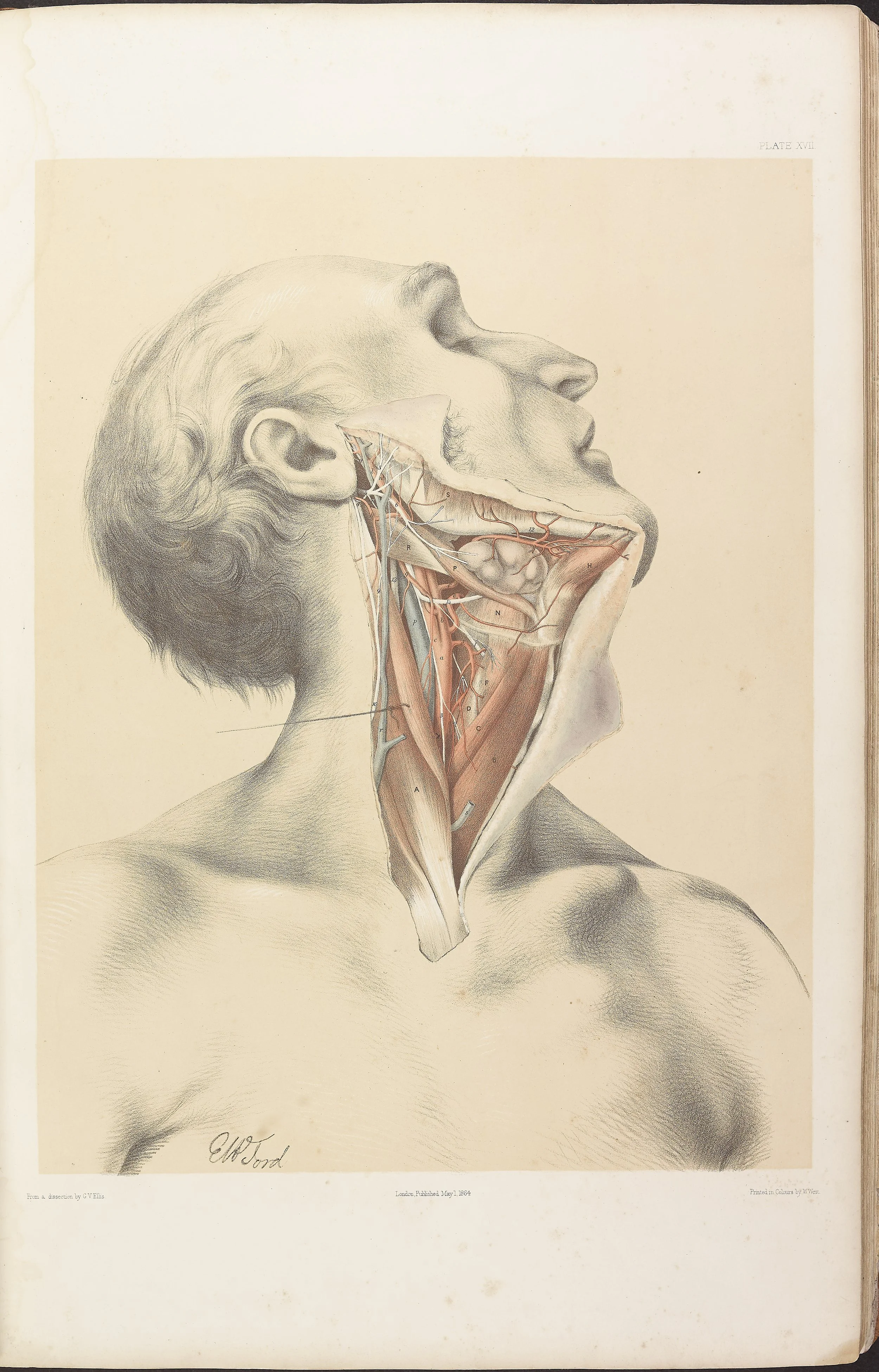
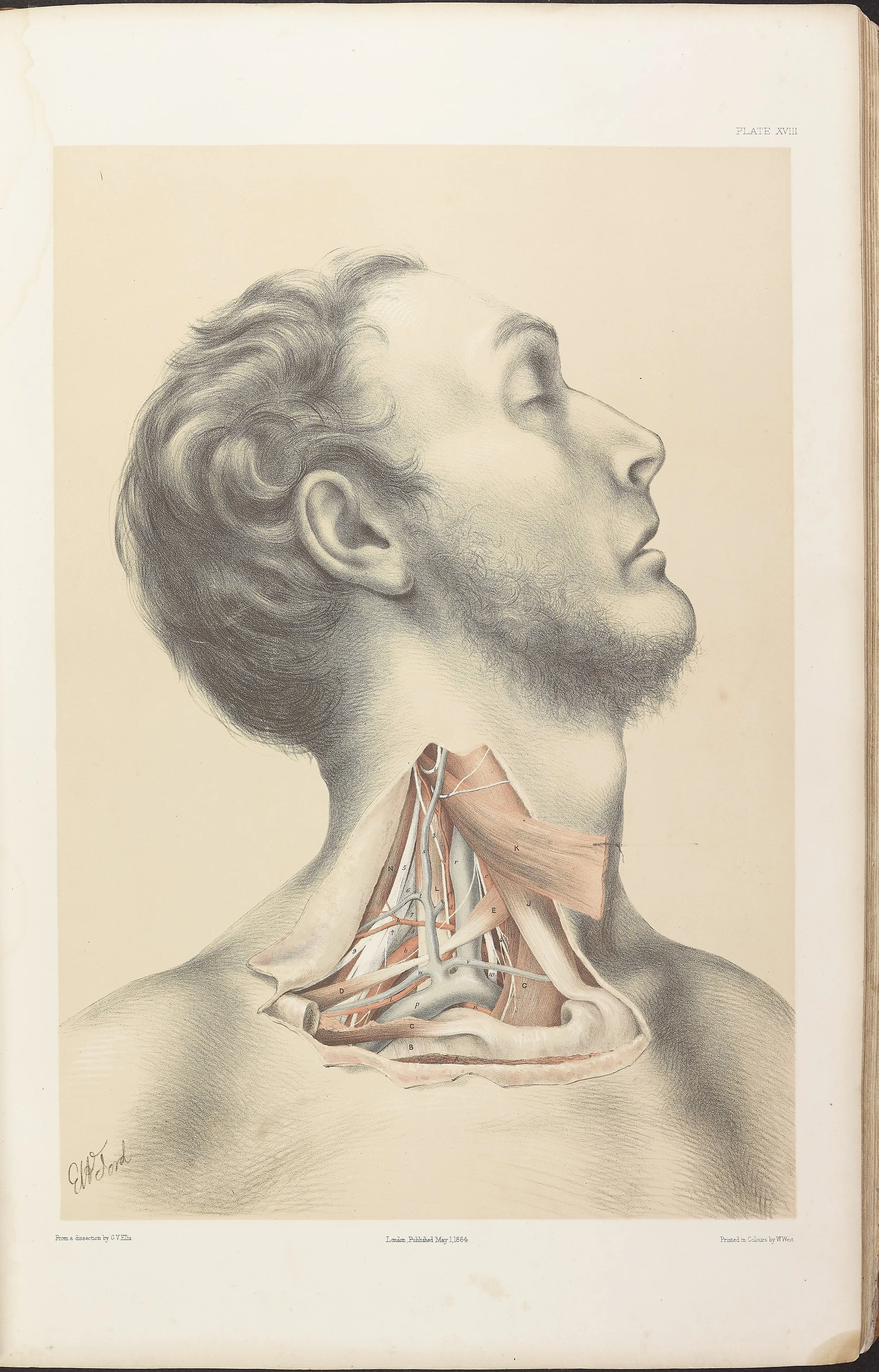
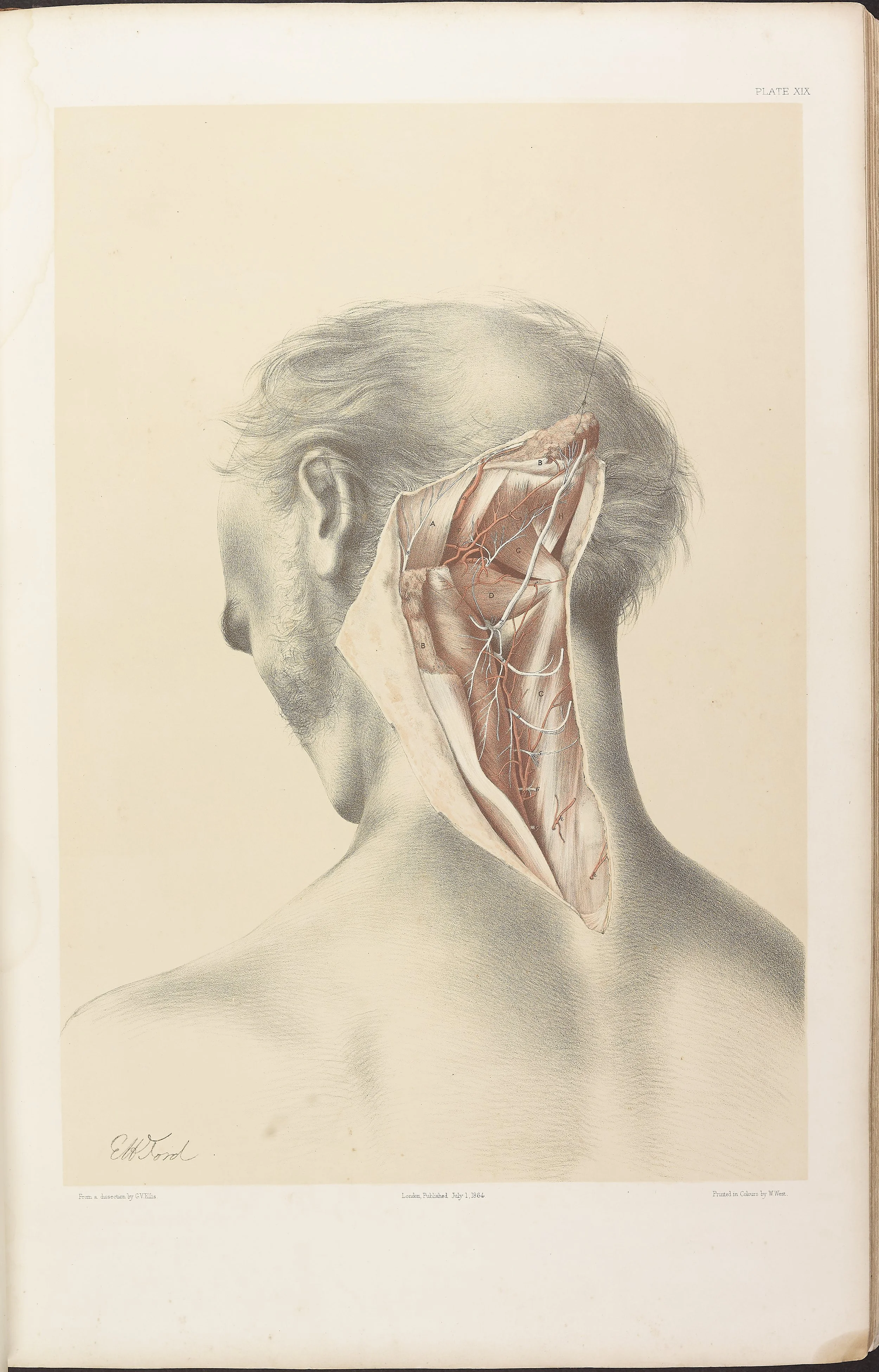
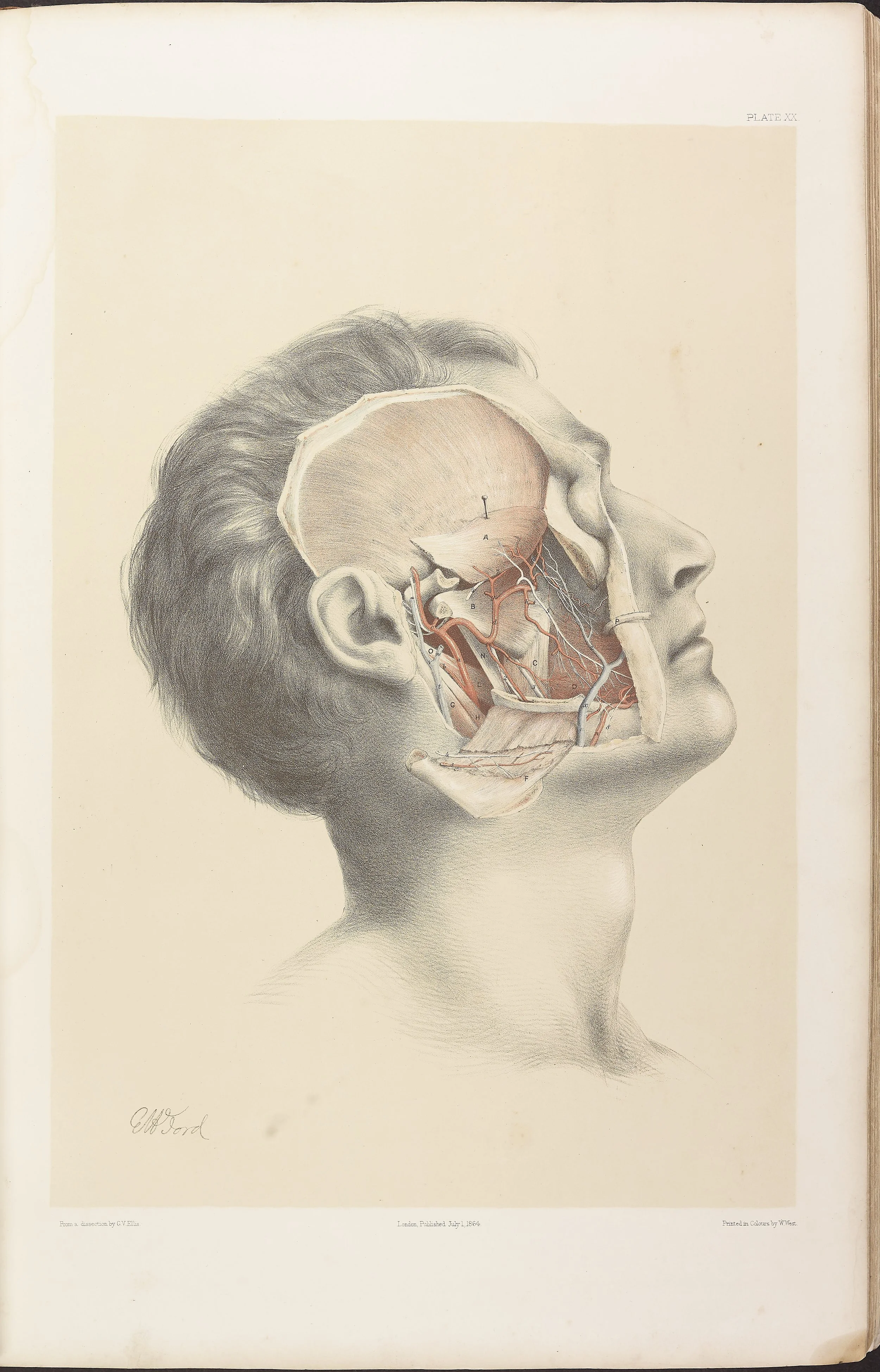
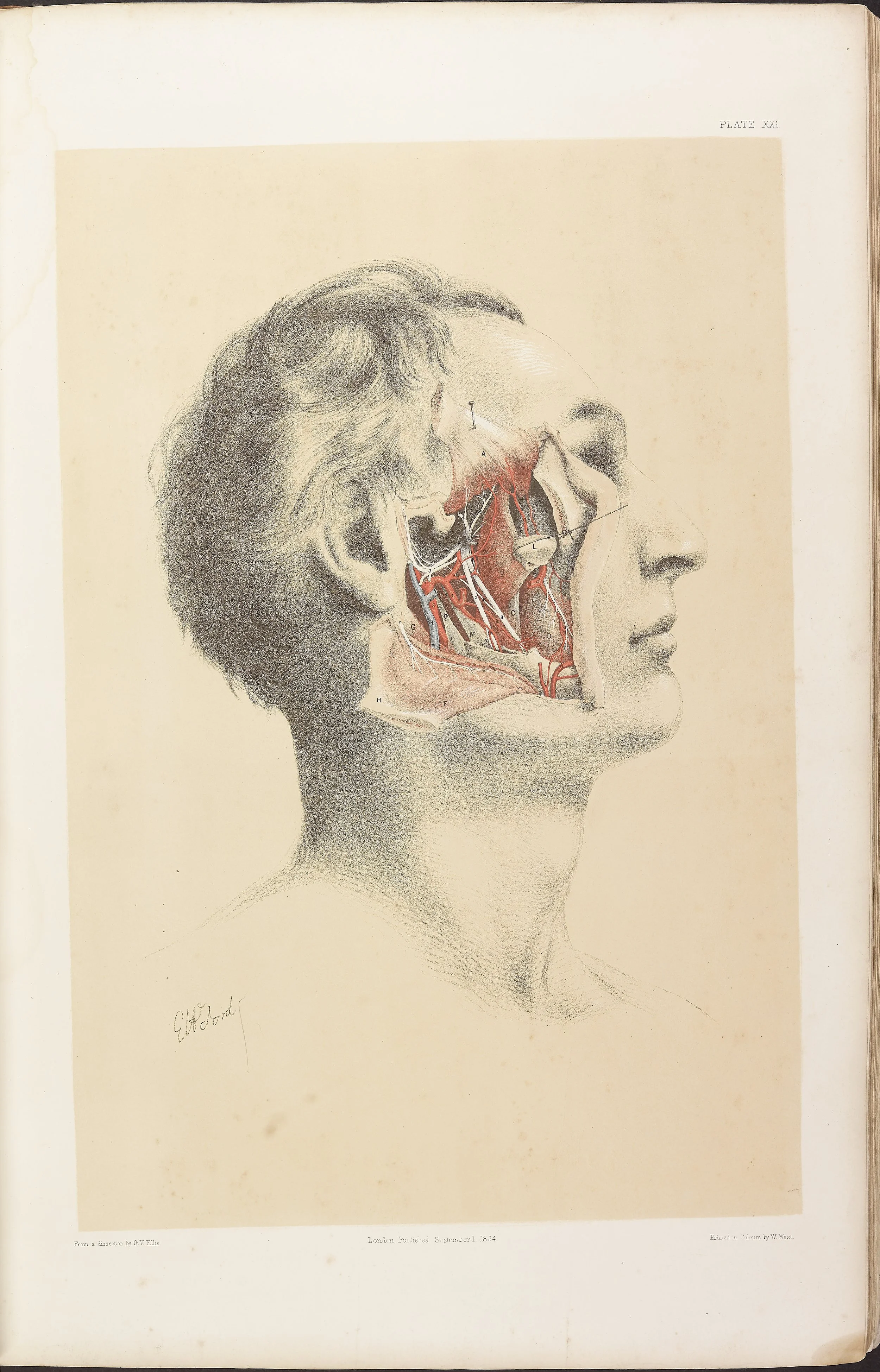
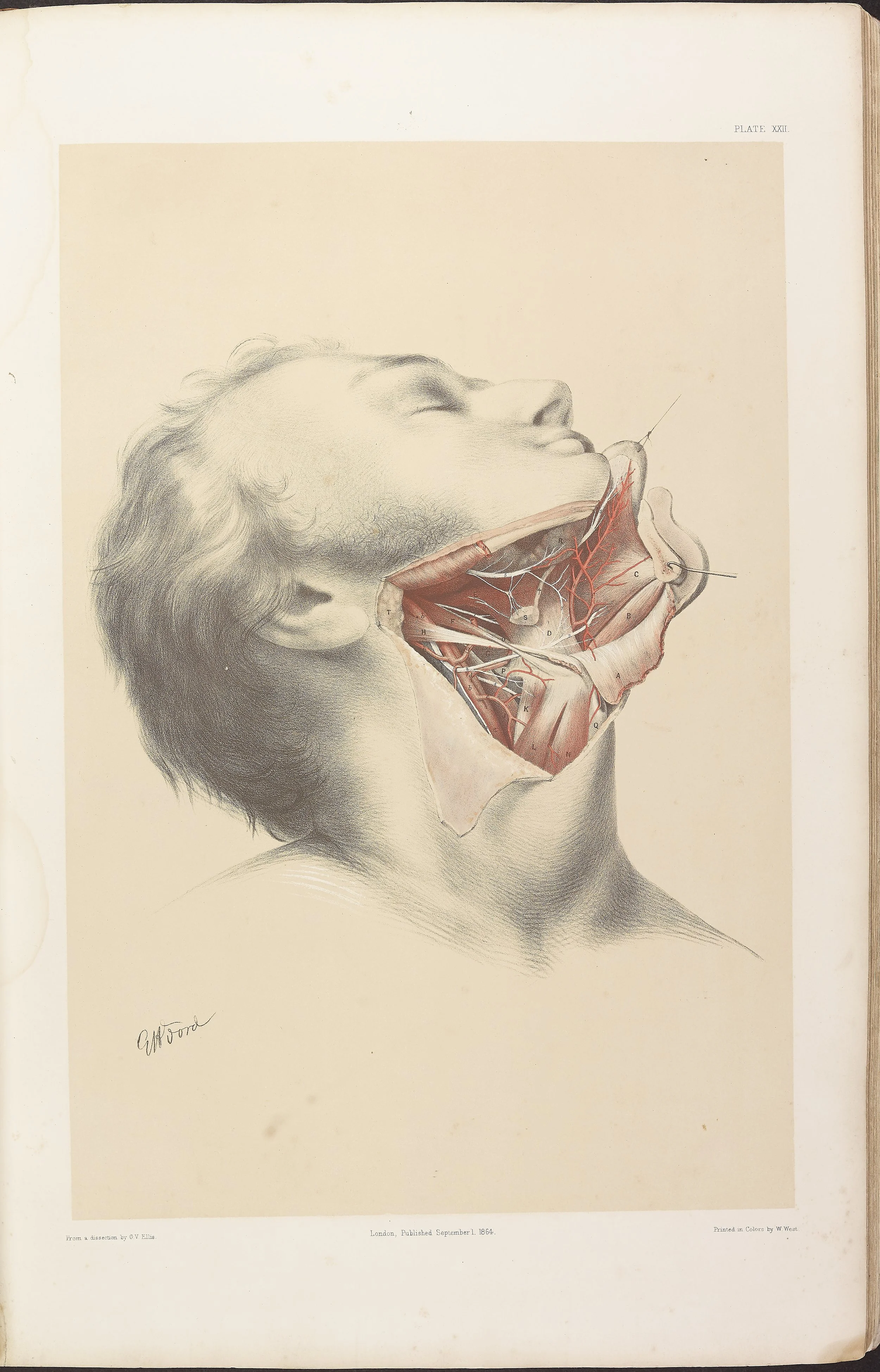
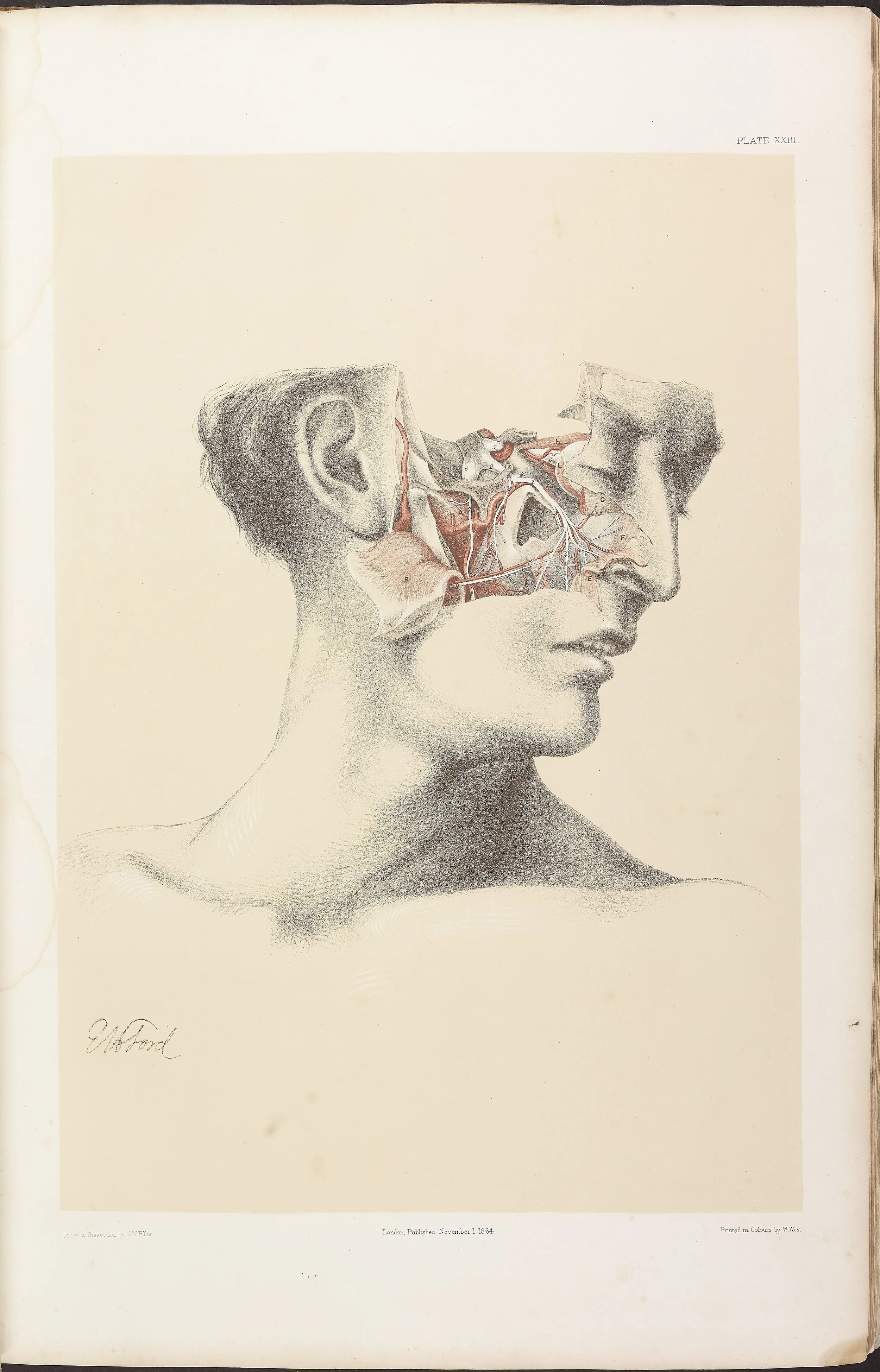
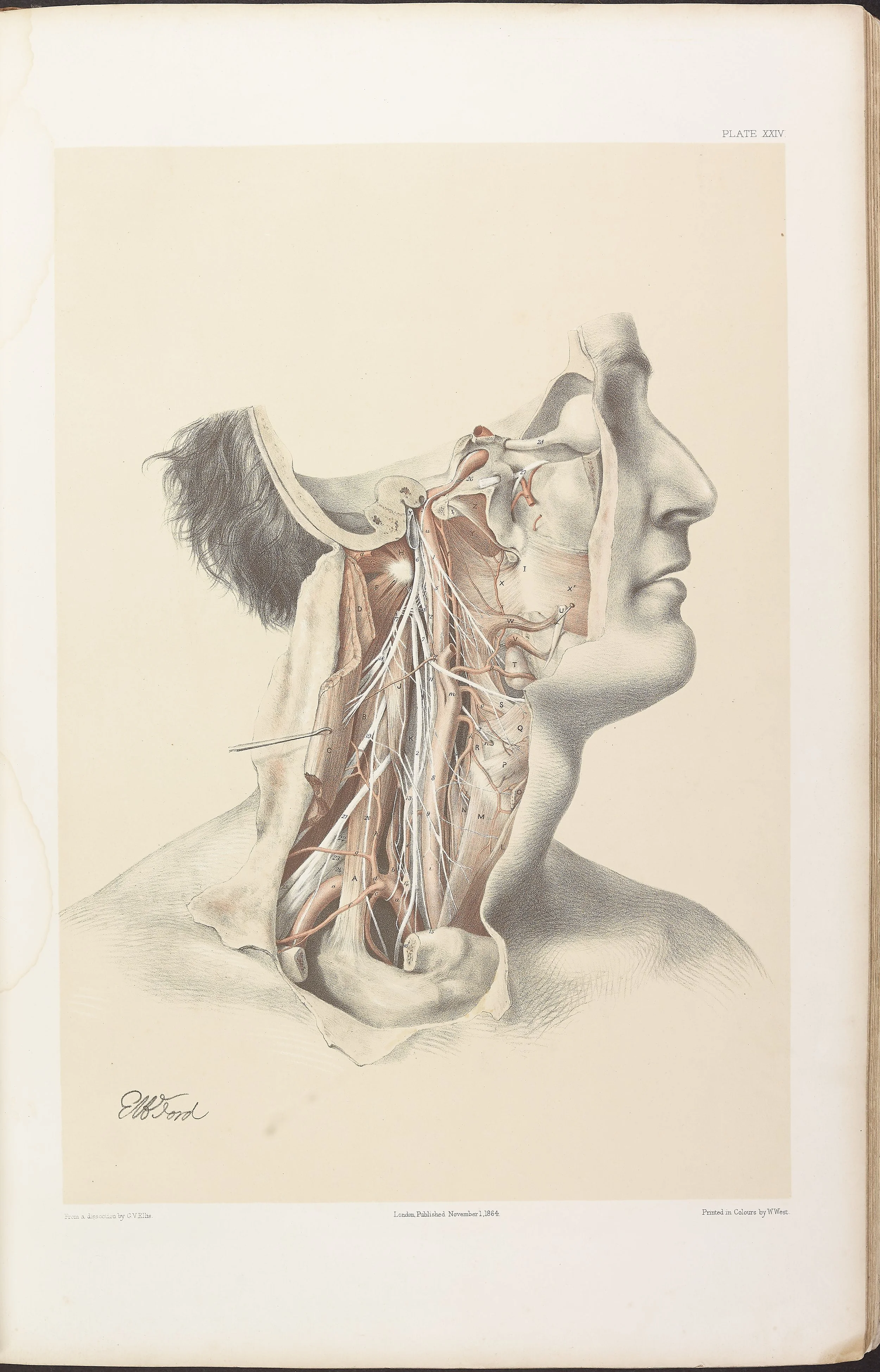
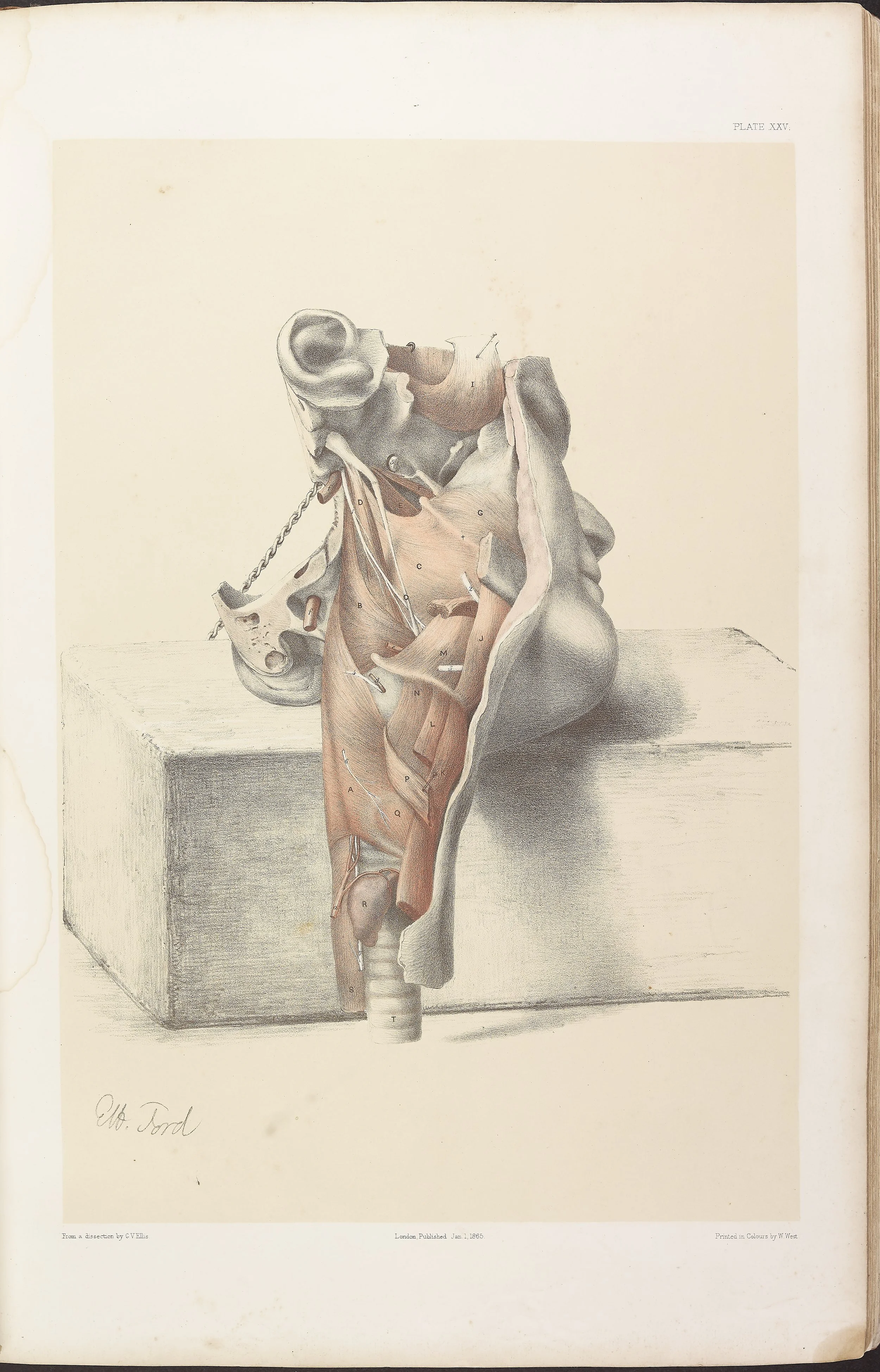
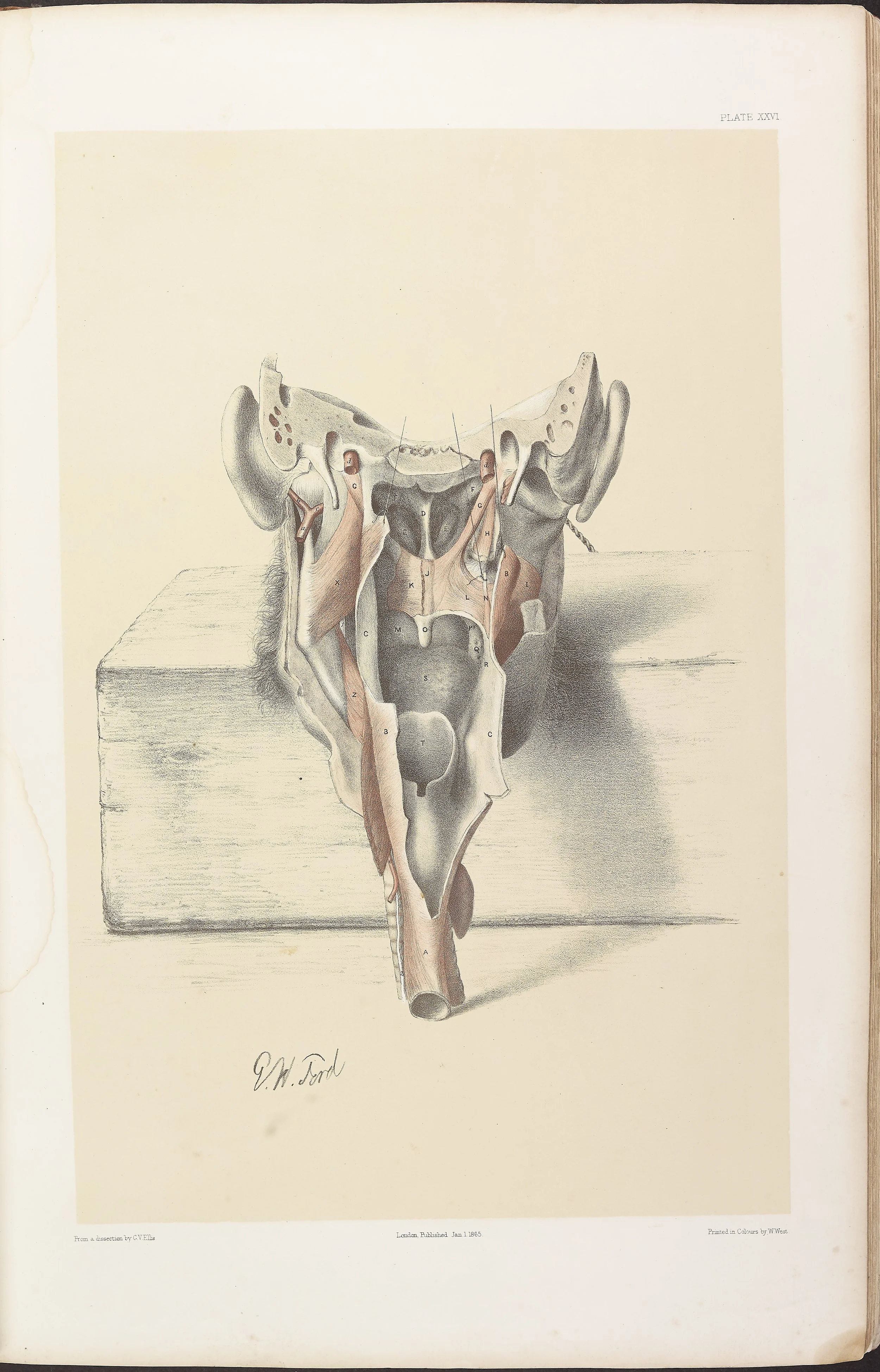
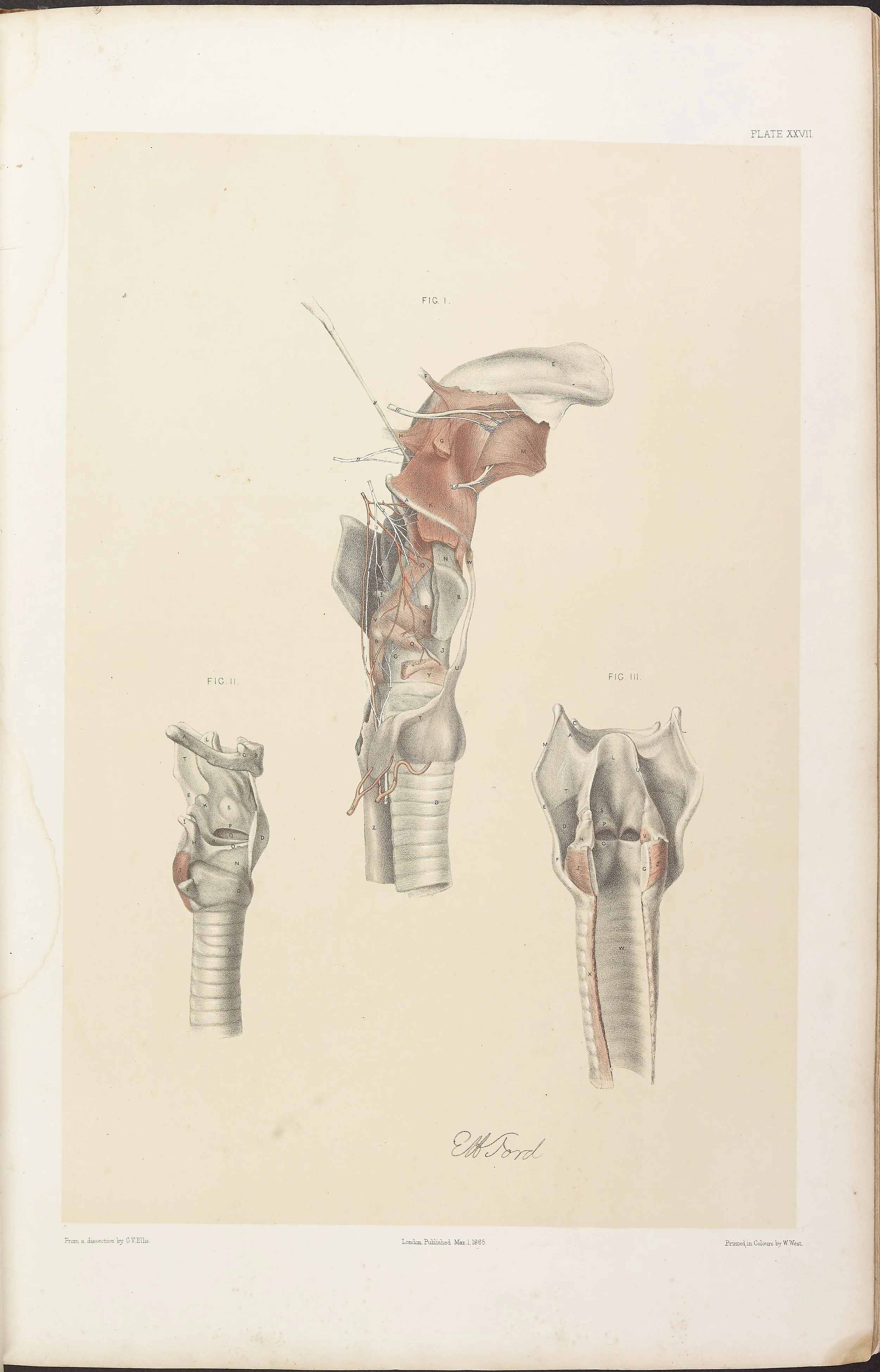
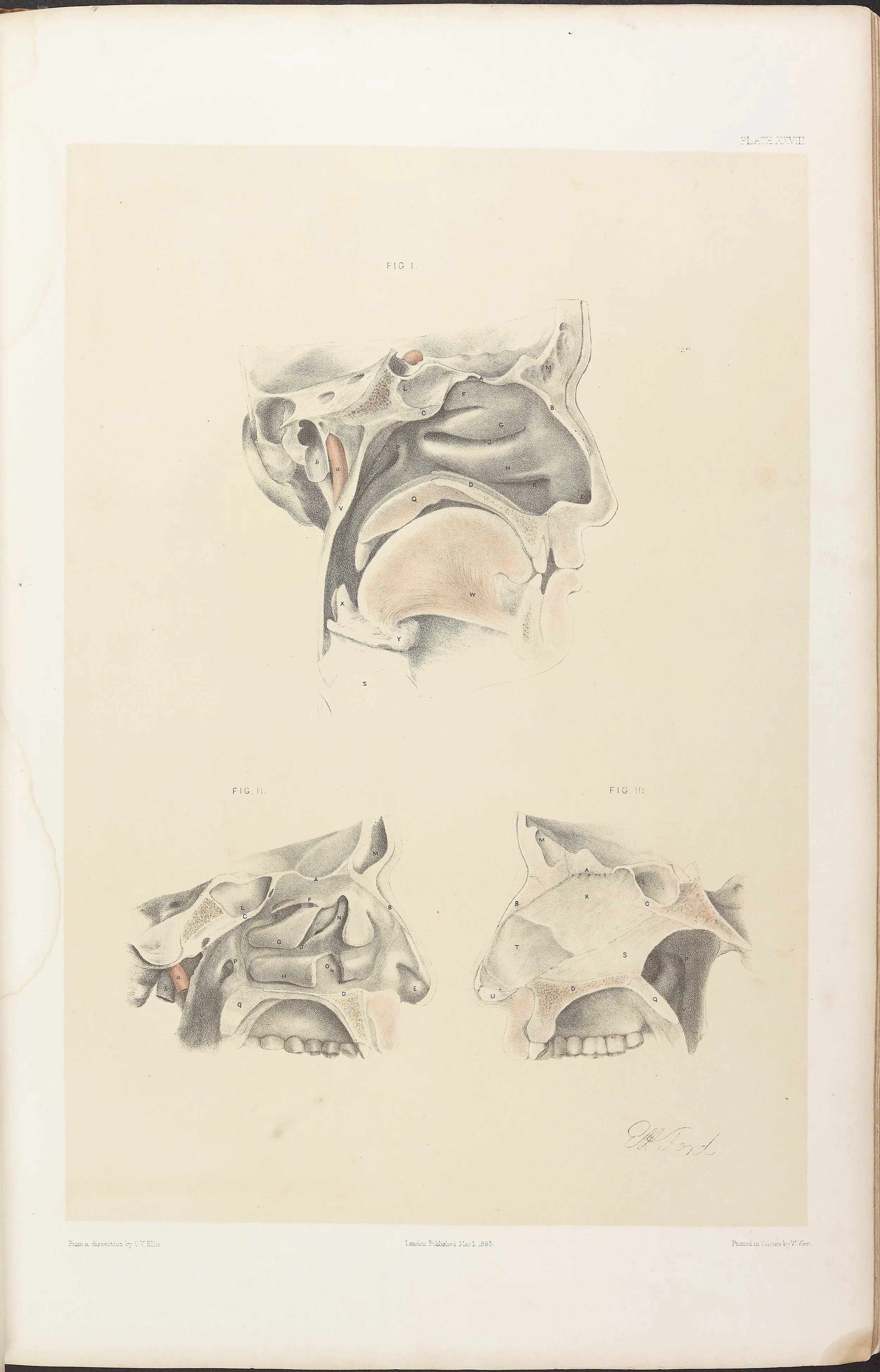
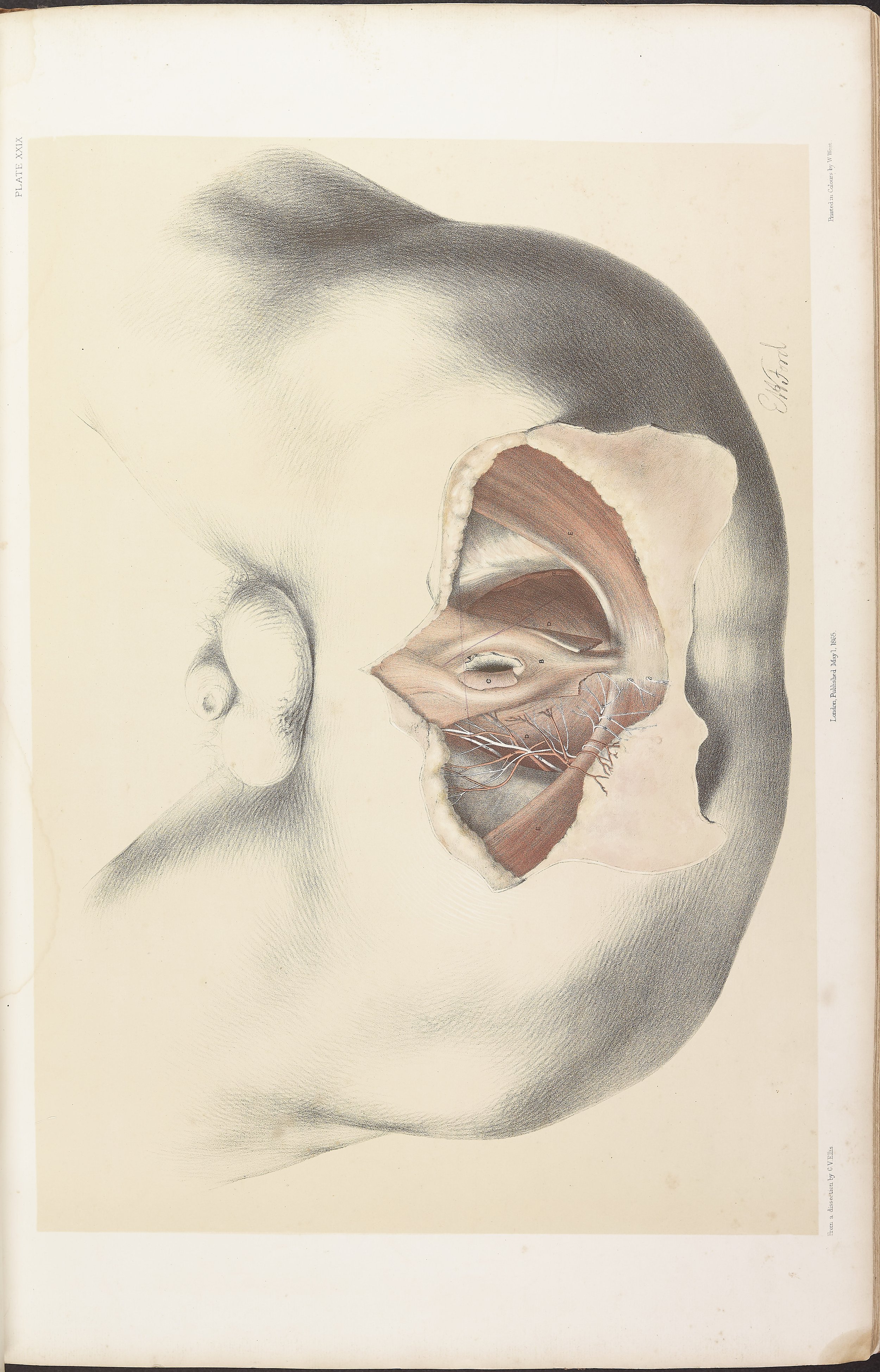
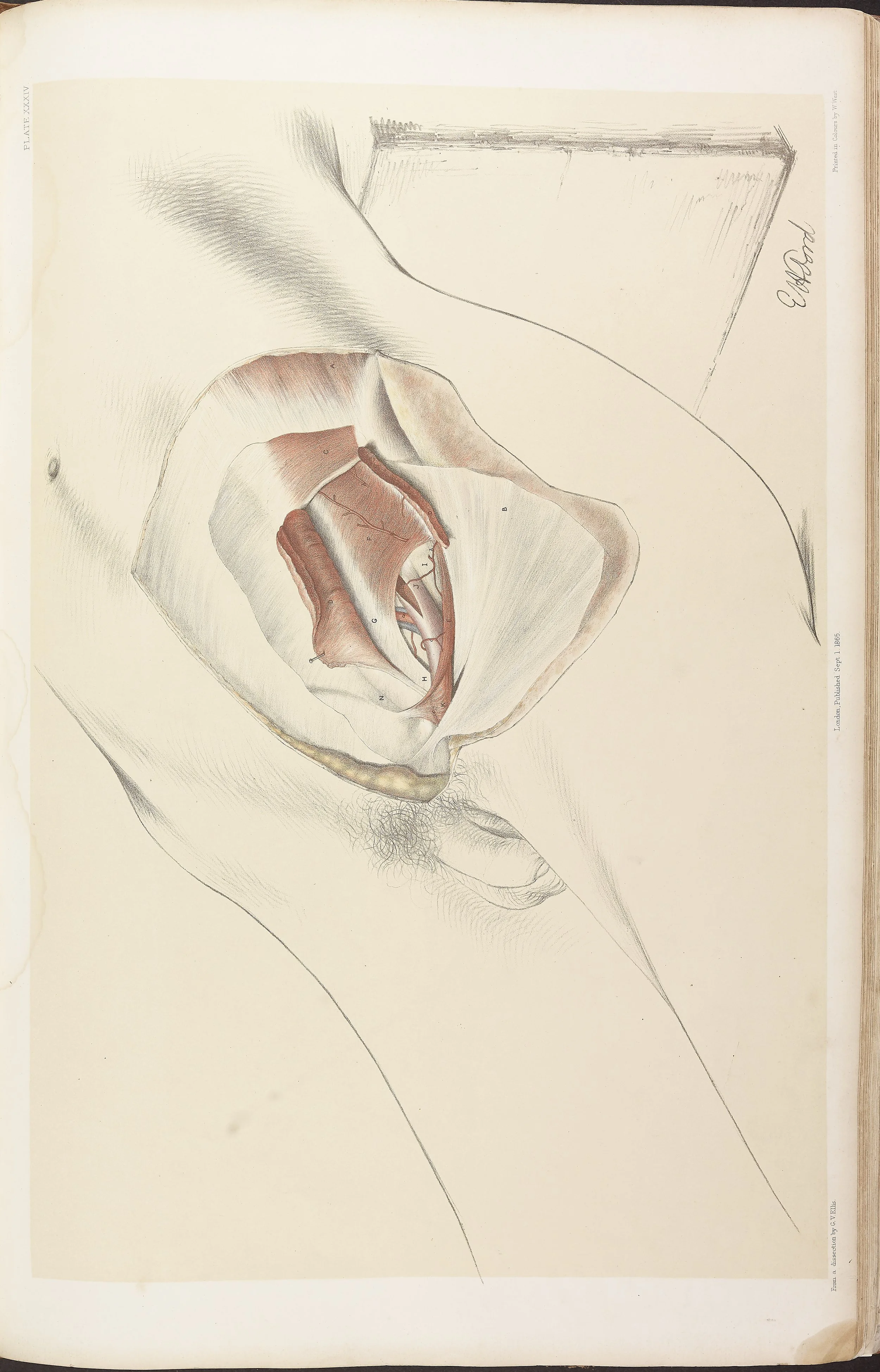
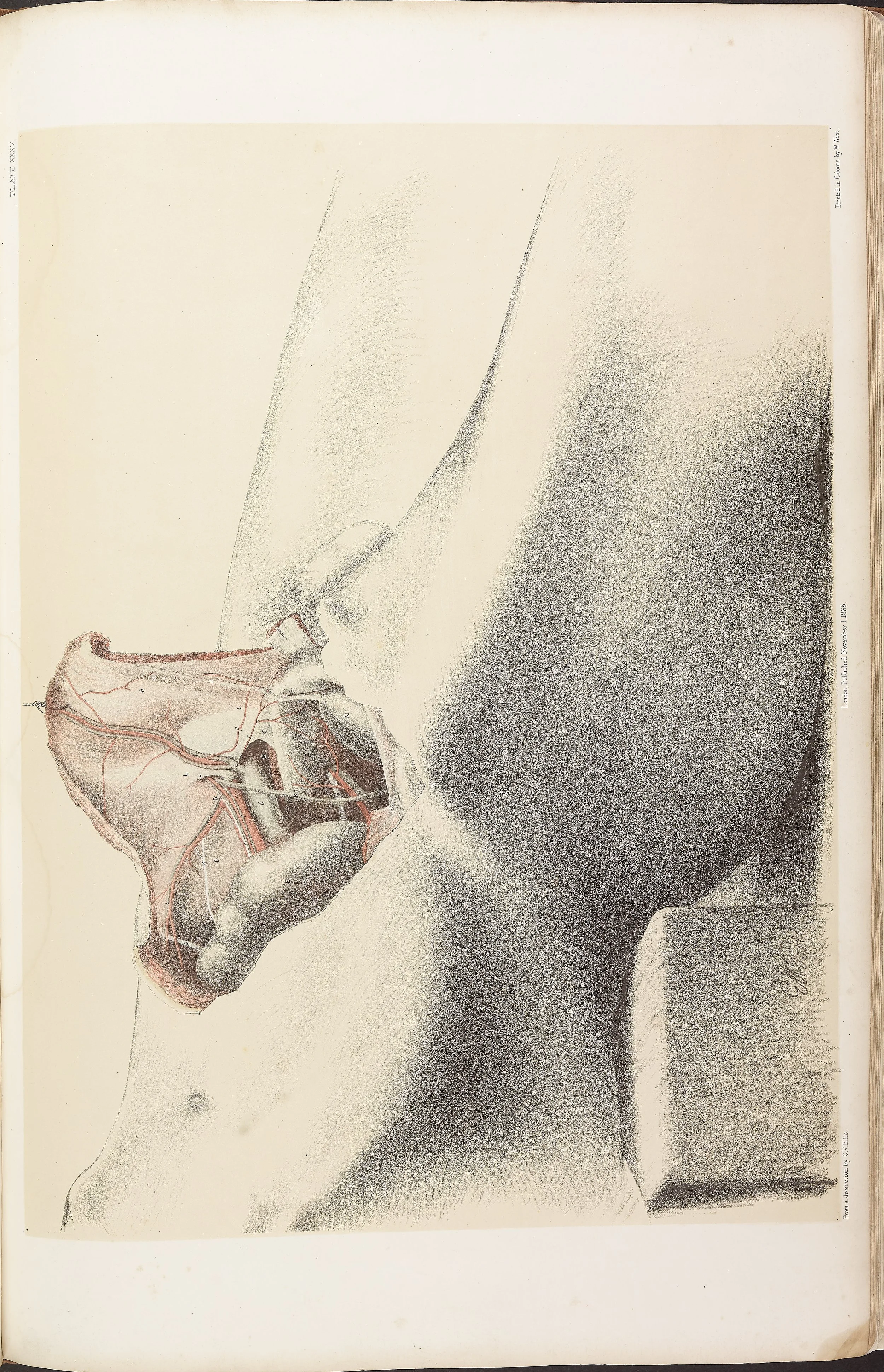
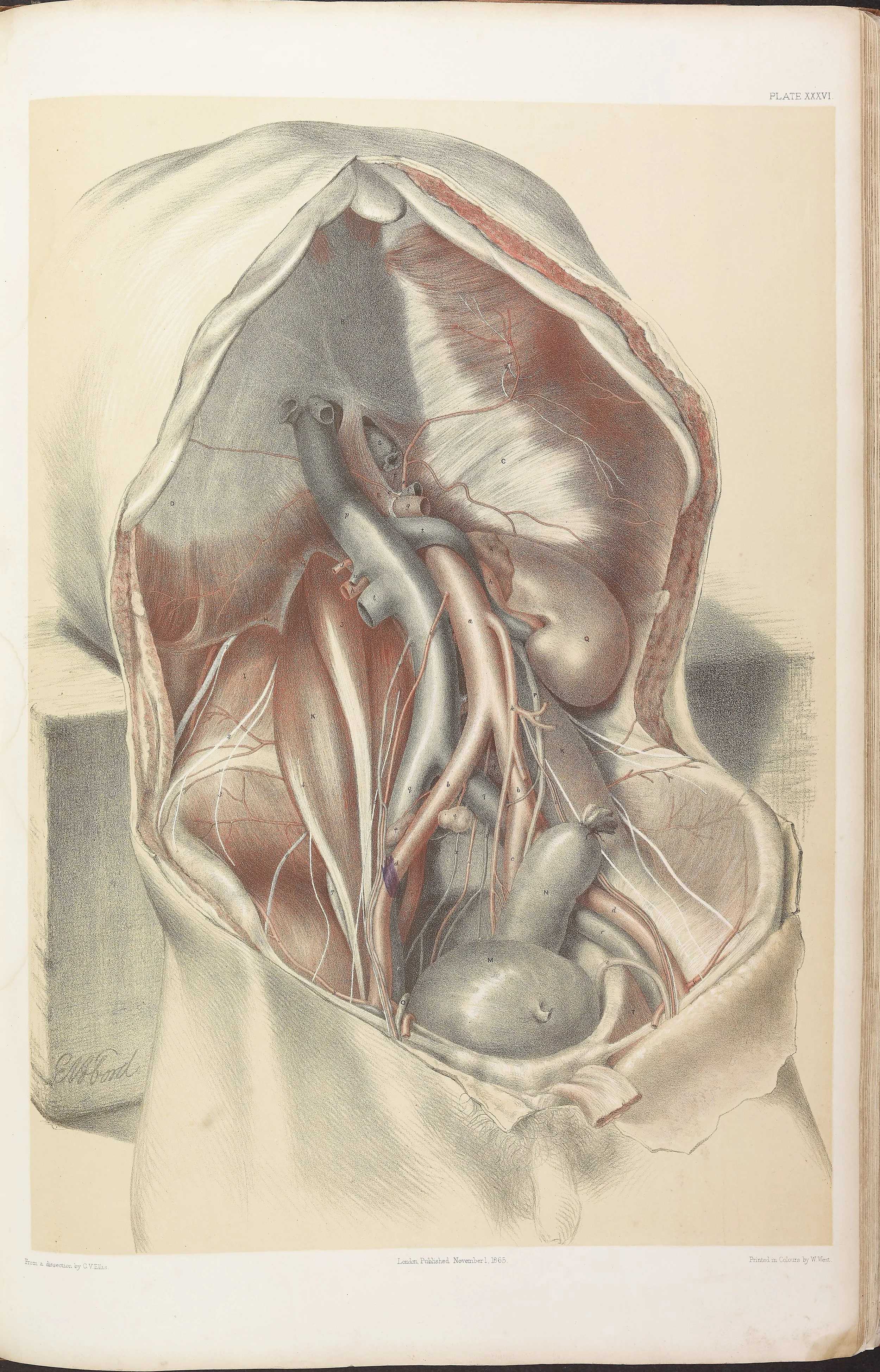
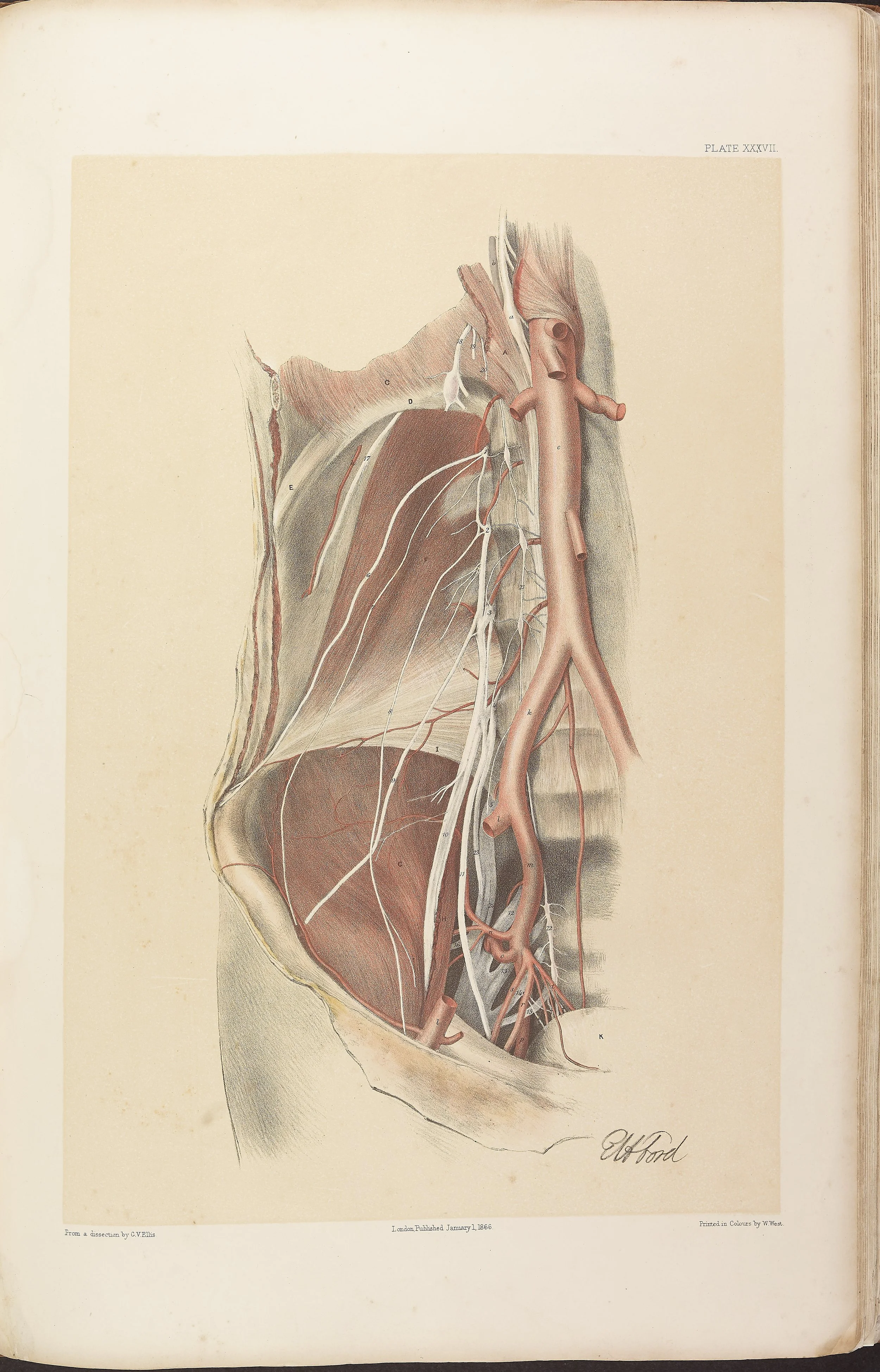
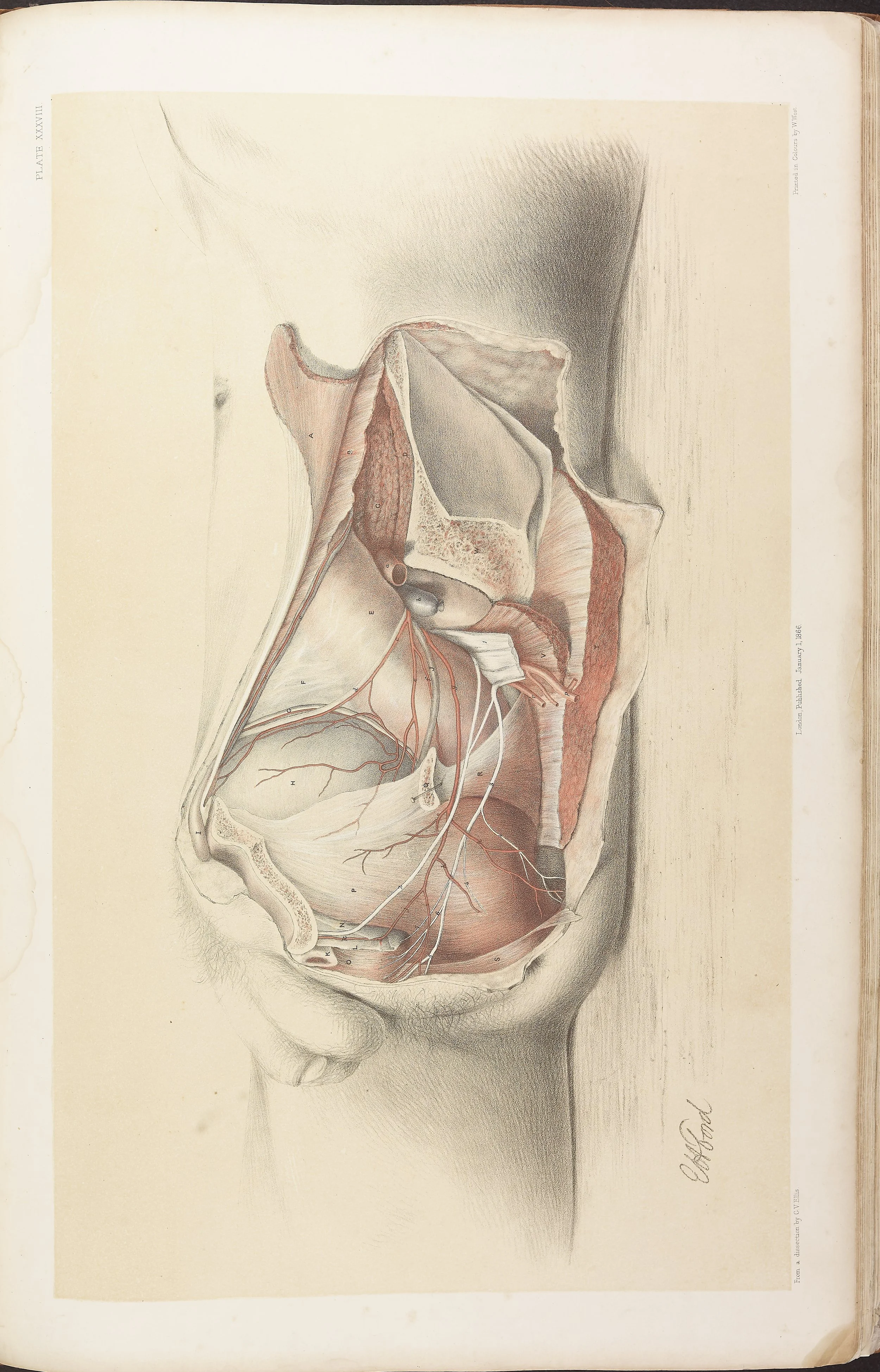
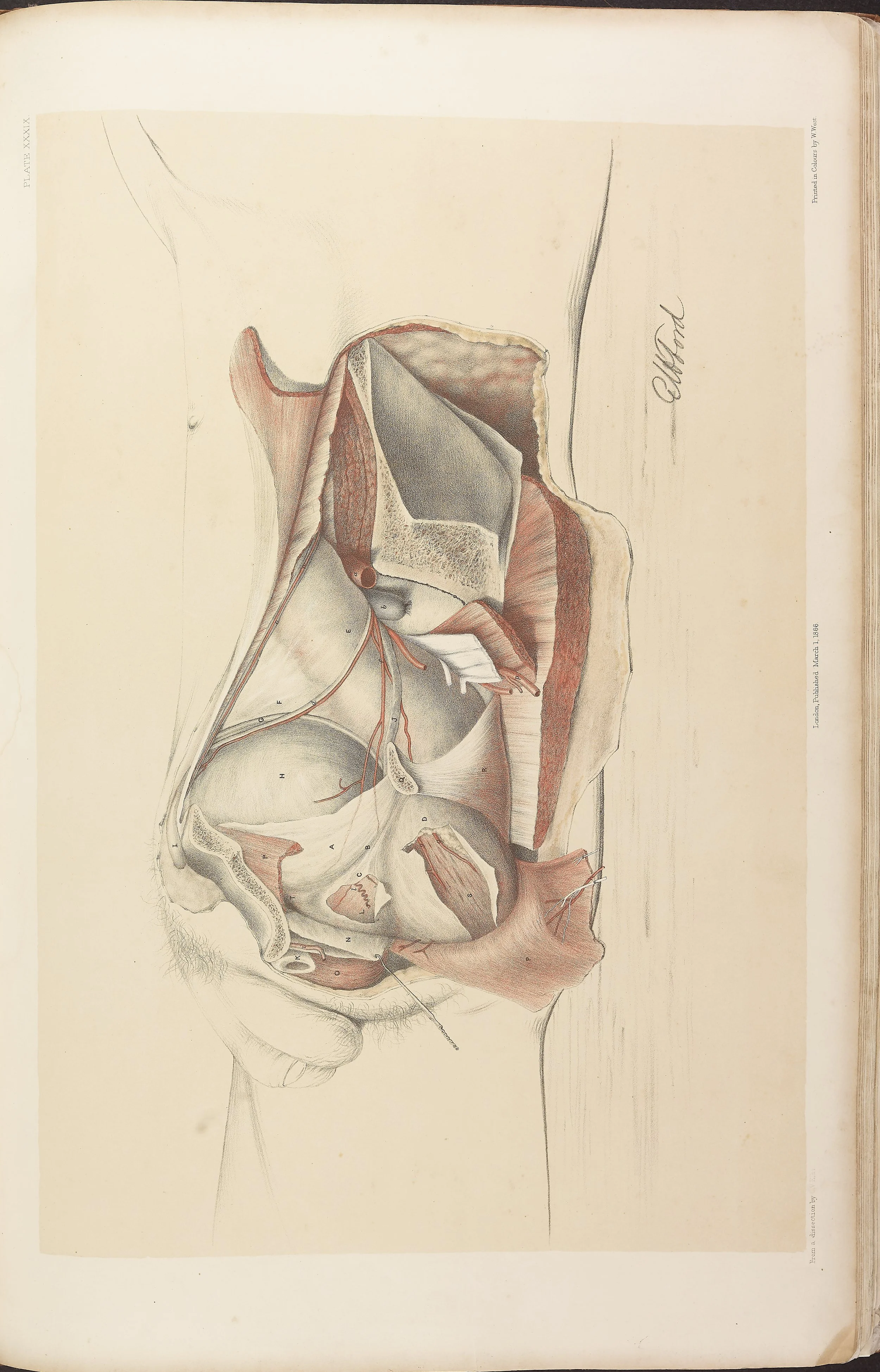
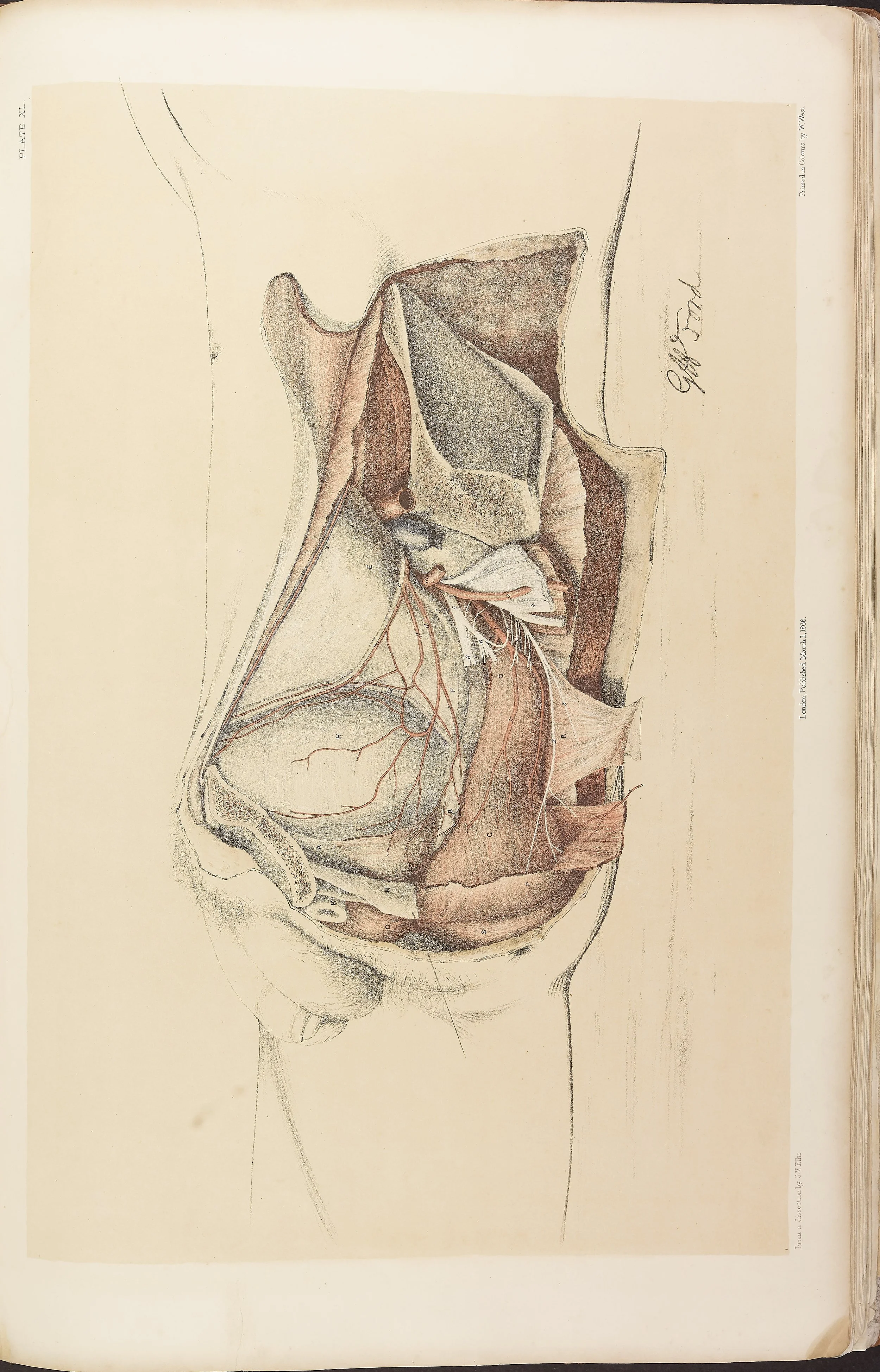
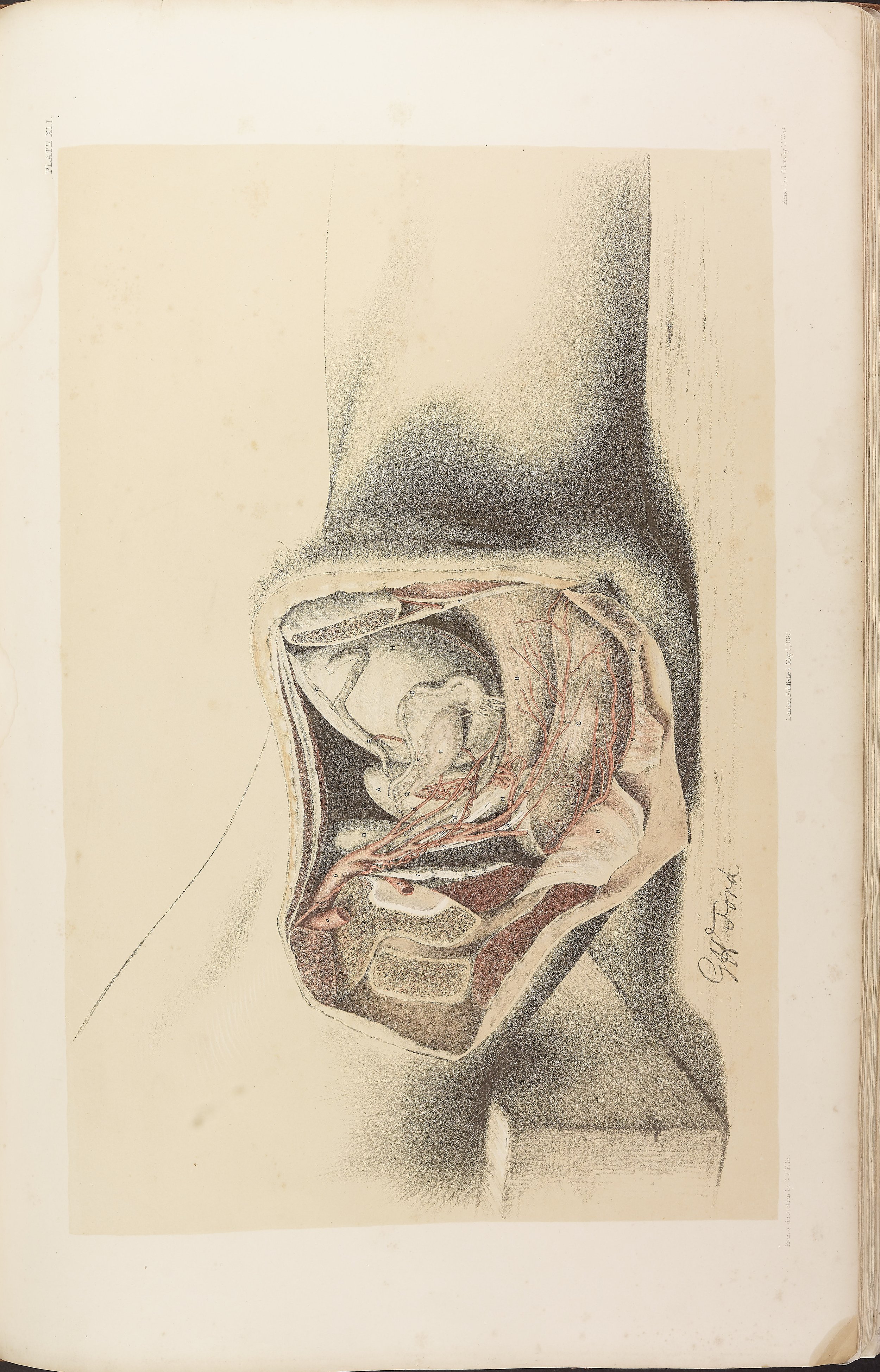
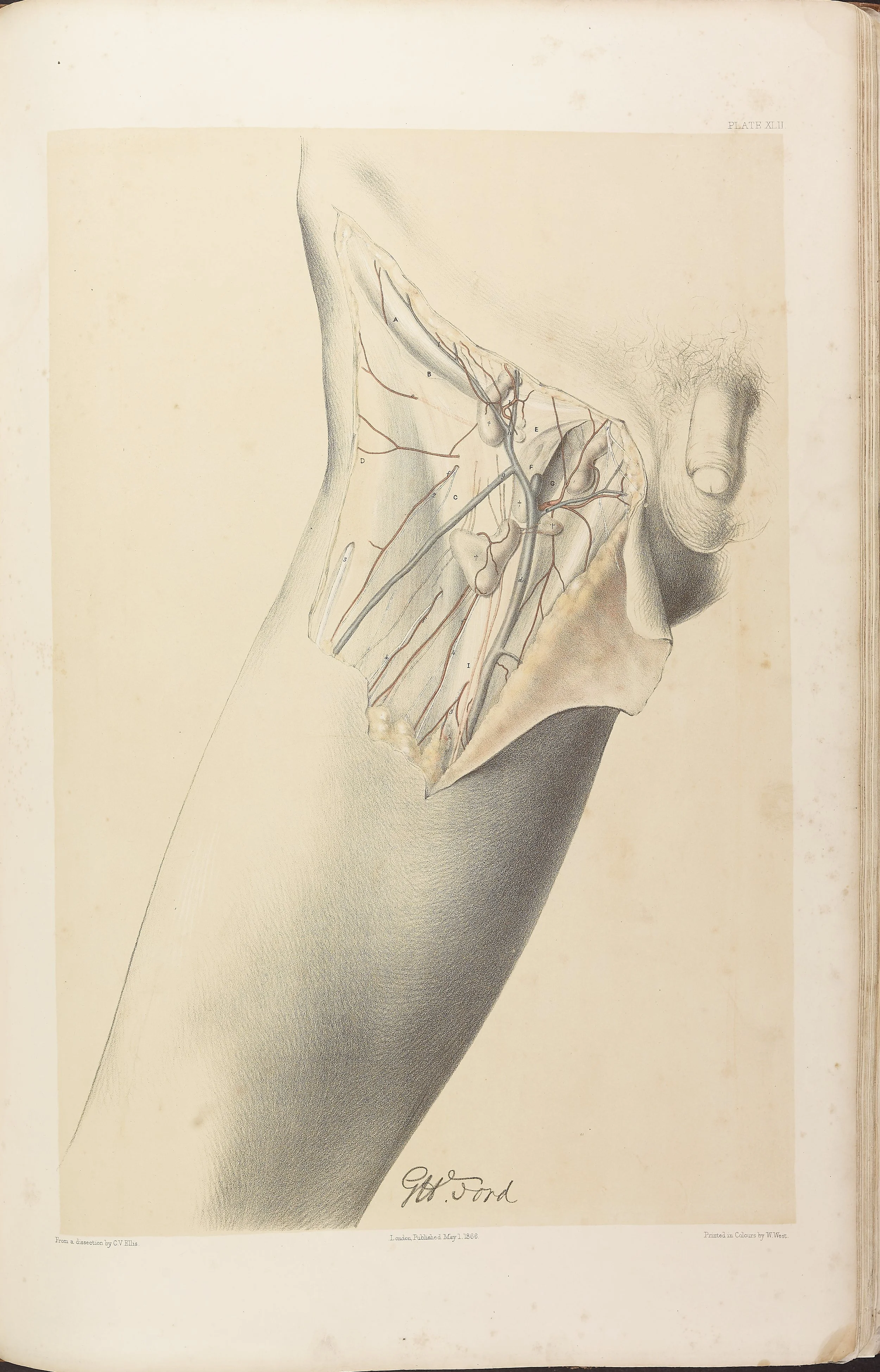
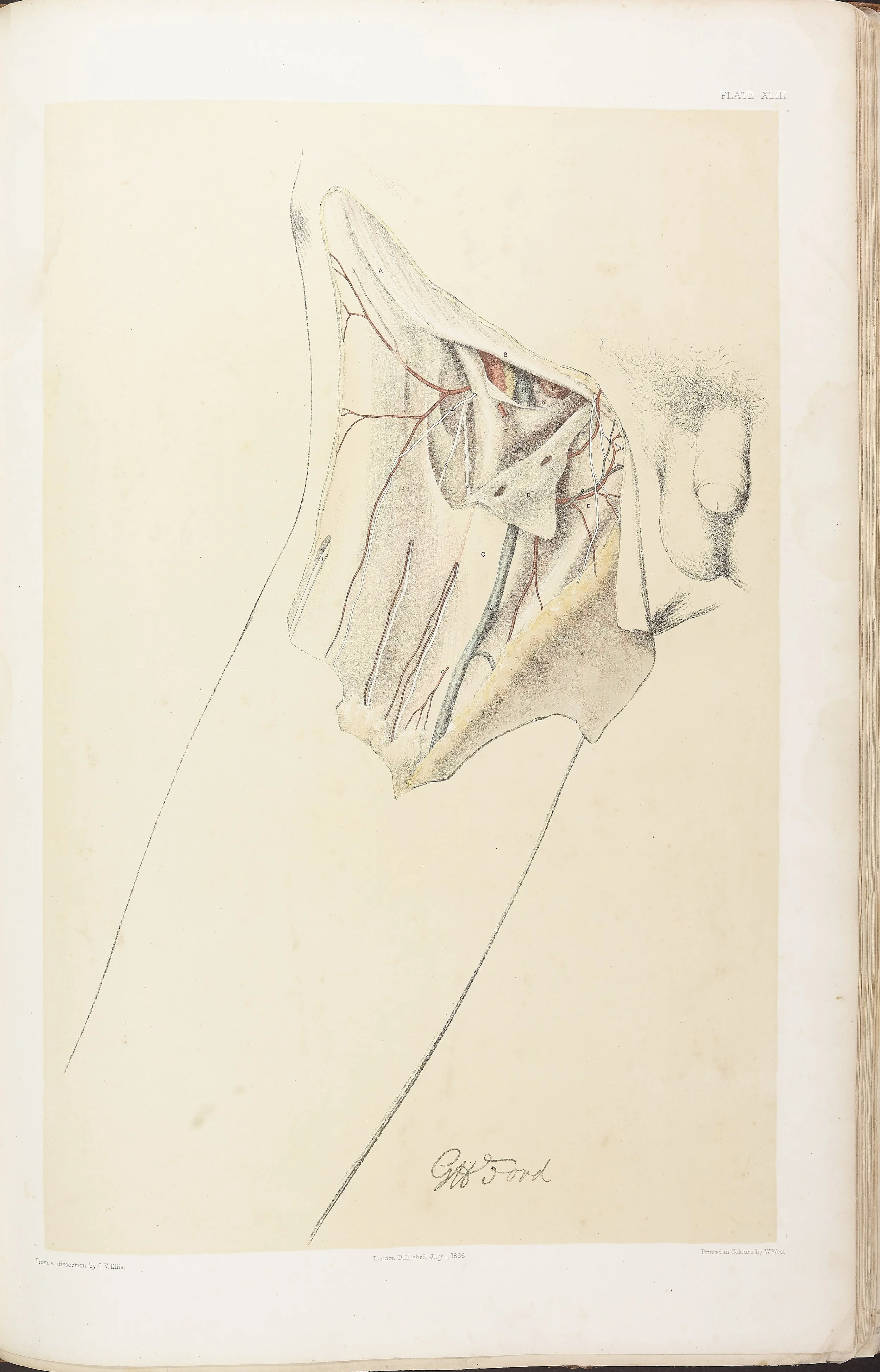
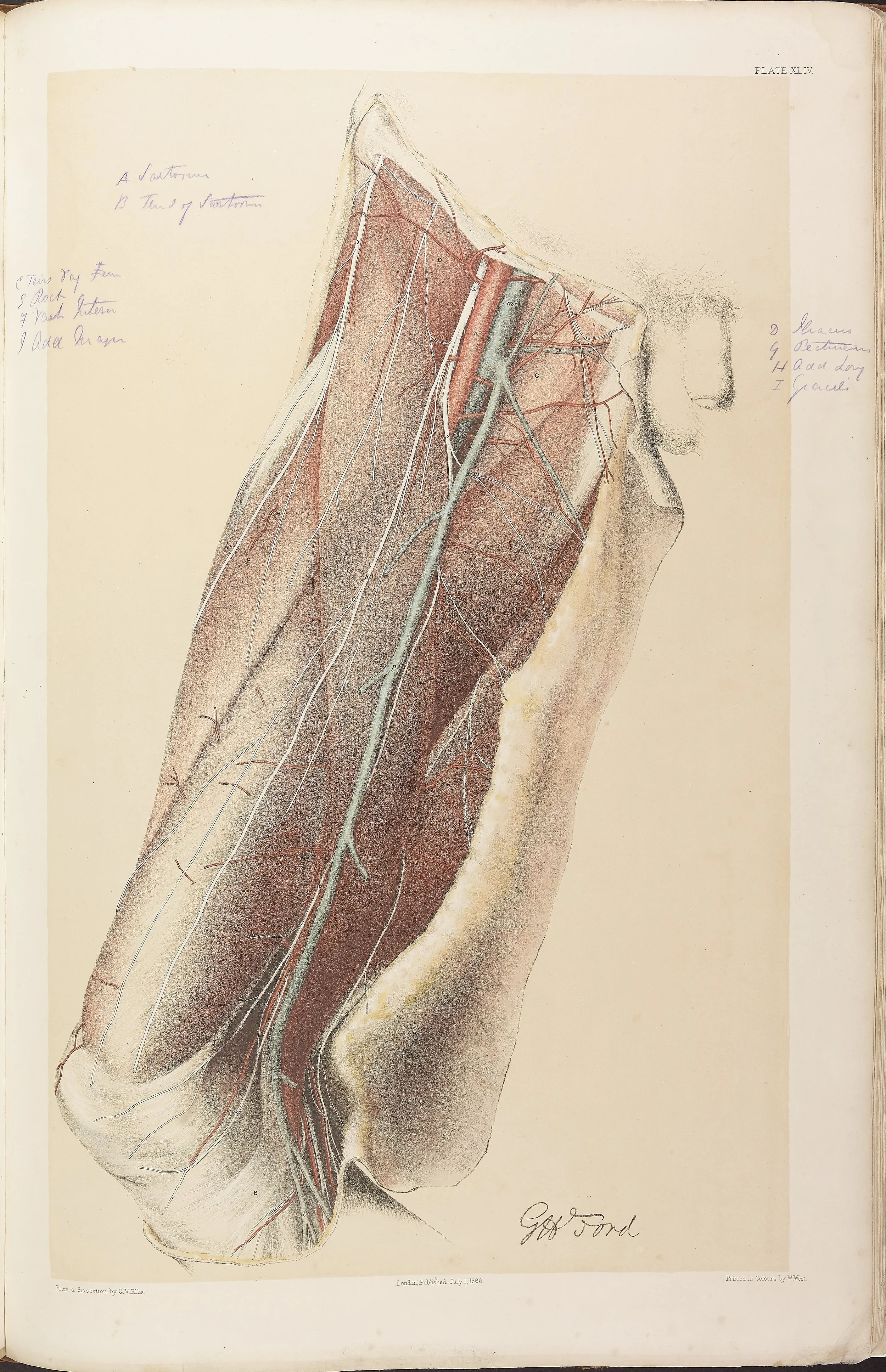
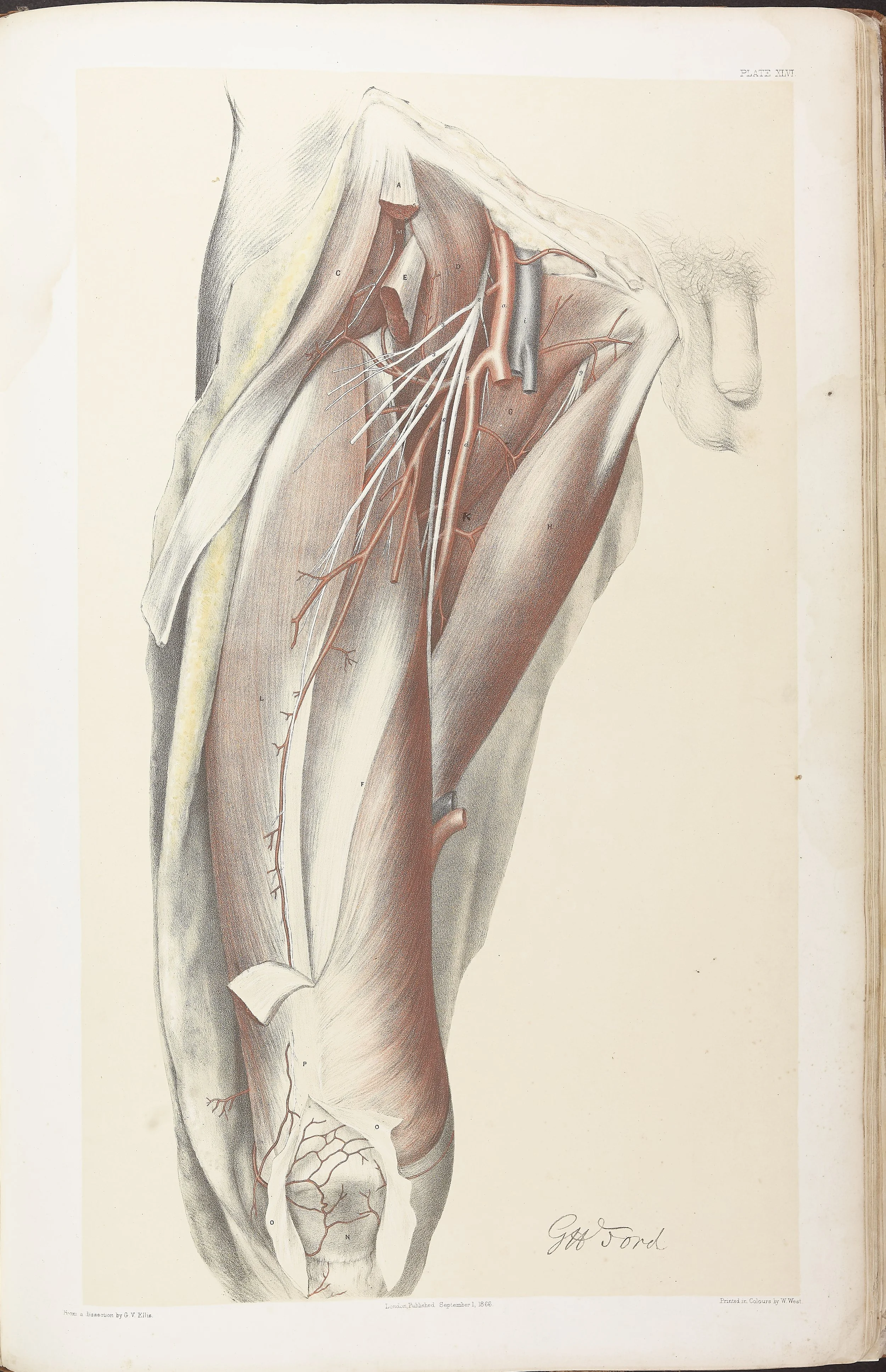
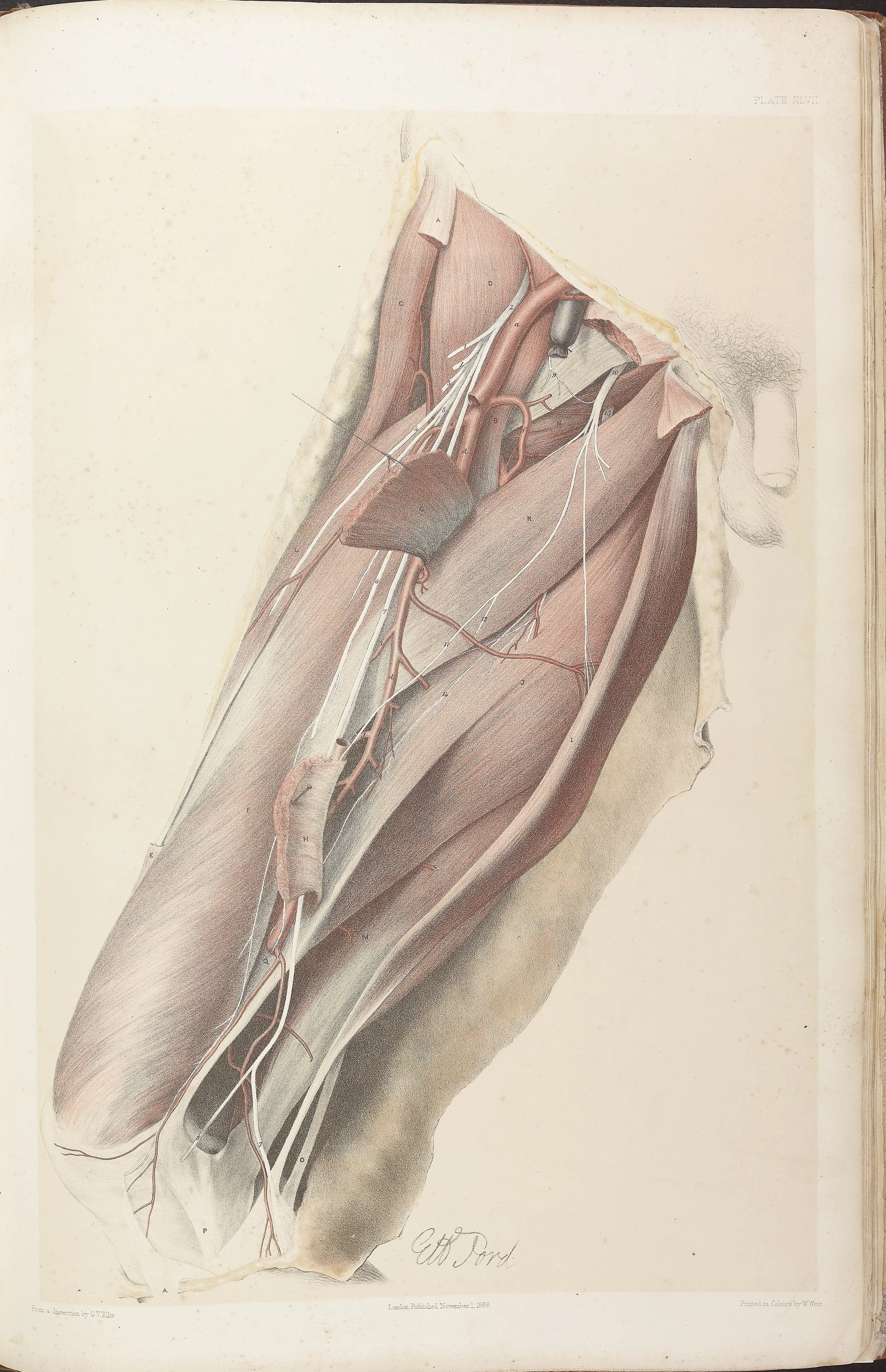
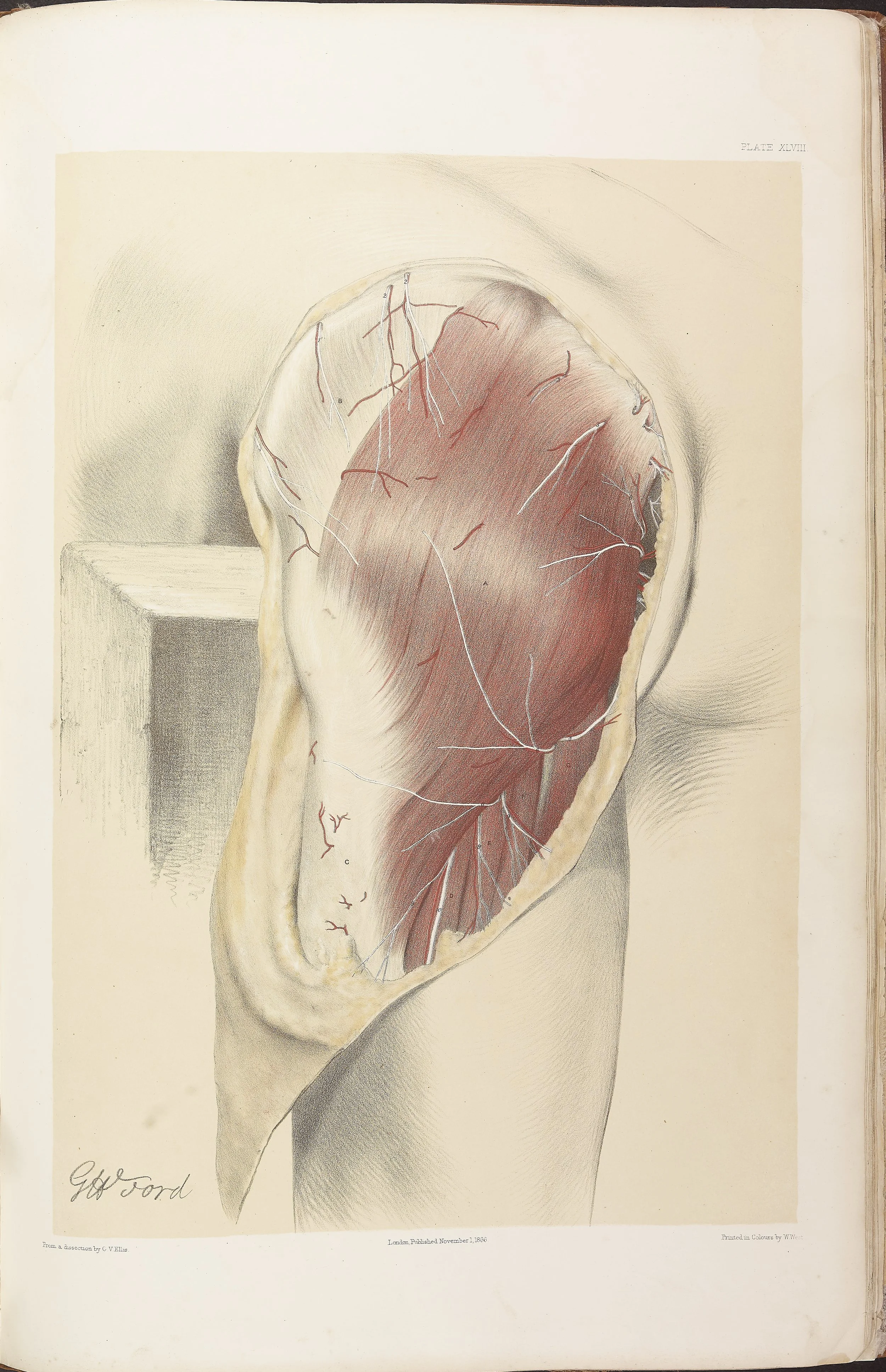
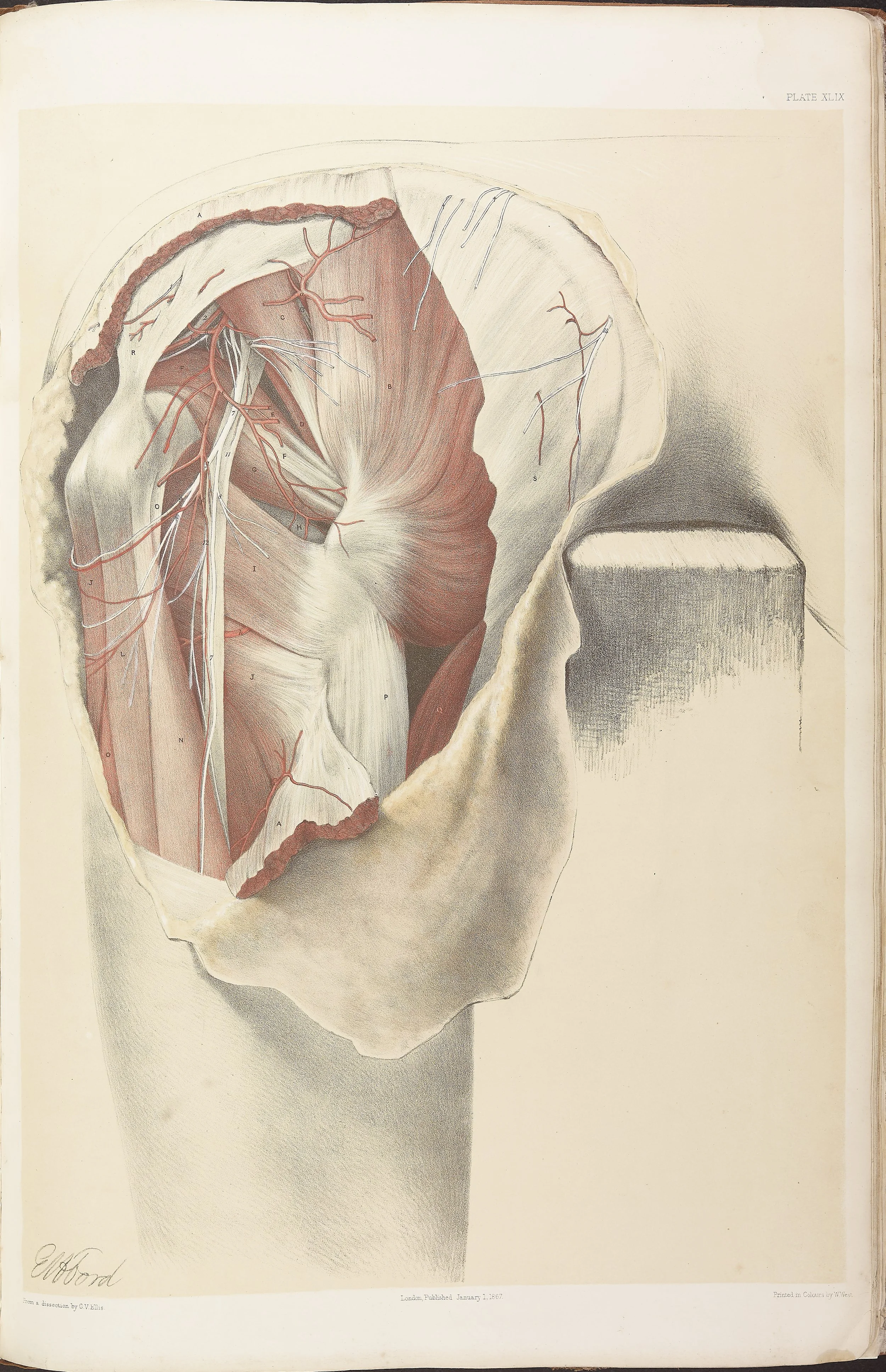
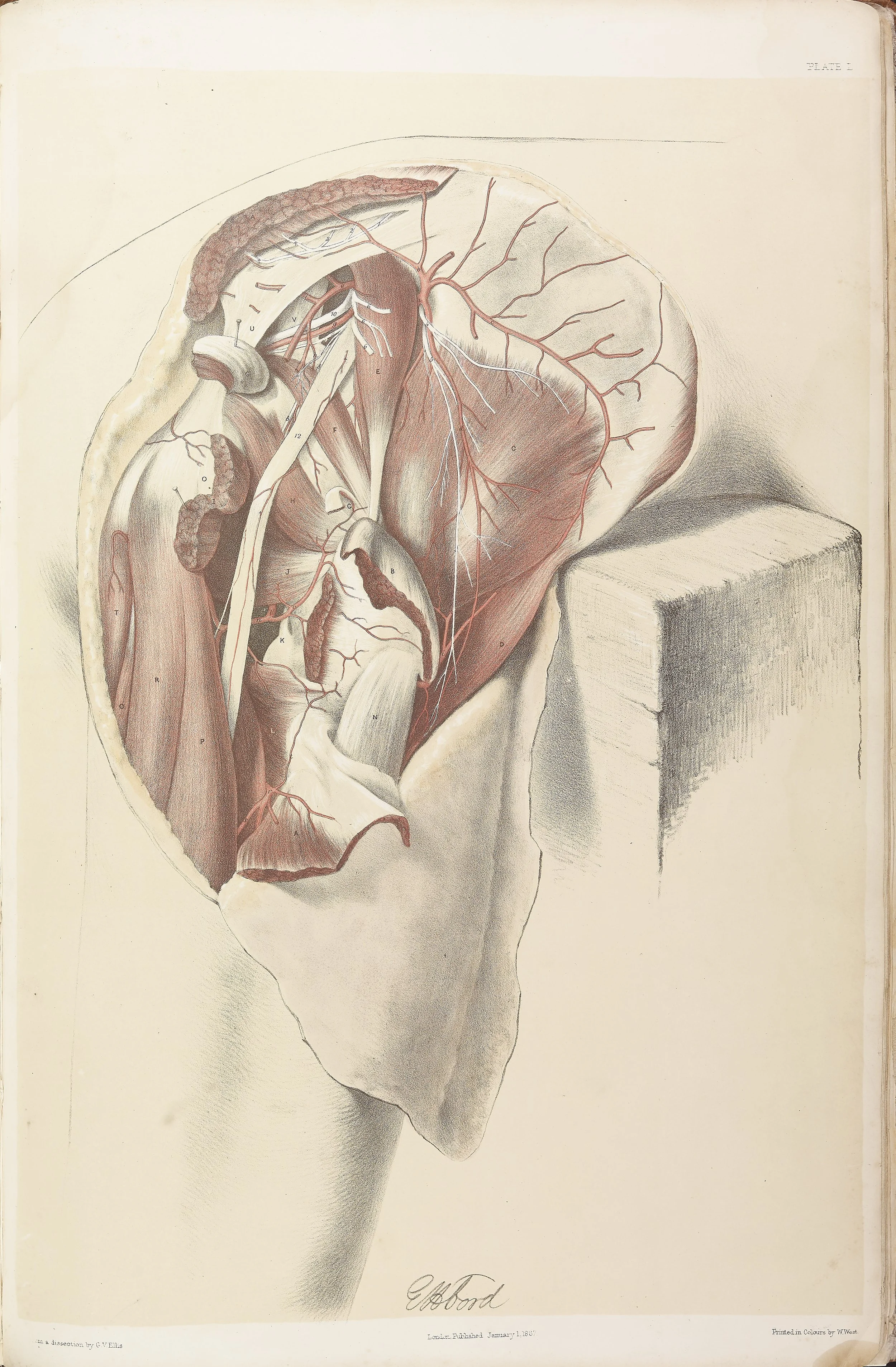
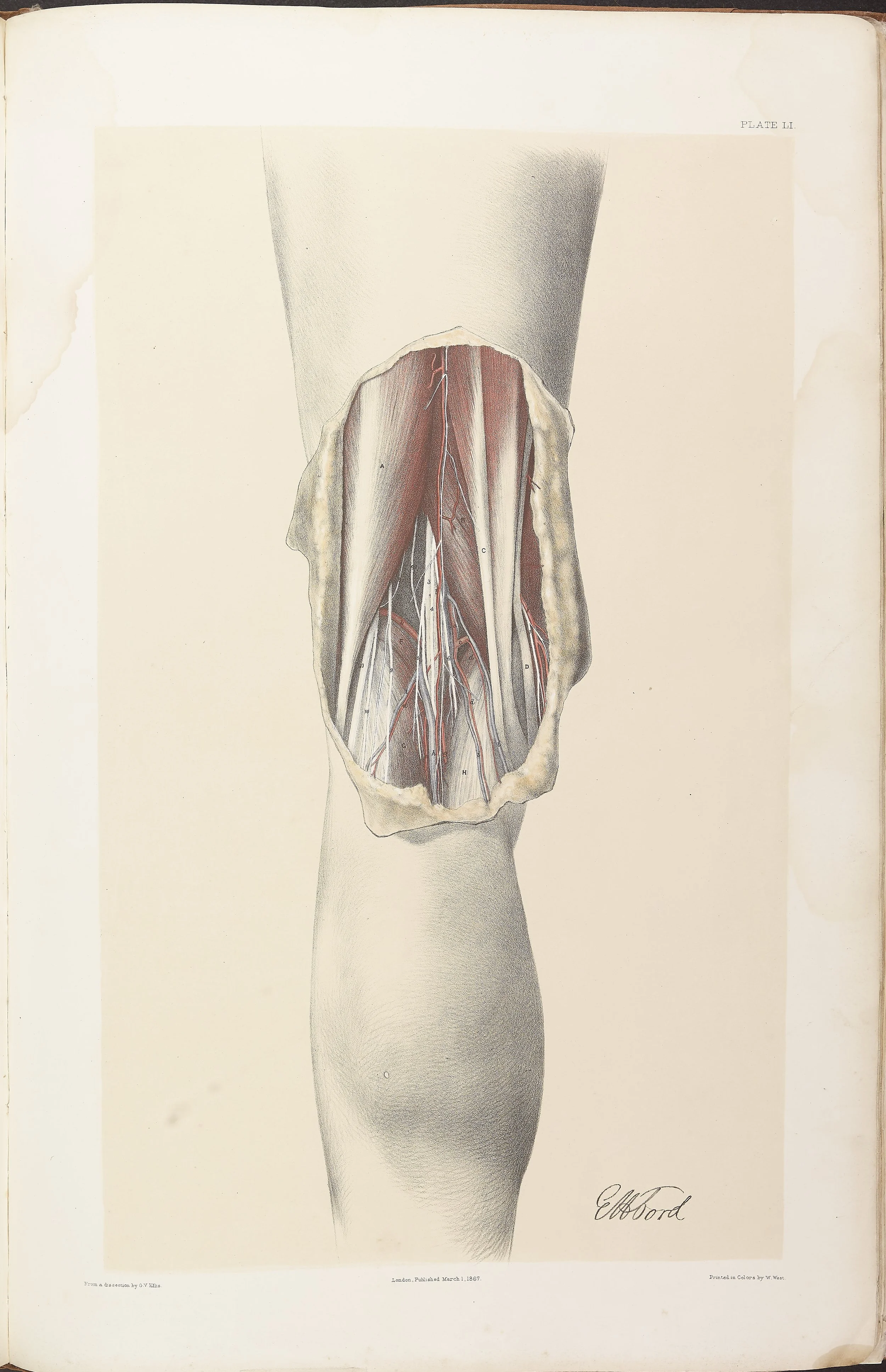
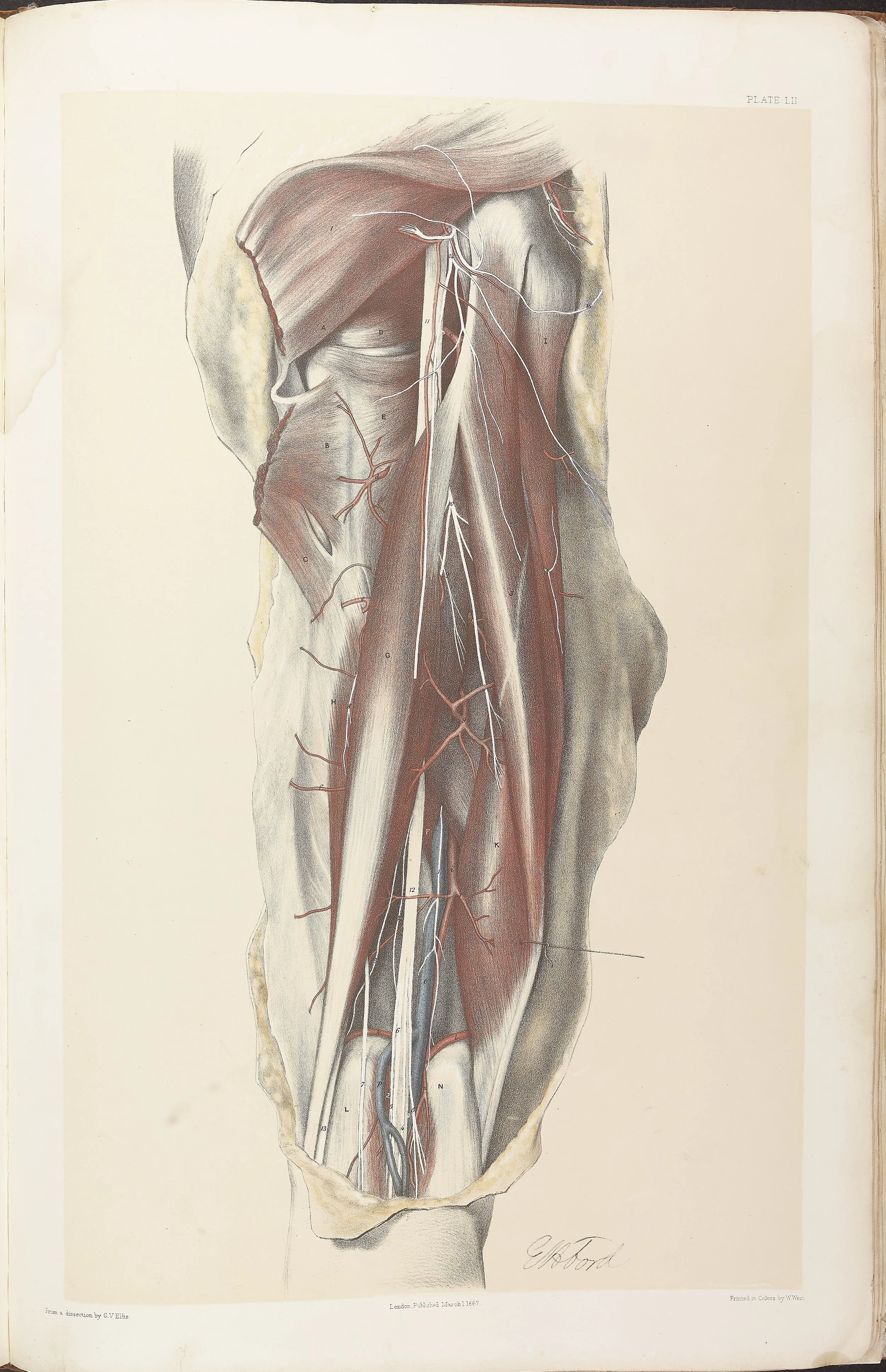
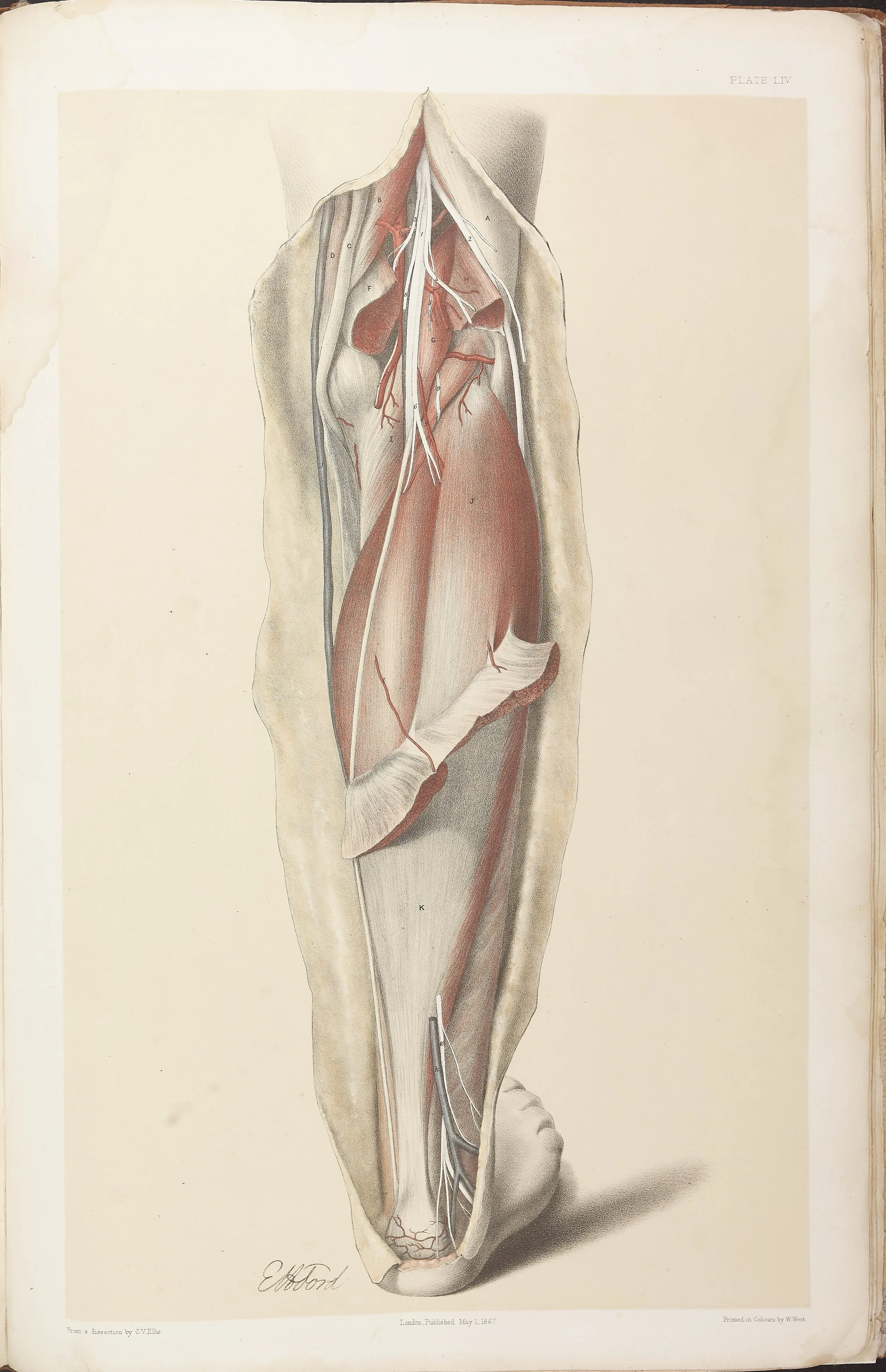
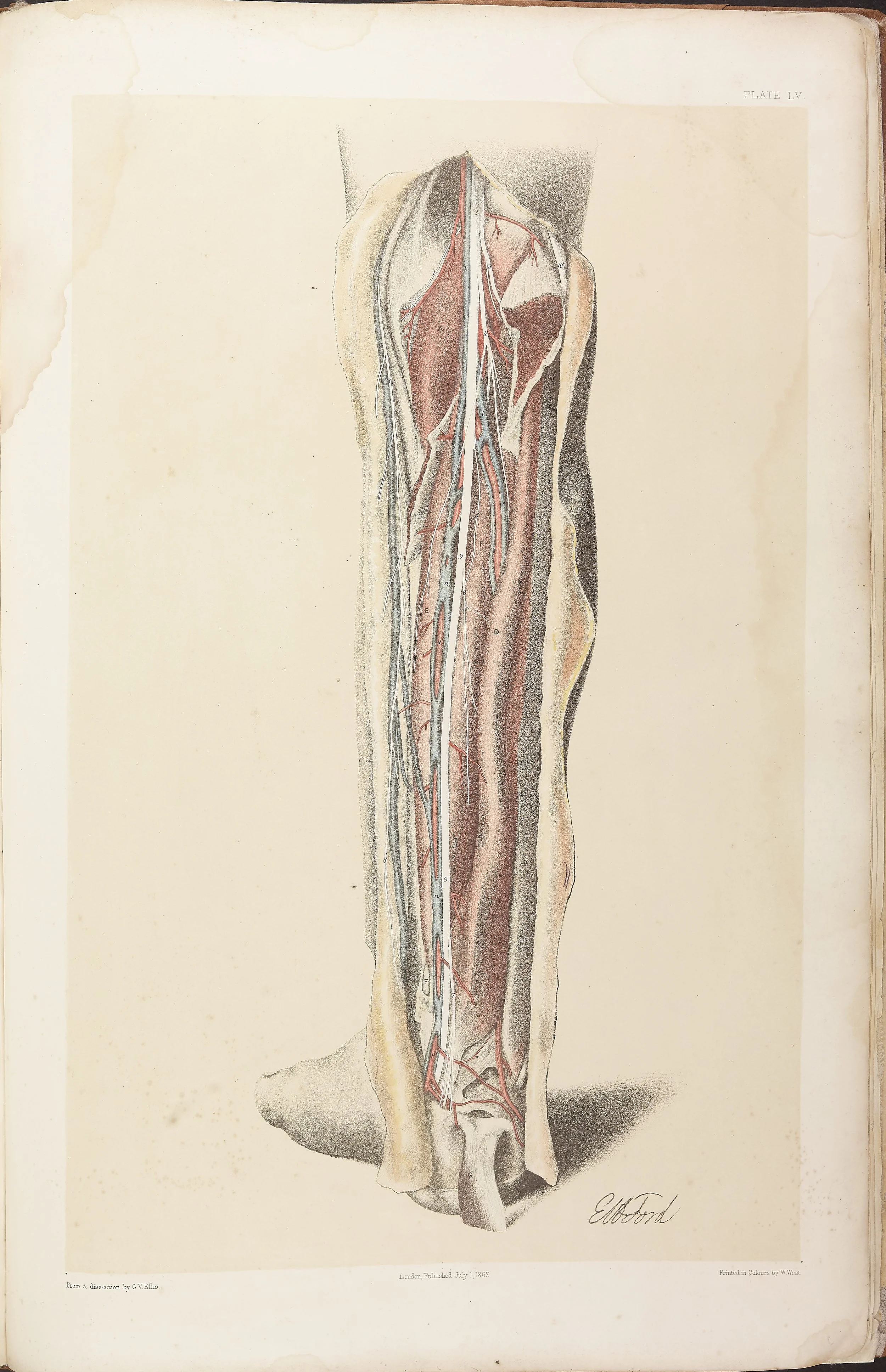
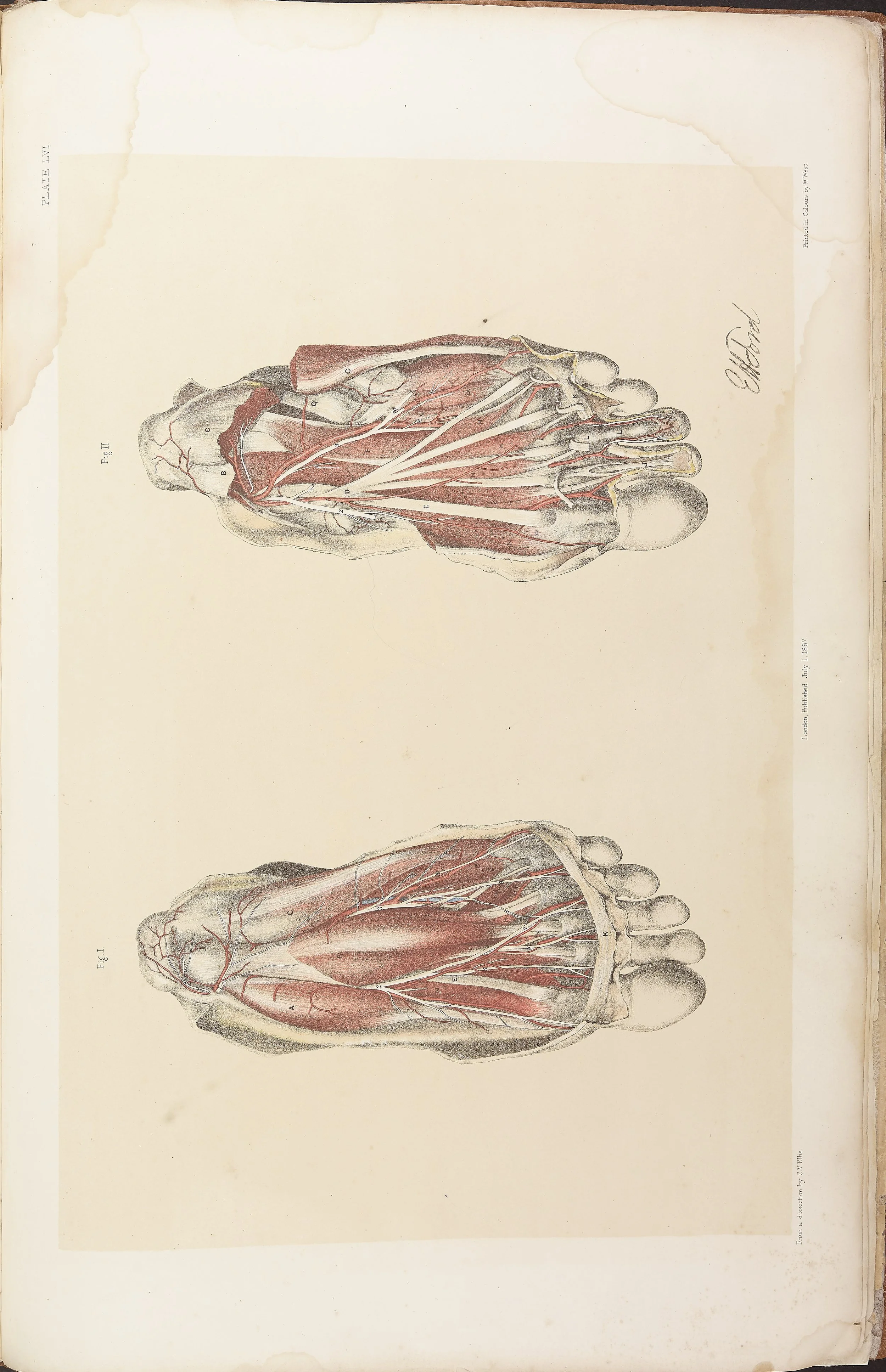
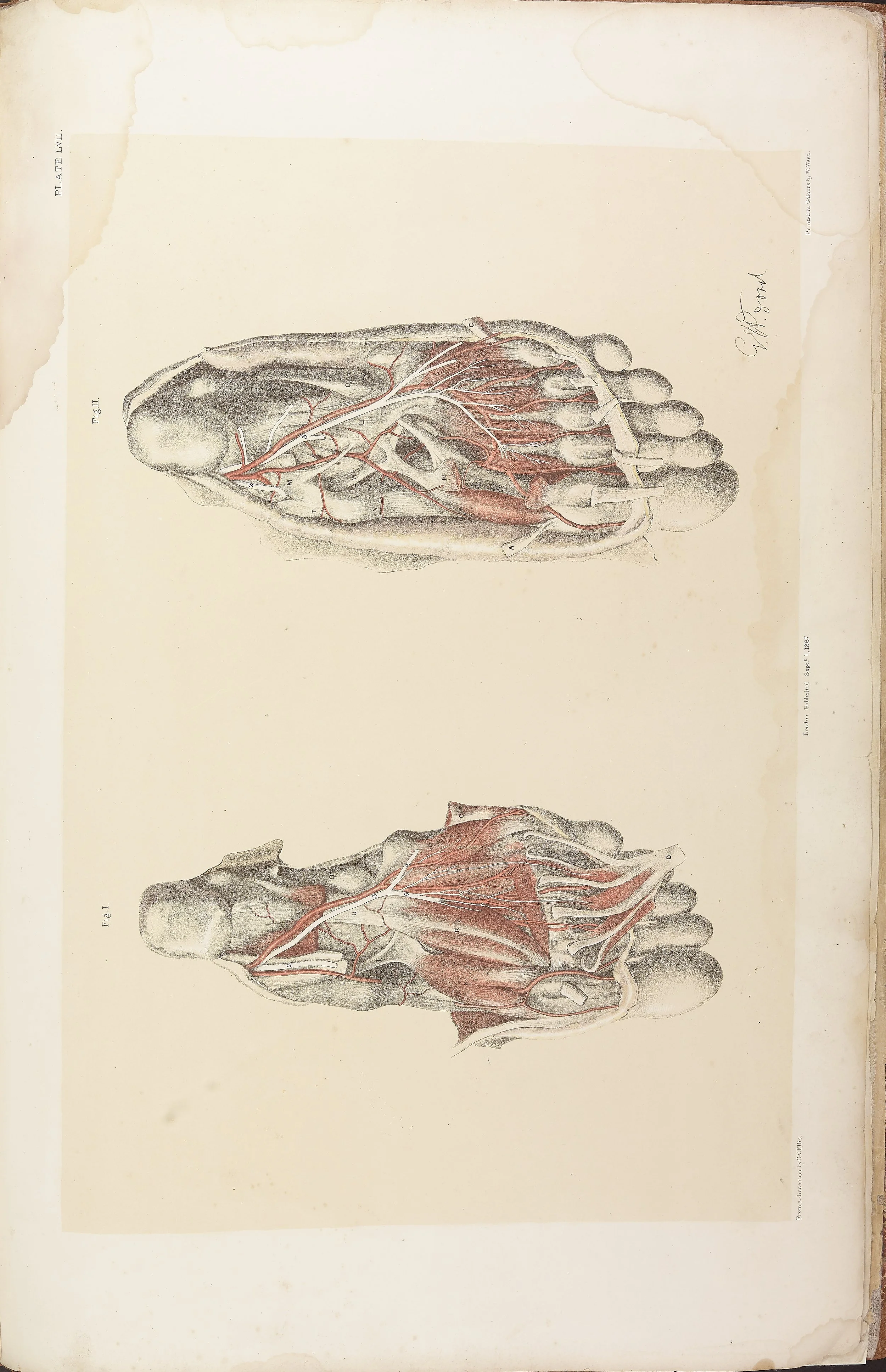
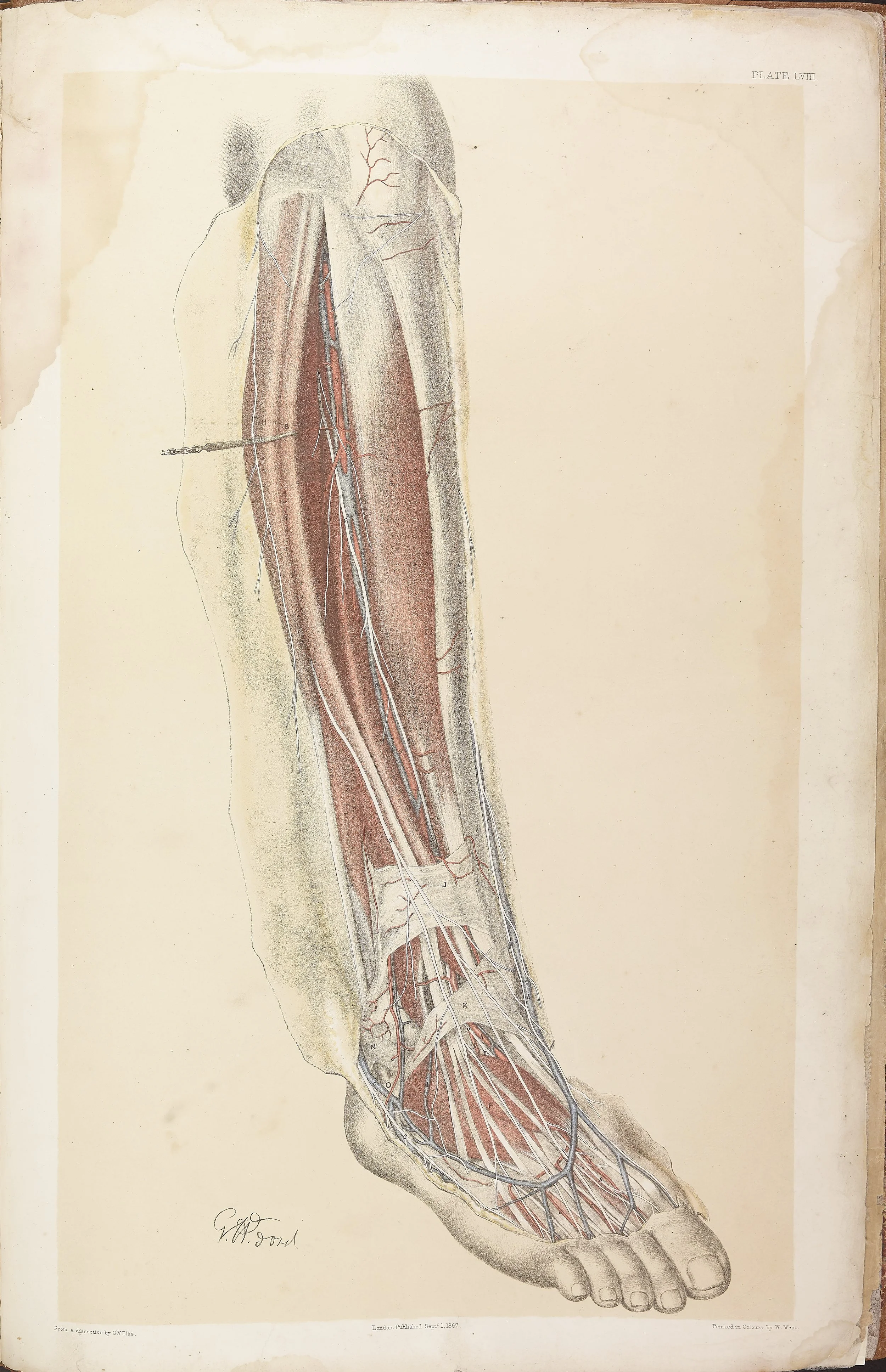
George Viner Ellis and G[eorge] H[enry] Ford collaborated on Dissection of the Human Body, published in 1867. As the preface suggests, the images were ‘designed to serve both as patterns for the Student to copy in his dissections, and as aids to him in after-study’. They used the new technique of chromolithography to reproduce the illustrations made by Ford. The plates were completed over a period of several years, with the first being dated 1 March 1863, and the last 6 September 1867.
GEORGE VINER ELLIS
George Viner Ellis was born on 25 September 1812, to parents William Viner Ellis and Elizabeth Stanhope, in Minsterworth, Gloucestershire. He had six siblings, Elizabeth (b. 1813), Robert (b. 1815), Mary (b. 1816), Edmund (b. 1821), Anne (b. 1823), and Susan[nah] (b. 1823). He attended the Crypt Grammer School and later the Cathedral Grammar School, and was apprenticed to a Dr Buchanan of Gloucestershire. He received his professional education at University College, and became MRCS (Membership of the Royal Colleges of Surgeons) in 1835. He was Demonstrator of Anatomy at University College under Professor Richard Quain, whom he succeeded in 1850 as Chair of Anatomy, until 1877 when he resigned with the title of Emeritus Professor, to live his retirement in the country. His most famous work, Demonstrations of Anatomy: being a Guide to the Knowledge of the Human Body by Dissections, appeared in 1840 and became the standard text-book for English and American dissections.
He died on 25 April 1900 at his home in Severn Bank, Minsterworth, Gloucester. His obituary described that though he was ‘too austere and unsympathetic in manner and strict in discipline to be popular with the great body of students, he was held in the highest respect by all, and in almost affectionate regard by a chosen few’. The obituary went on to suggest that ‘[t]hough he disdained the art of clothing the dry bones of anatomy with any flesh of human interest, his lectures were so exact in detail and so clear in expression that they were always listened to with close attention if not with pleasure’. It also alluded to an anecdote in which:
‘[t]he students, it is said, once petitioned the Council for leave to purify the atmosphere of the practical anatomy rooms with tobacco; the petition was granted, whereupon the Professor at once tendered his resignation, which was withdrawn only when he had received assurances that he should never again be asked to tolerate the accursed thing’.
In his retirement, George Viner Ellis turned his hand to the study of horticulture and the study of apples, following in the footsteps of his father William, who had been a renowned pomologist in the nineteenth century, oft mentioned in Robert Hogg’s The Fruit Manual, a reference book published in 1884. He died on 25 April 1900.