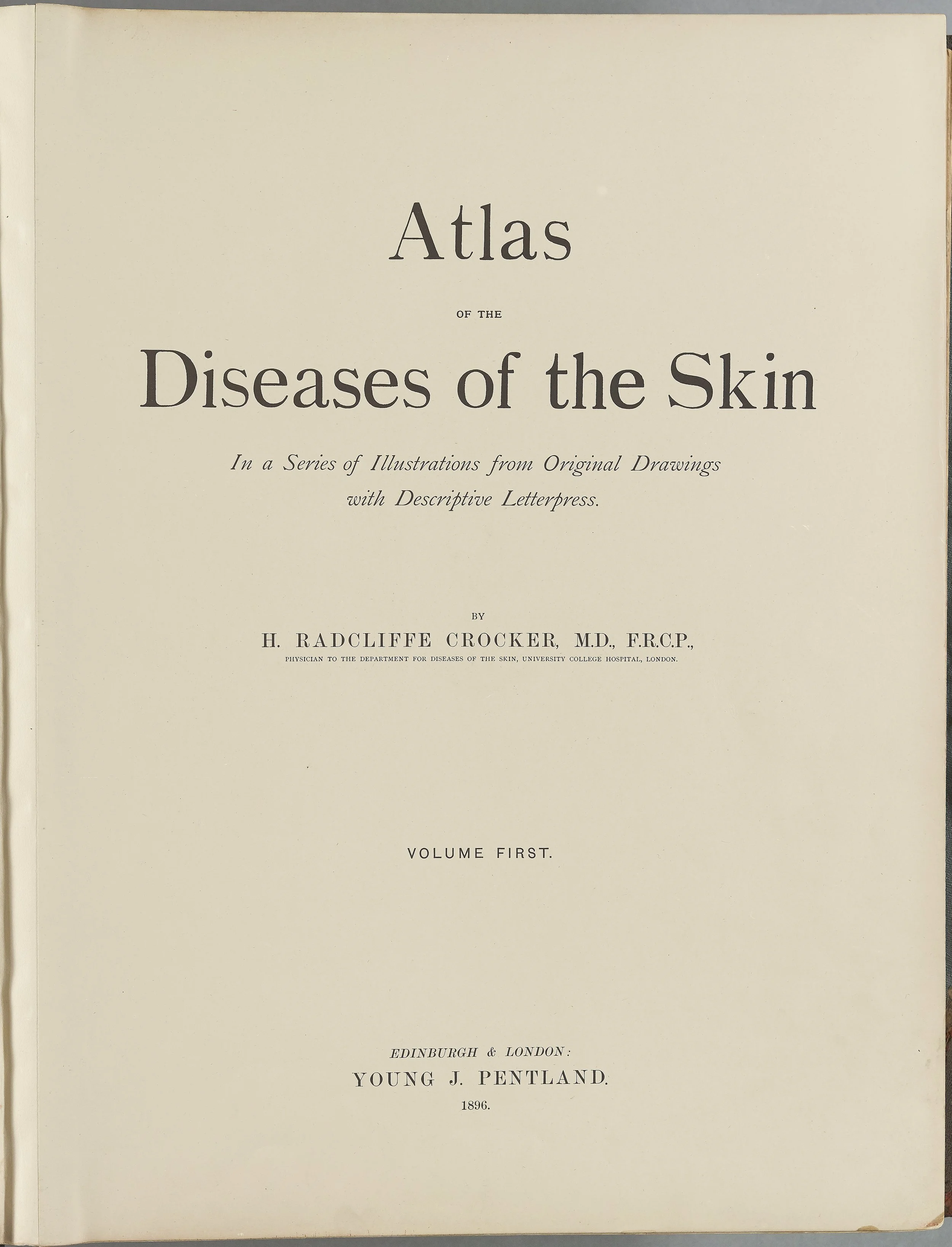
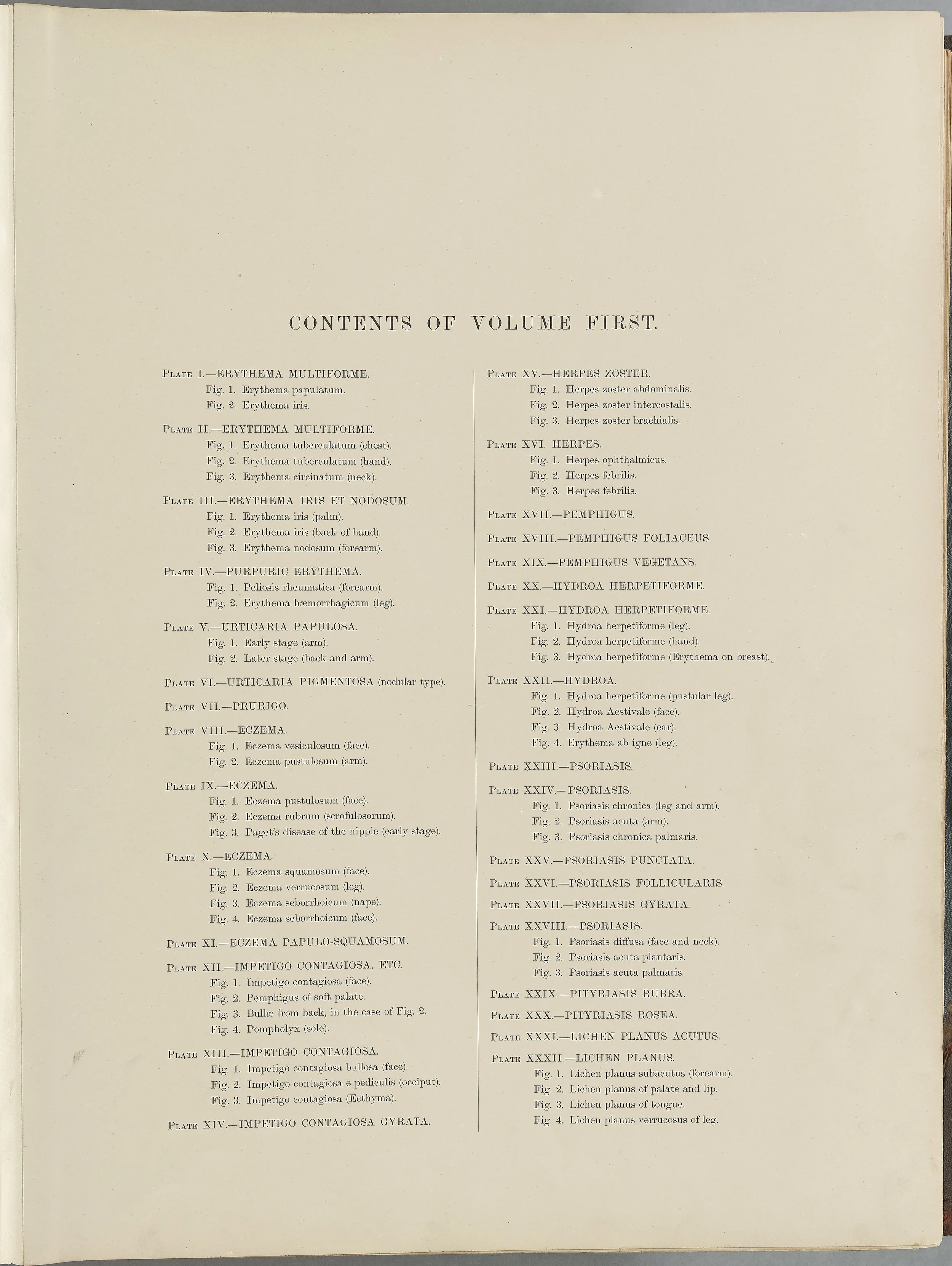
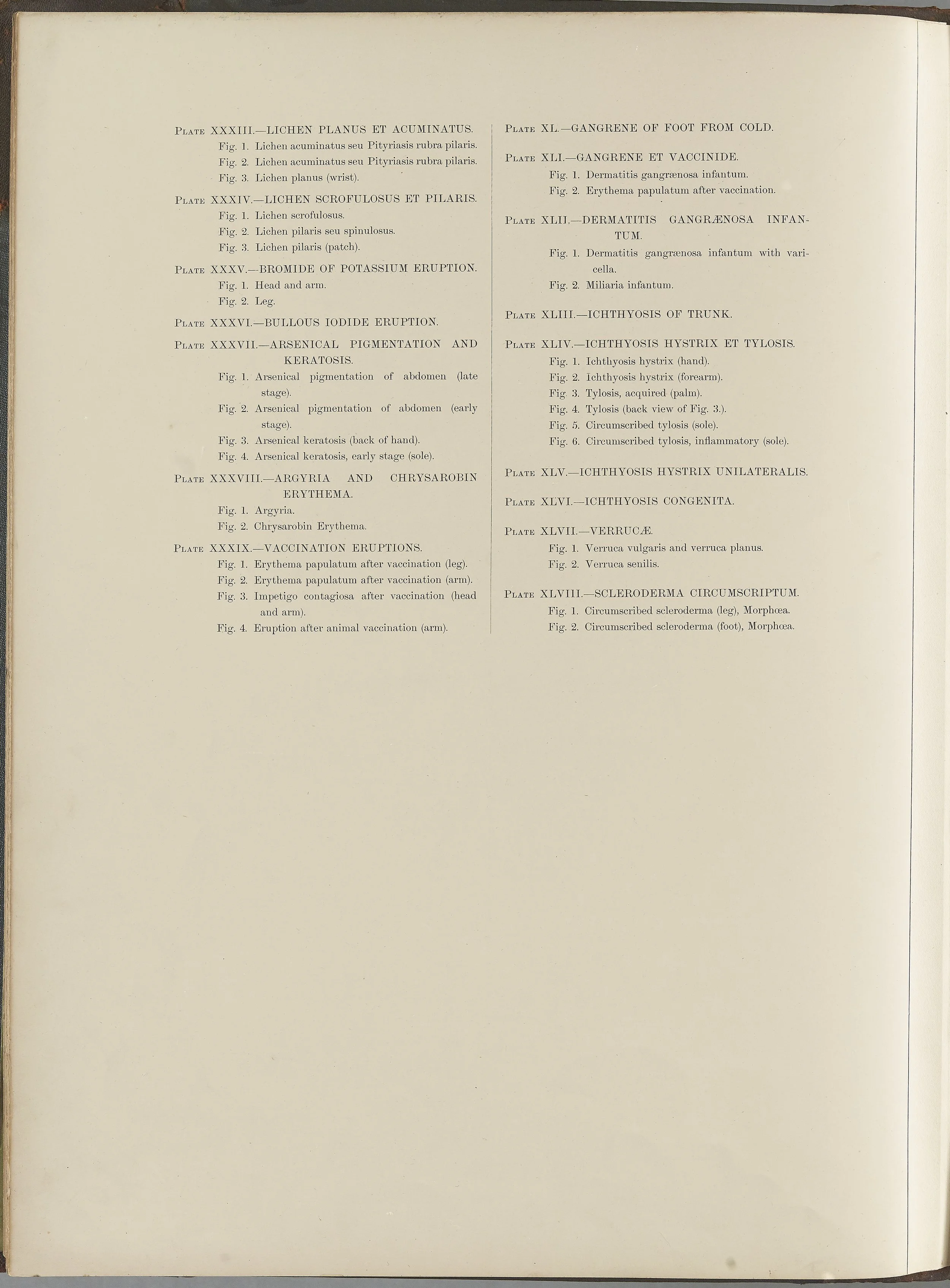
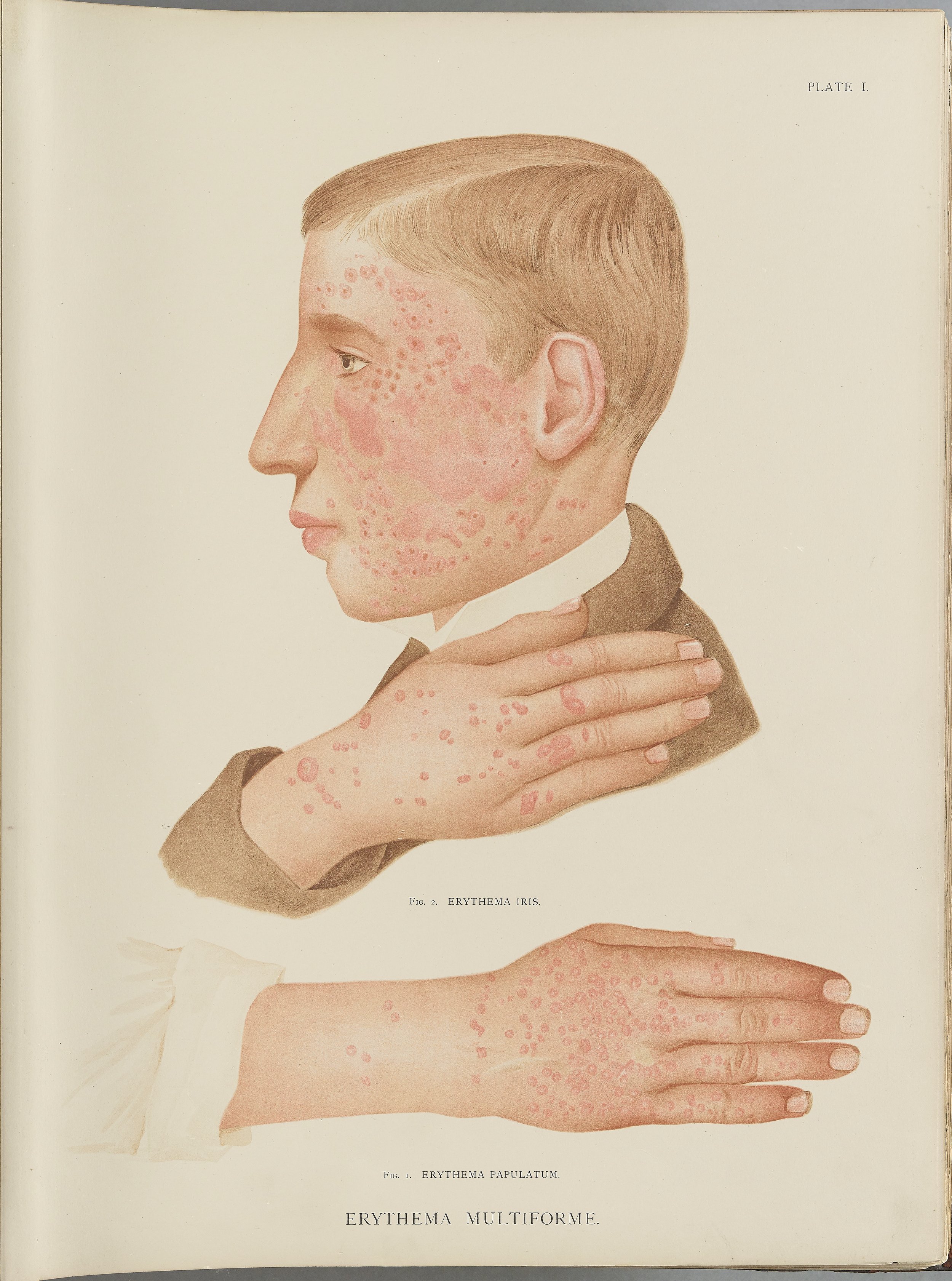
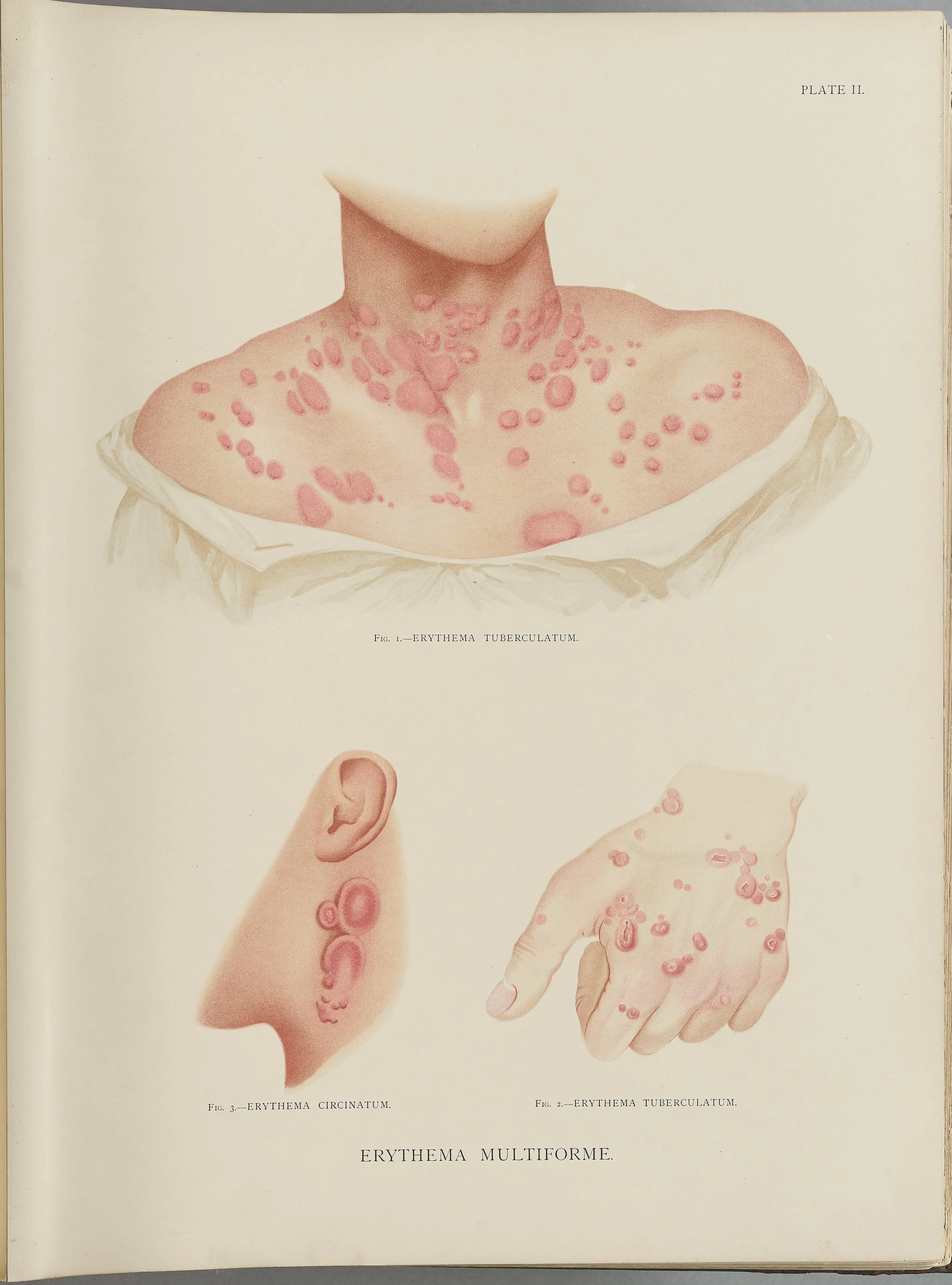
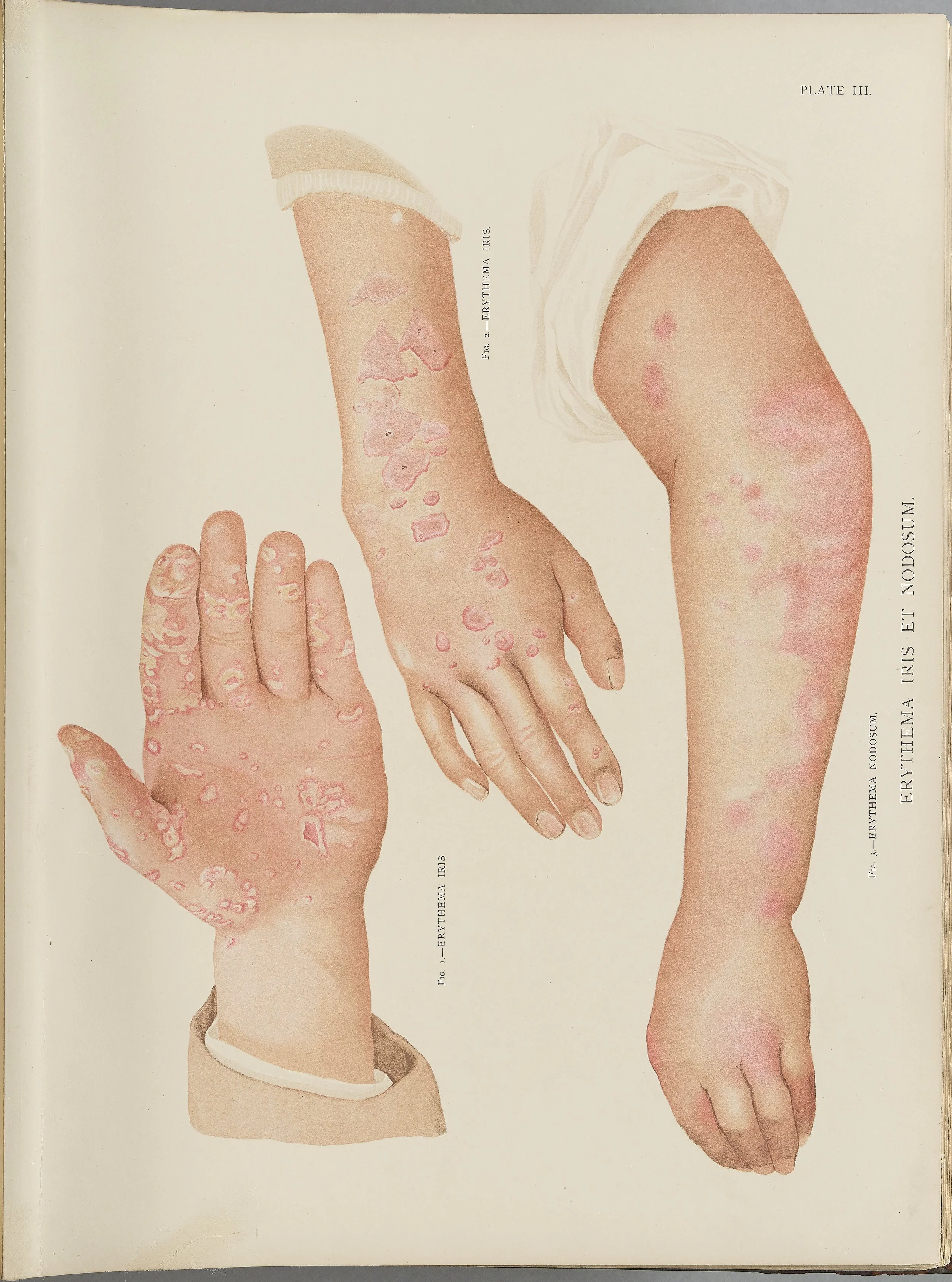
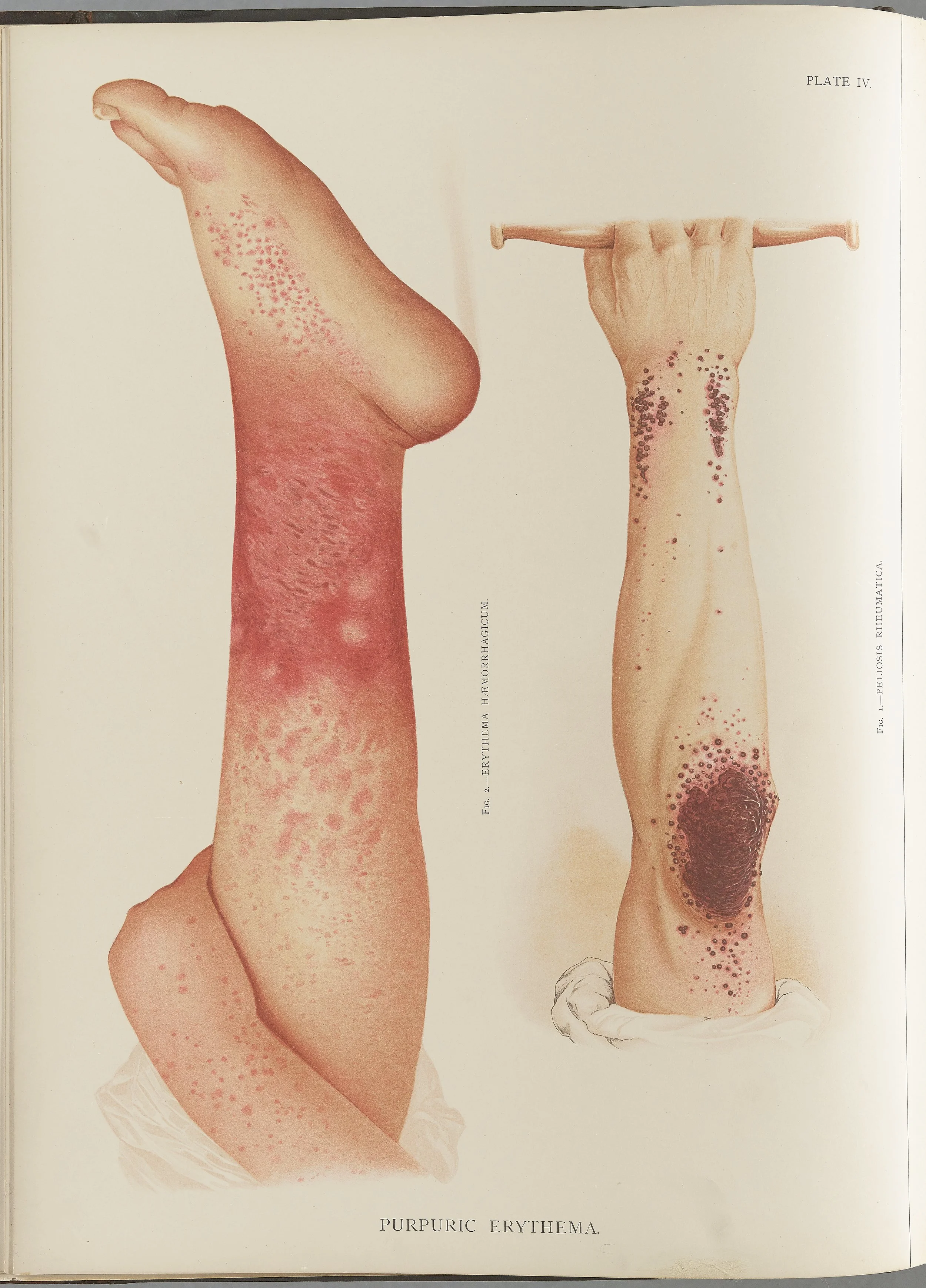
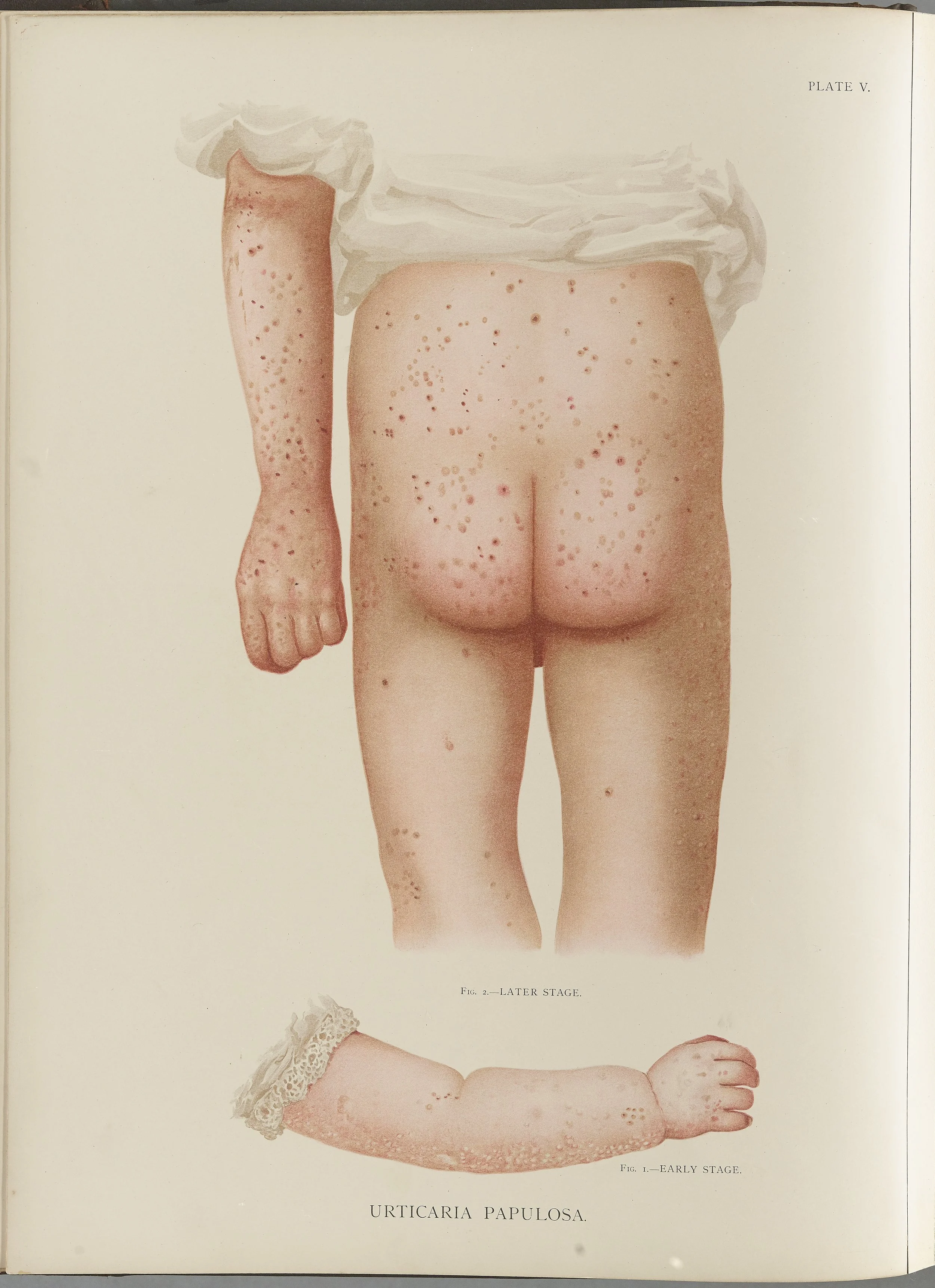
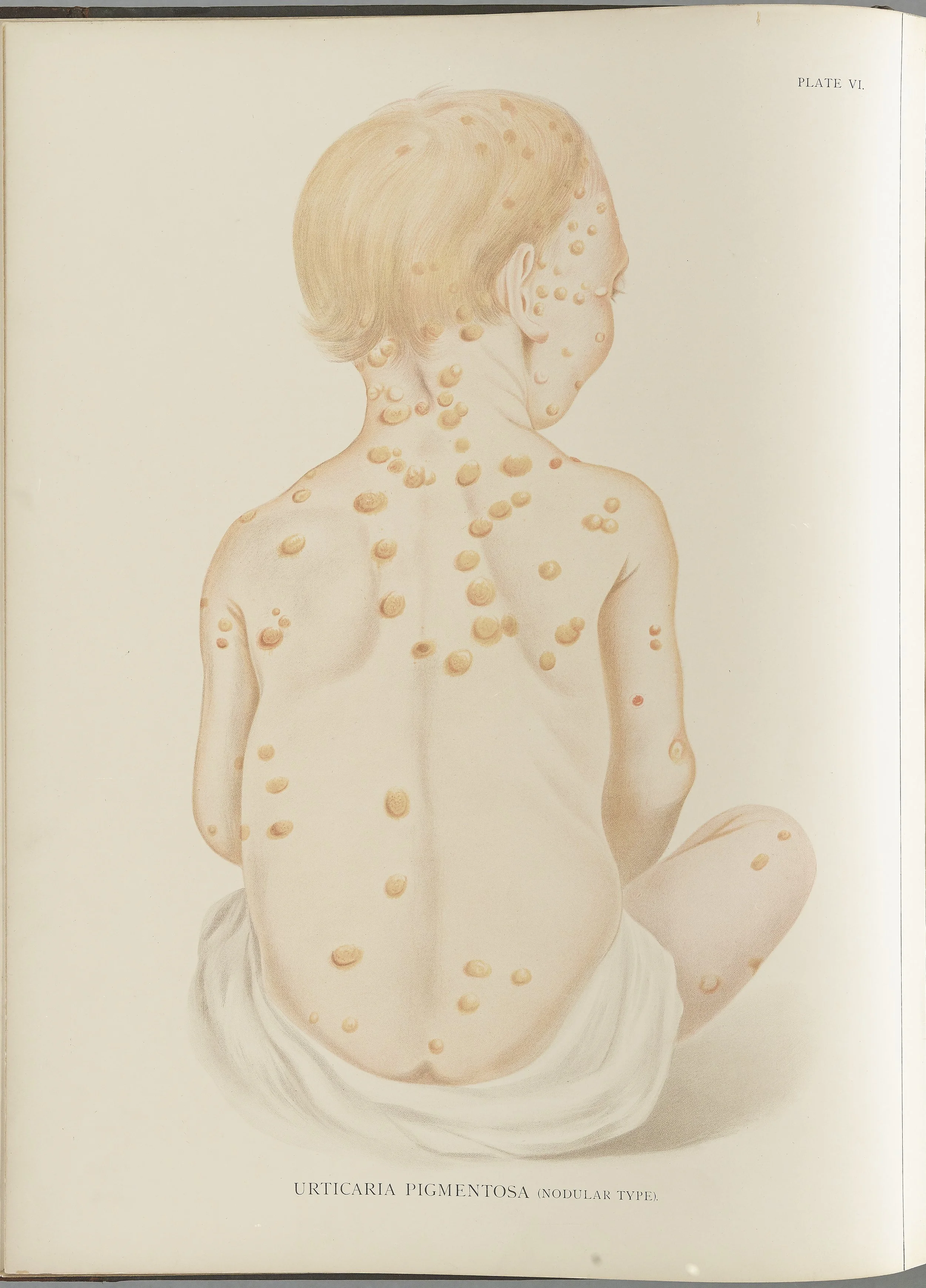
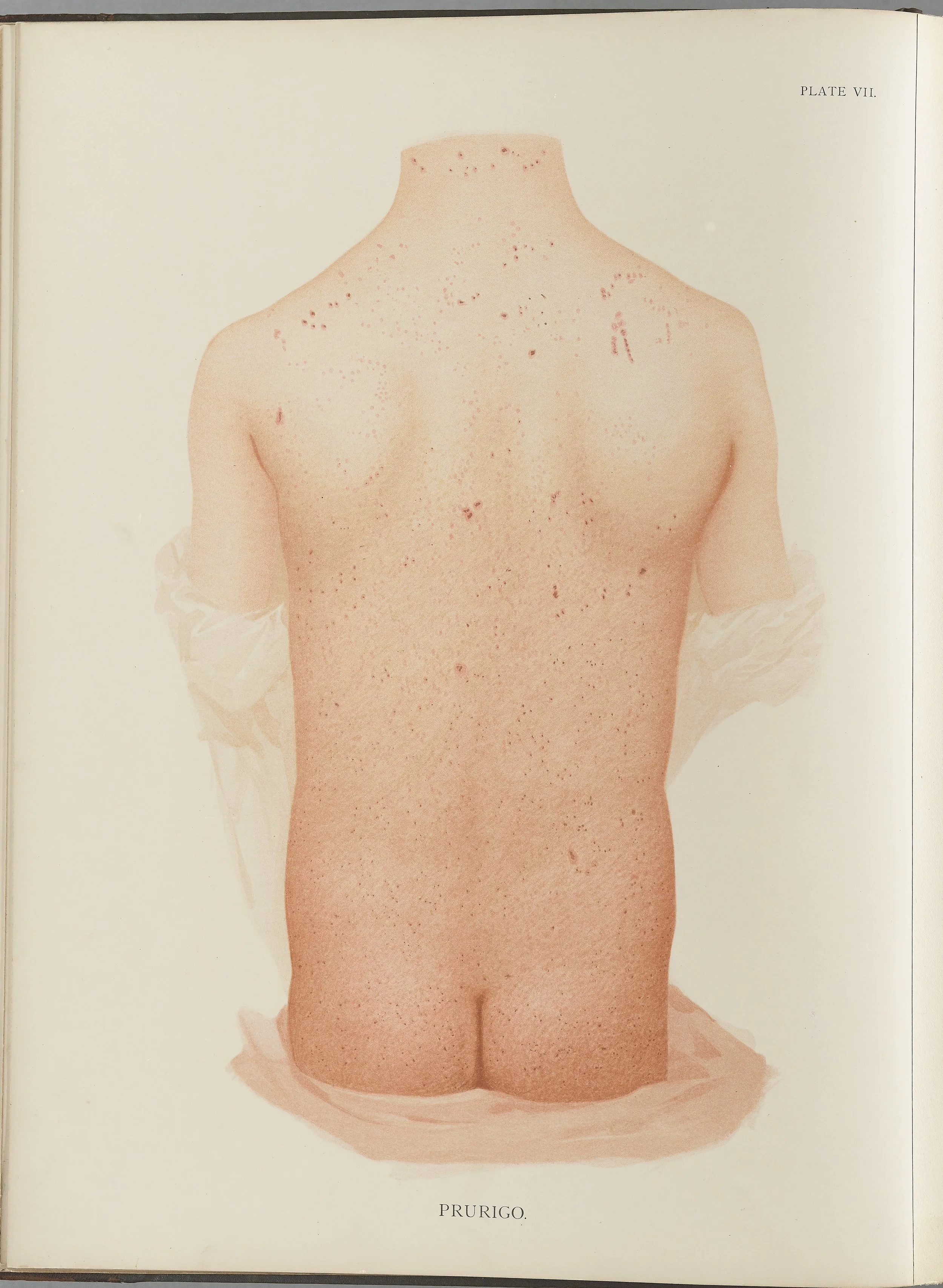
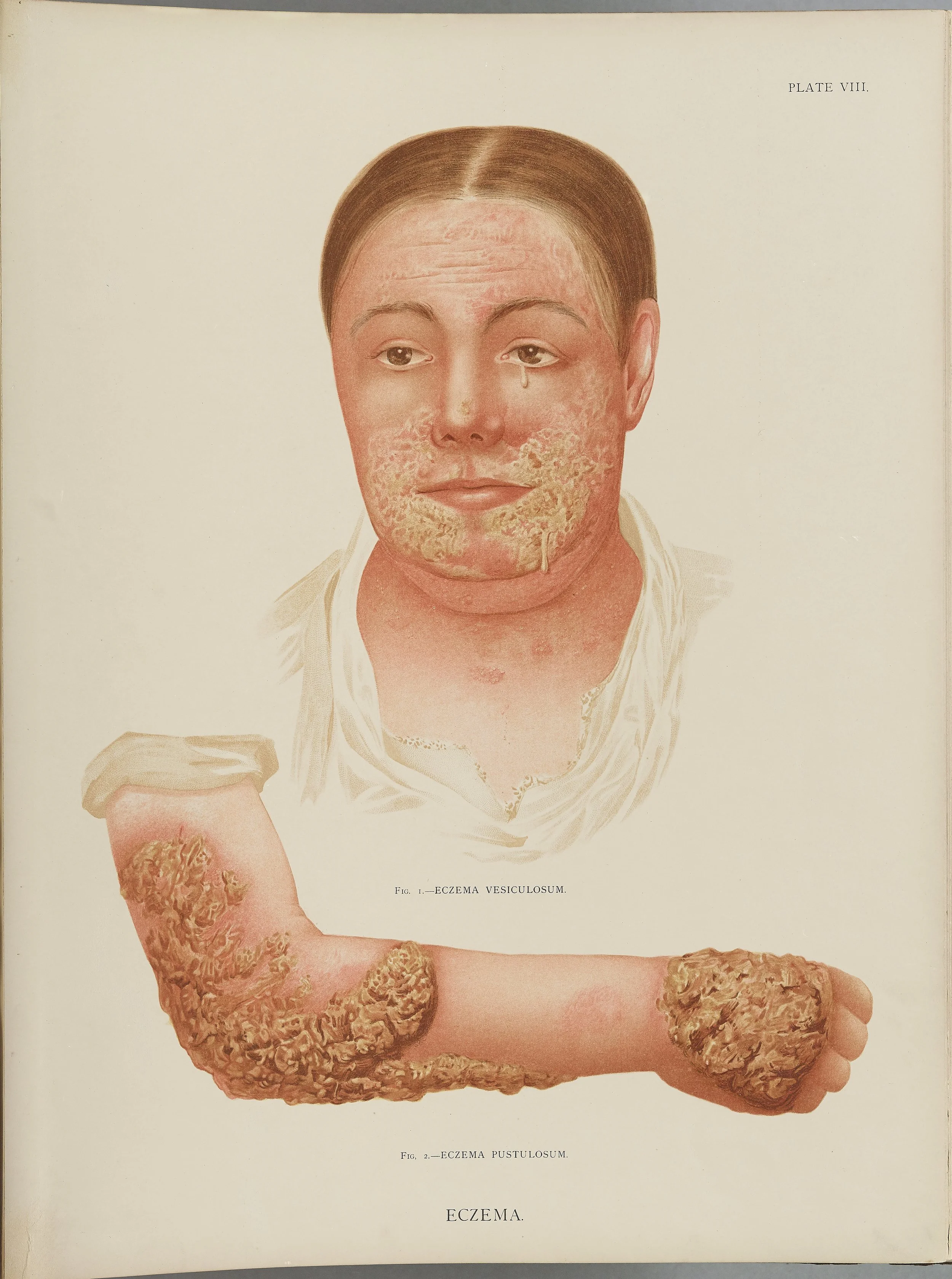
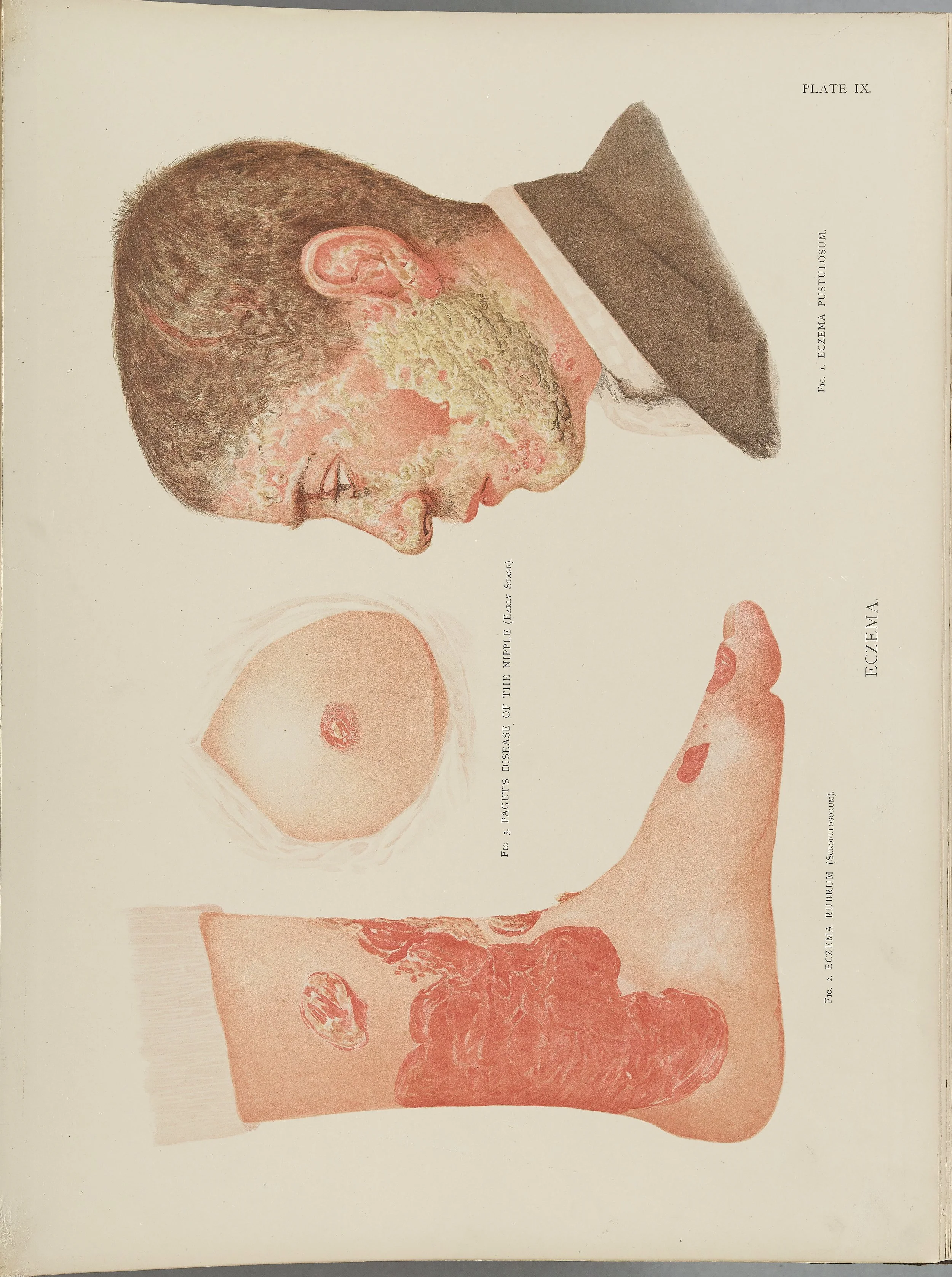
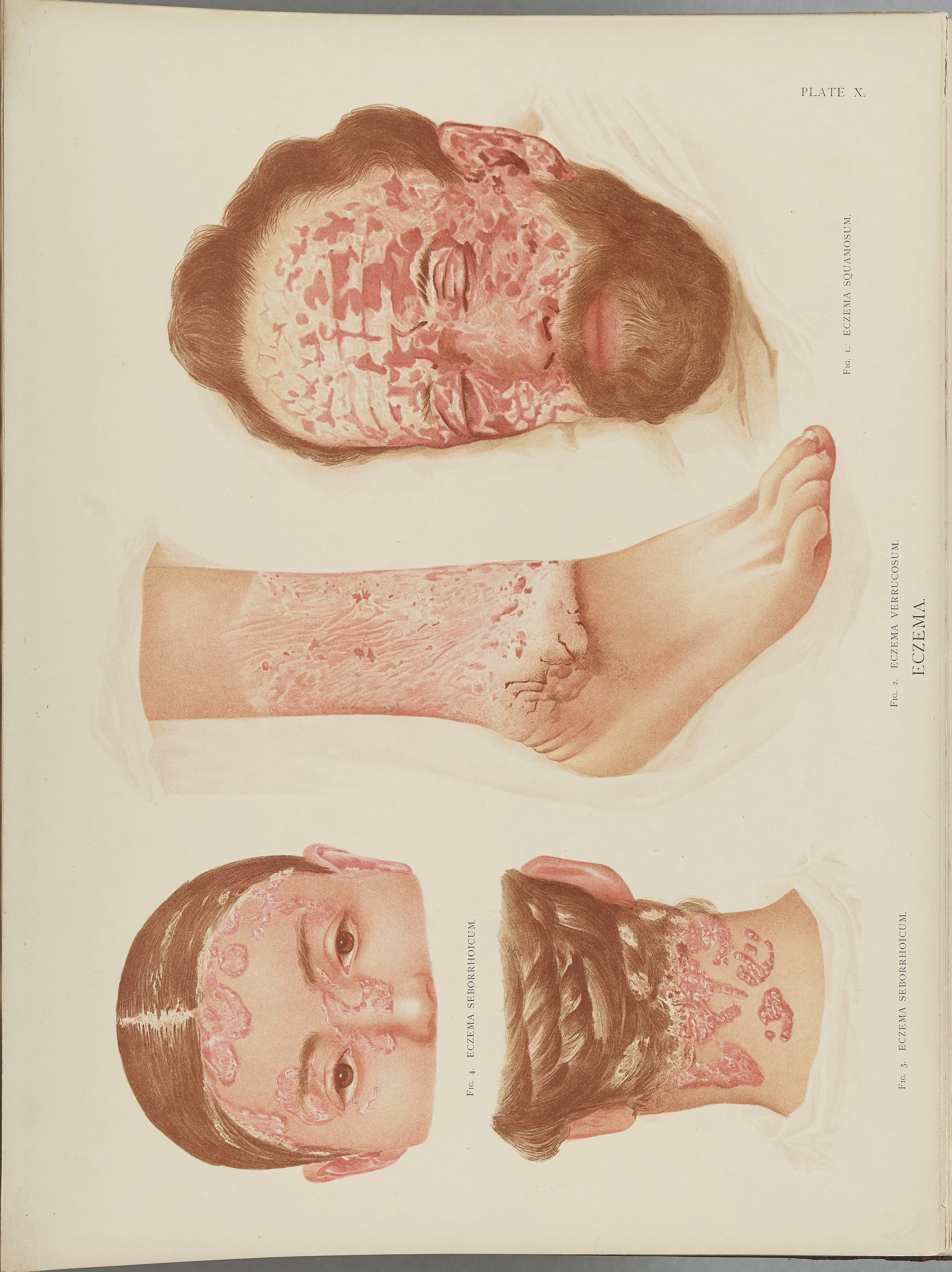
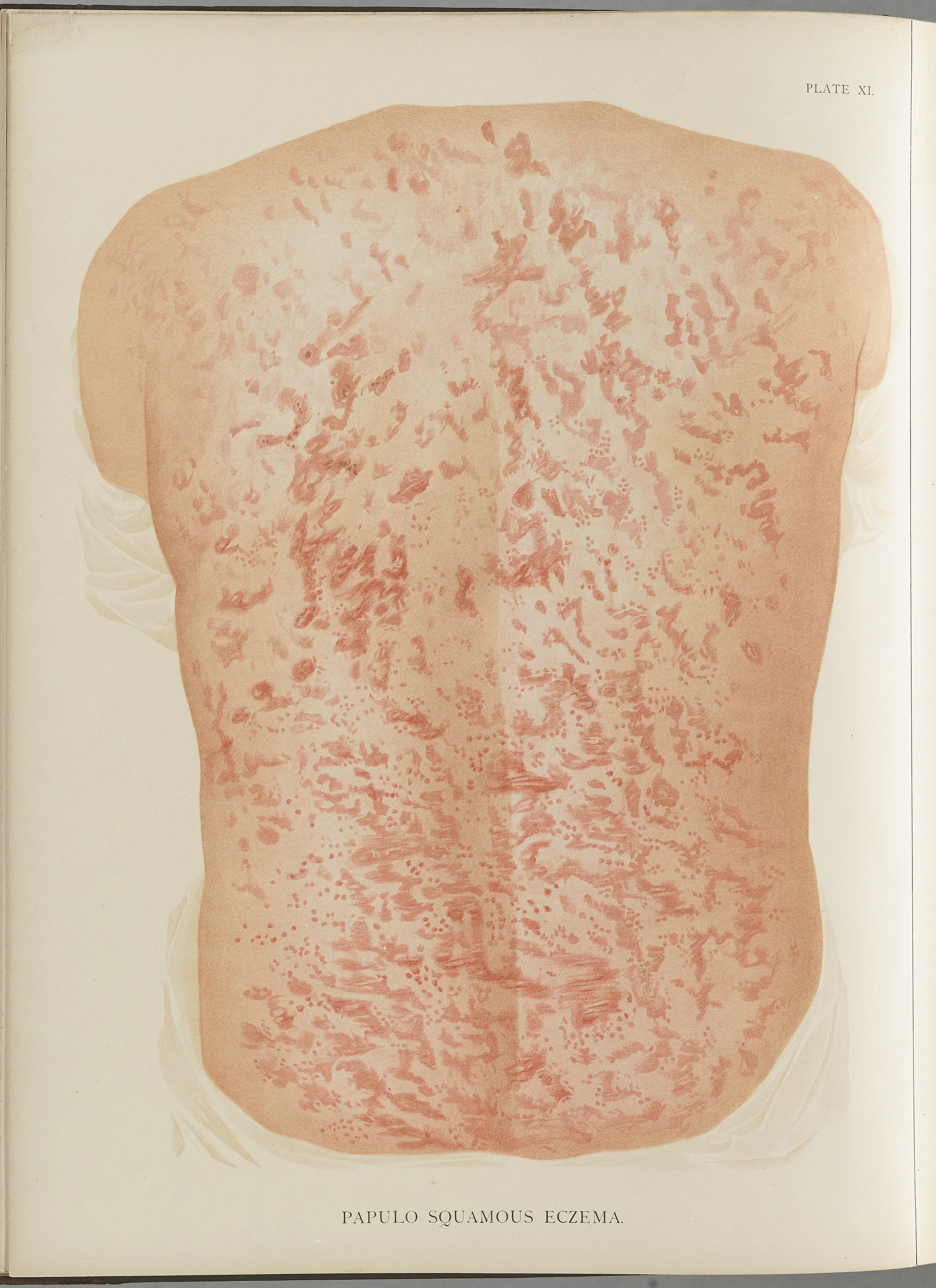
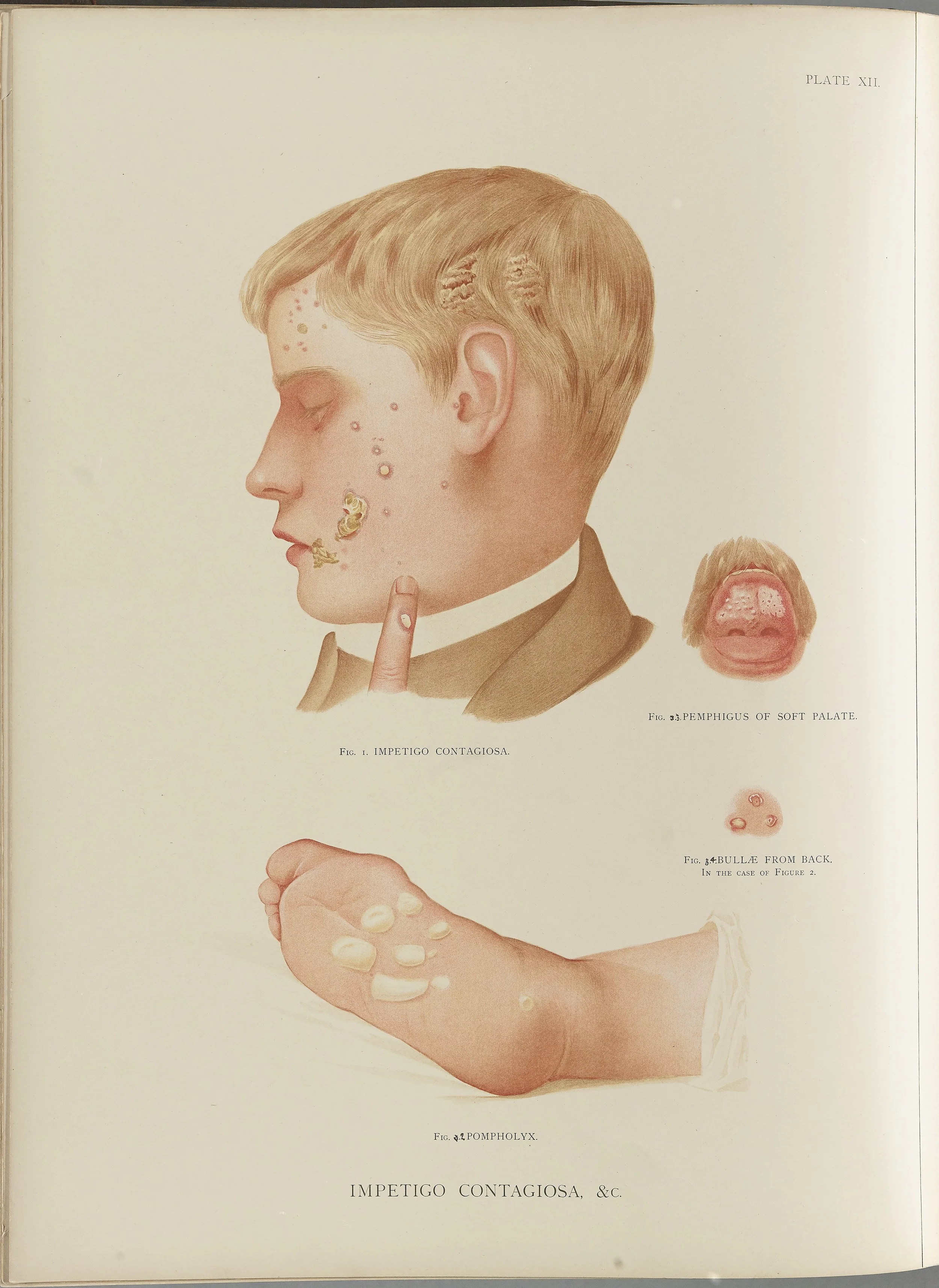
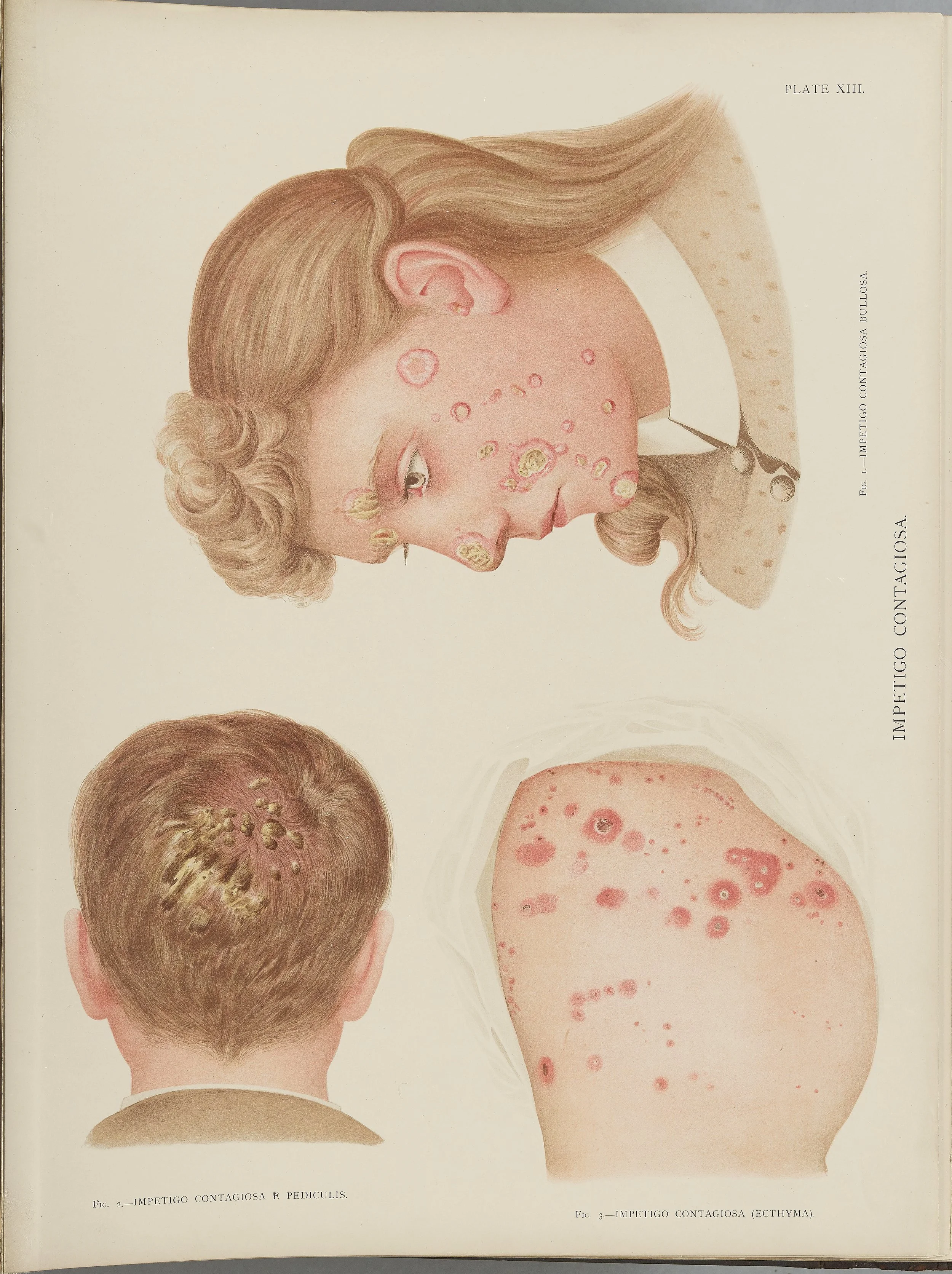
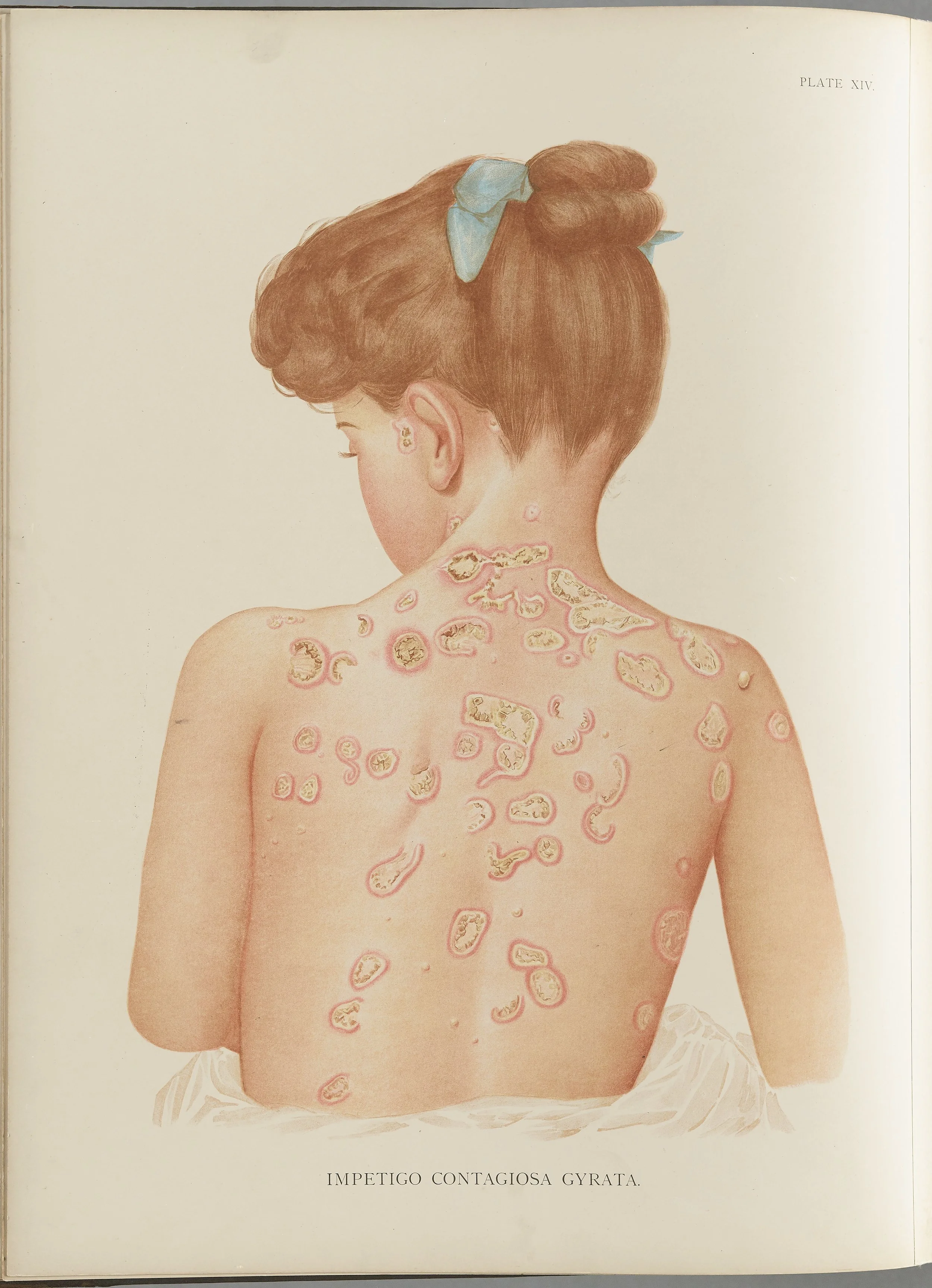
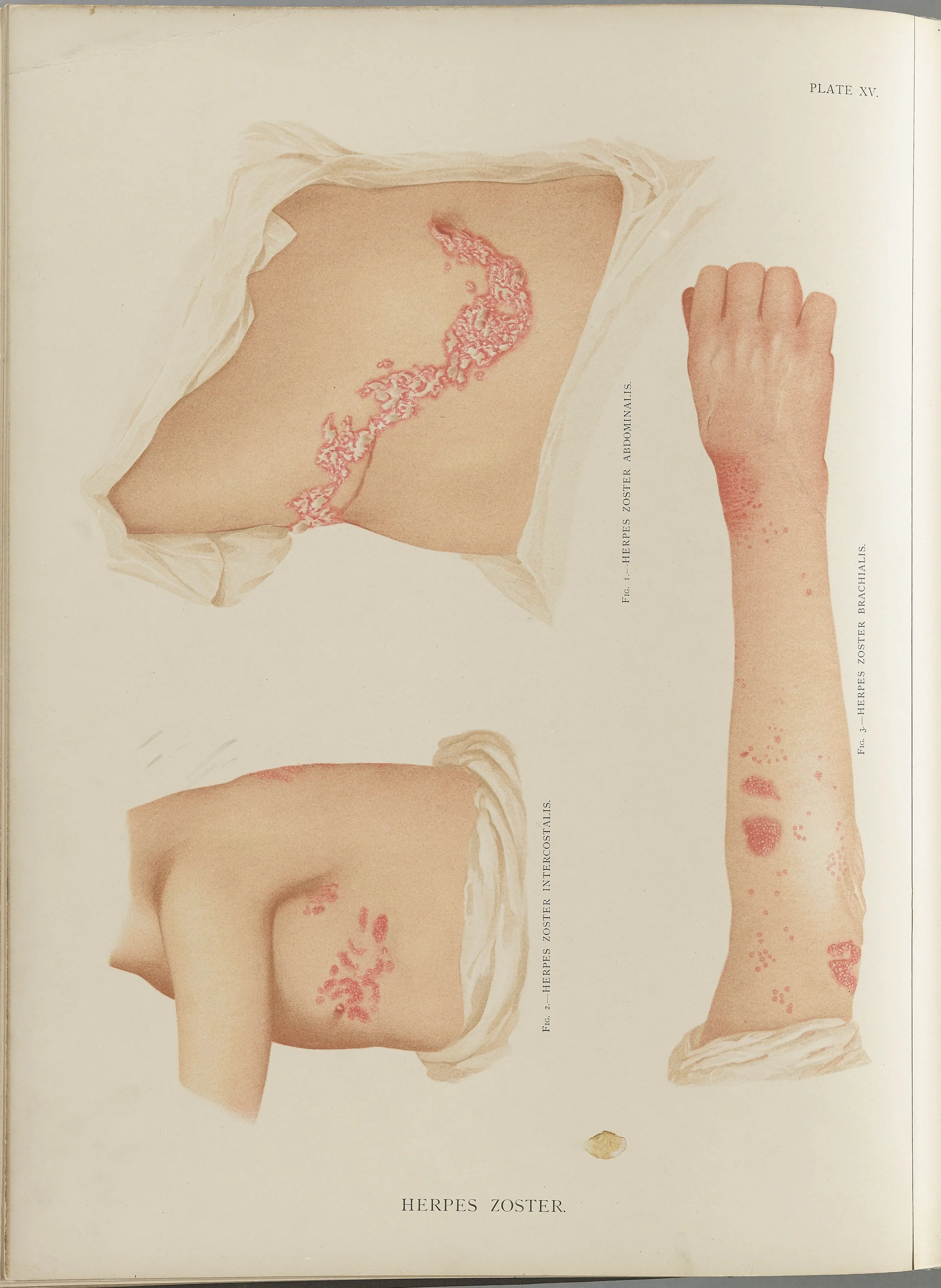
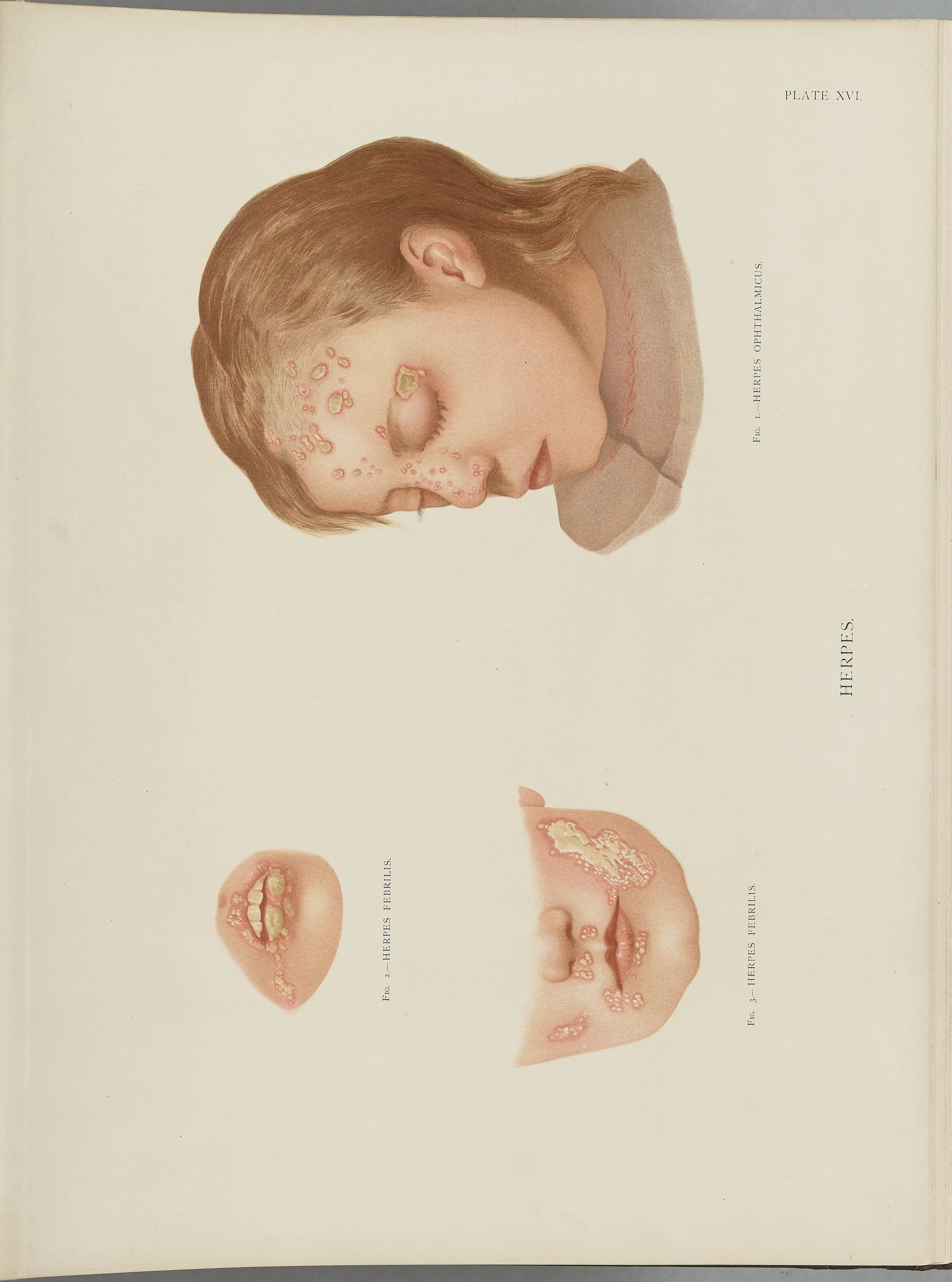
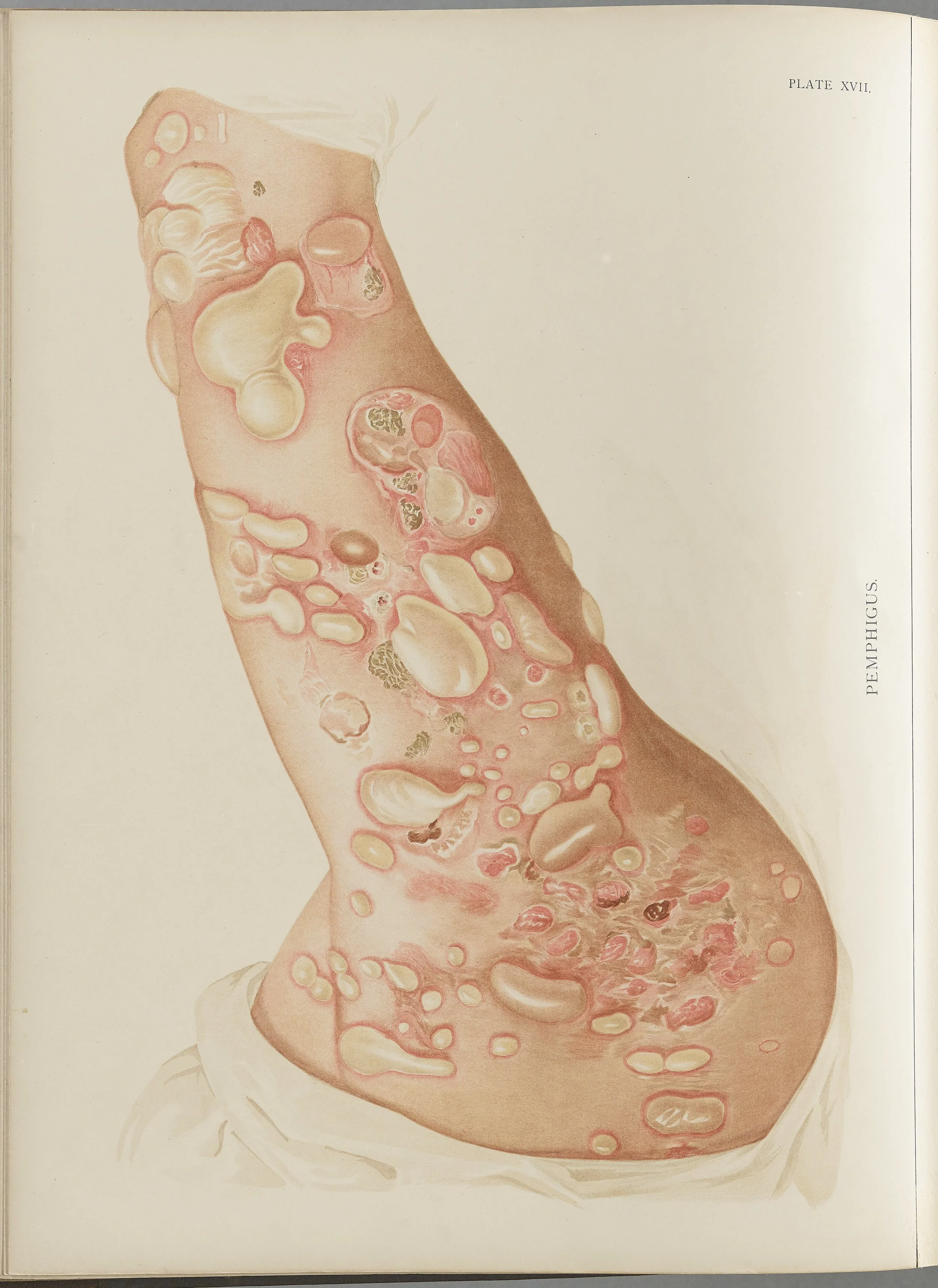
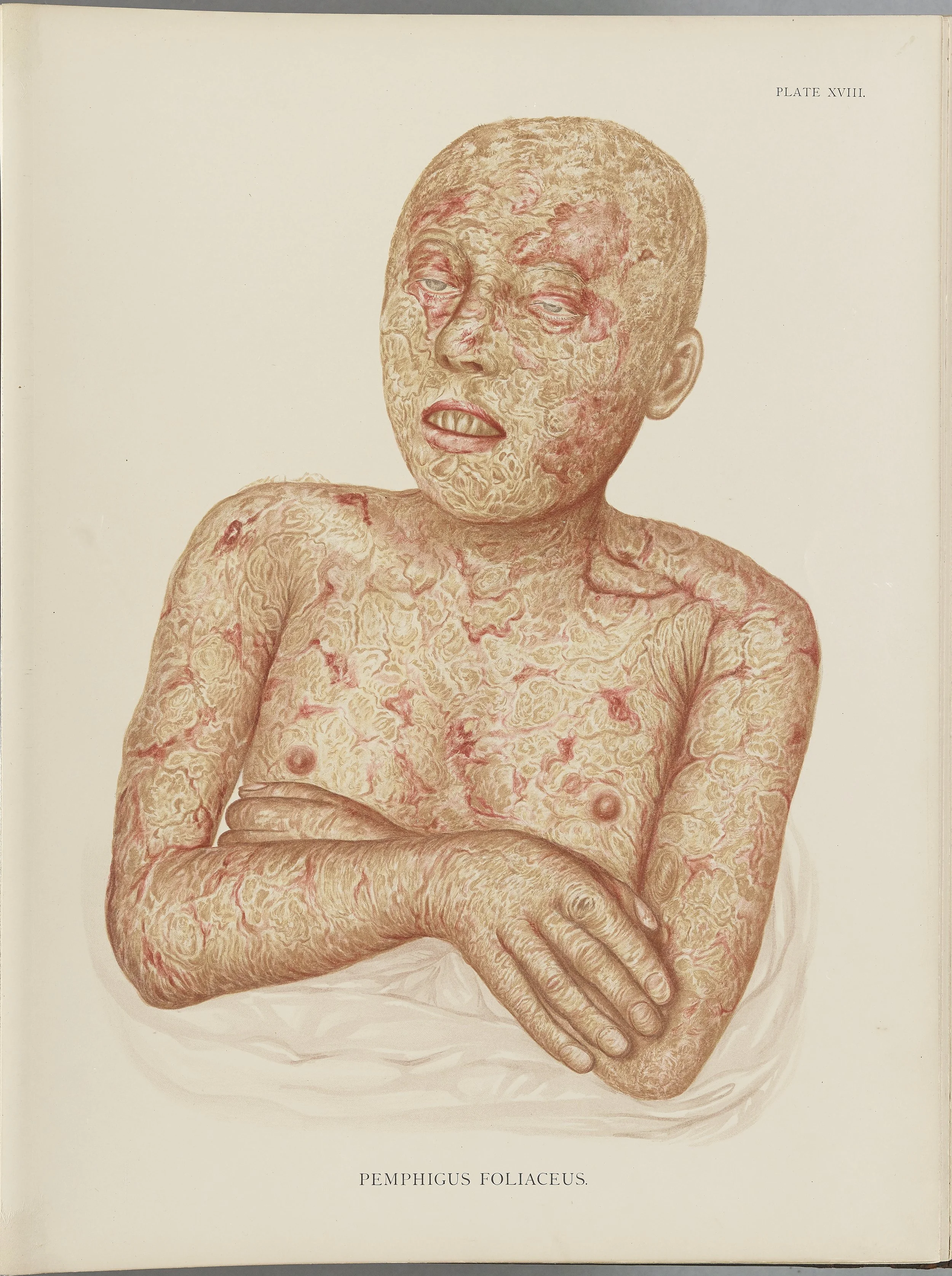
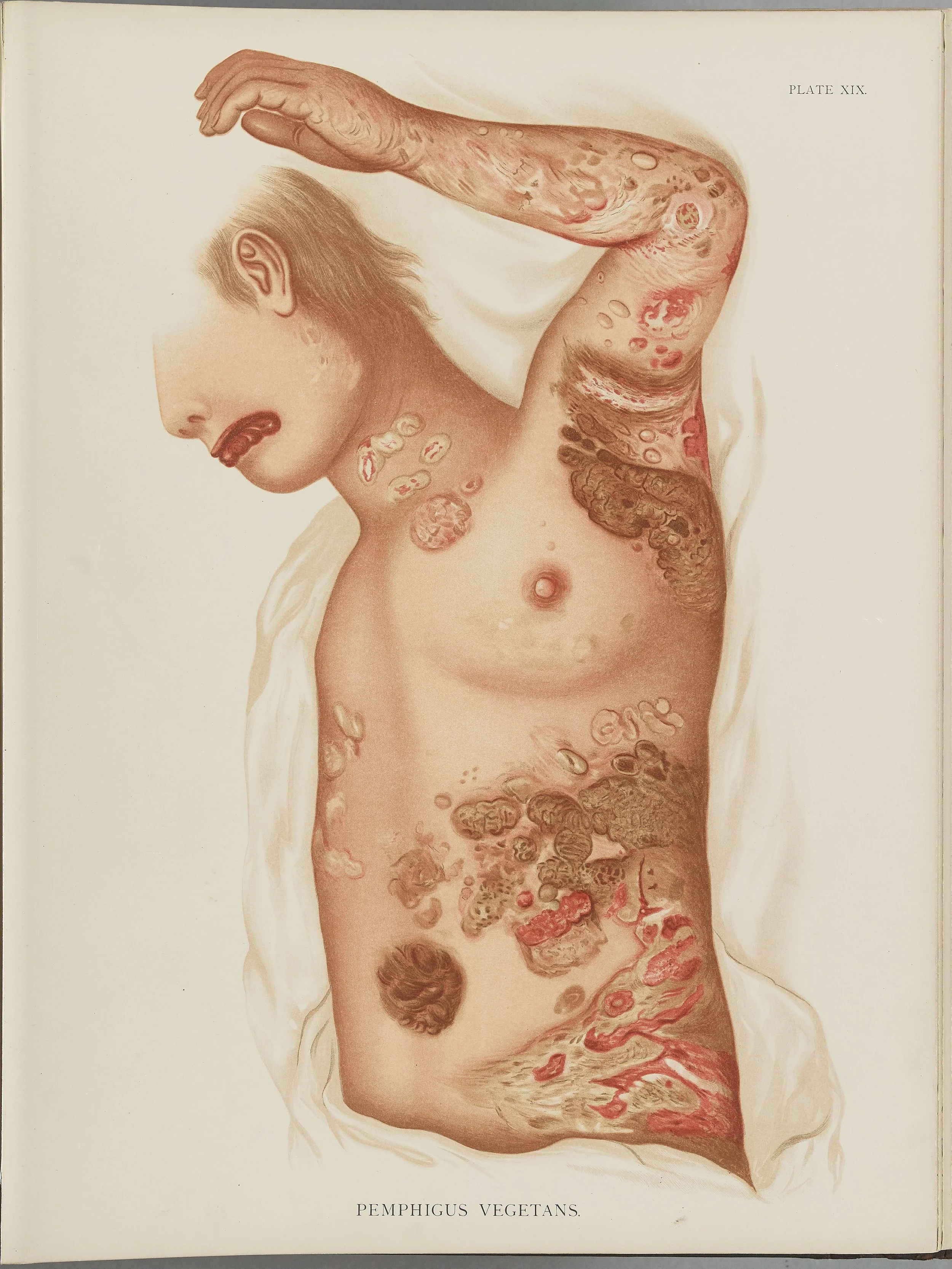
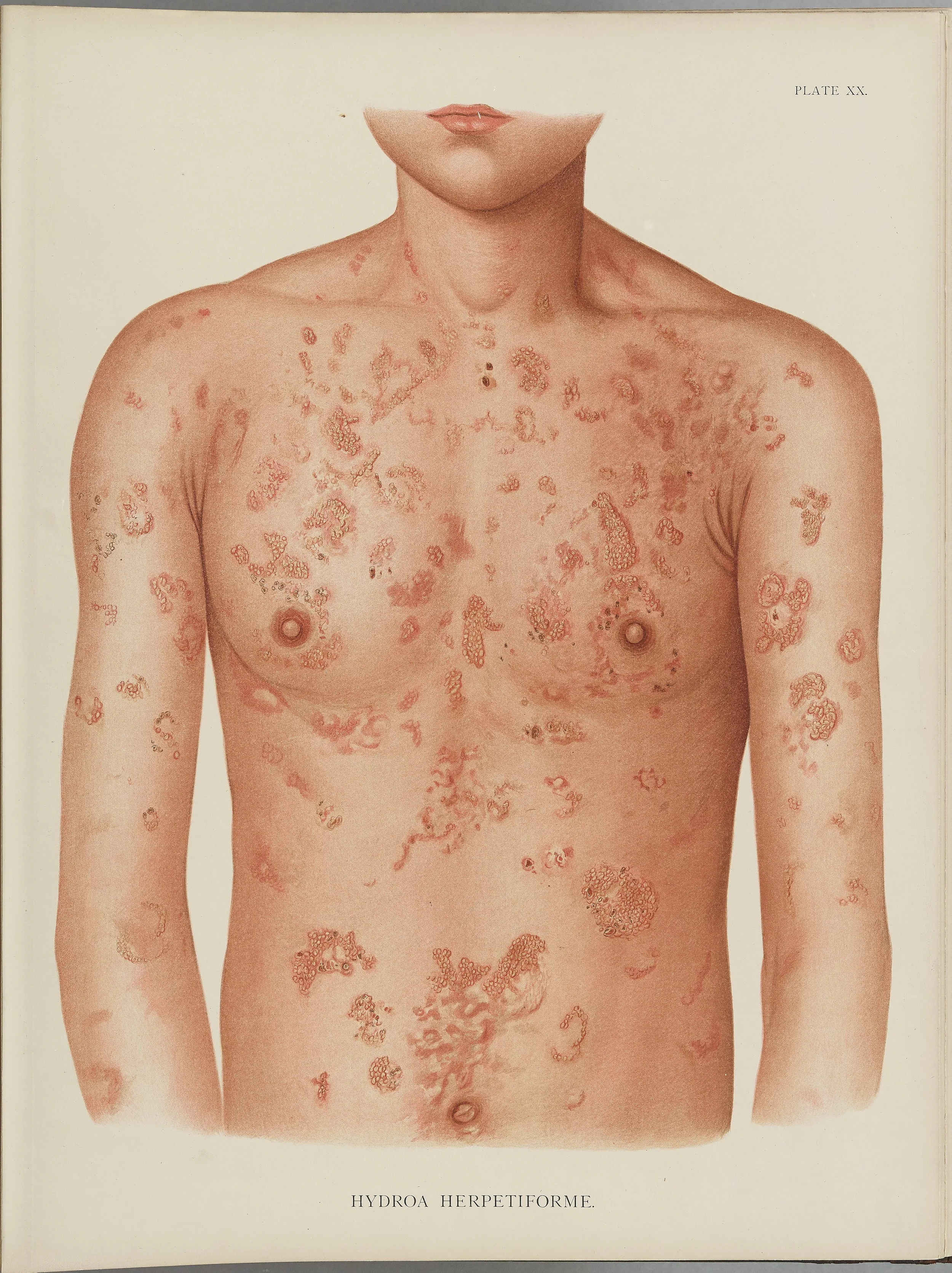
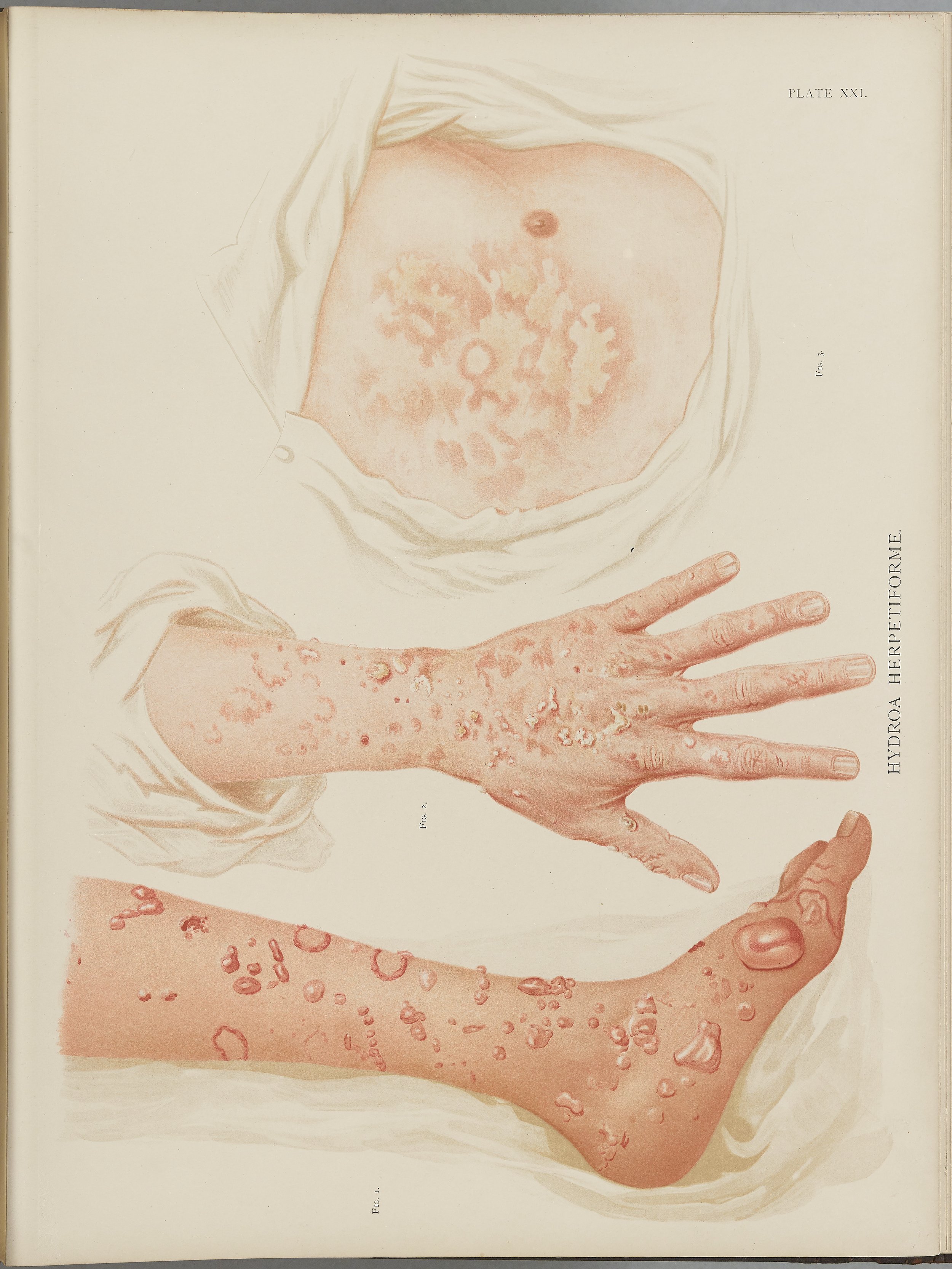
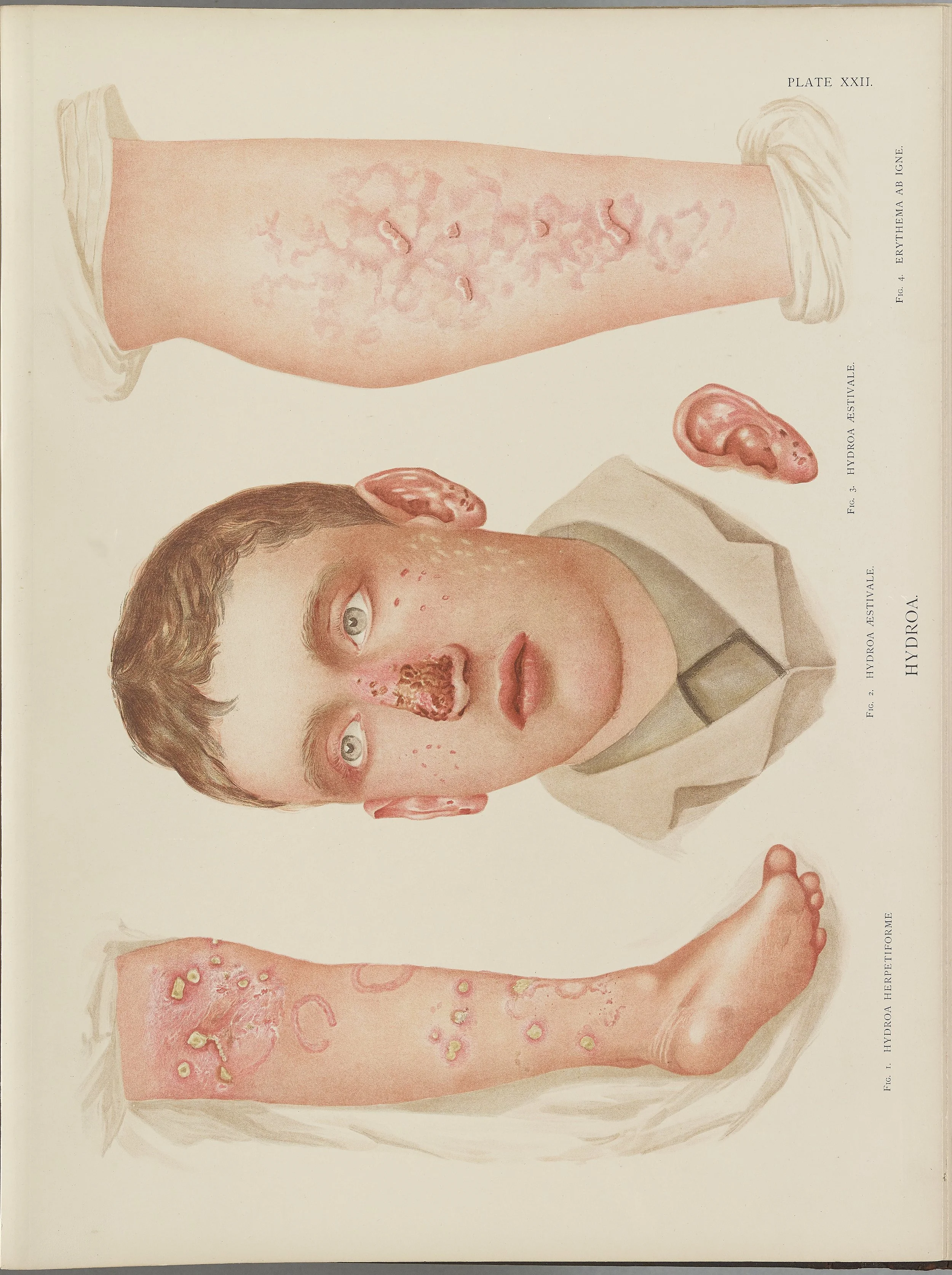
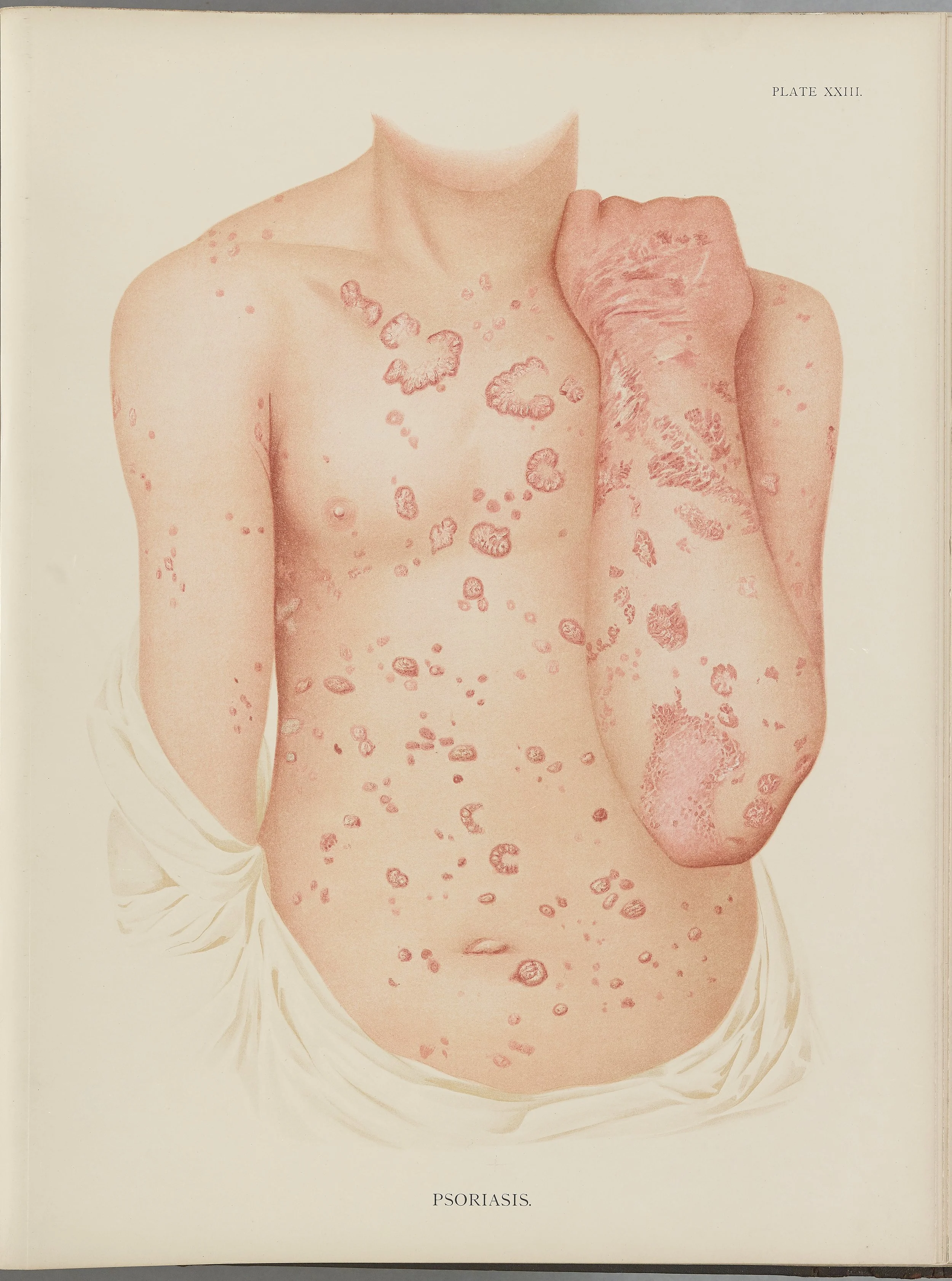
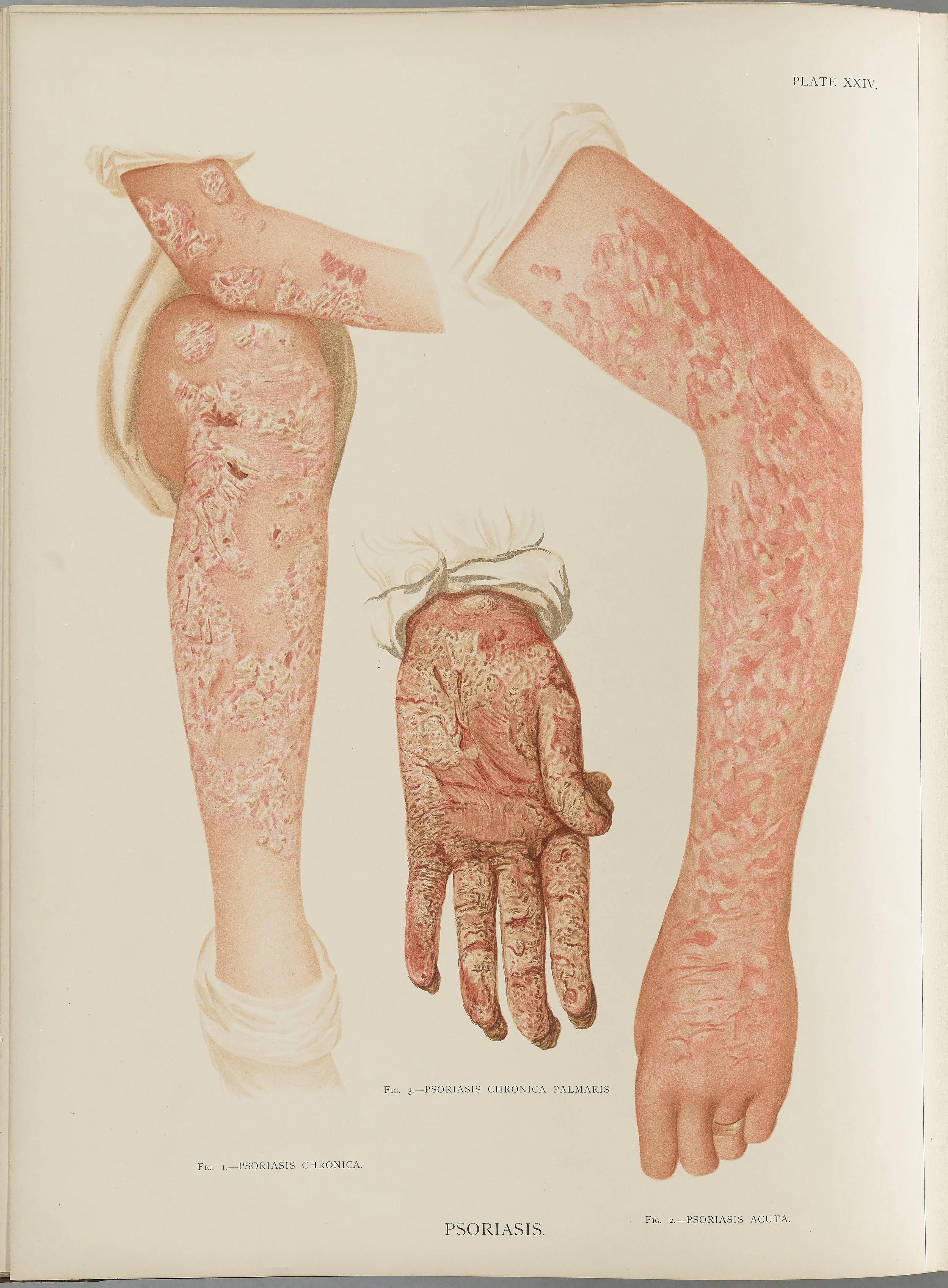
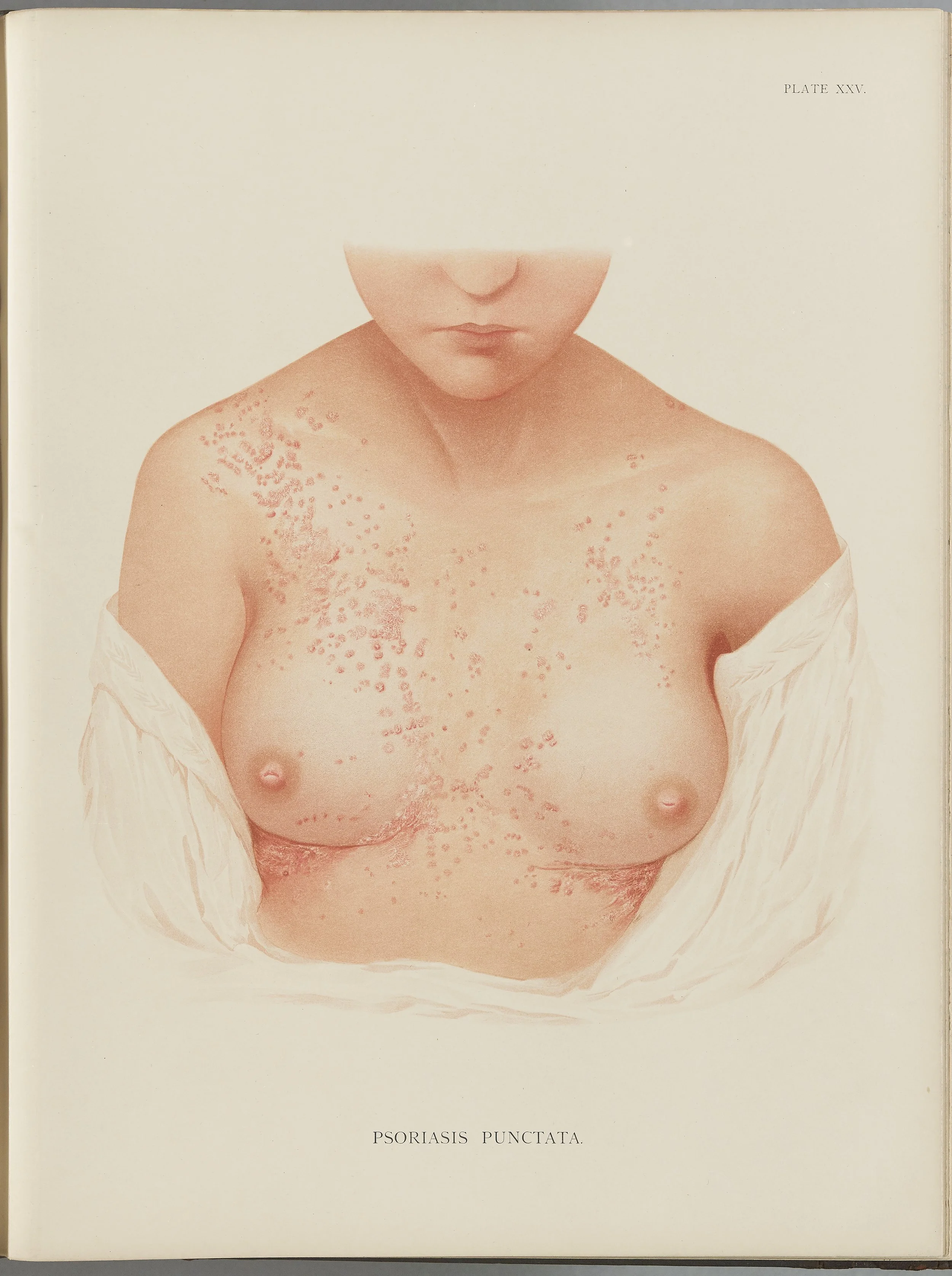
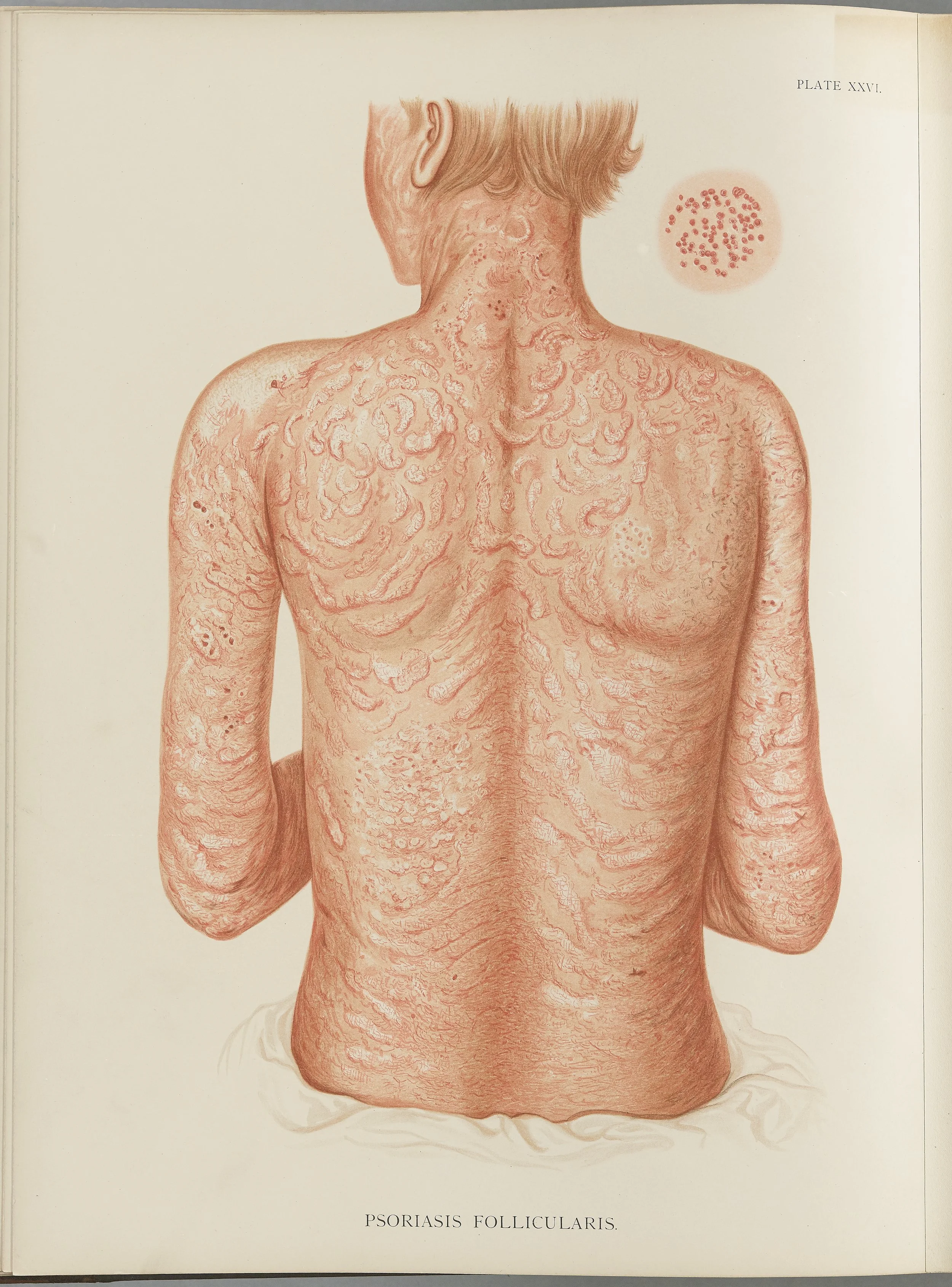
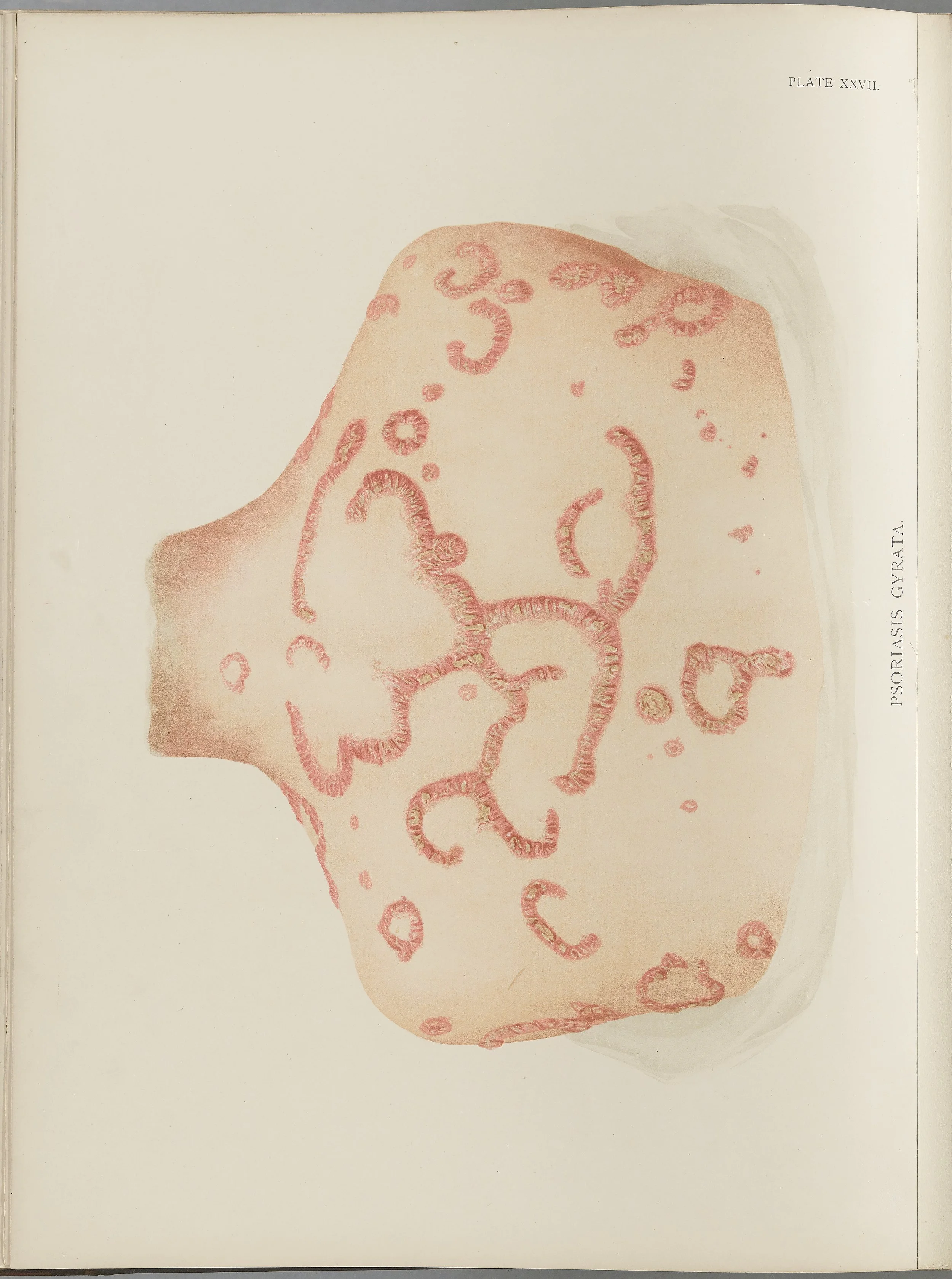
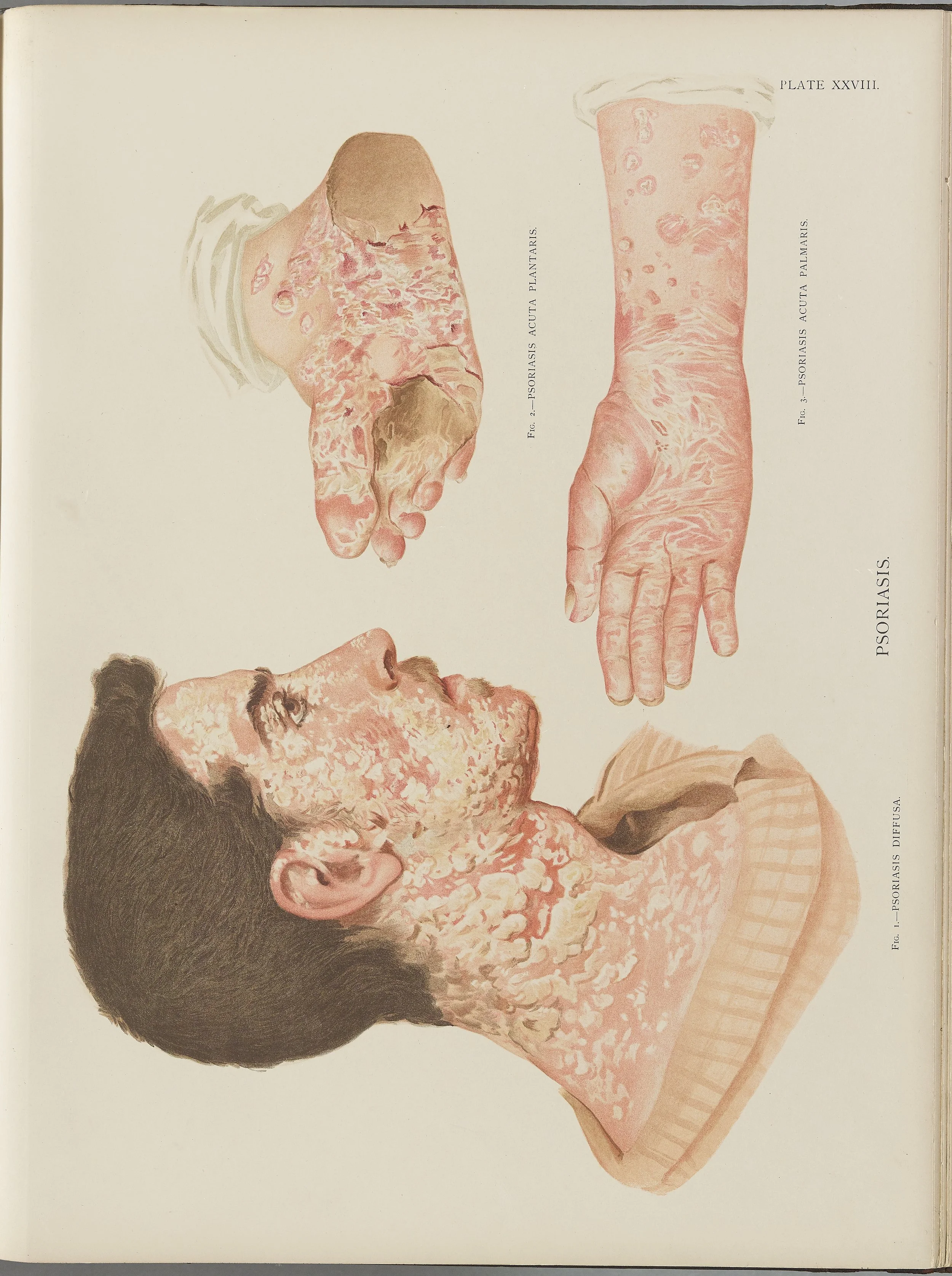
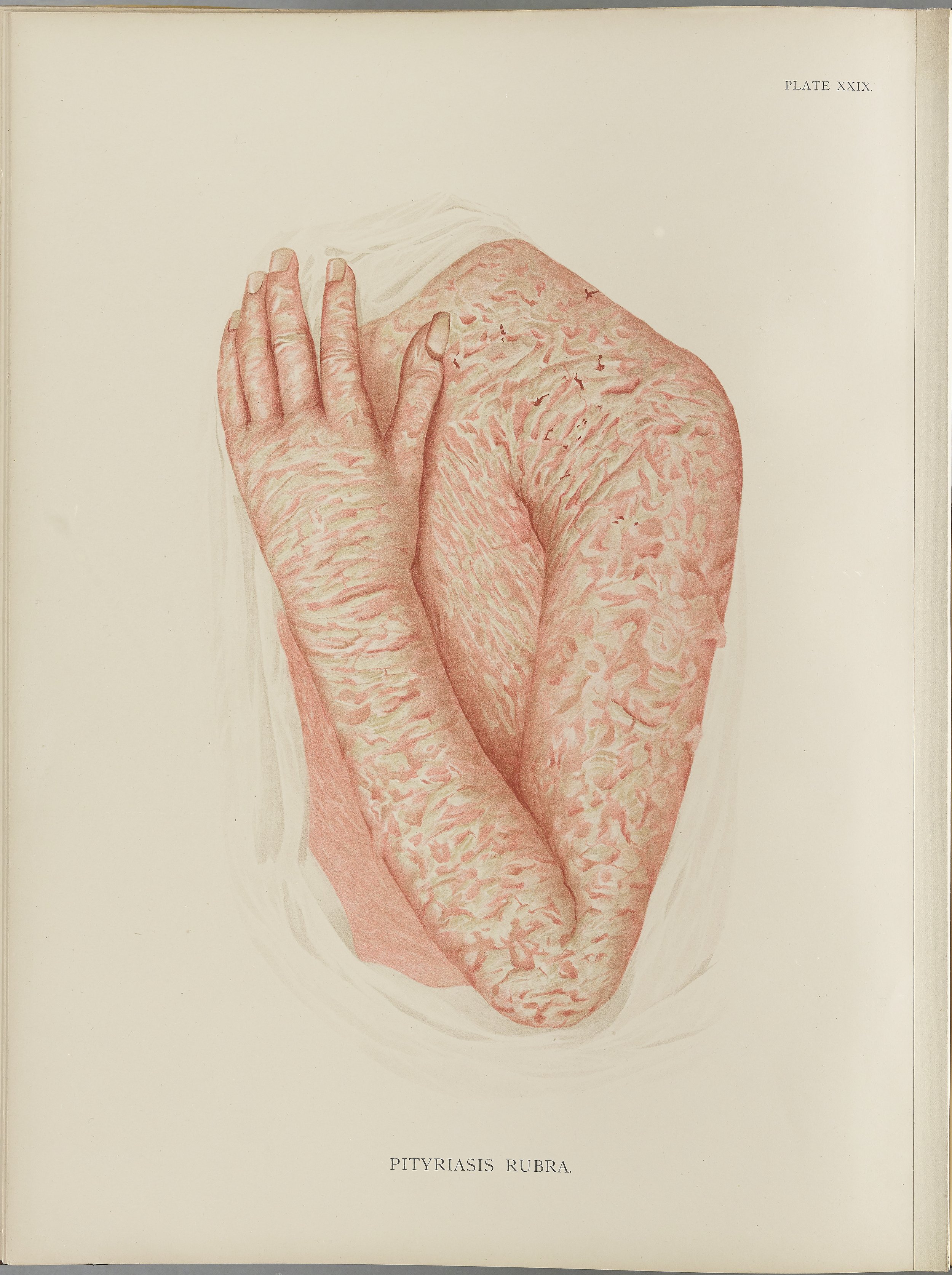
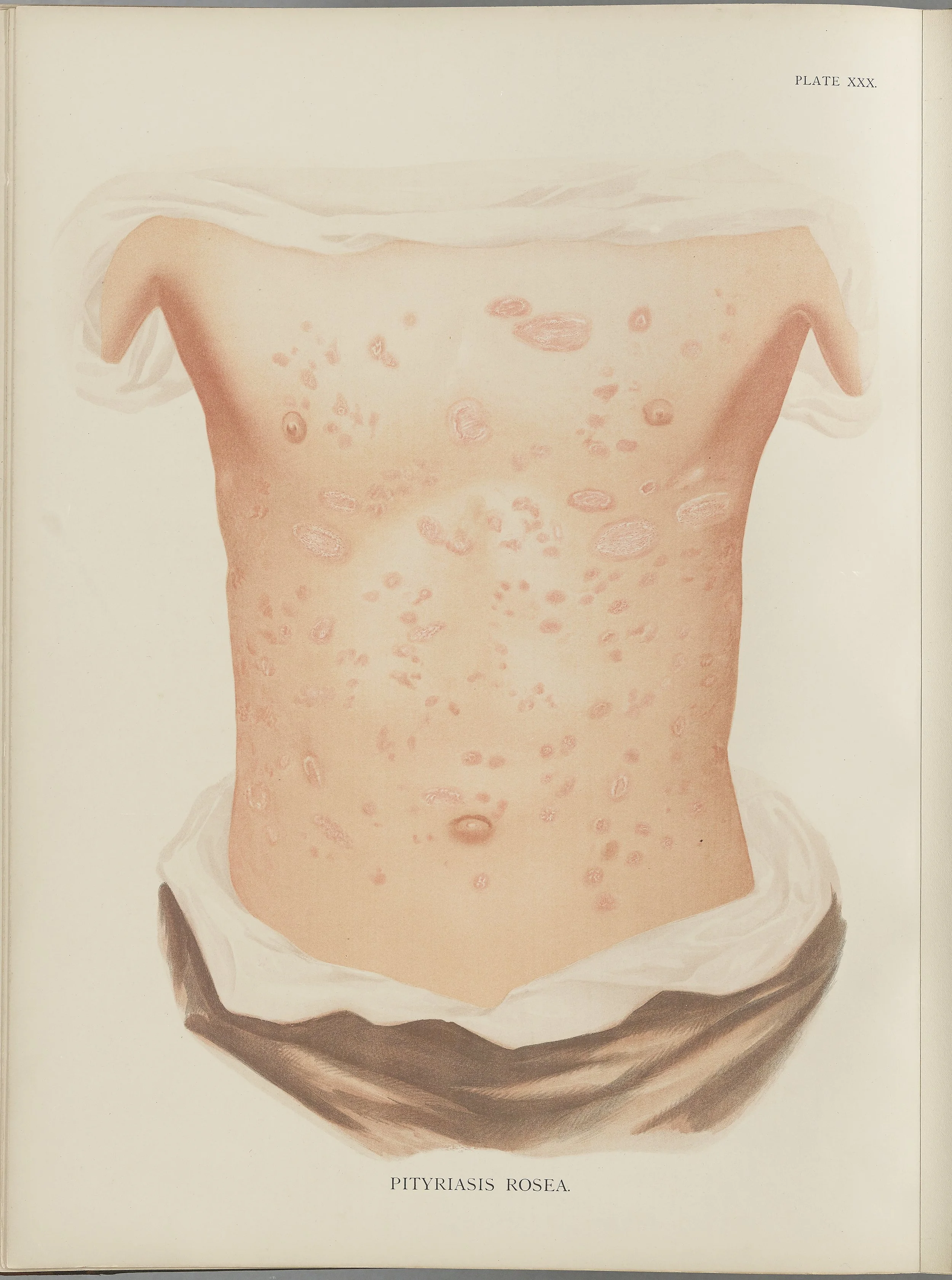
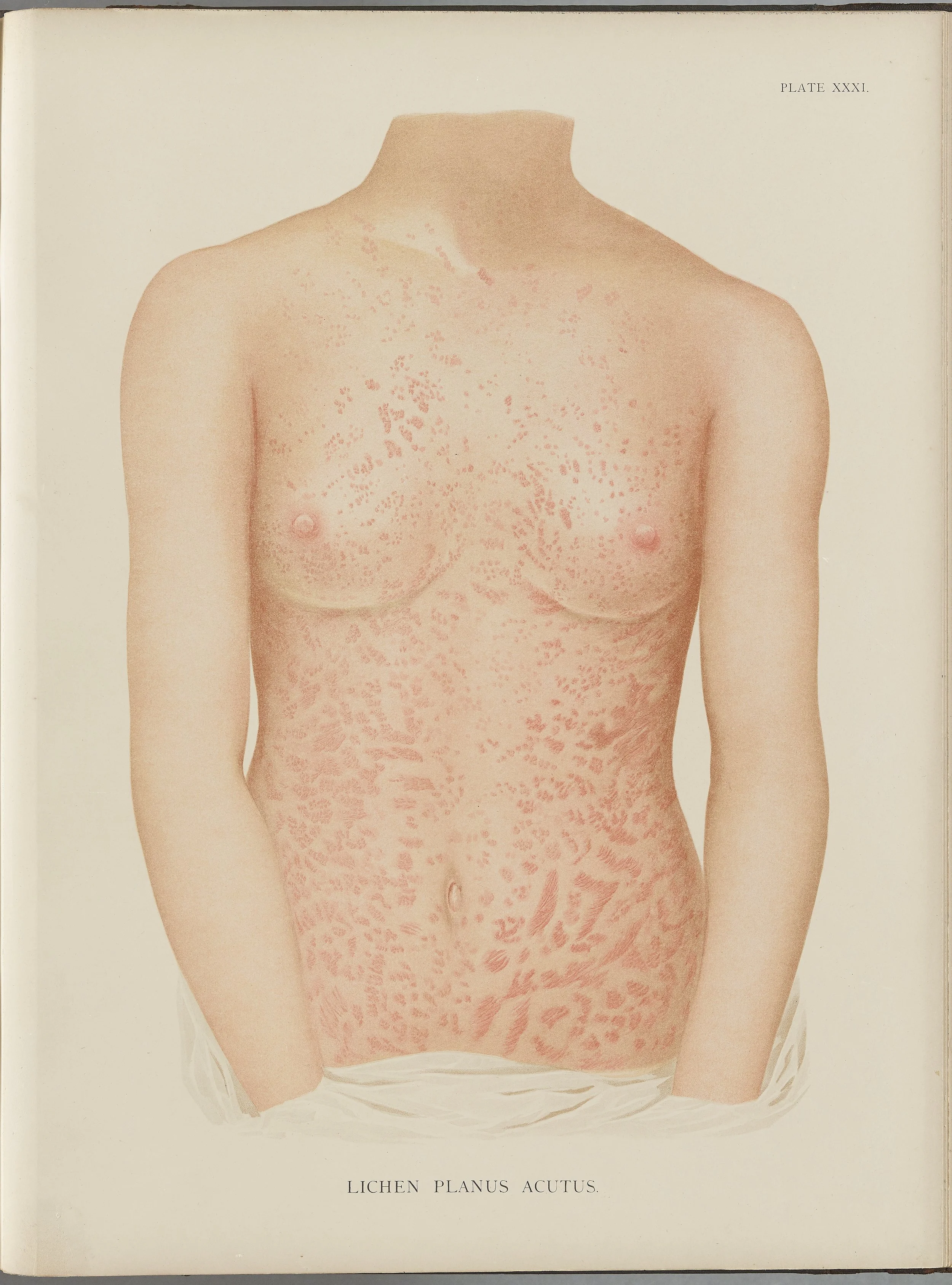
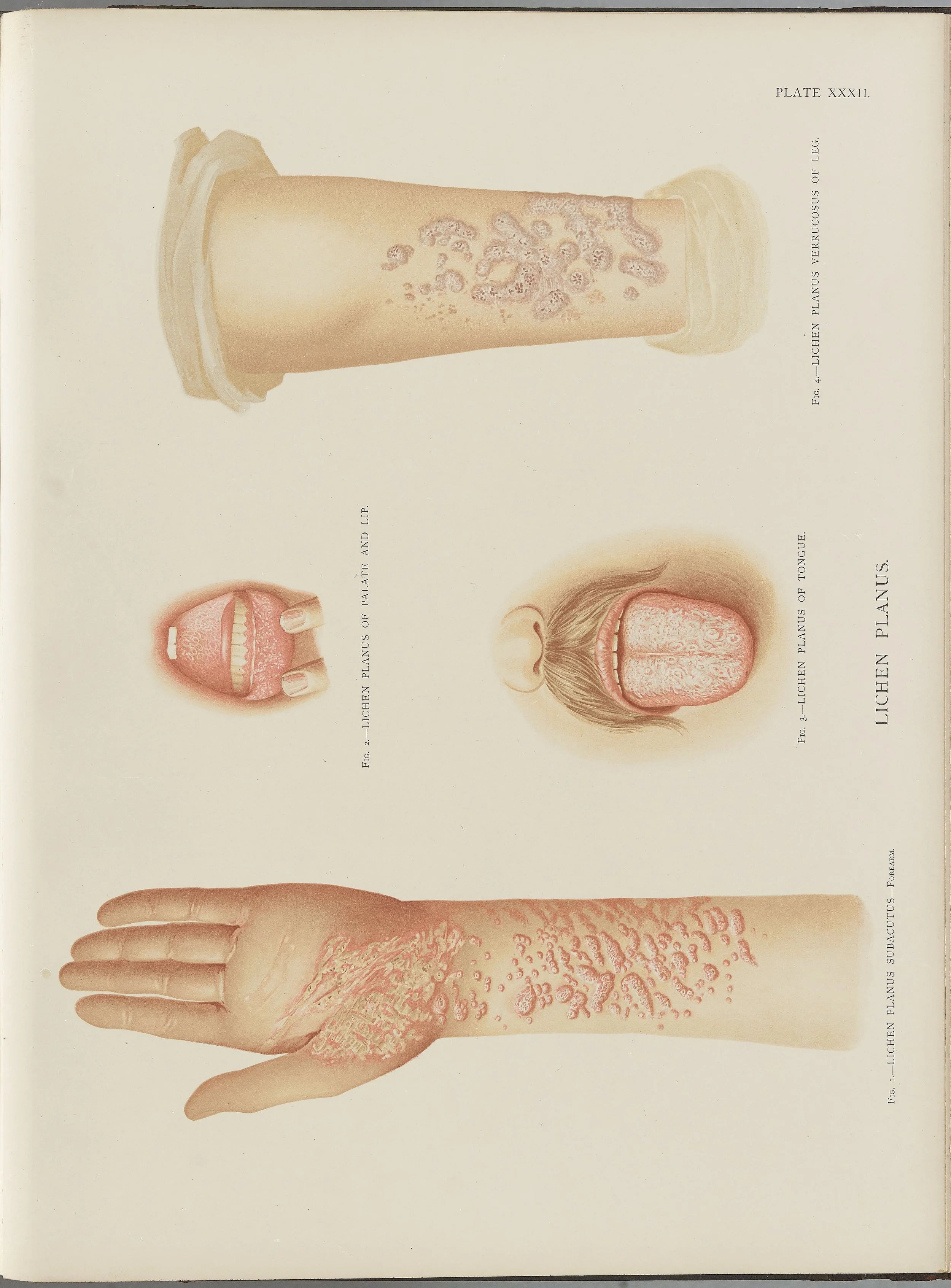
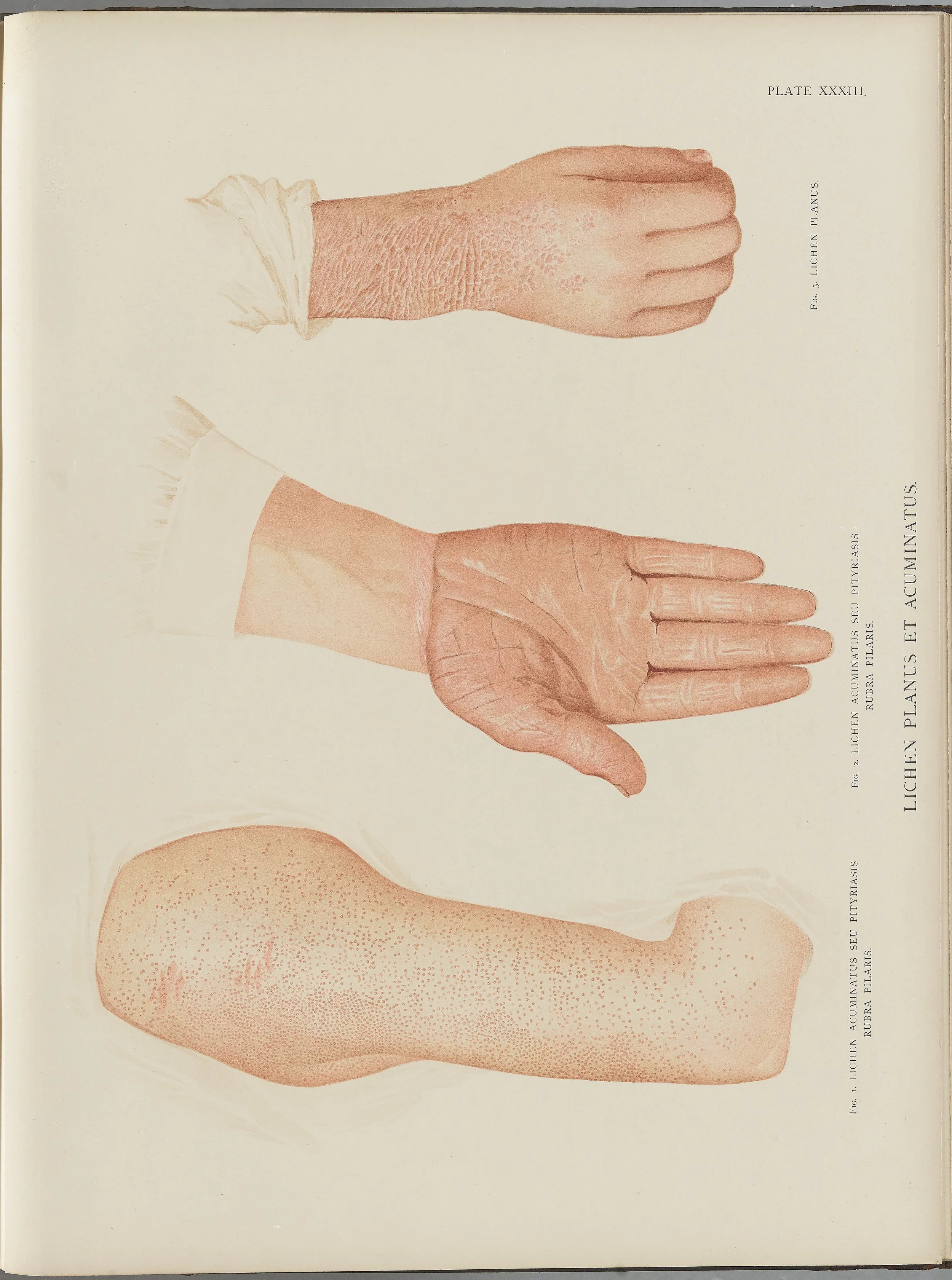
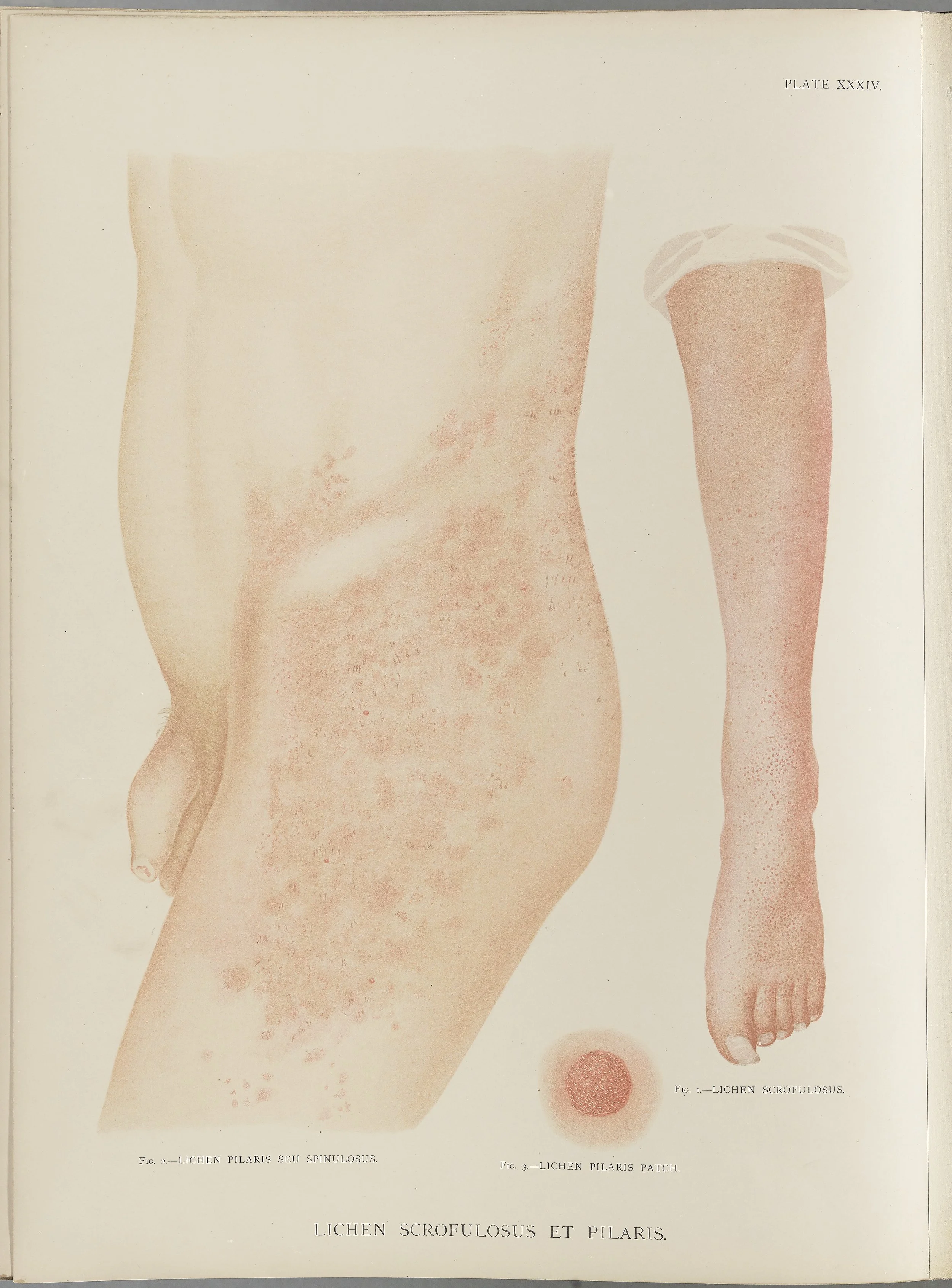
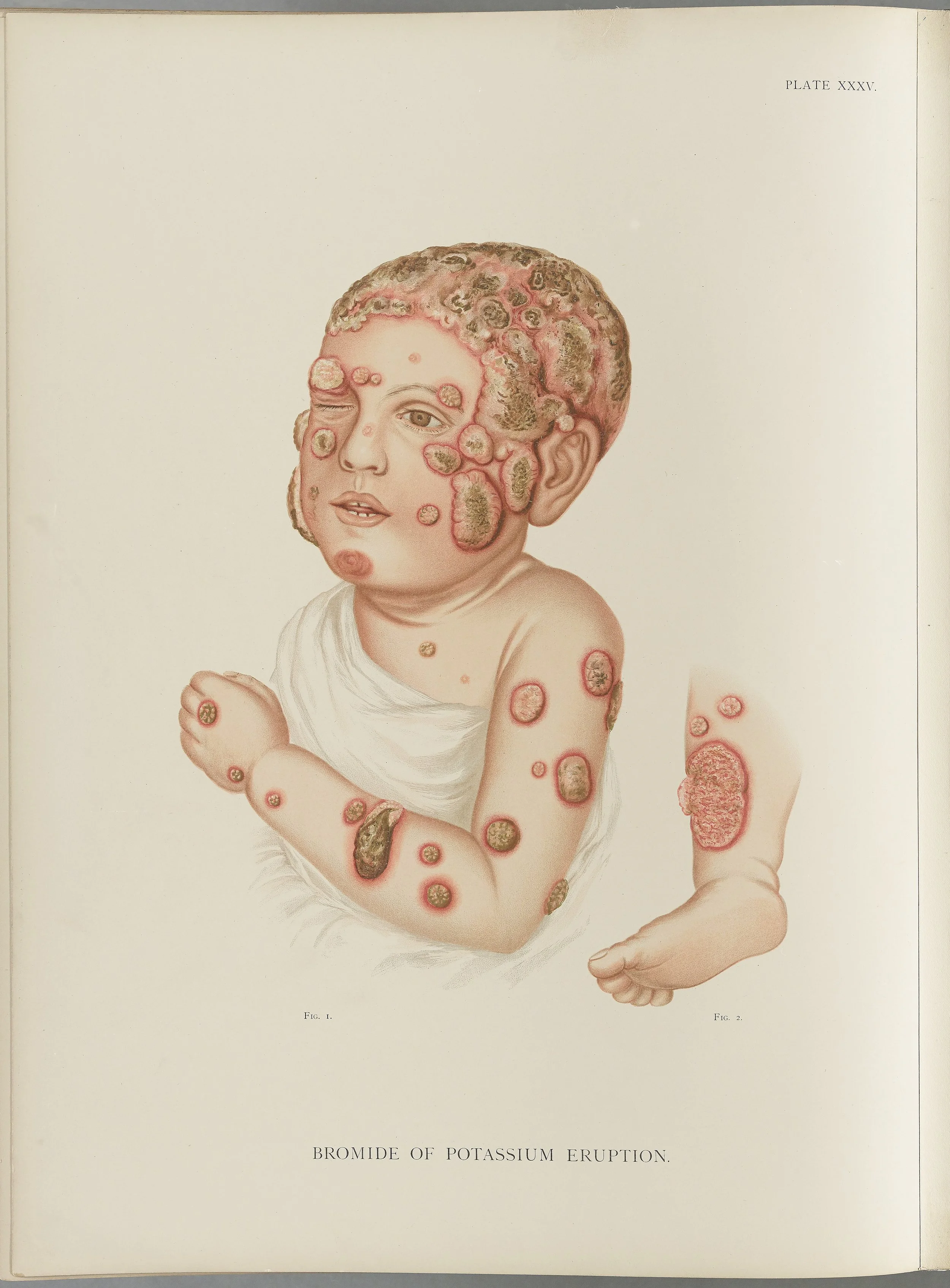
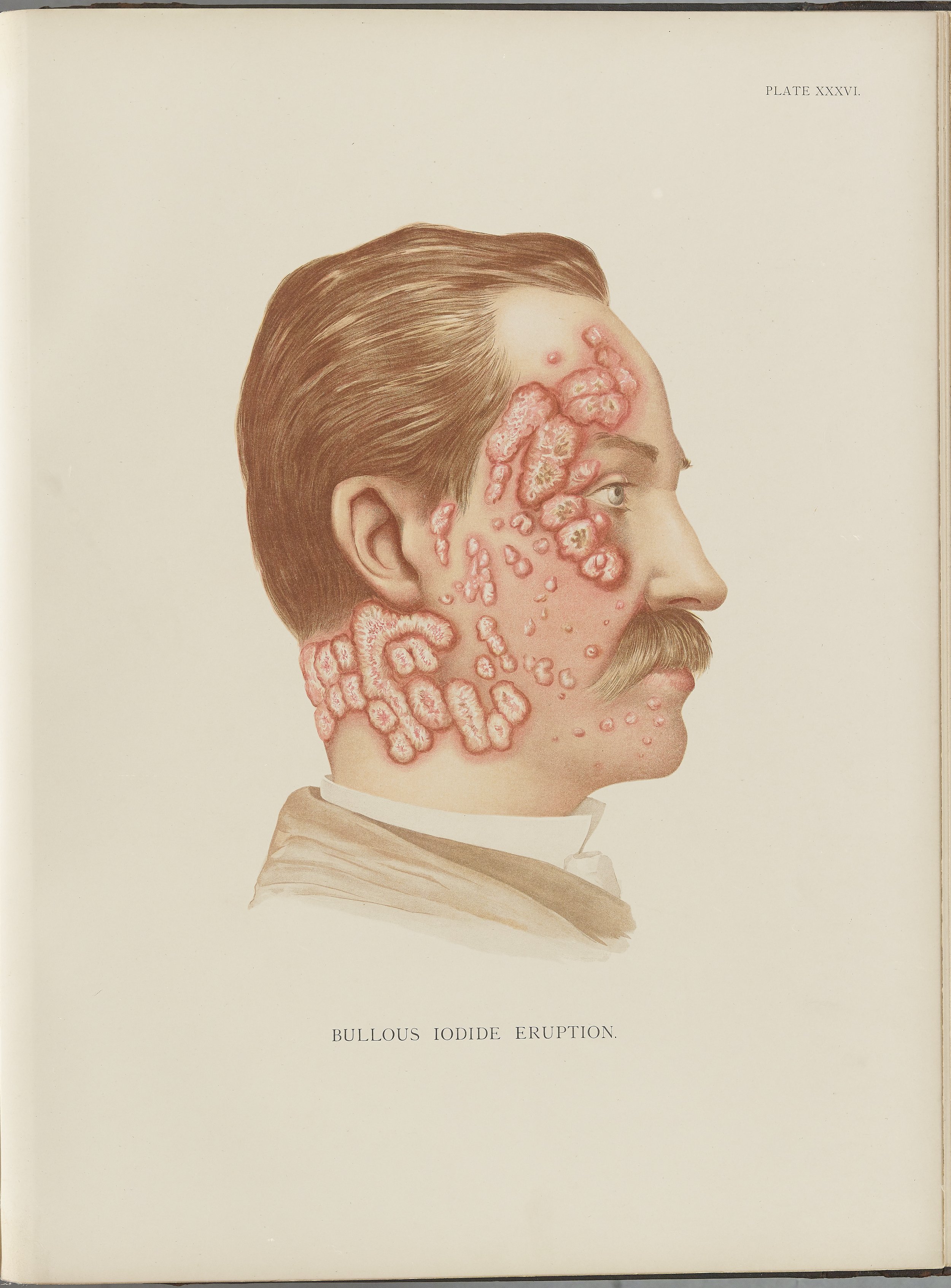
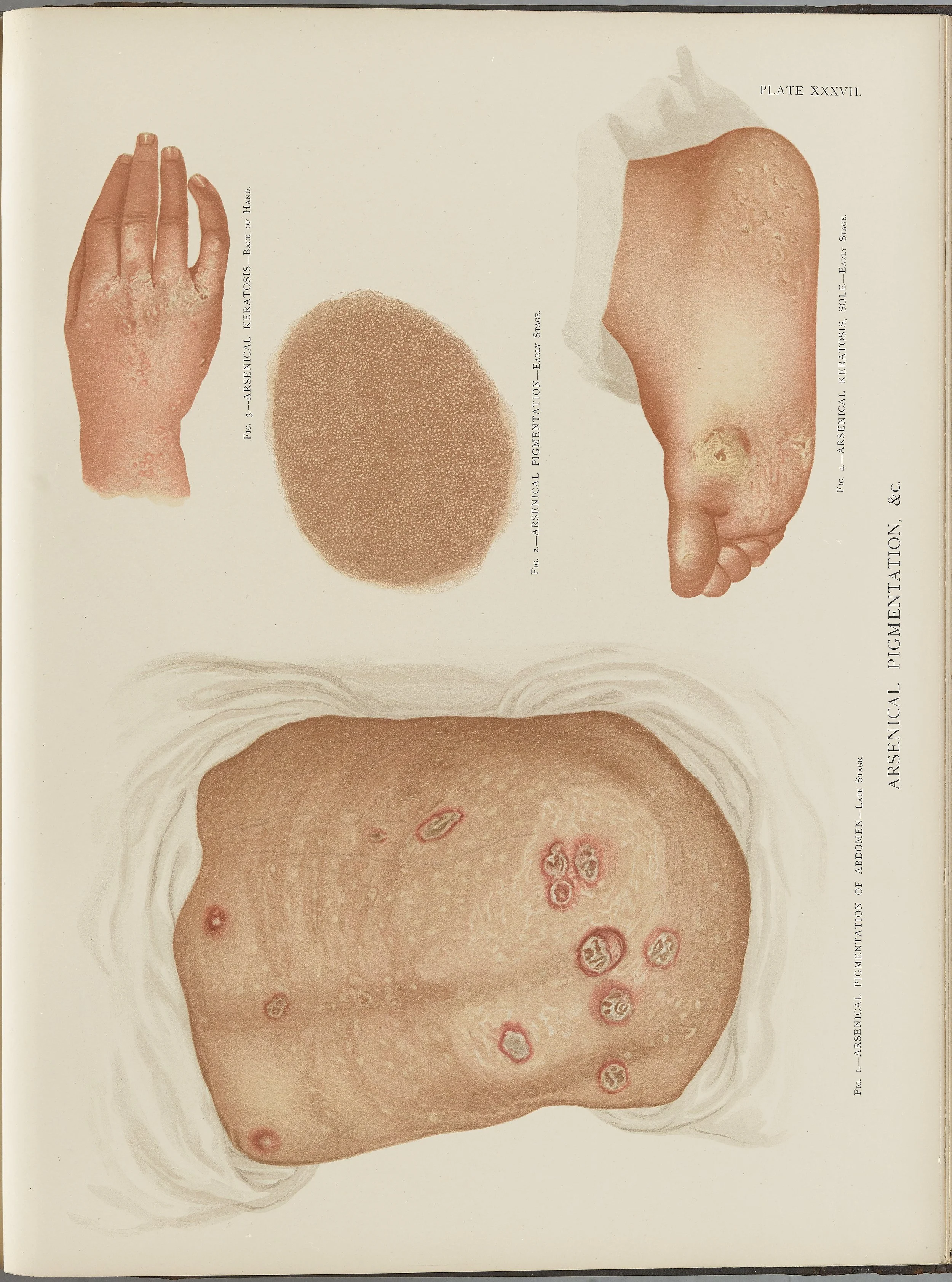
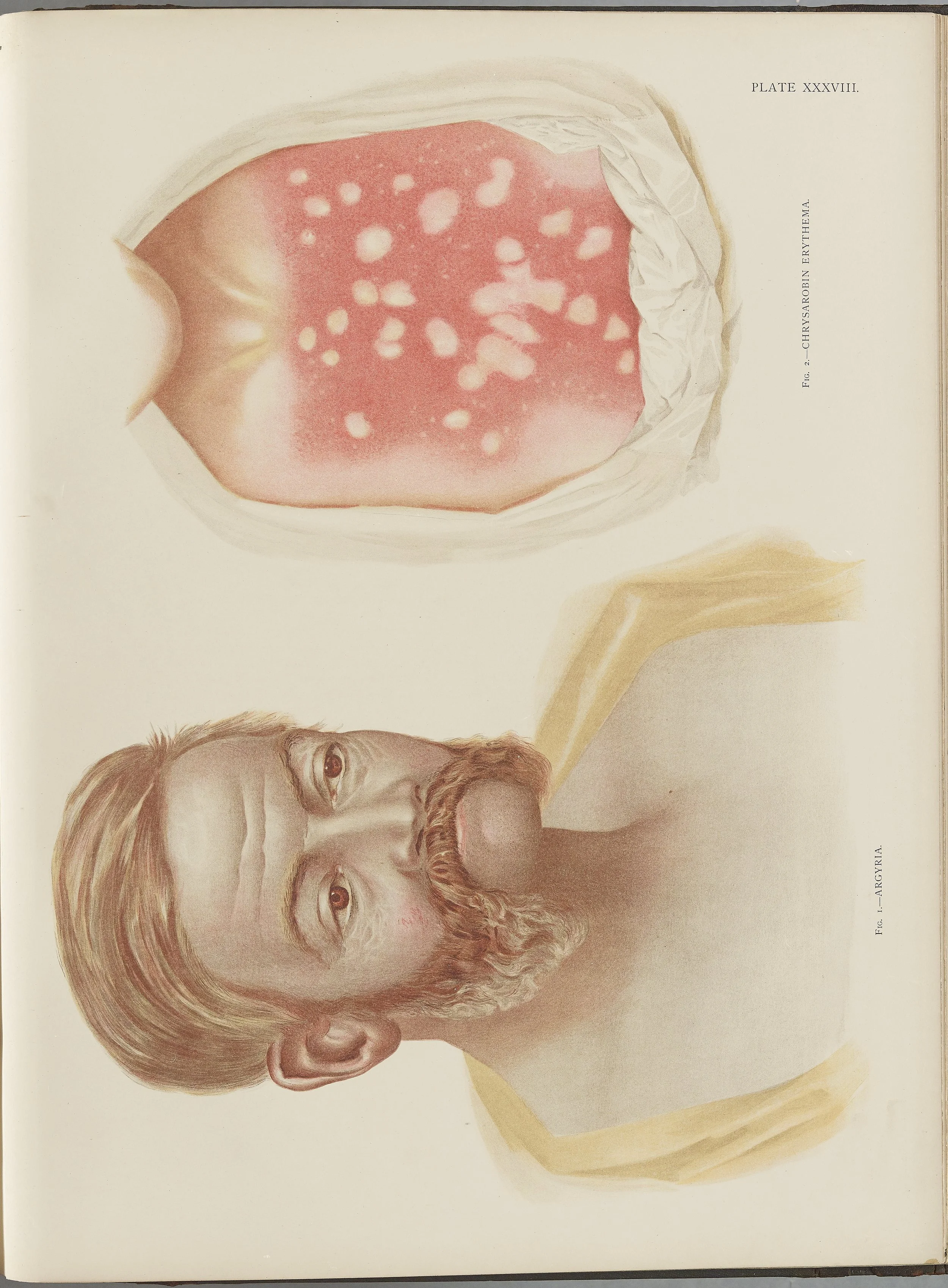
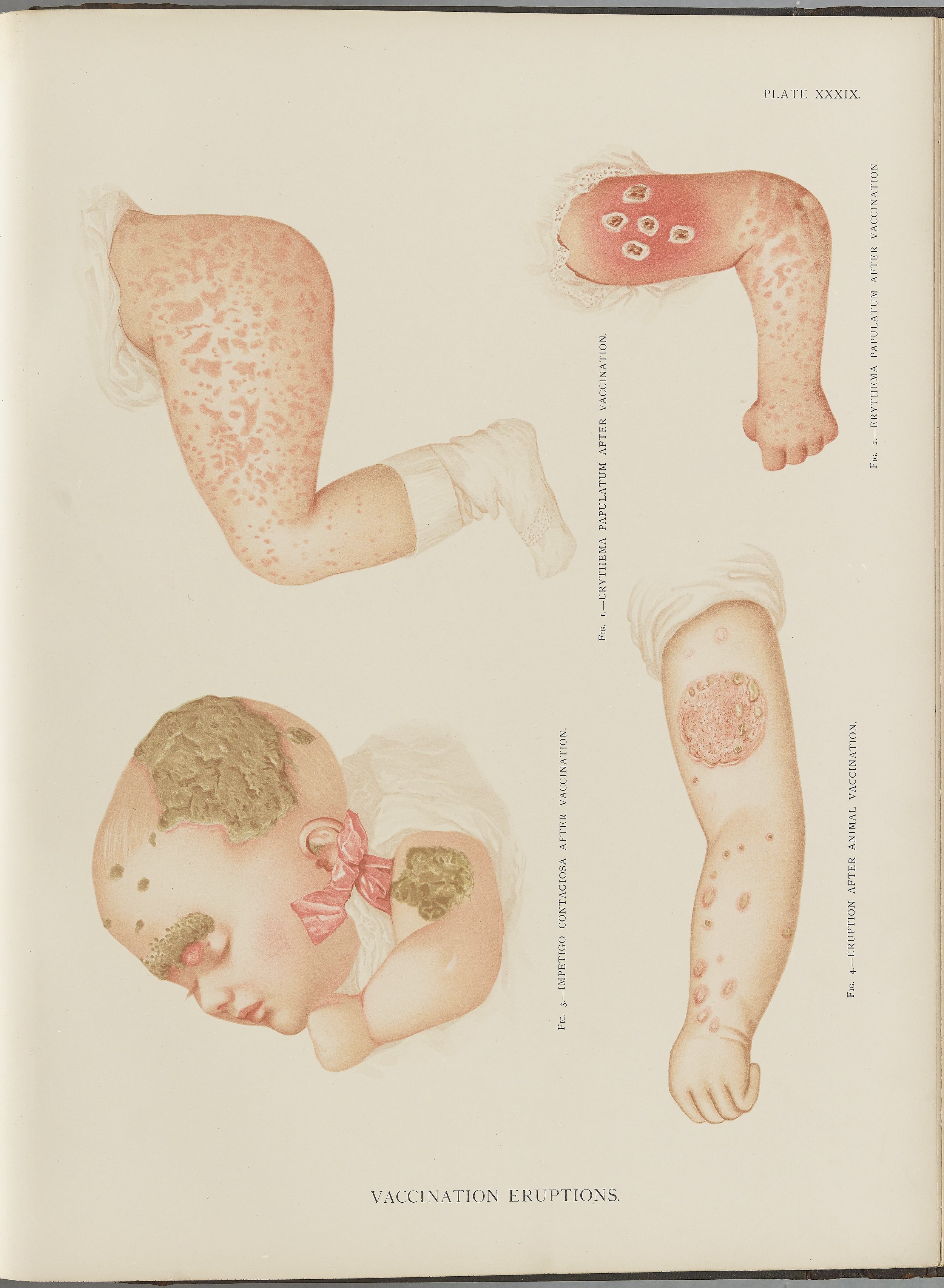
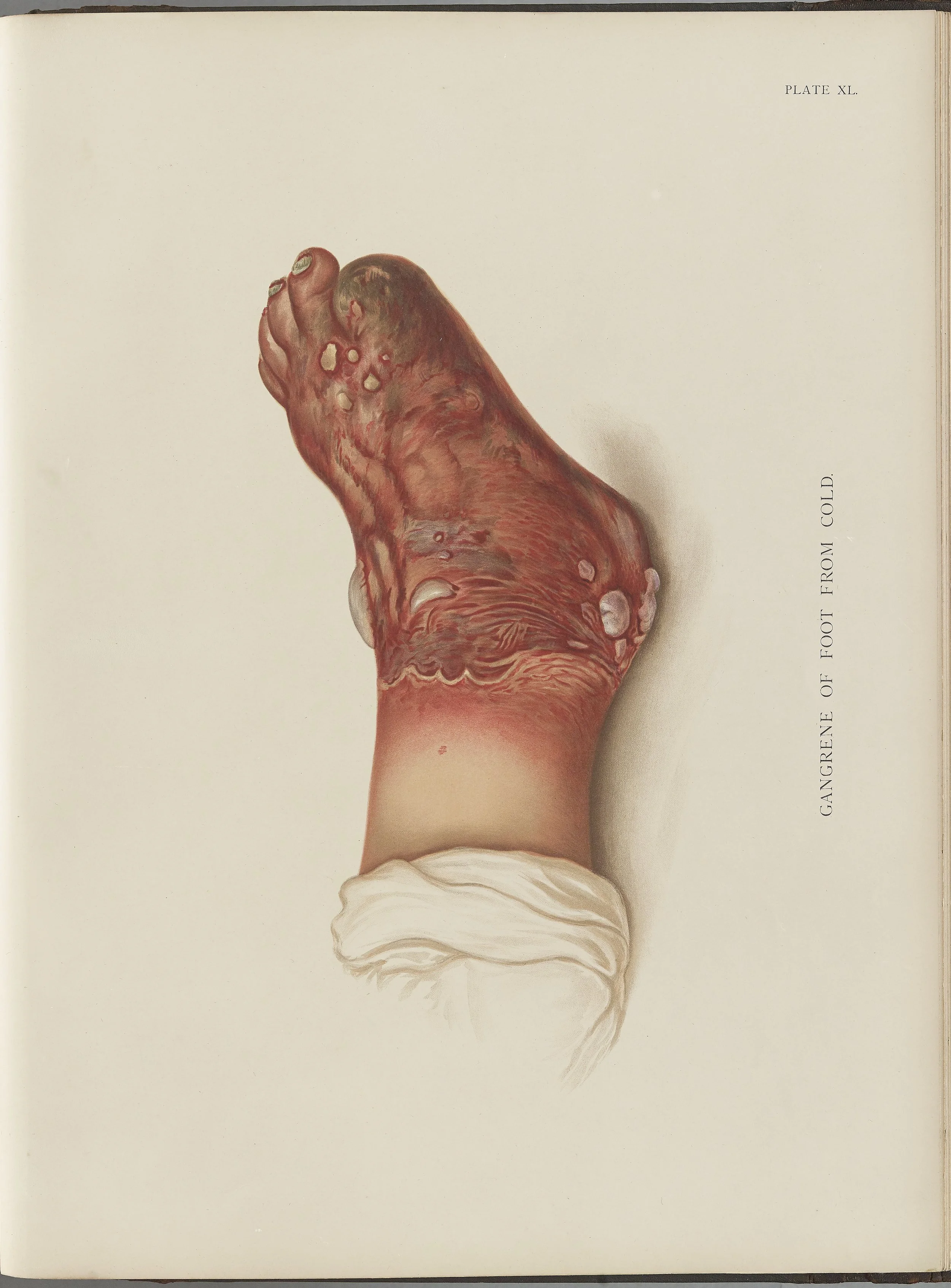
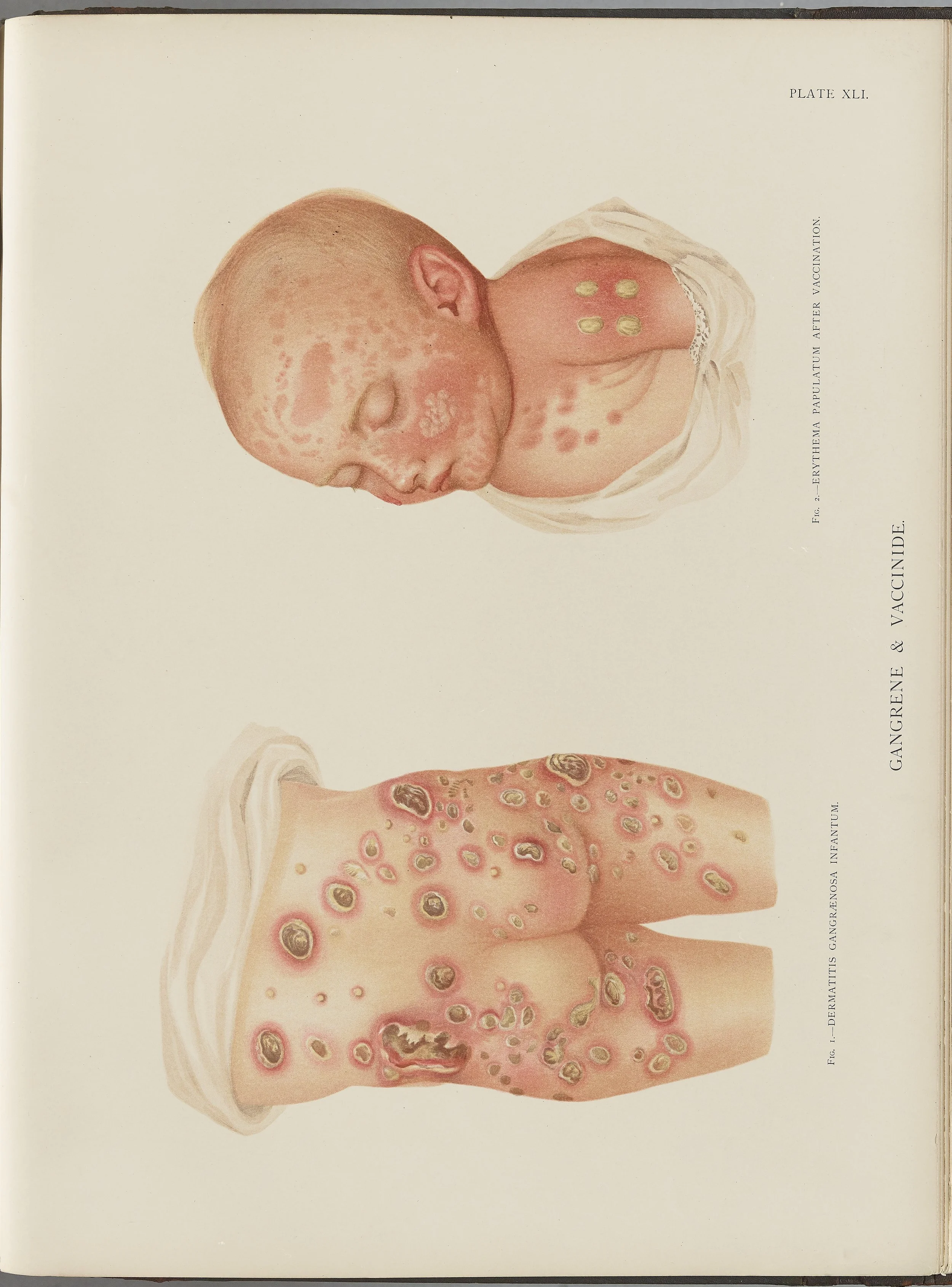
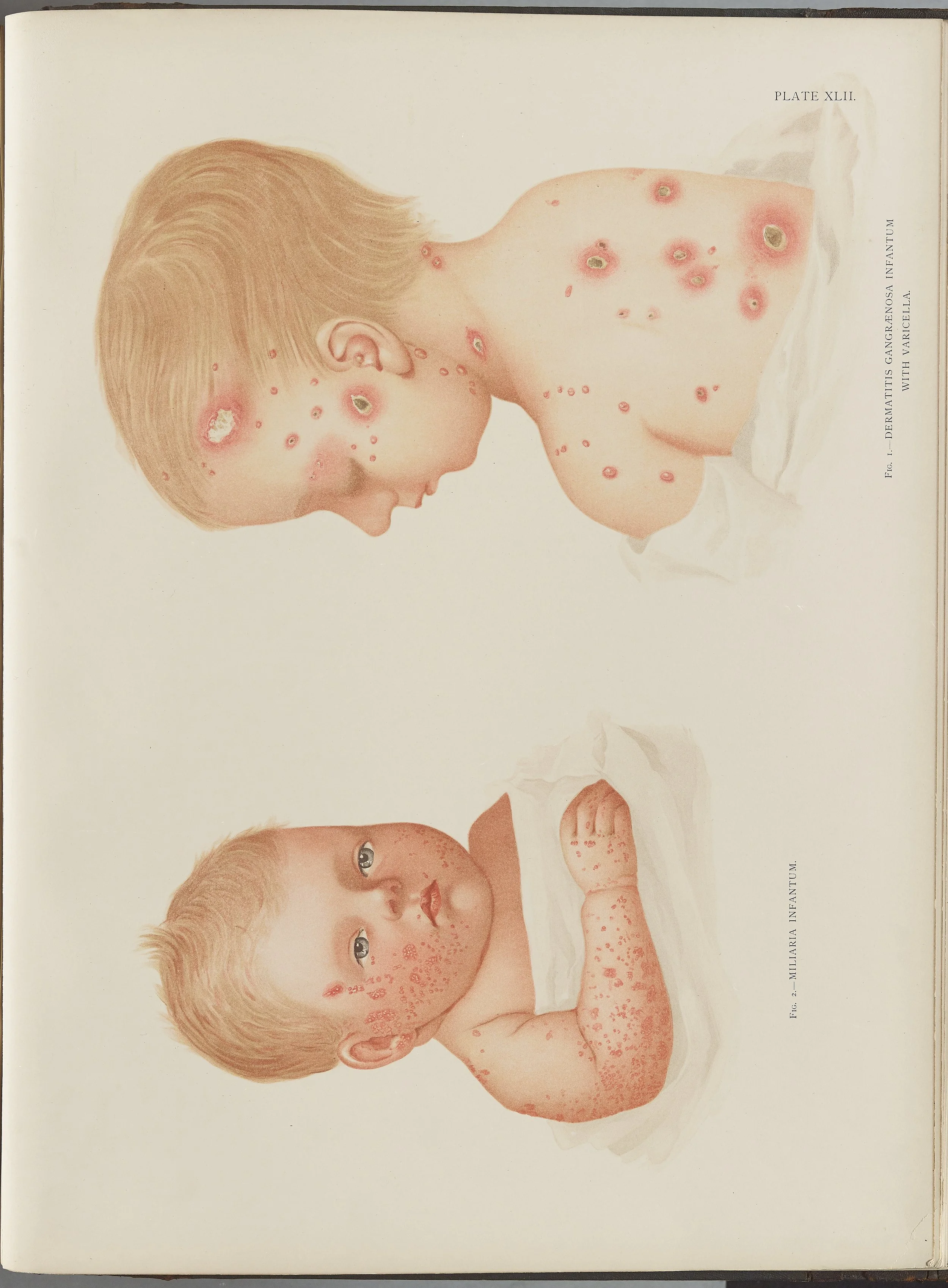
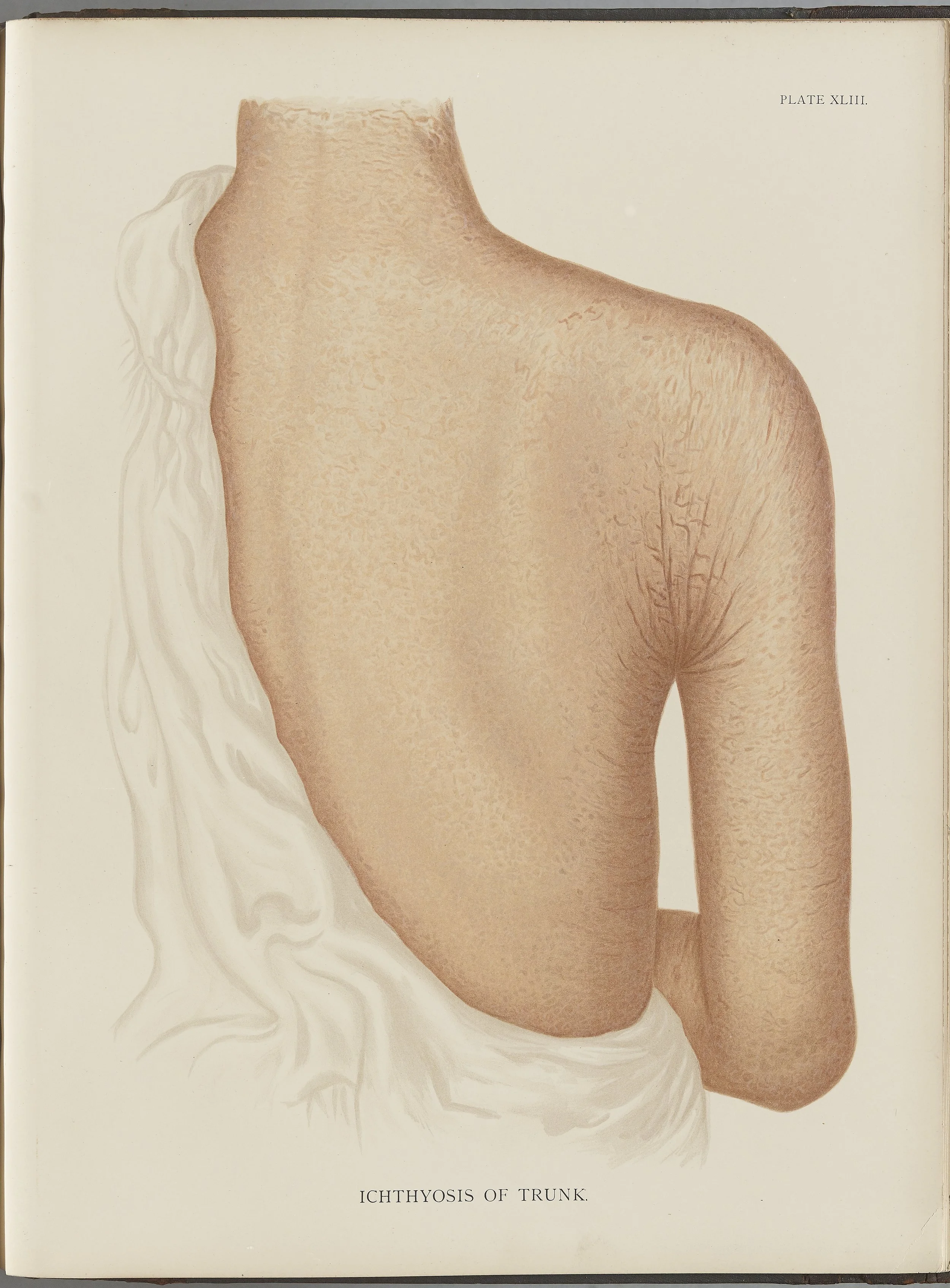
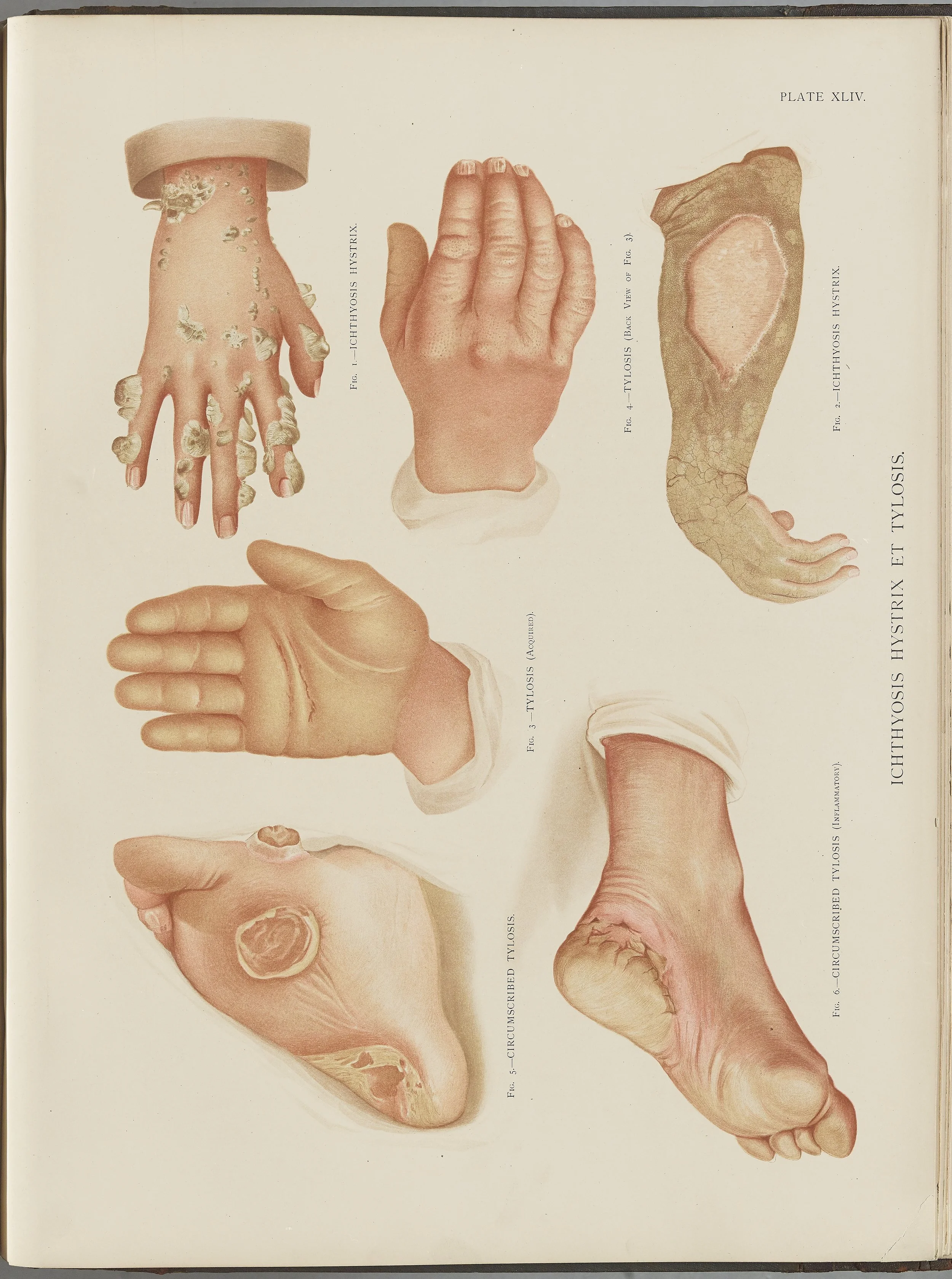
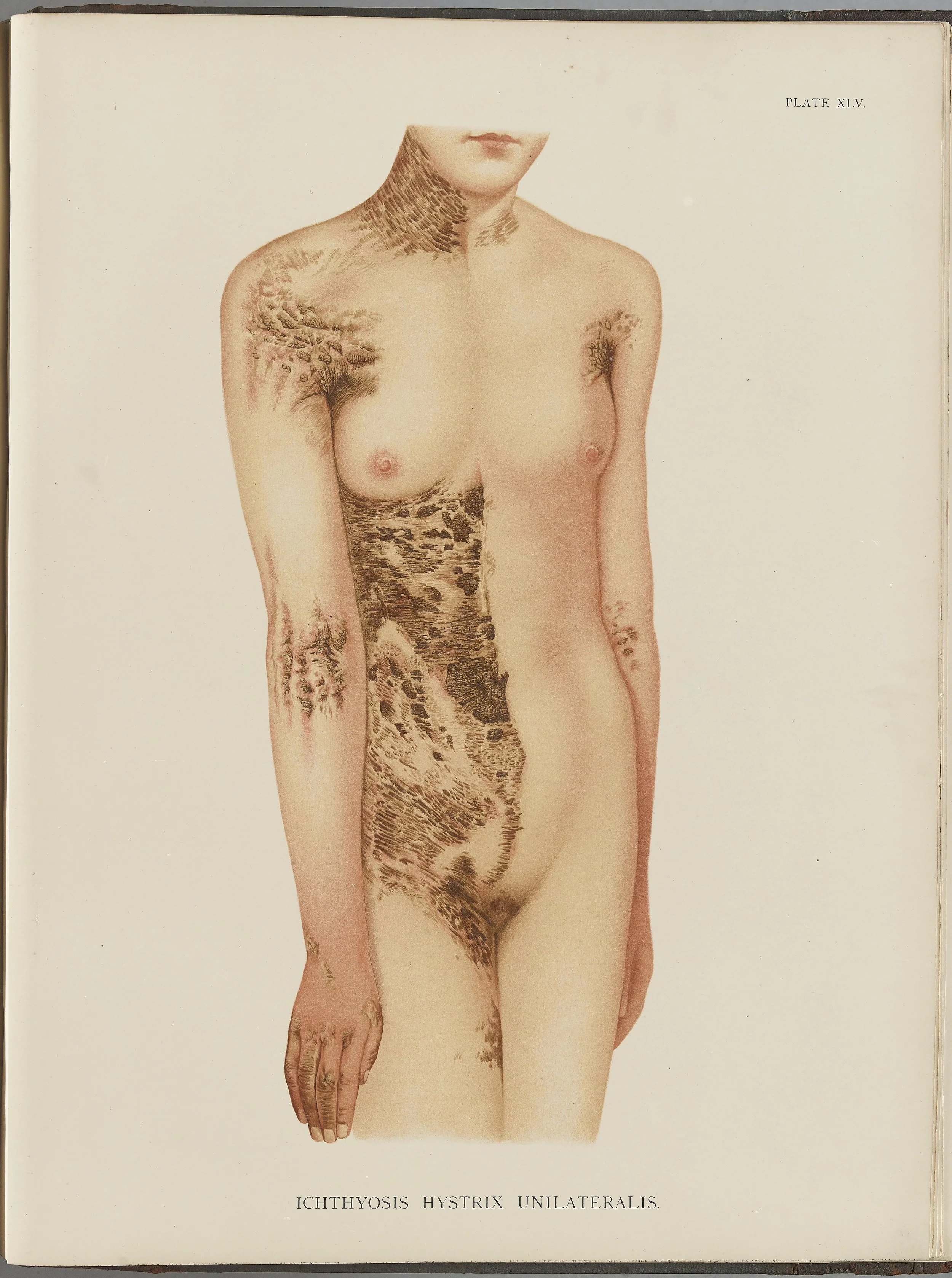
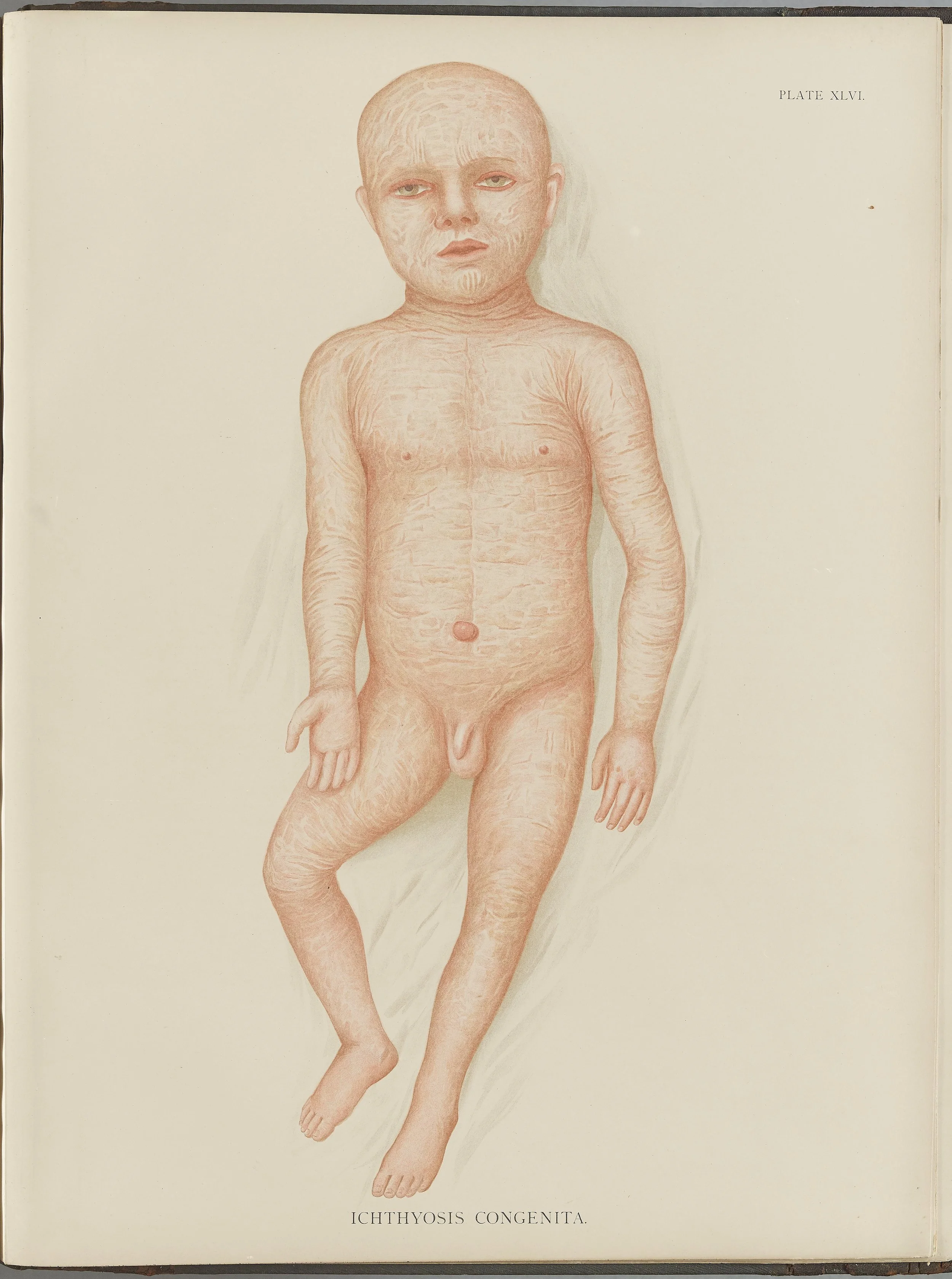
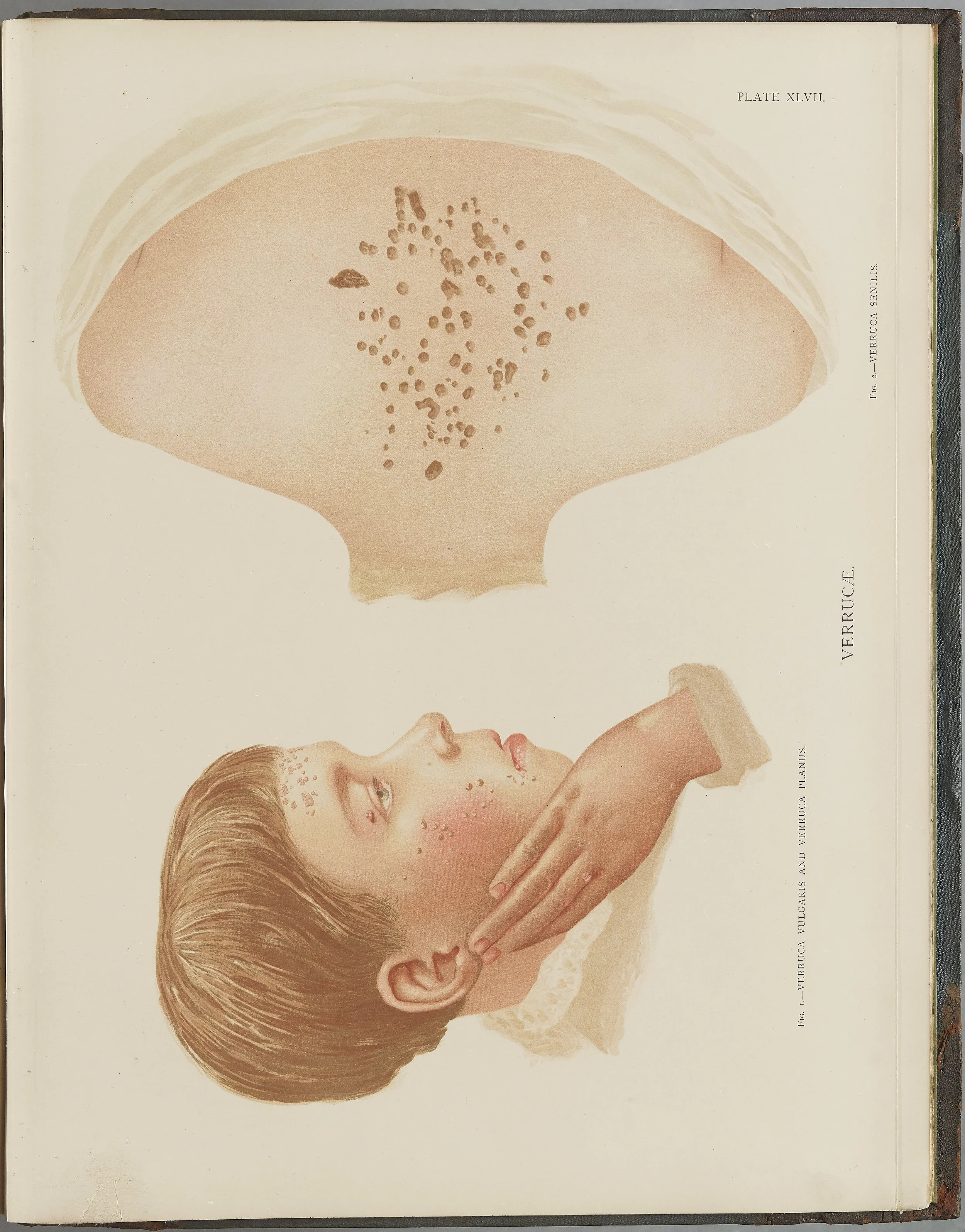
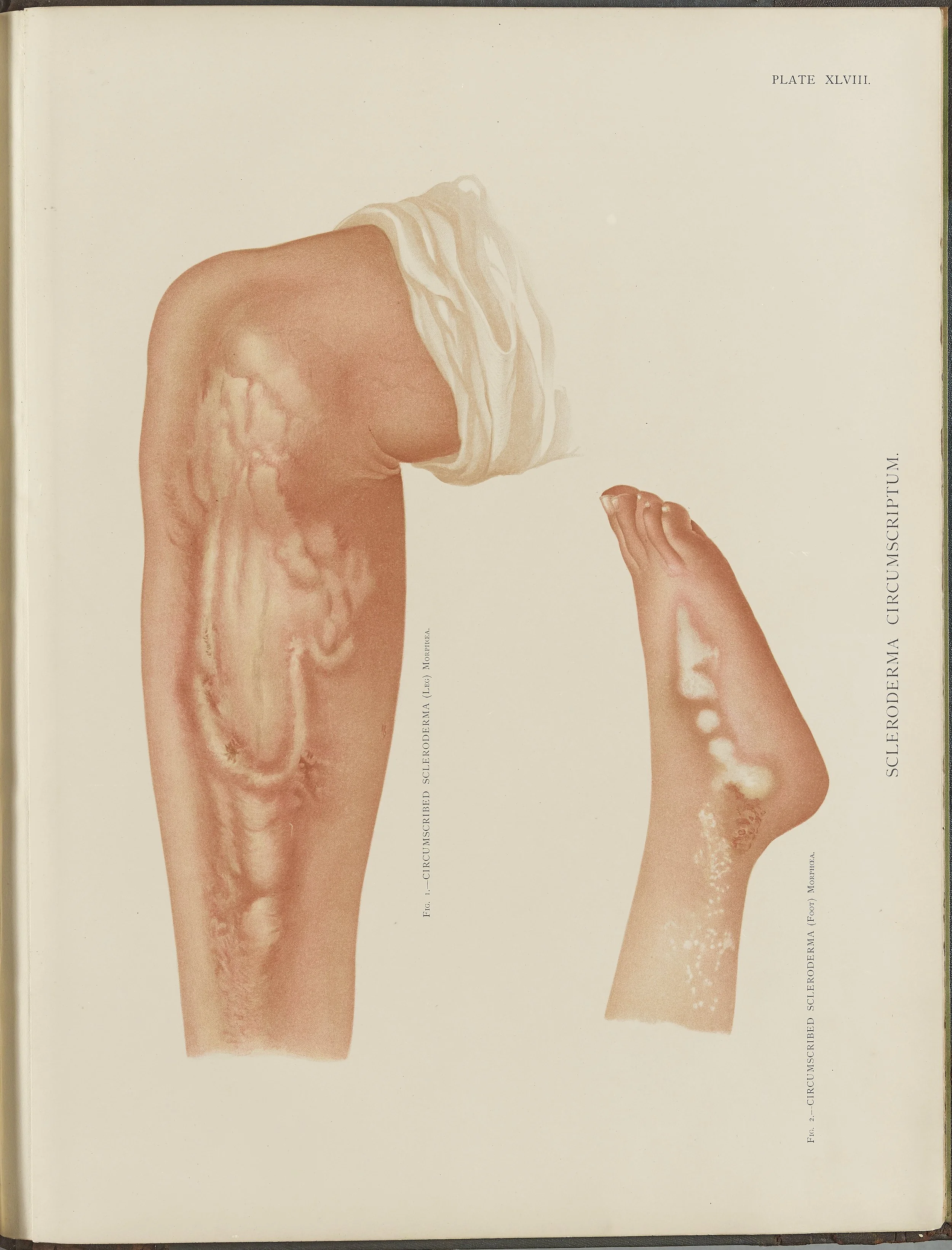
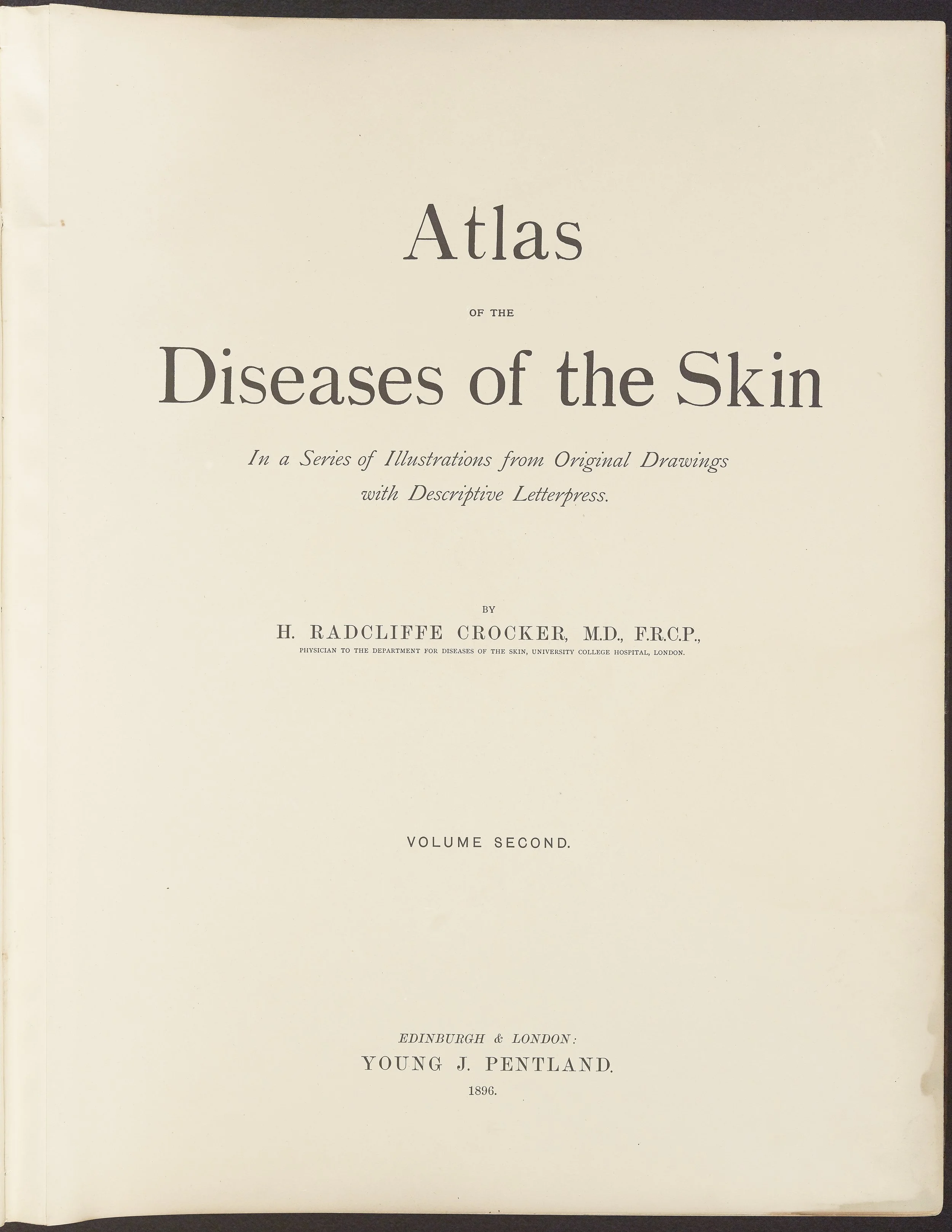
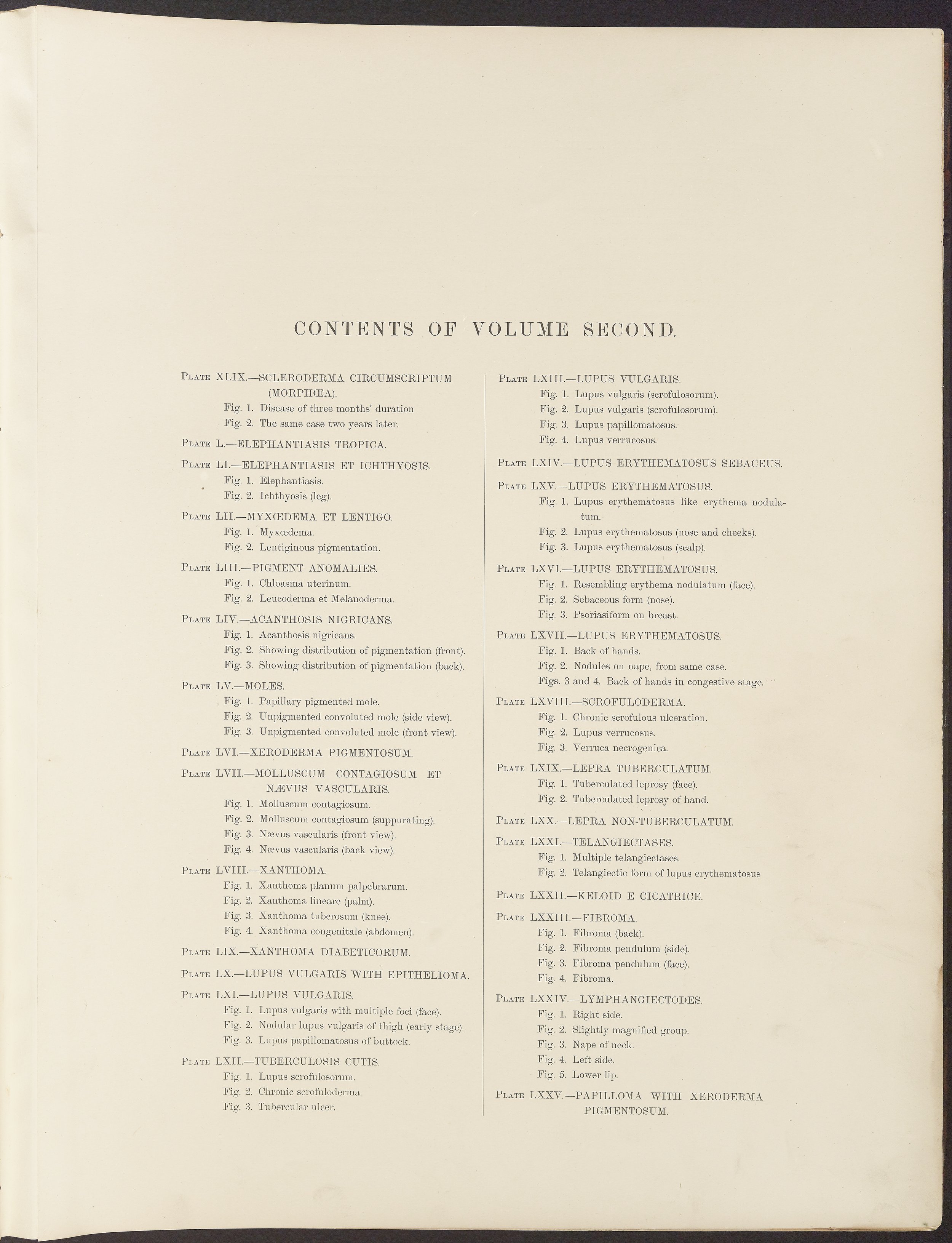
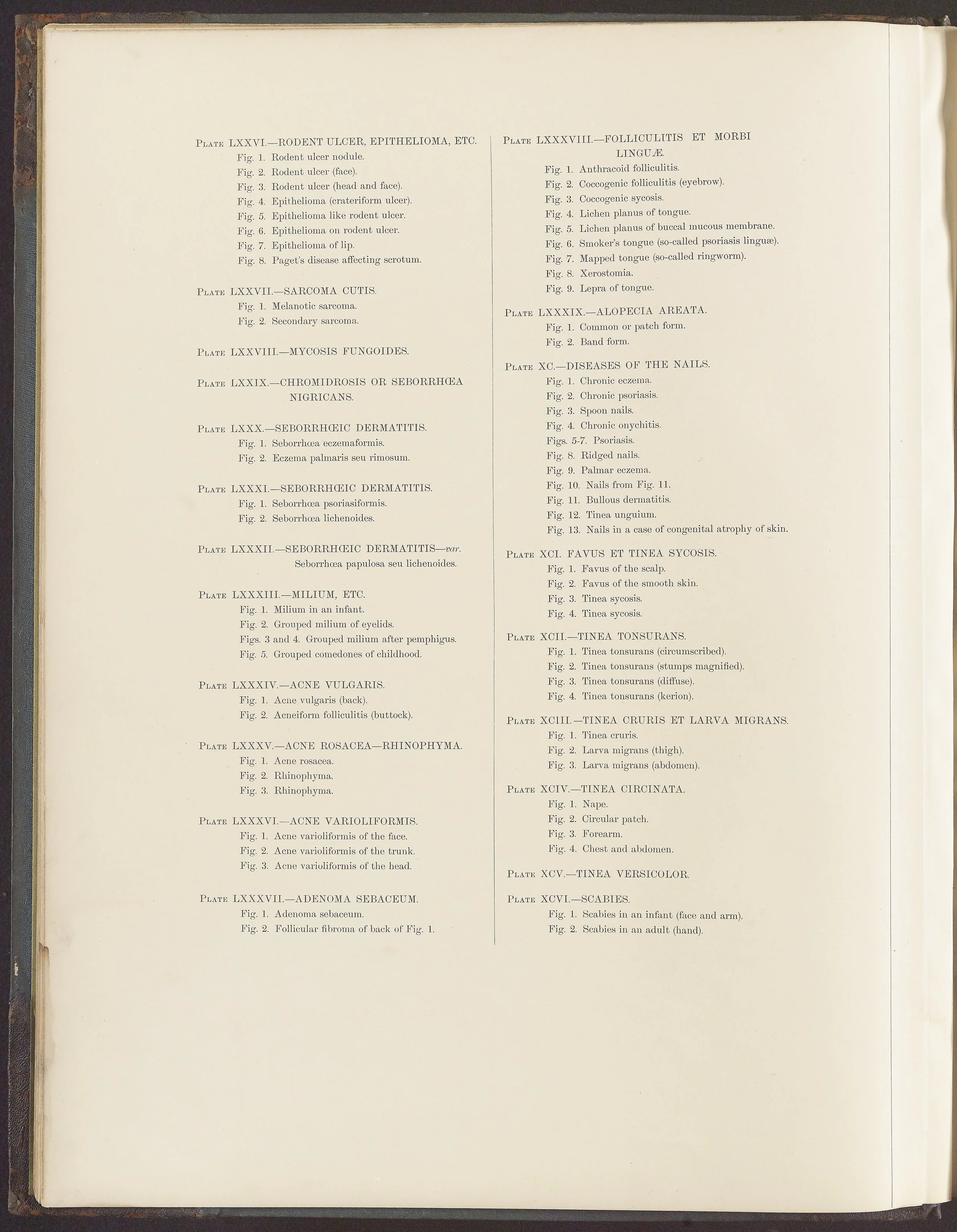
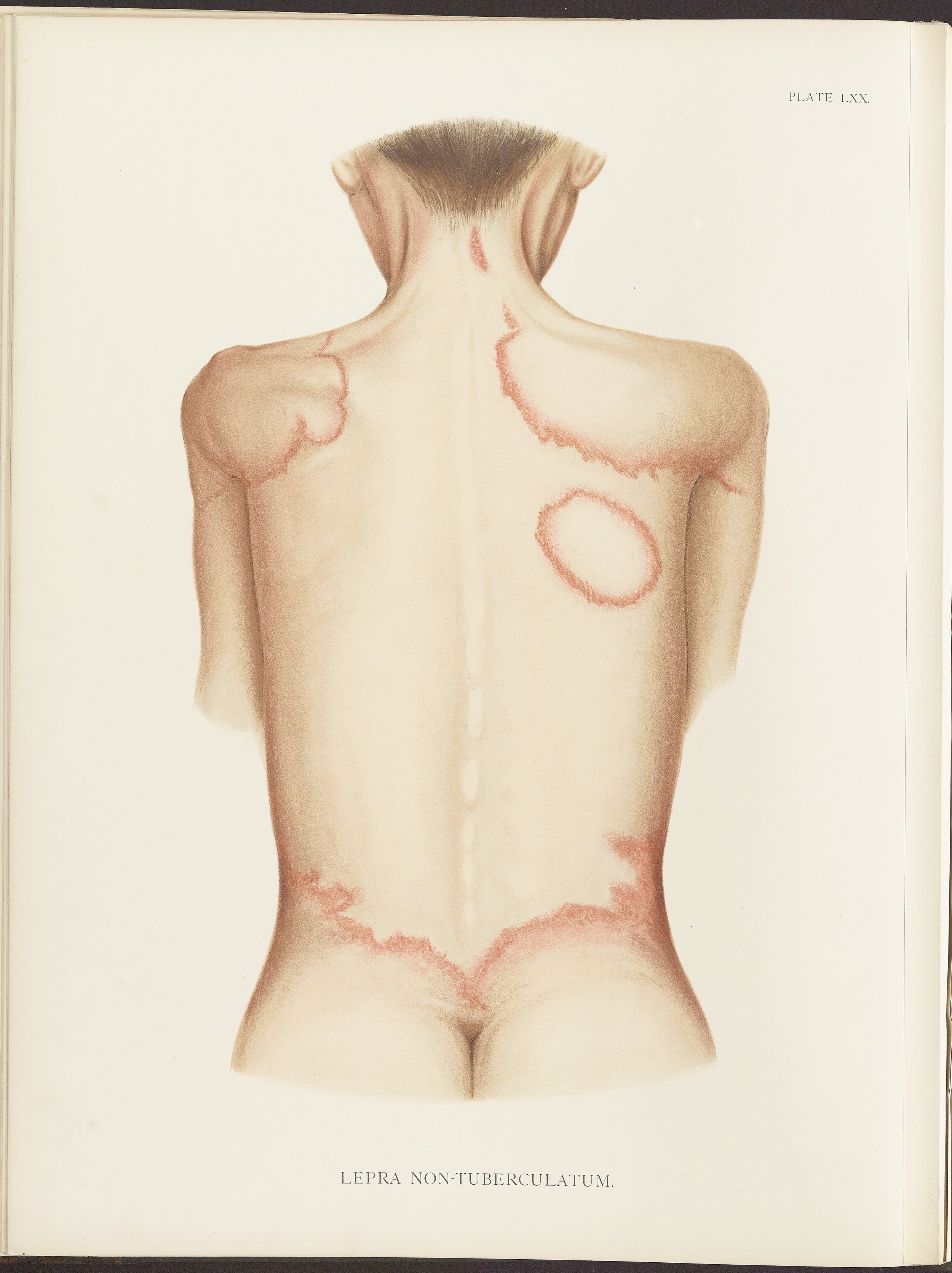
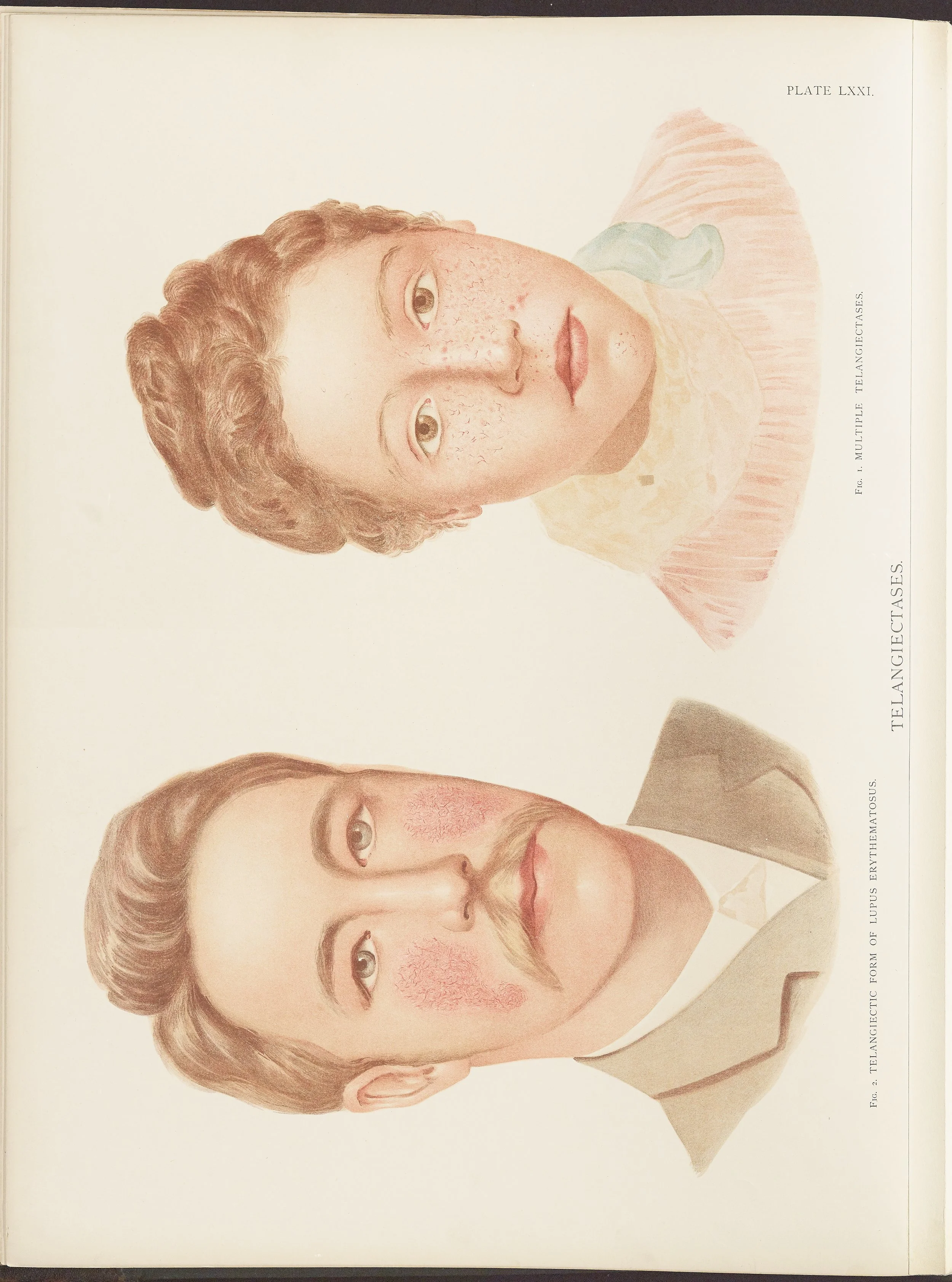
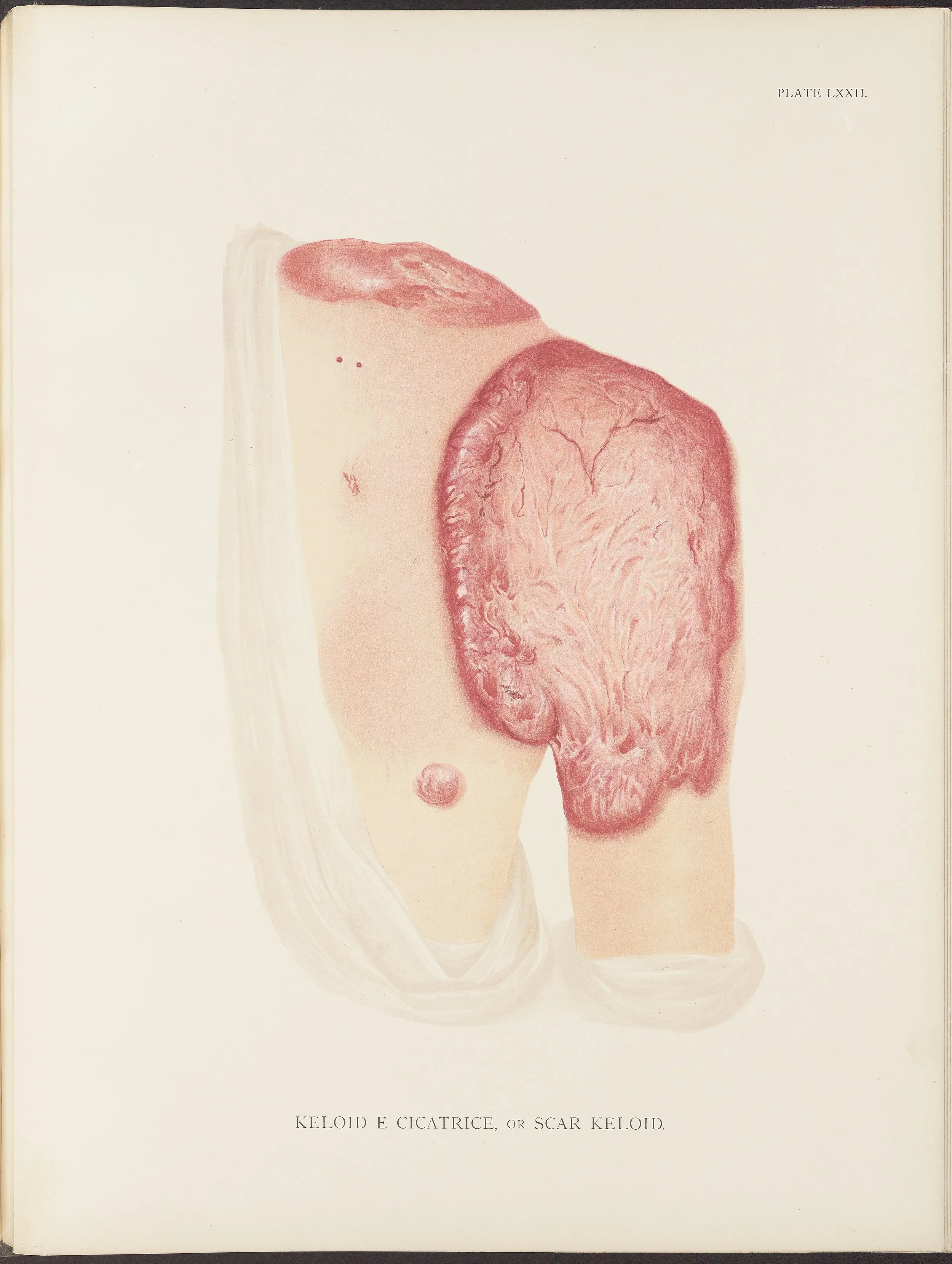
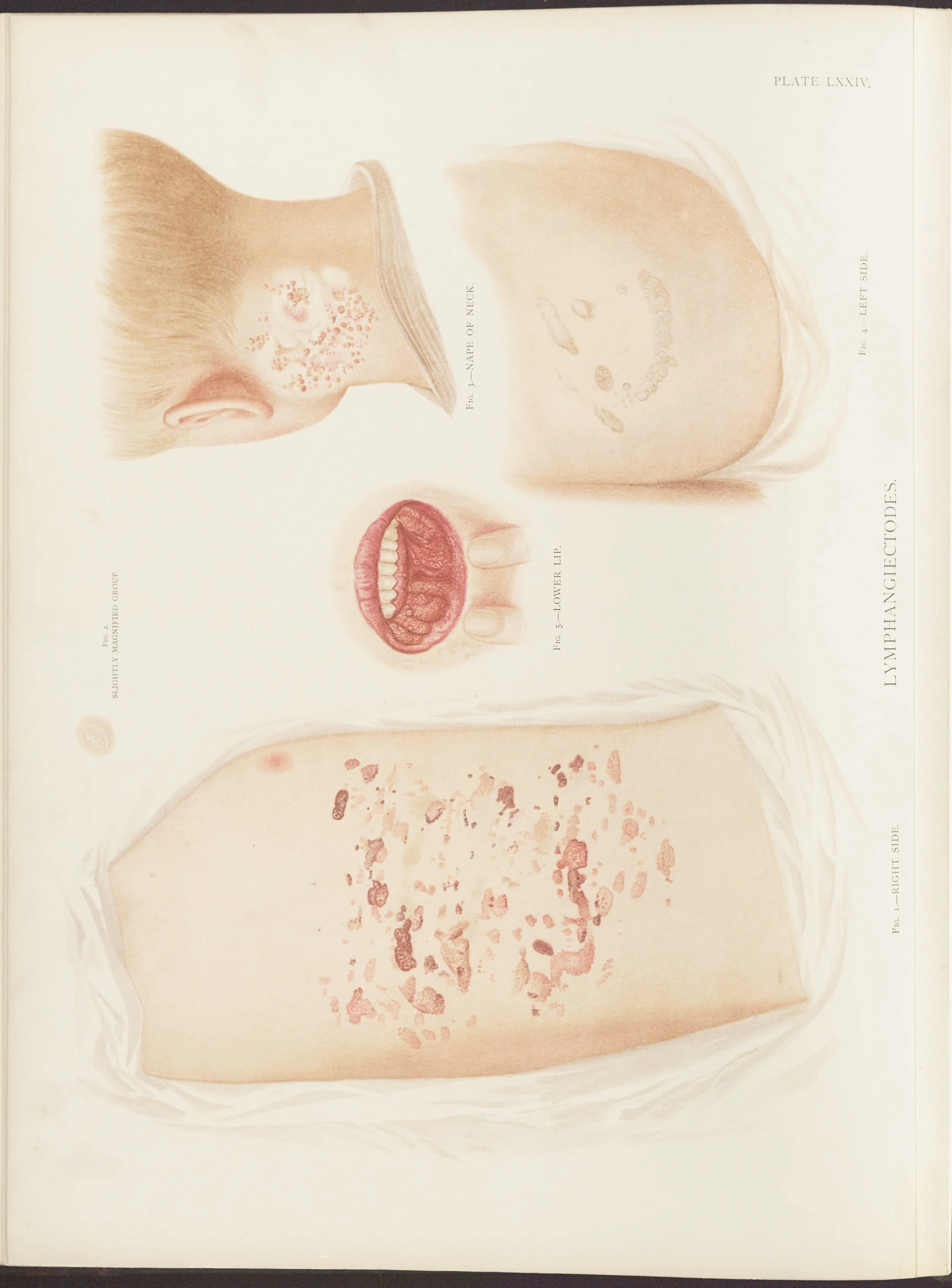
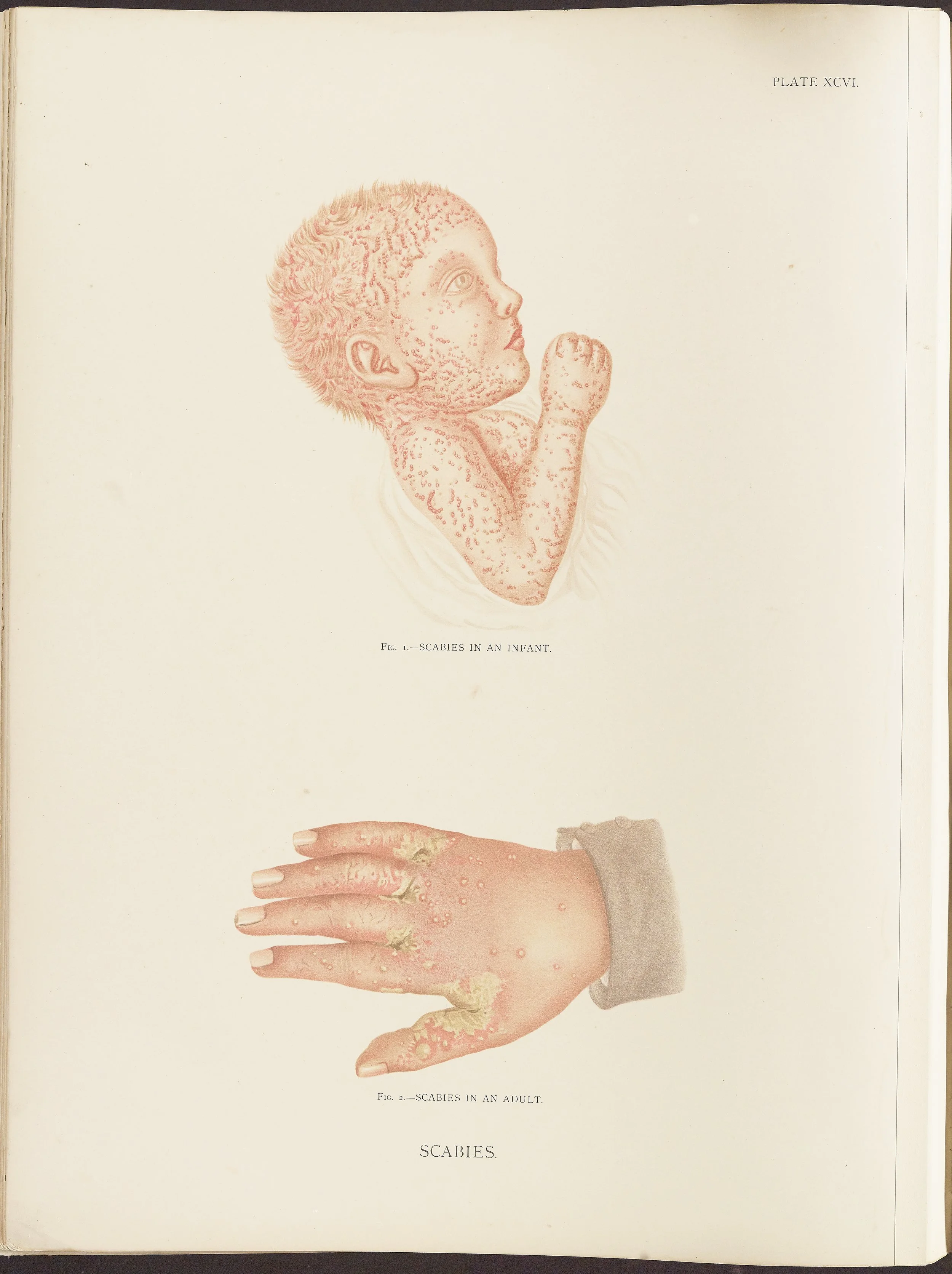
Atlas of the Diseases of the Skin was published in 1896 in two volumes, authored by Henry Radcliffe Crocker. Crocker describes the process of printing the anatomical drawings/paintings for the book:
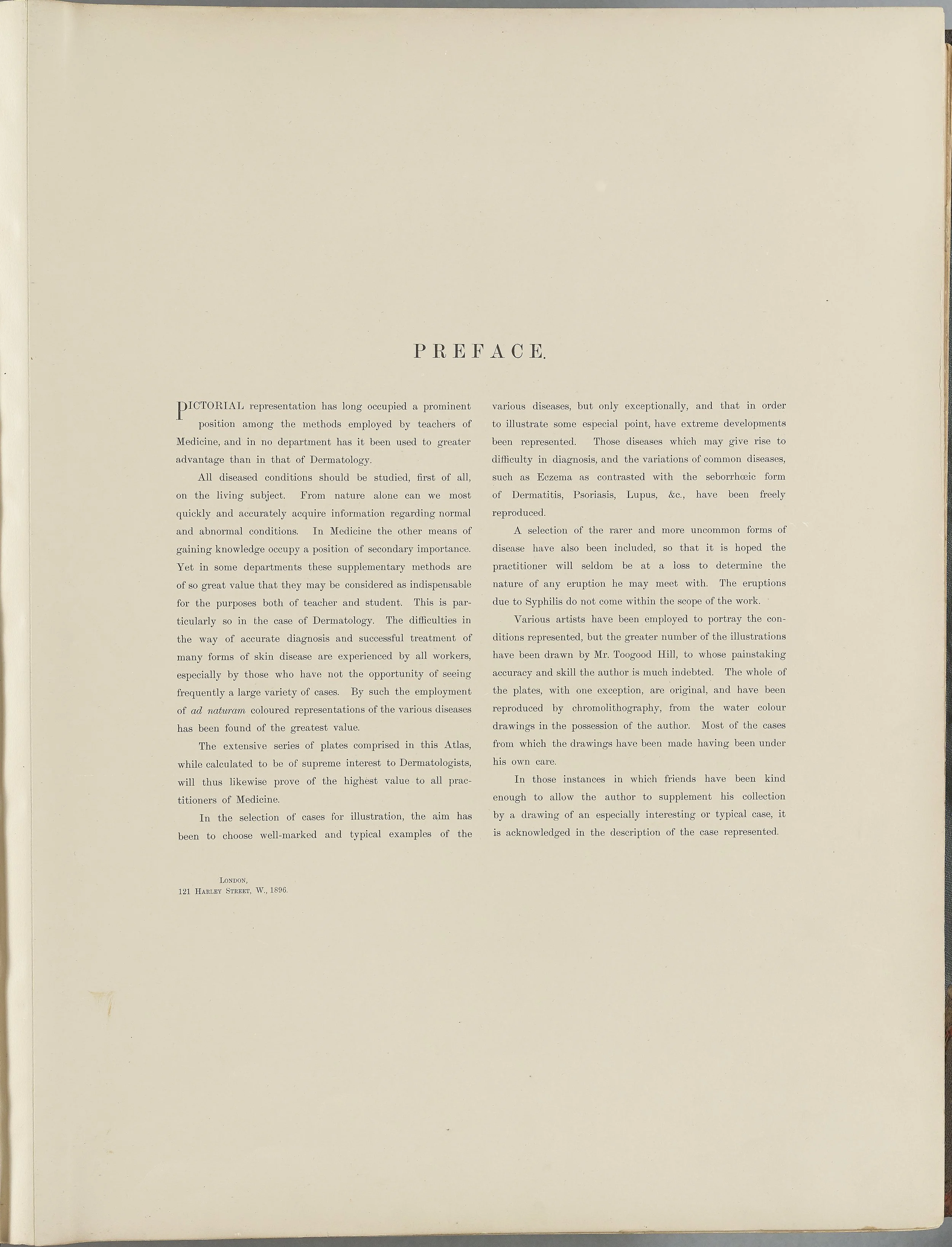
‘Various artists have been employed to portray the conditions represented, but the greater number of the illustrations have been drawn by Mr. Toogood Hill, to whose painstaking accuracy and skill the author is much indebted. The whole of the plates, with one exception, are original, and have been reproduced by chromolithography, from the water colour drawings in the possession of the author’.
Henry Radcliffe Crocker
Henry Radcliffe Crocker was born on 6 March 1845, to parents Henry Crocker Sr, a chemist, and Maria Walters, in Brighton. He generally went by his middle name, Radcliffe. In 1862, he took up an apprenticeship with a general practitioner in Staffordshire, and in 1870 became a medical student at University College London. He worked part time as a dispenser in Sloane Street in order to support his studies. He received various medals and awards during his studies, as well as the university scholarship in 1874. He obtained his MRCS in 1873, his LRCP in 1874, and his MD in 1875.
After gaining his qualifications, Crocker worked as an obstetric physician at University College Hospital, and he tutored alongside this. He also worked at the Brompton Hospital for Consumption and Diseases of the Chest, and as a resident medical officer at Charing Cross Hospital. He returned as resident medical officer to University College Hospital in 1875, and became the assistant medical officer of the dermatology department a year later. He worked under William Tilbury Fox, which is where Crocker began his foray into skin disease as a subject of medical interest.
When Tilbury Fox died in 1879, Crocker succeeded him as physician and dermatologist. Whilst dermatology was in its earlier stages as a medical discipline, Crocker made advancements, and recognised the usefulness of skin biopsies. He published a textbook, Diseases of the Skin: their Description, Pathology, Diagnosis and Treatment in 1888, and became a successful dermatologist, recognised across the world for his research.
In 1851, Henry lived with his father Henry and mother Maria and his sisters Maria and Charlotte in Shoreham, and later in Chelsea, in 1861. In 1871, Crocker was residing with the family of John Milton Ellborough Scotliffe, who studied at the University of London, and went on to be a surgeon. On 3 April 1880, he married Constance Mary, daughter of Edward Francis Fussell, who was physician to Sussex County Hospital. In 1881, the couple were living at 28 Welbeck Street, which was historically associated with the medical profession. The couple had no children together, and their fortune was sp
Ill health affected his work, and he stepped down from his duties at University College Hospital, and taking a holiday to Engelberg, Switzerland. Whilst on holiday, on 22 August 1909, he died suddenly of heart failure at his hotel, and he was later buried in Engelberg.
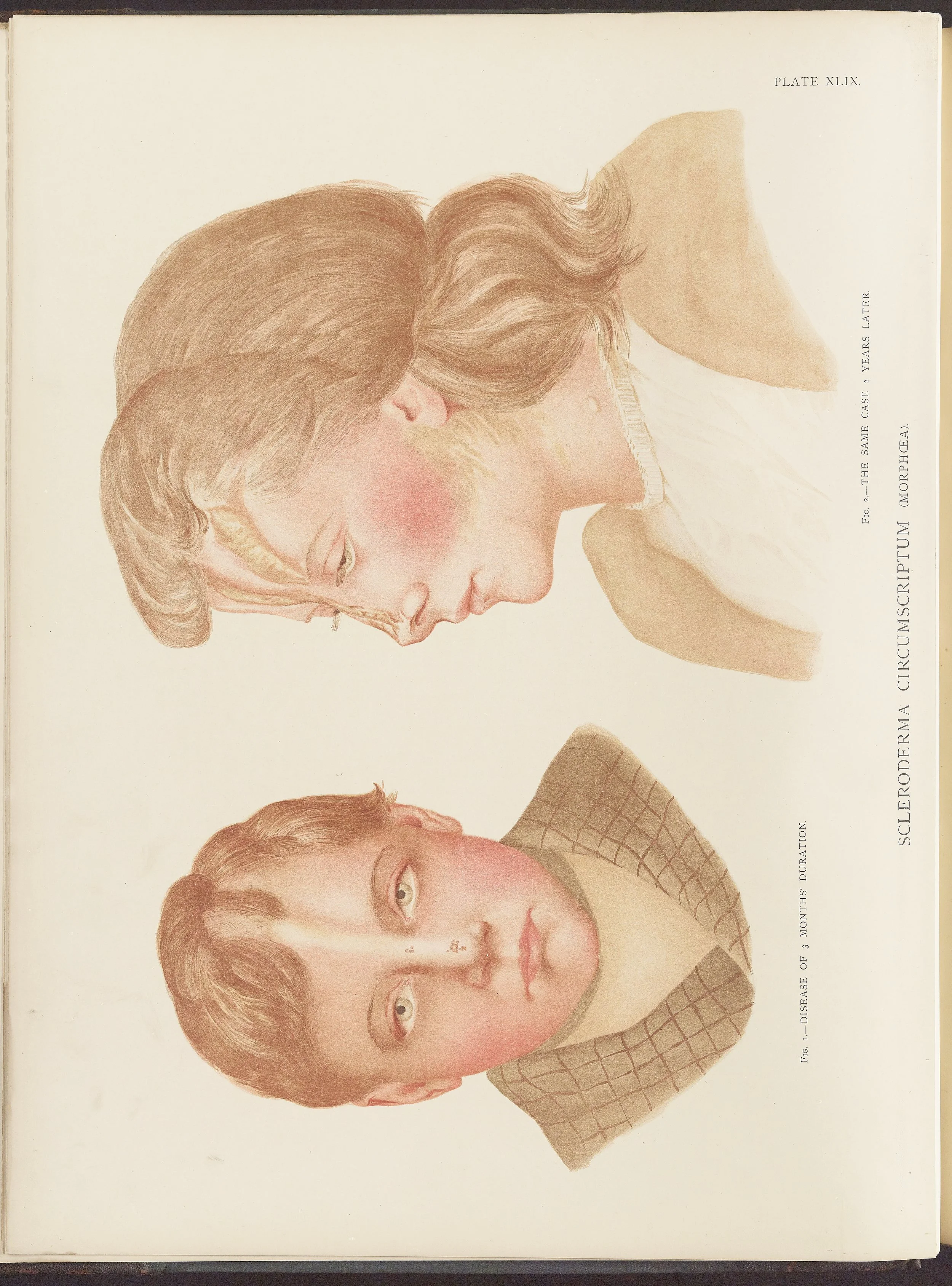
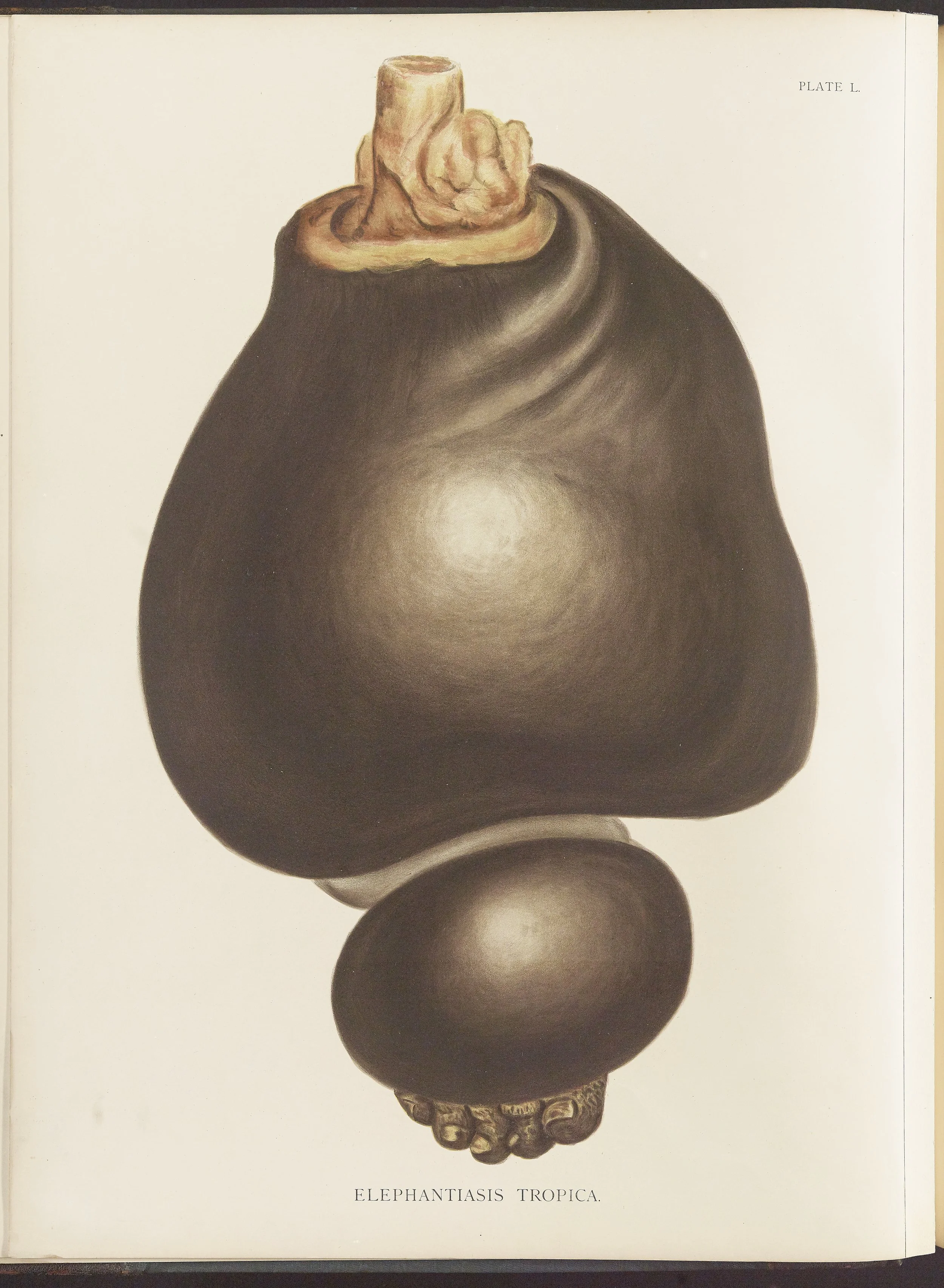
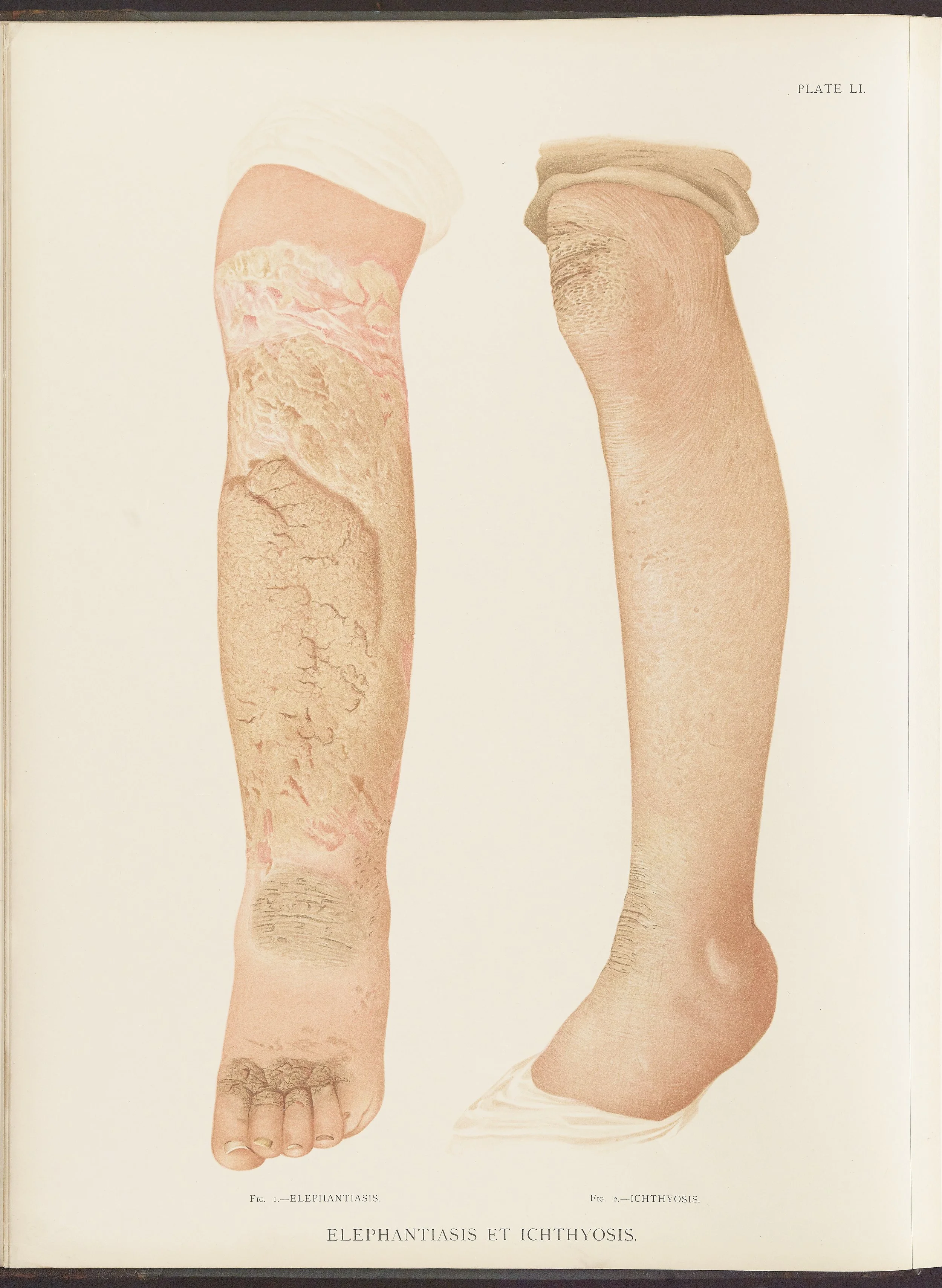
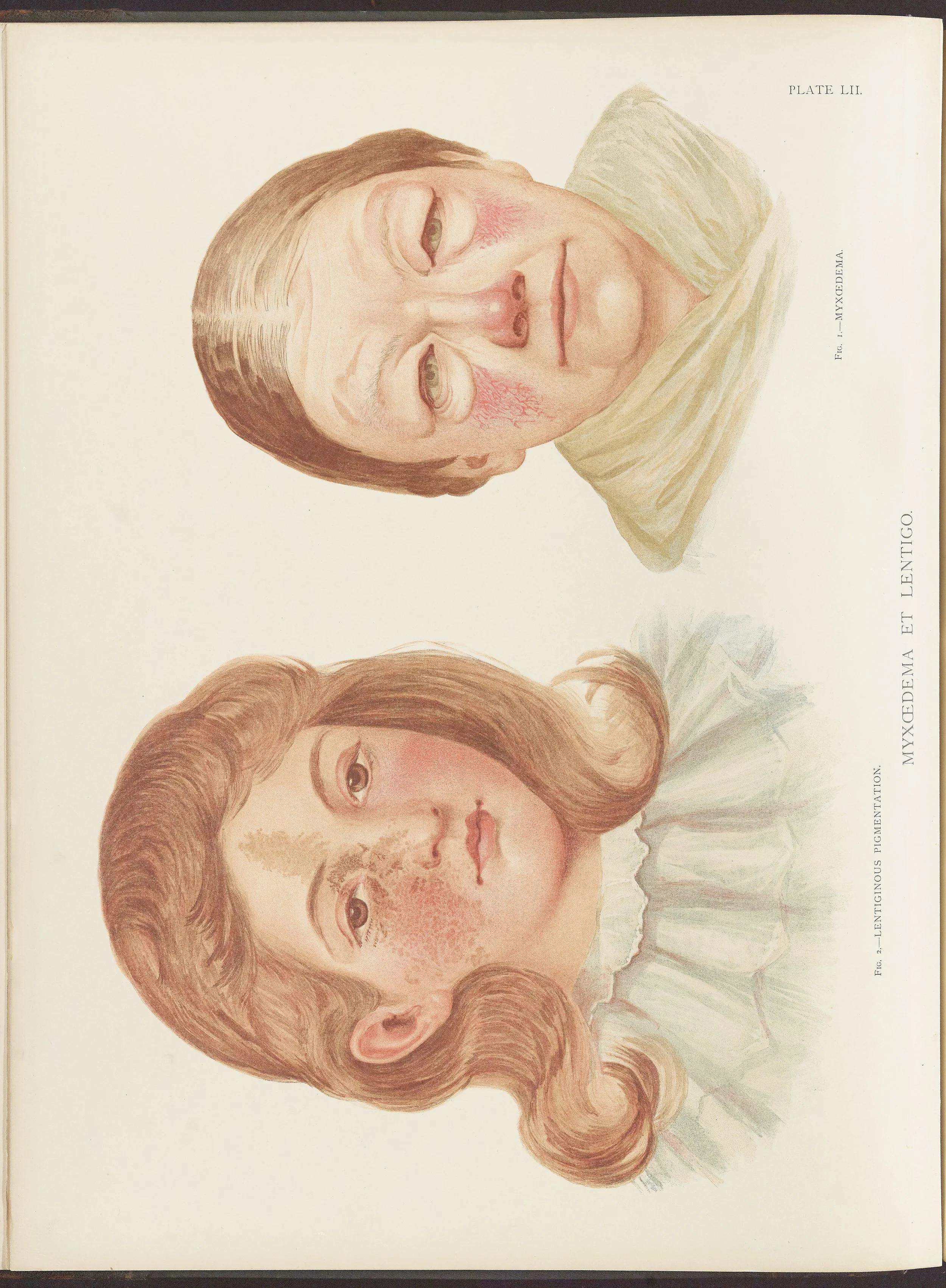
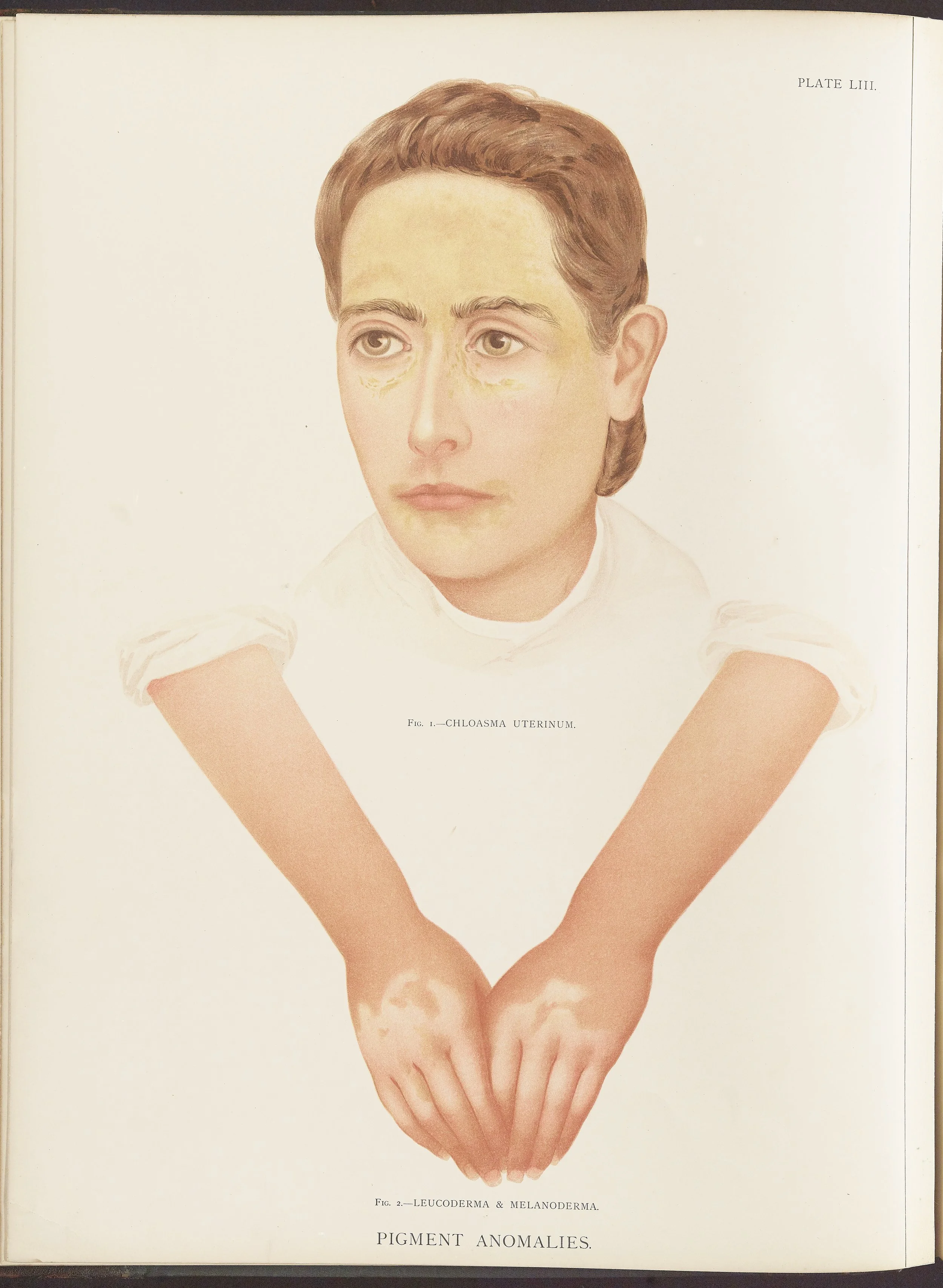
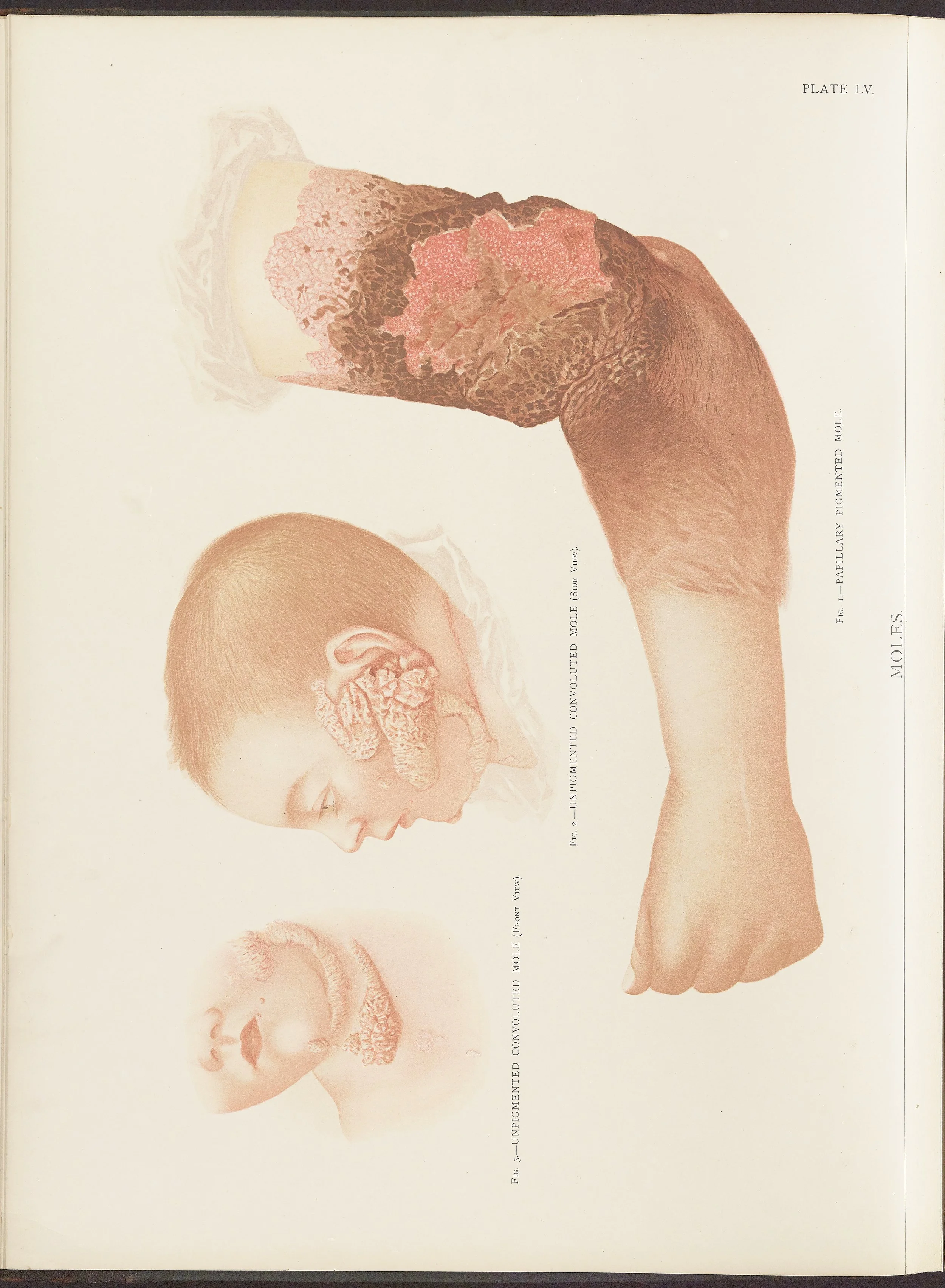
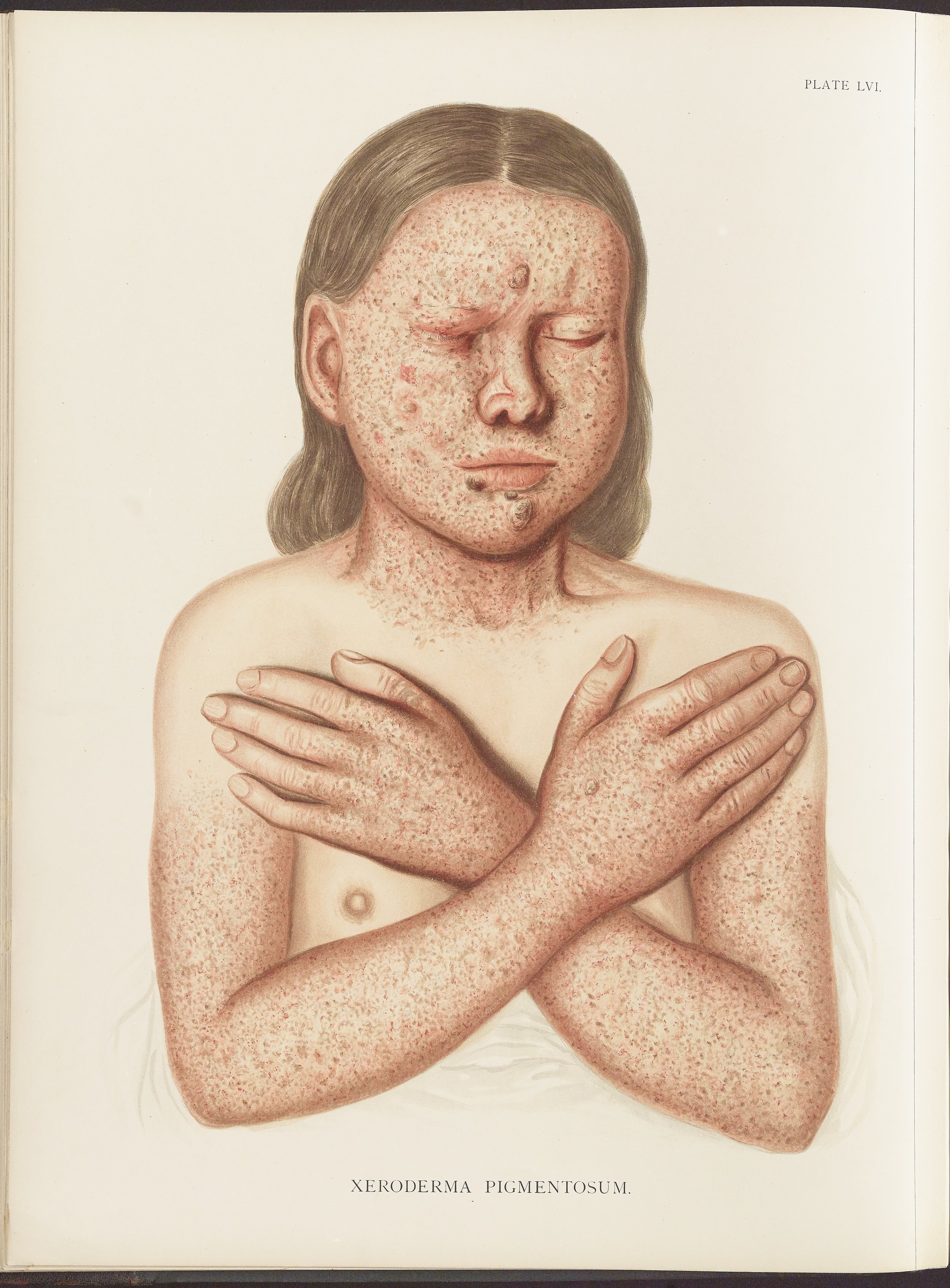
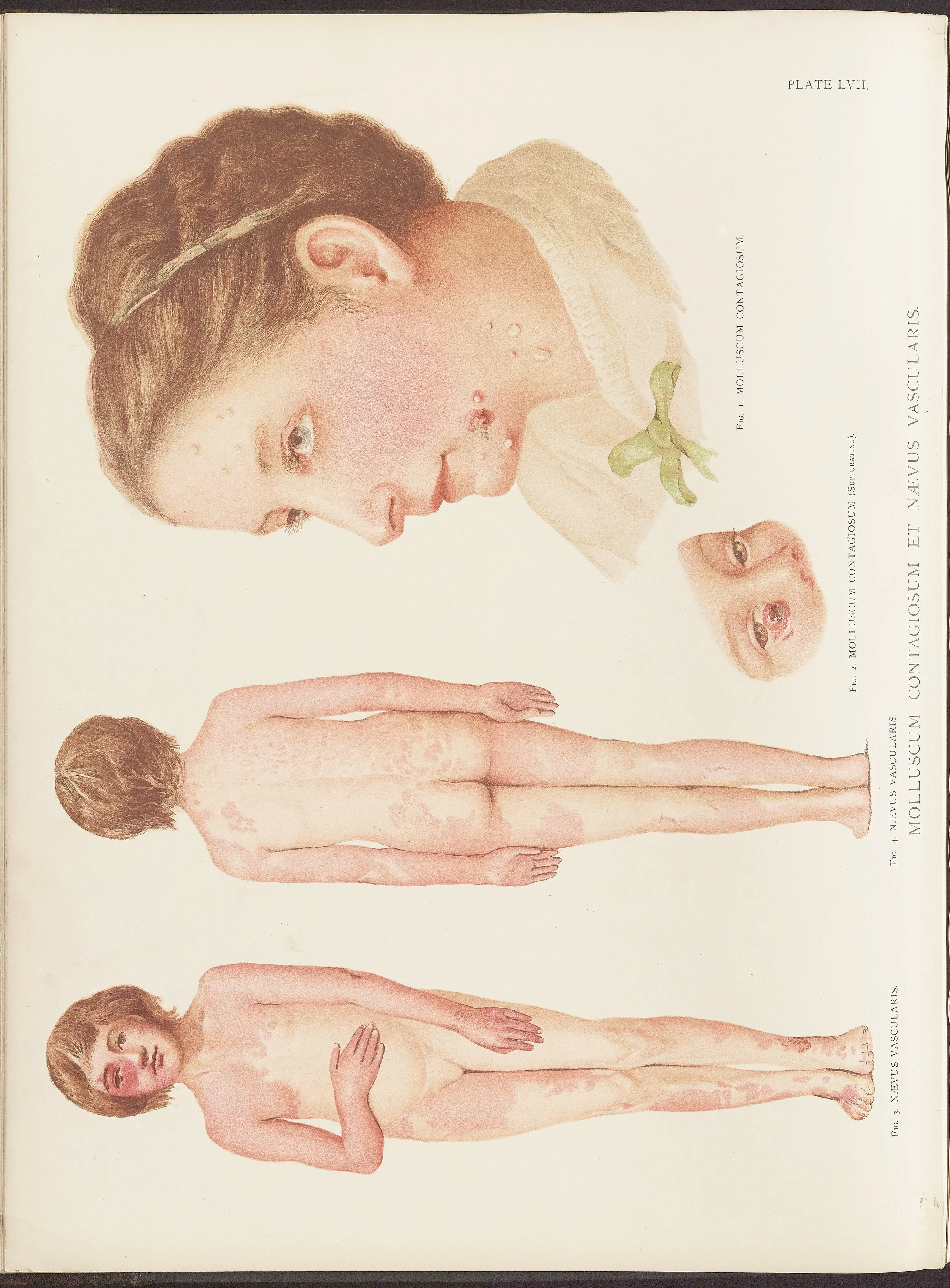
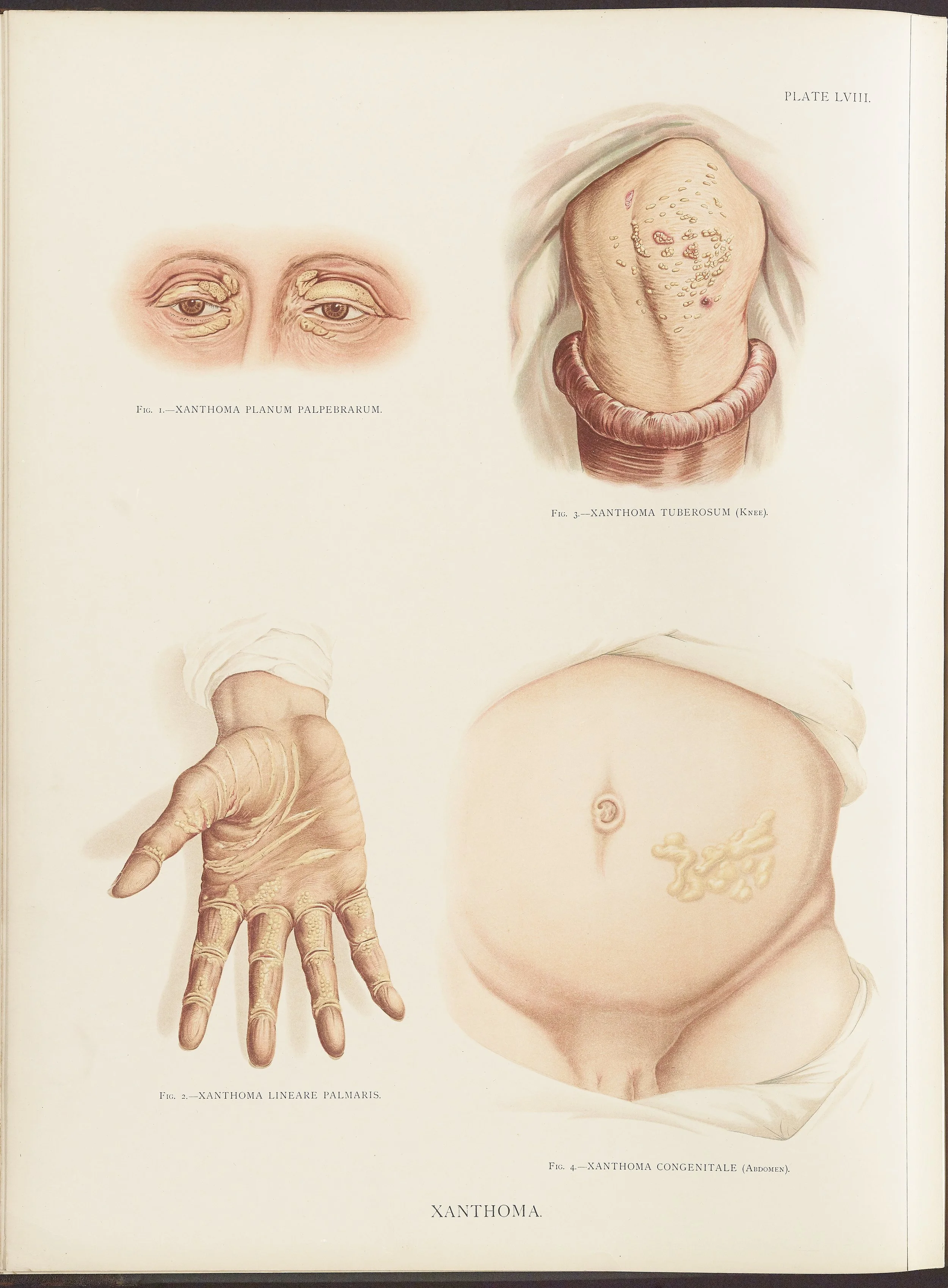
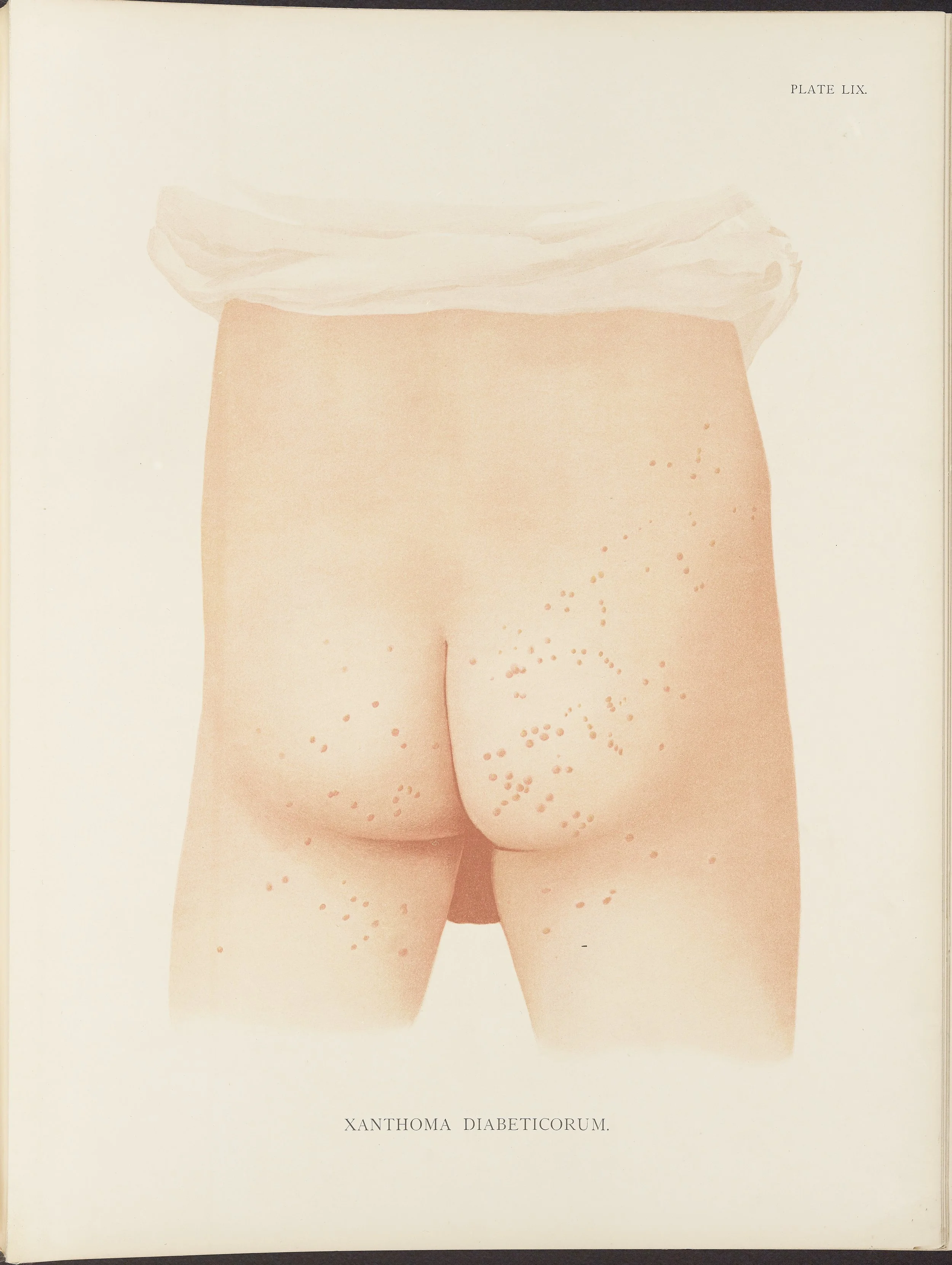
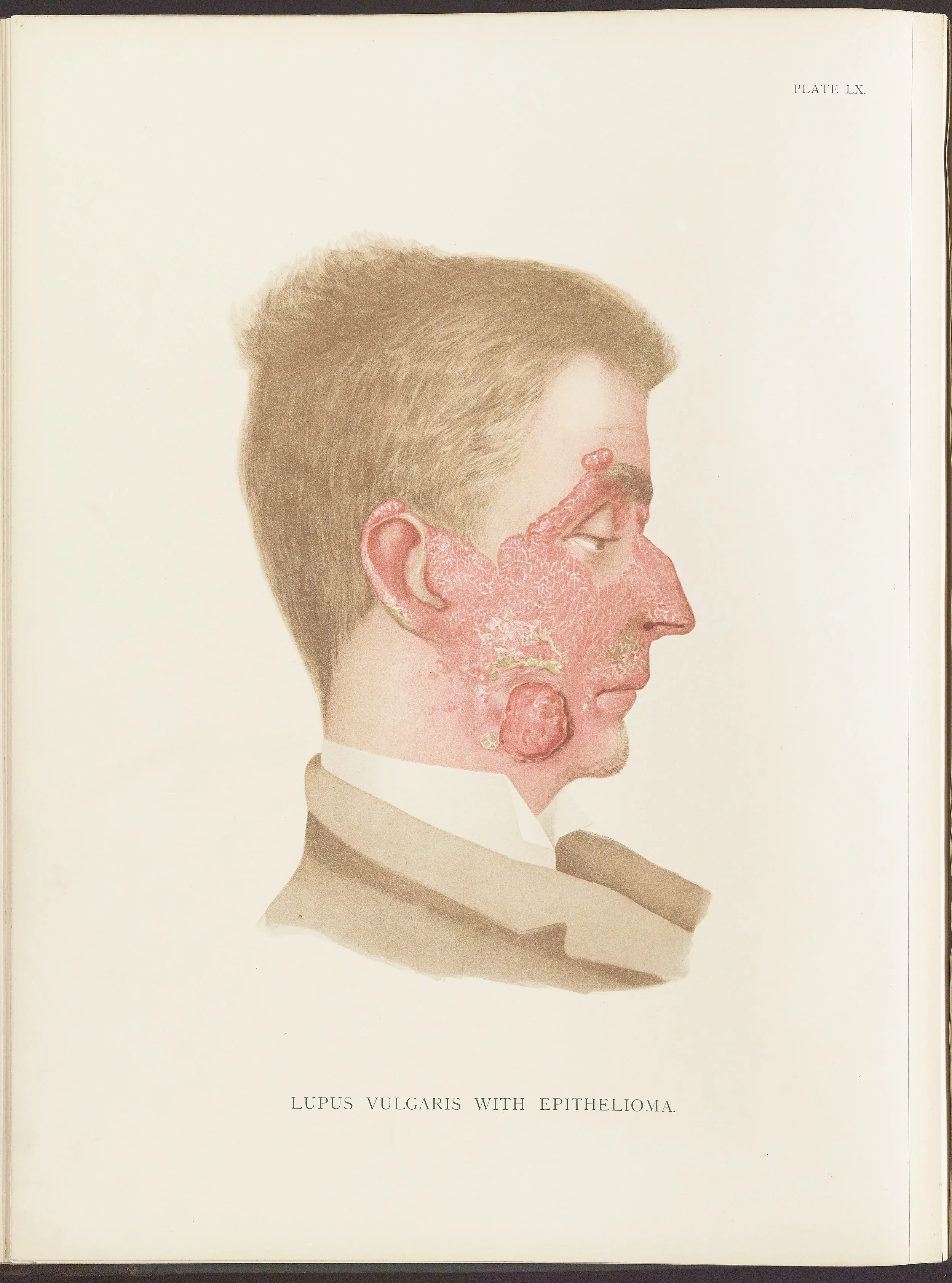
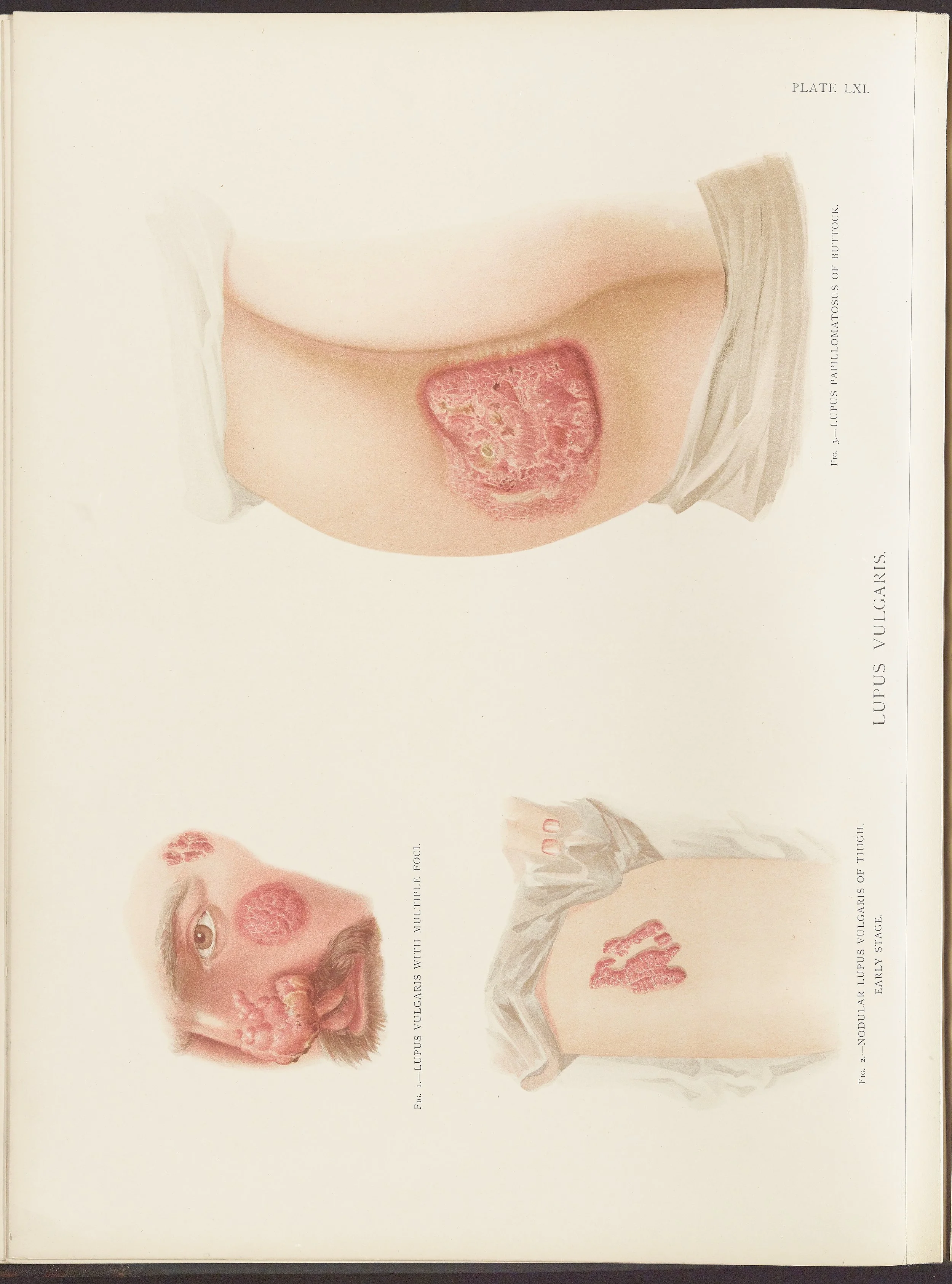
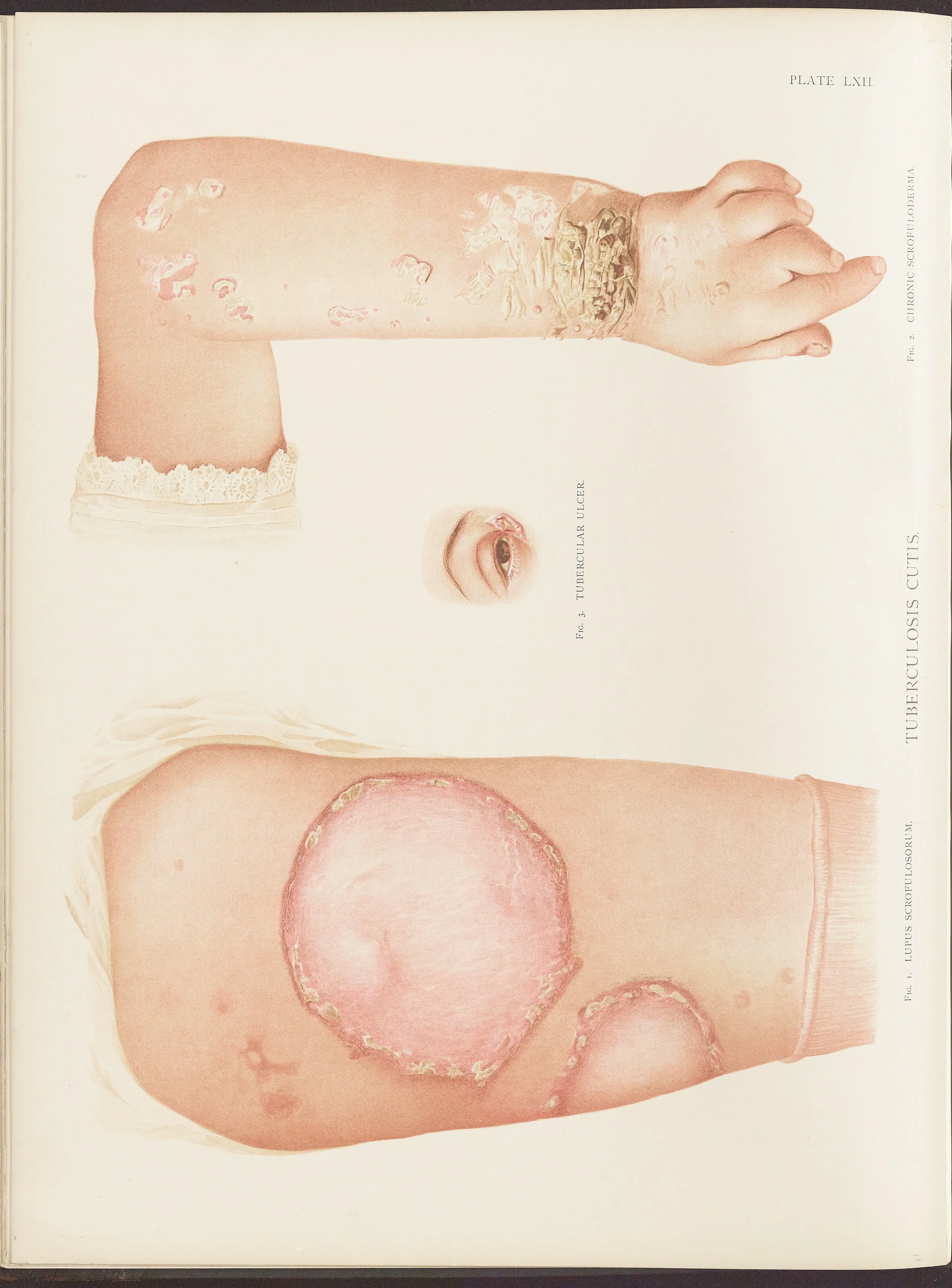
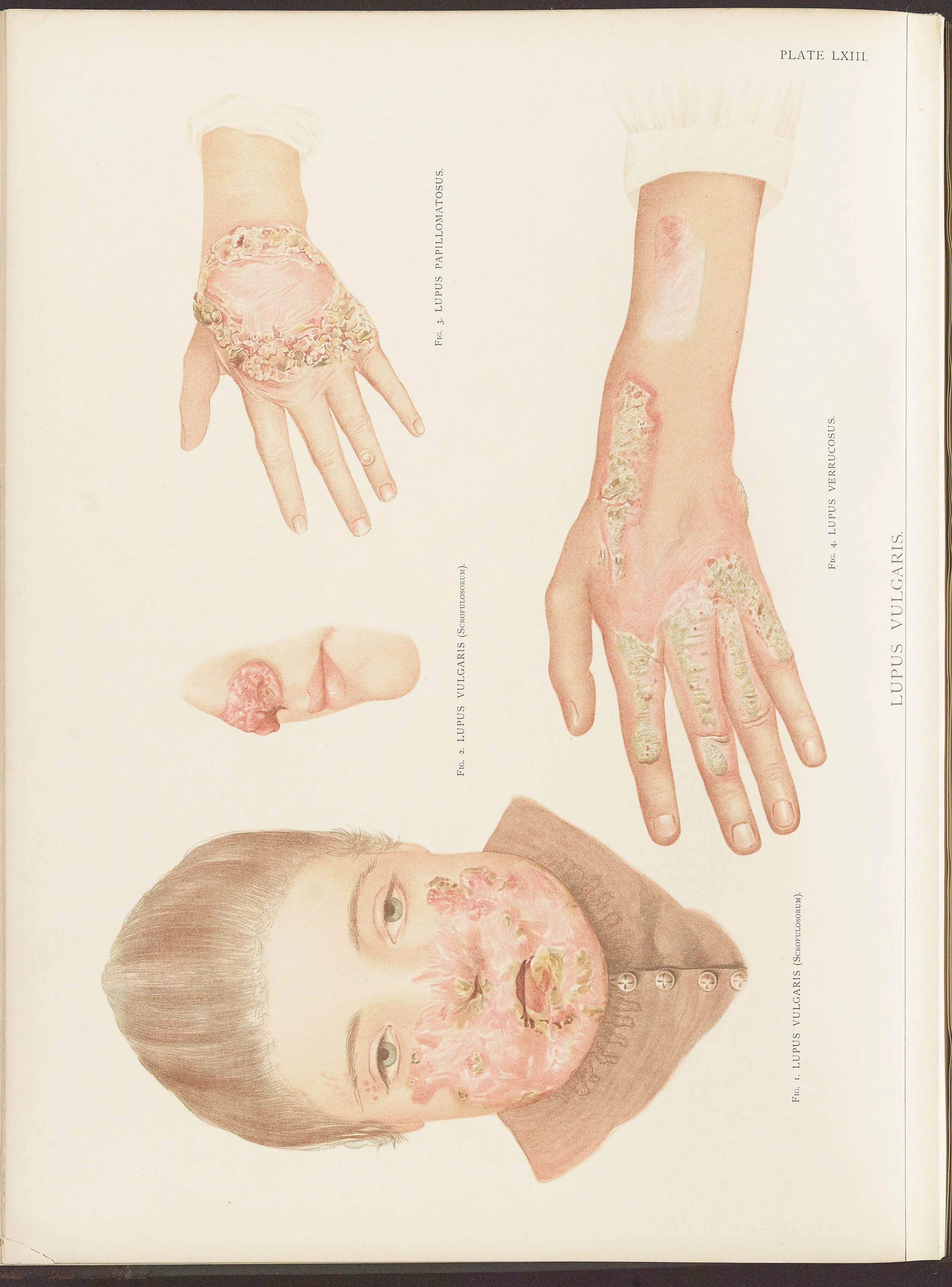
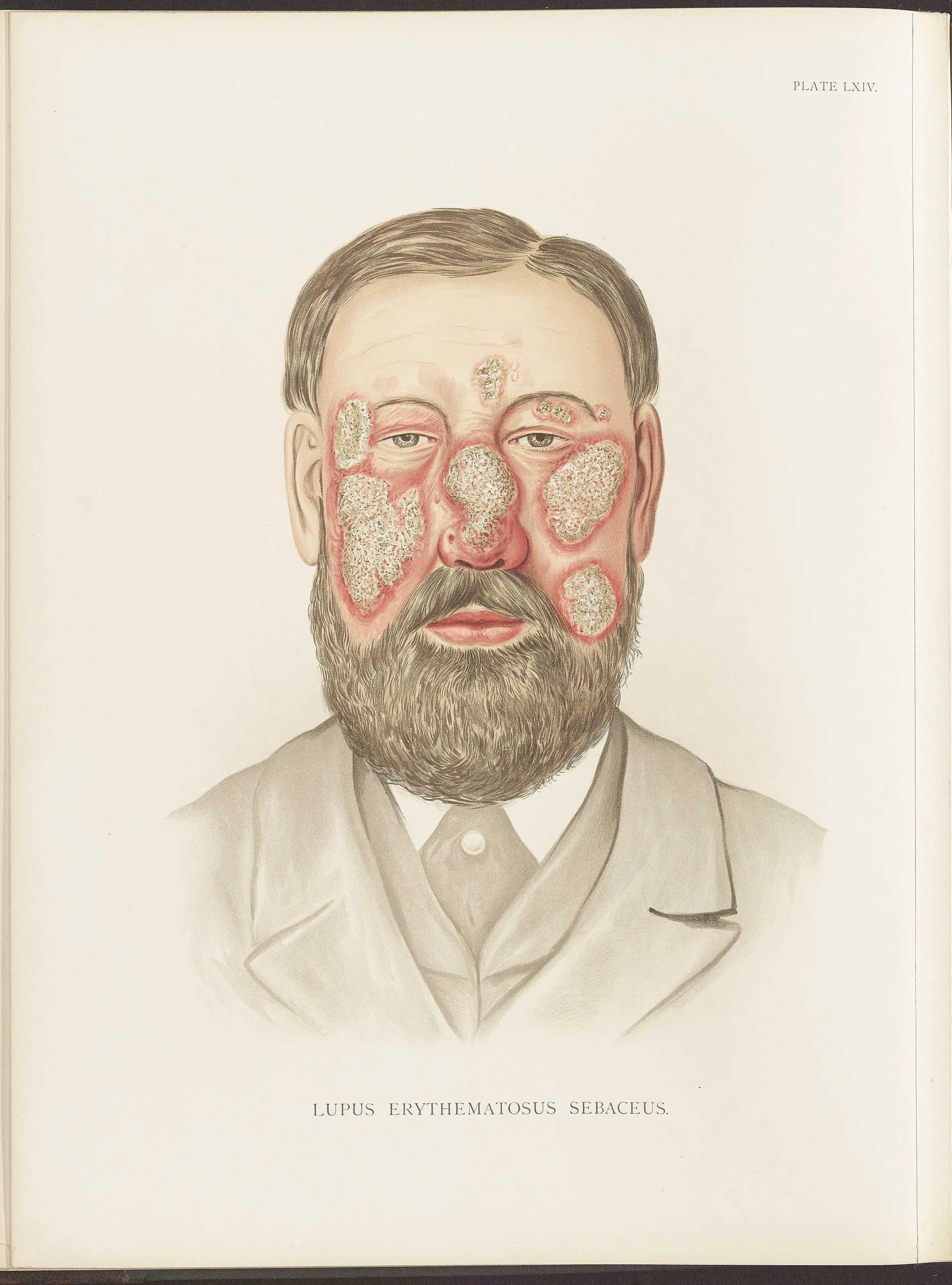
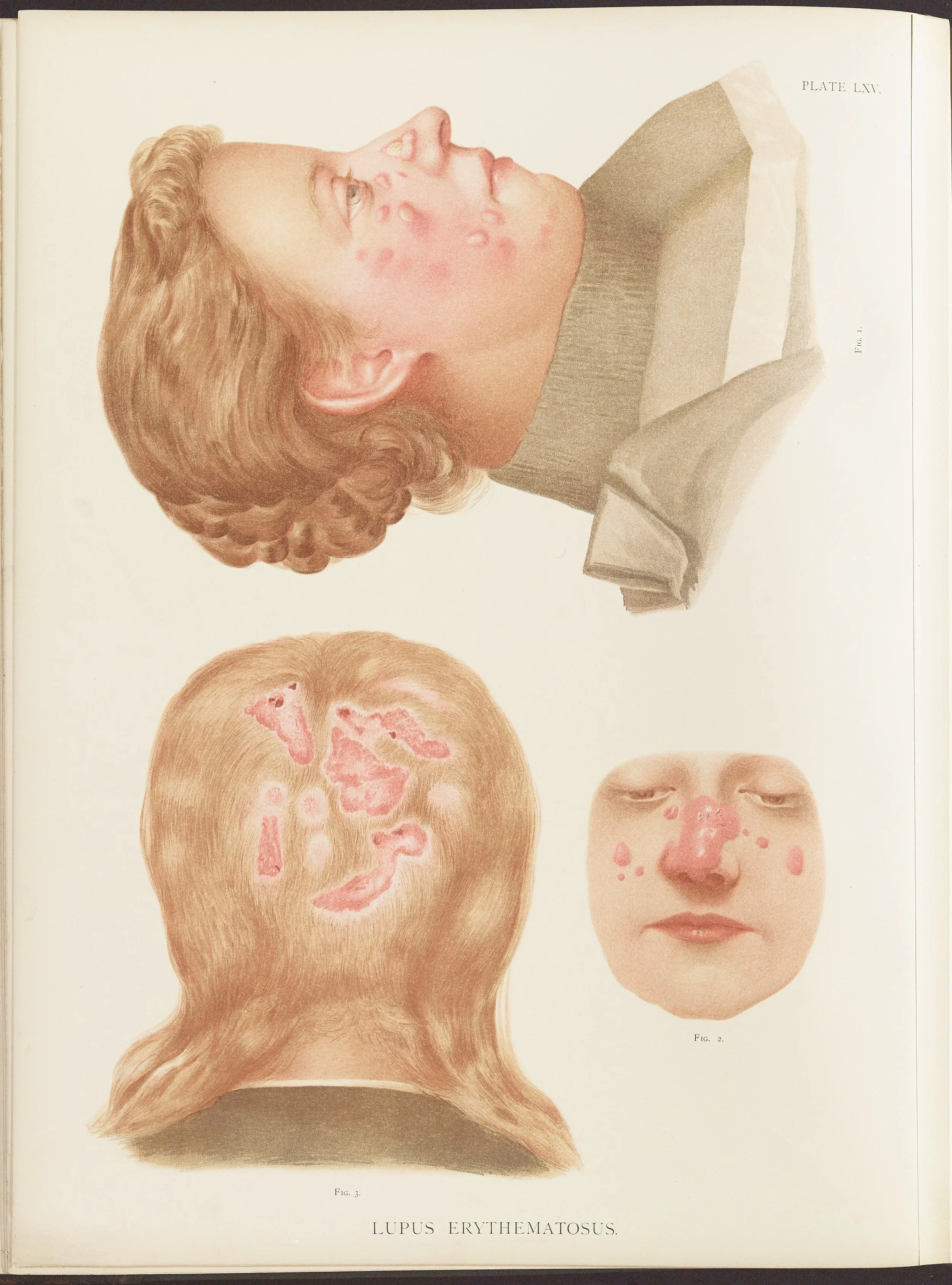
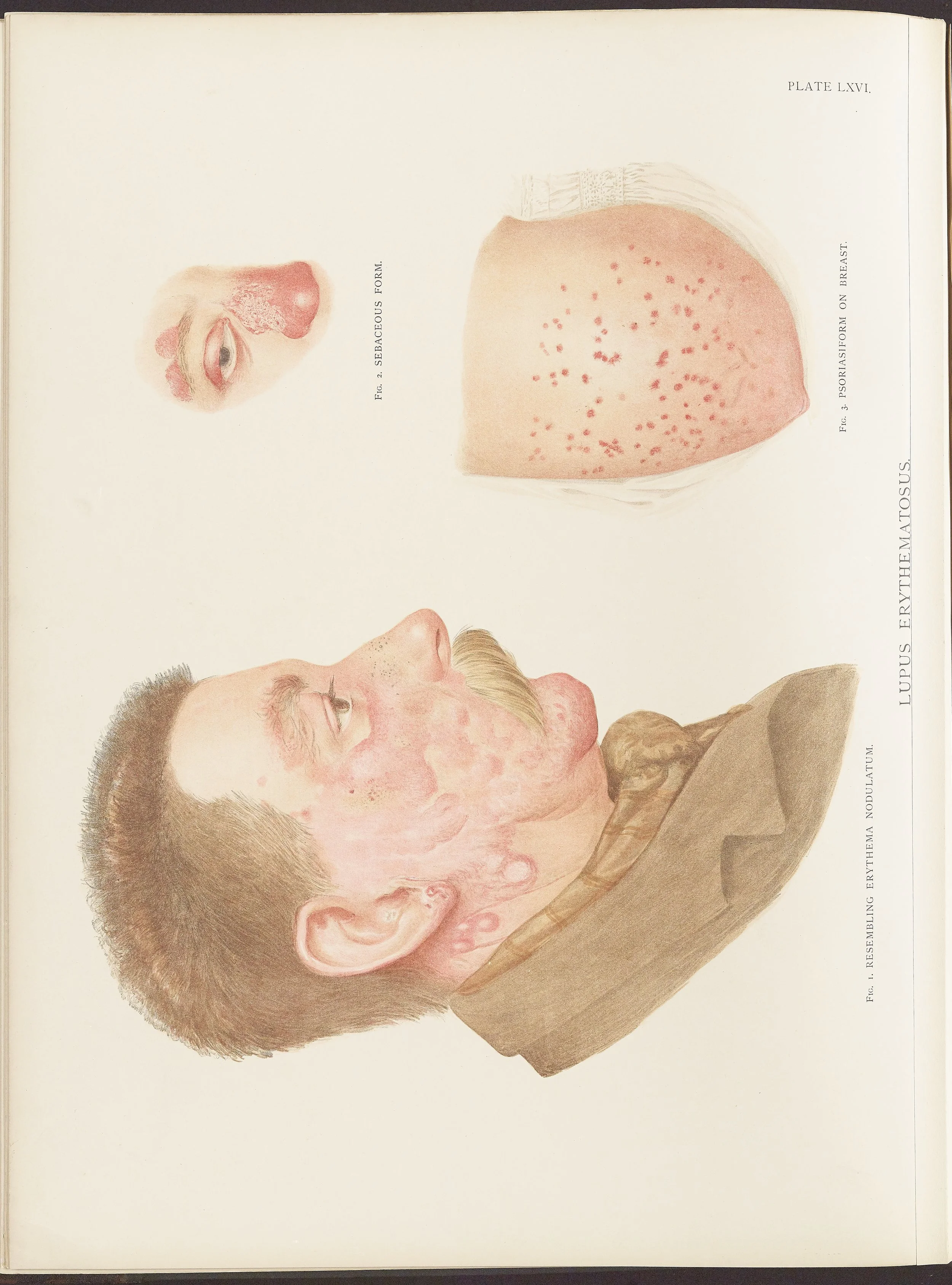
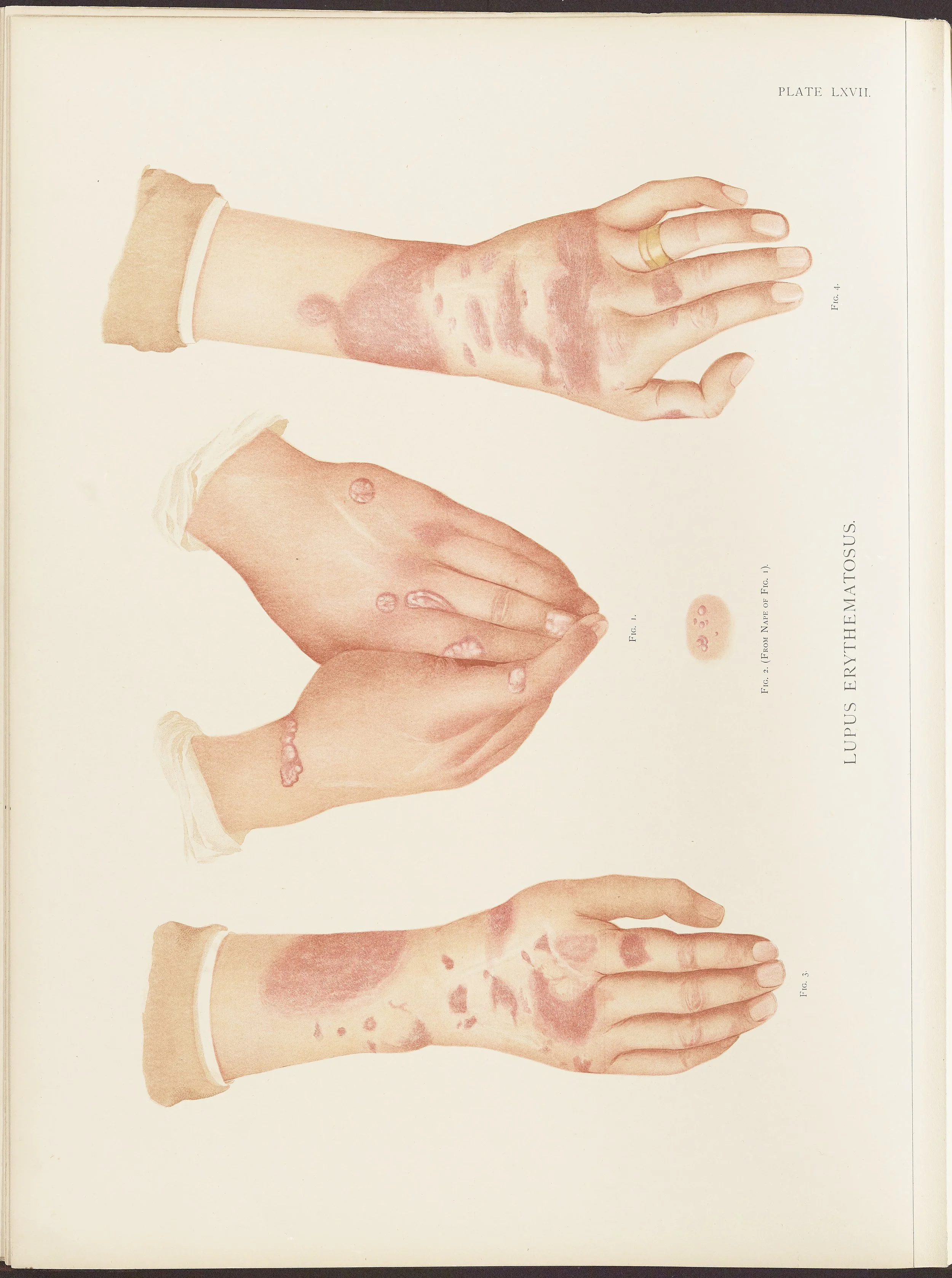
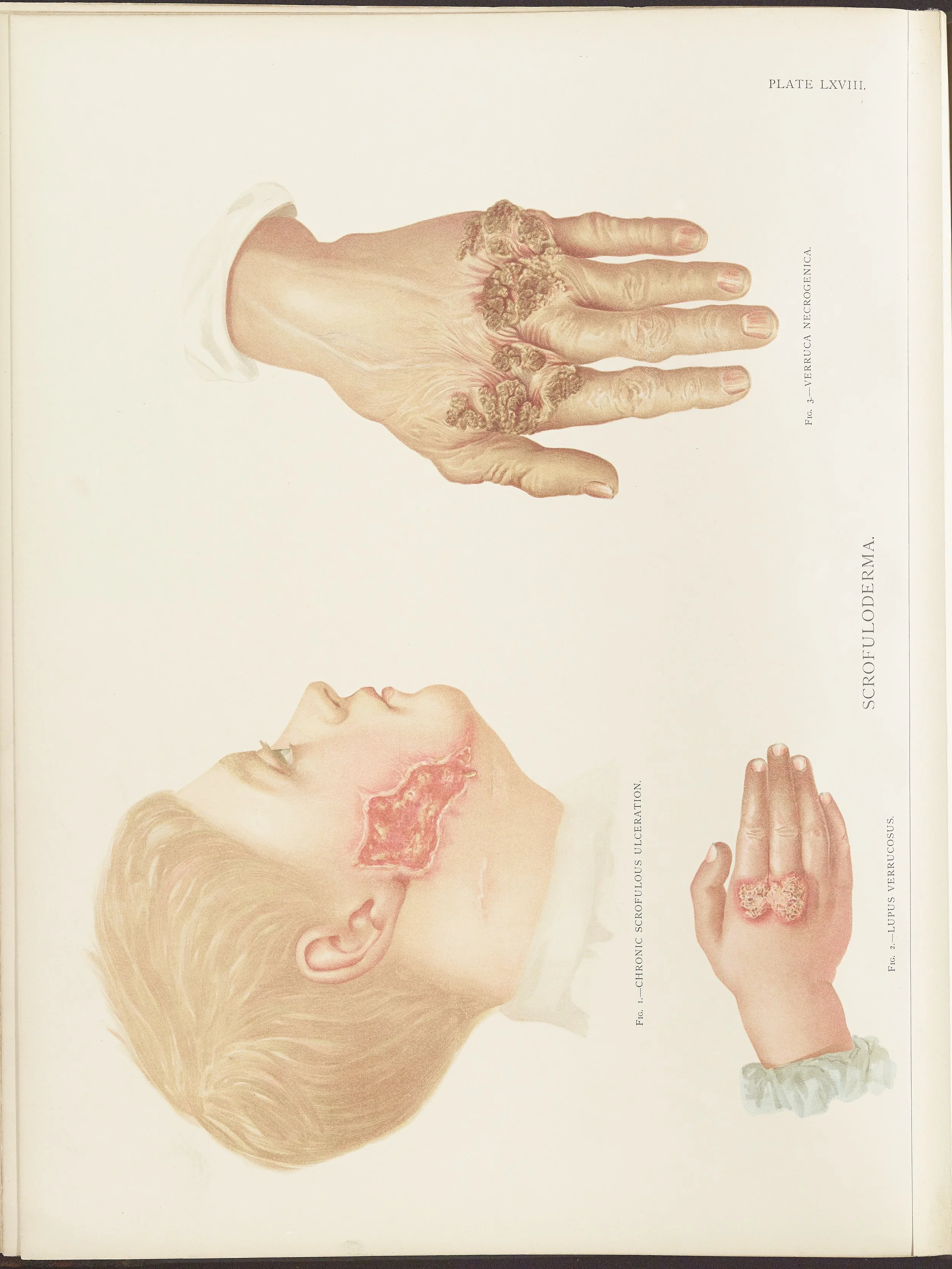
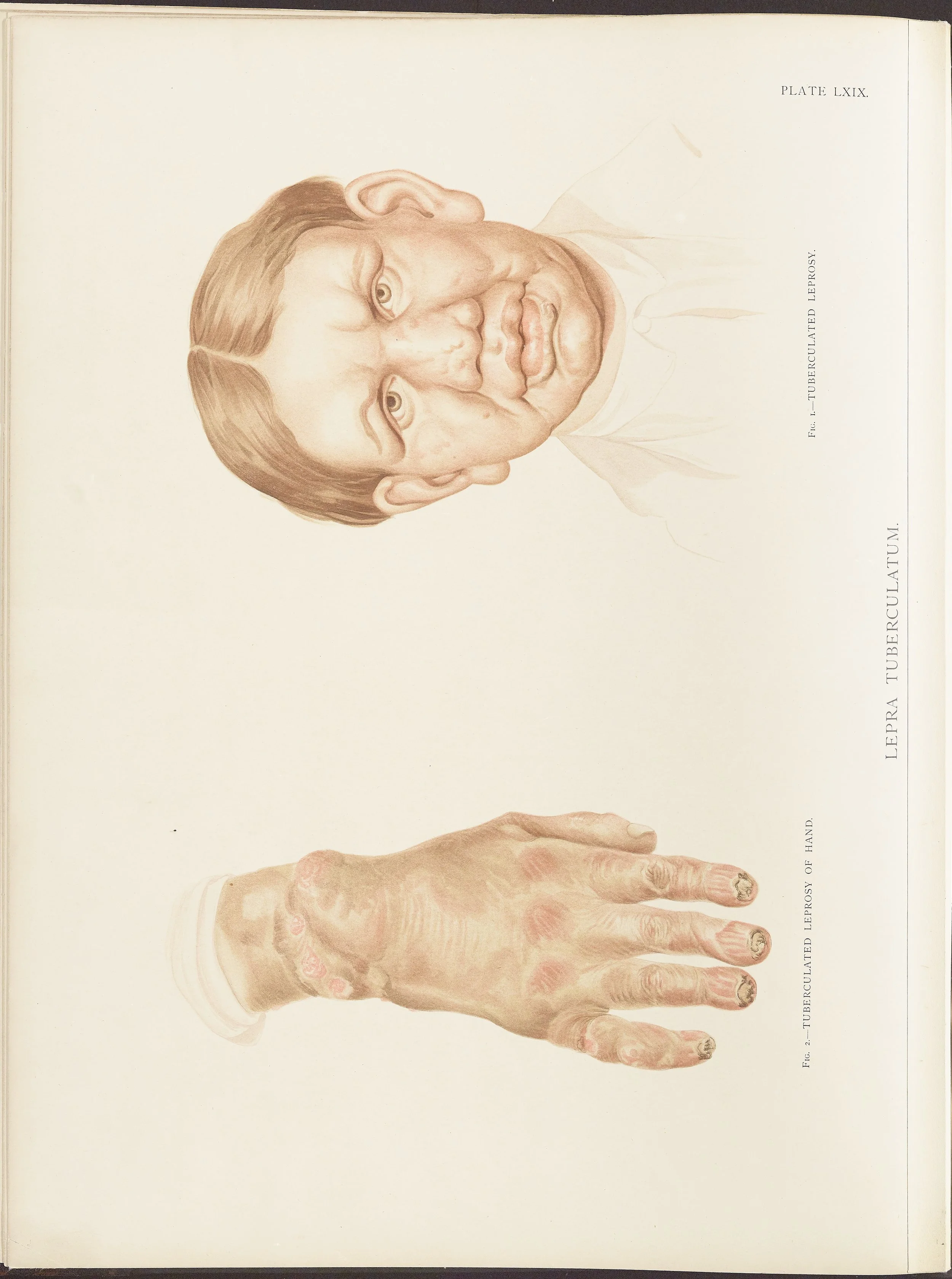
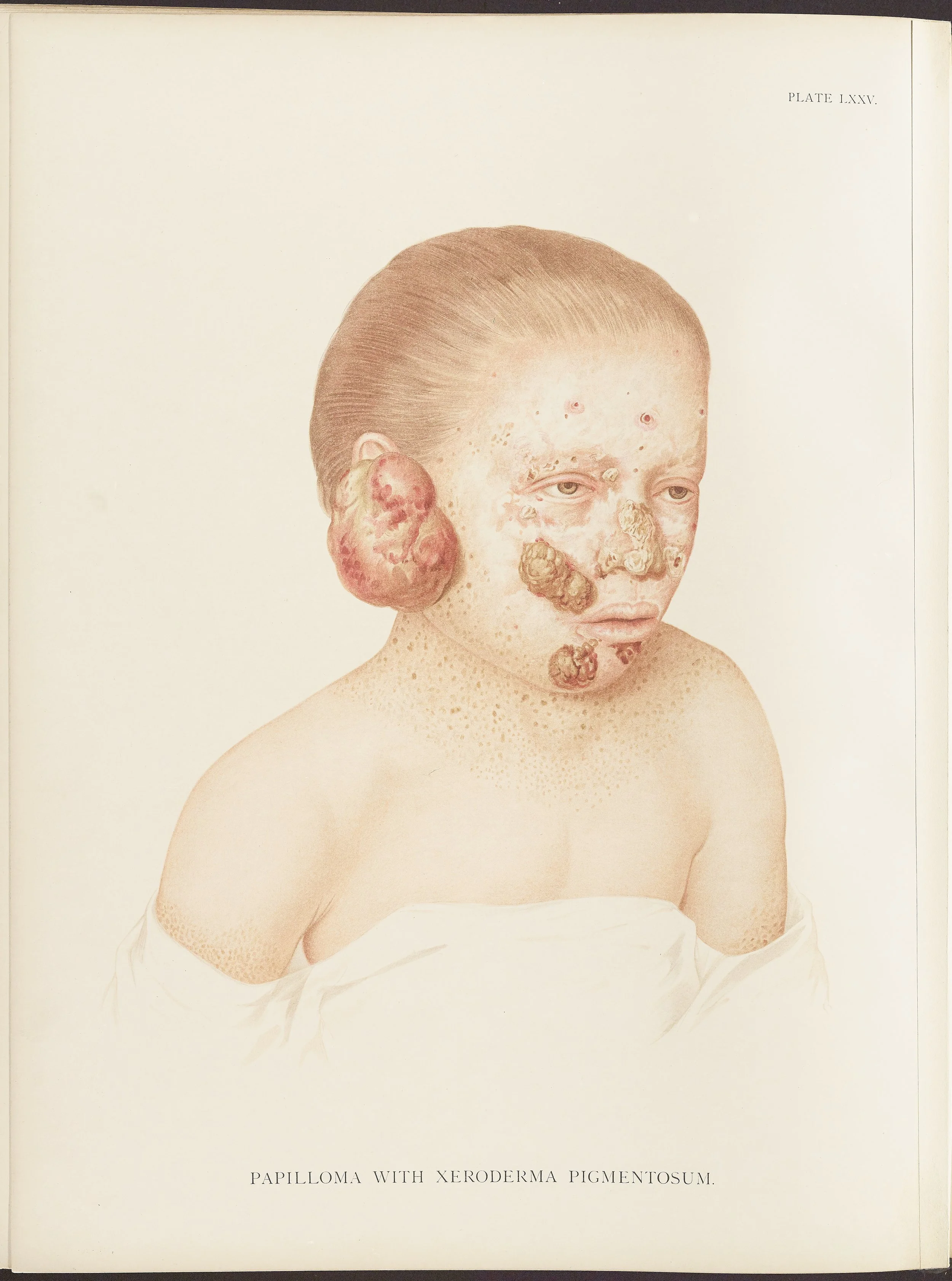
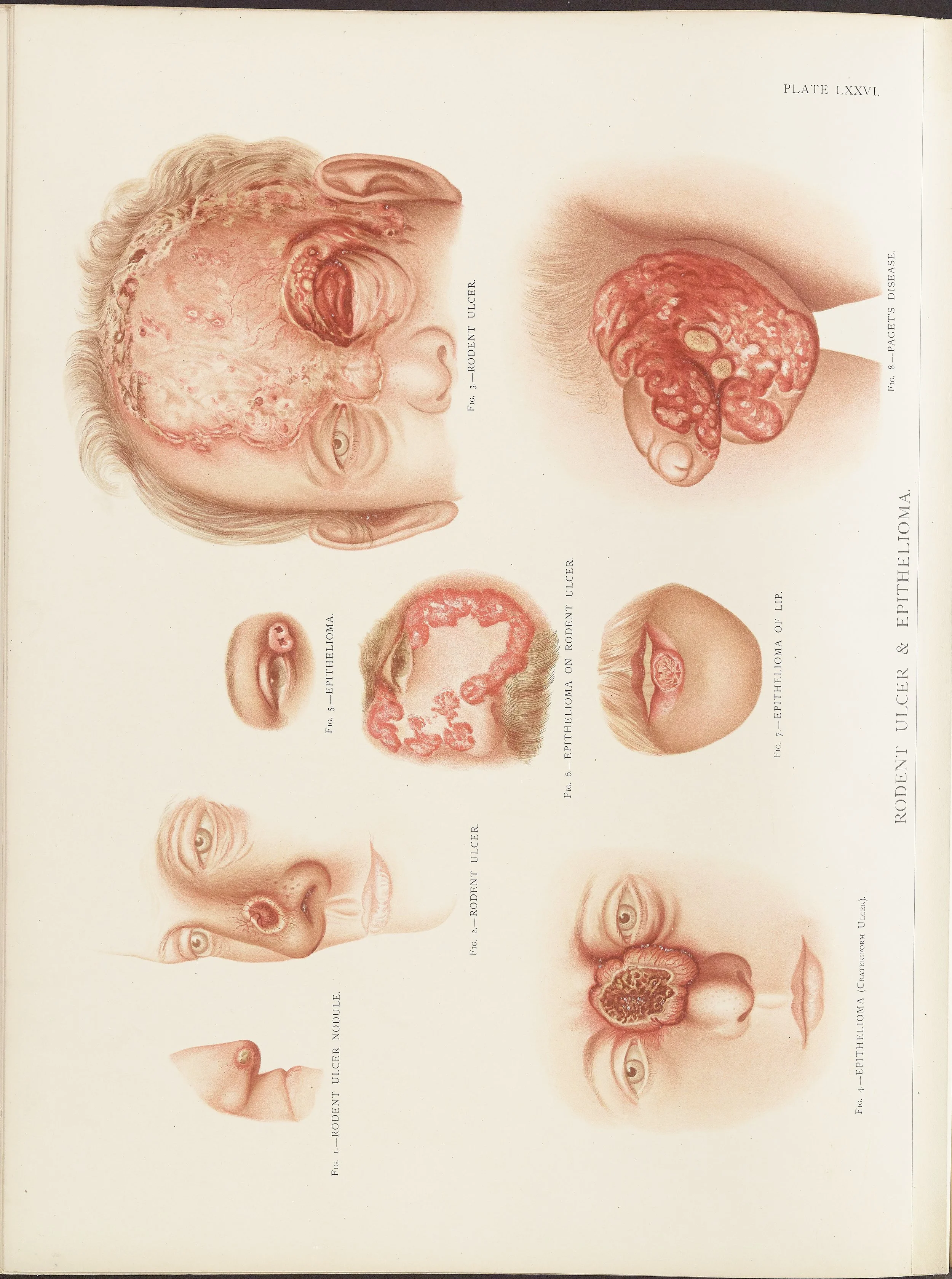
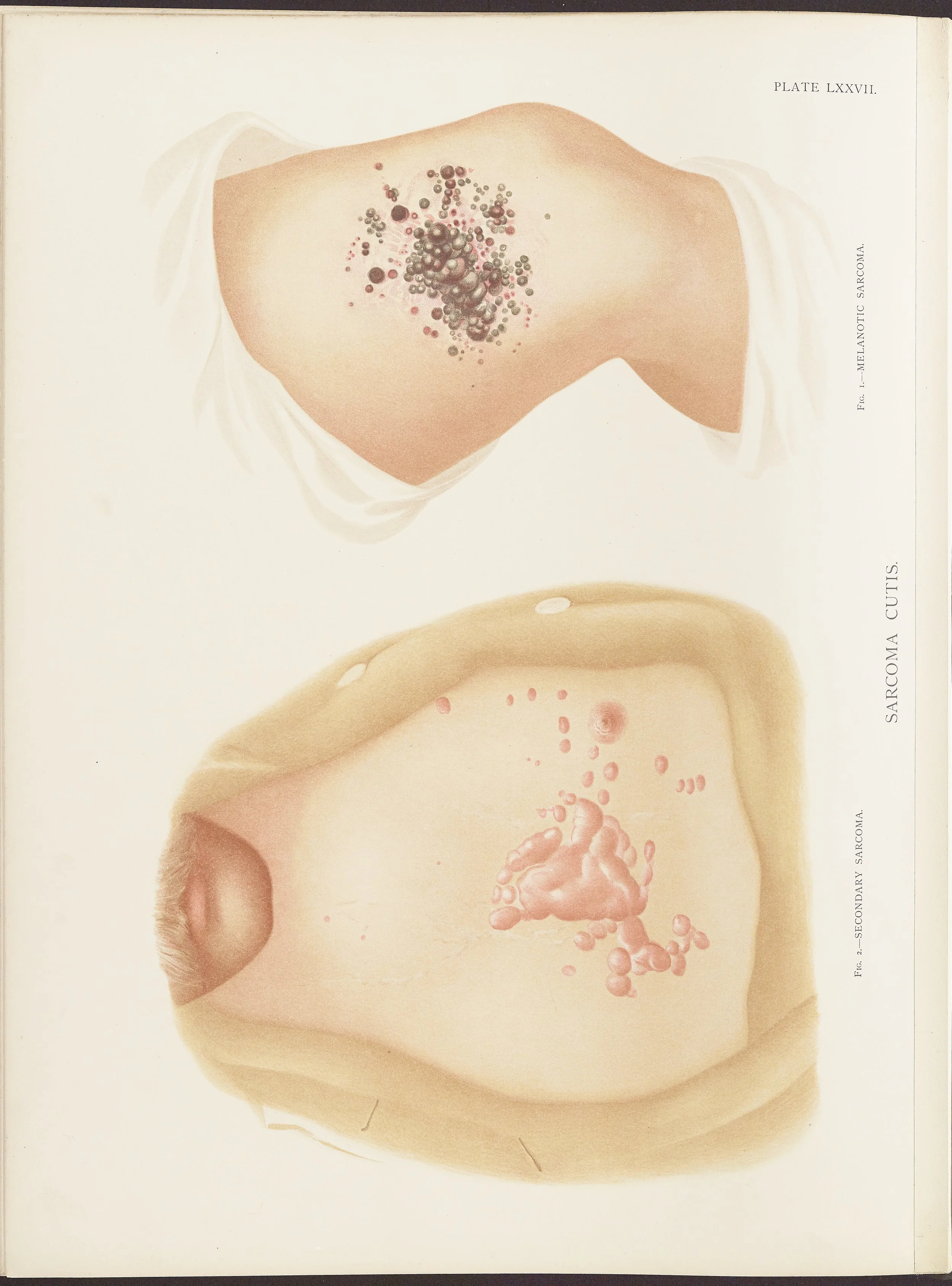
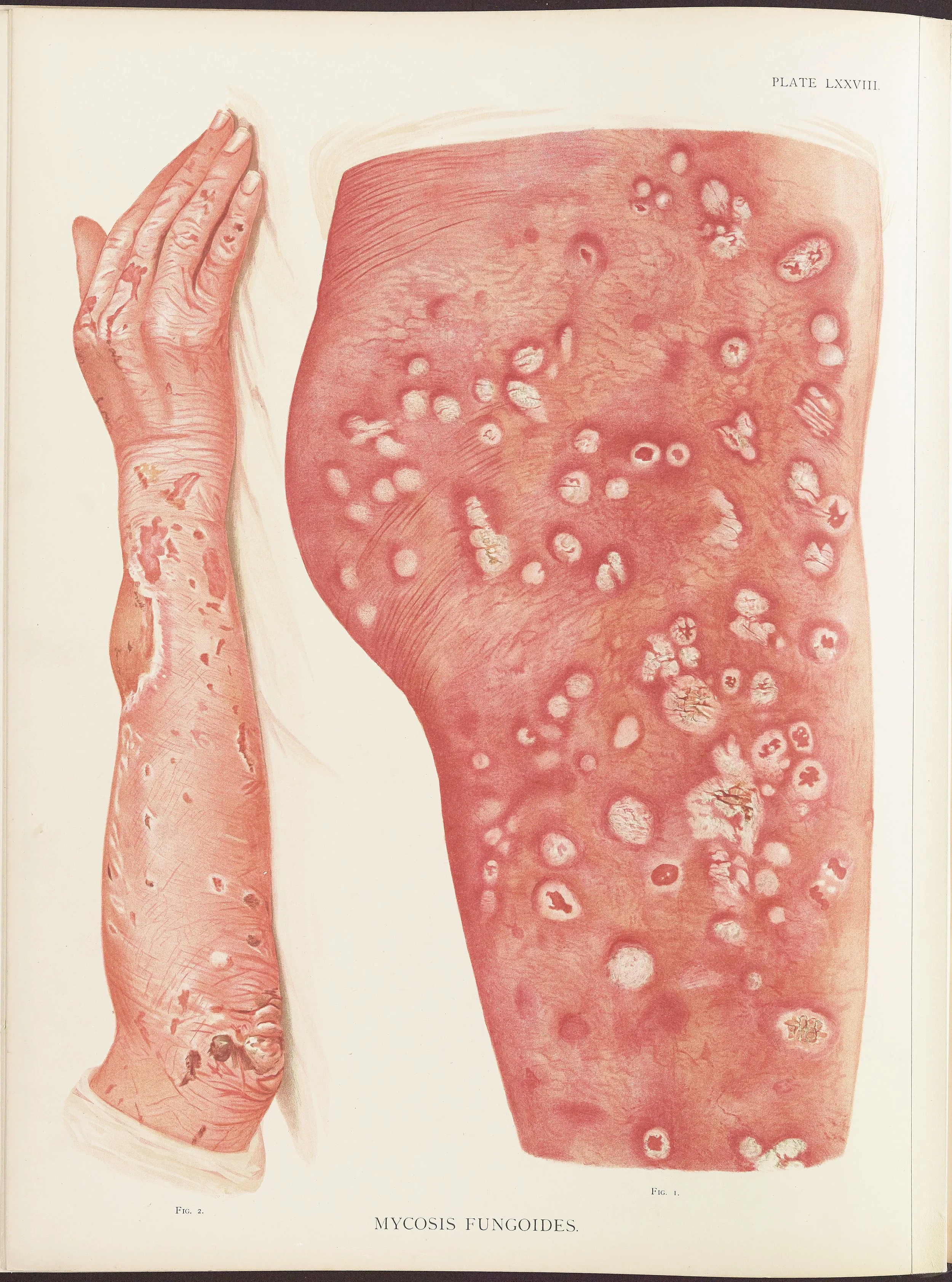
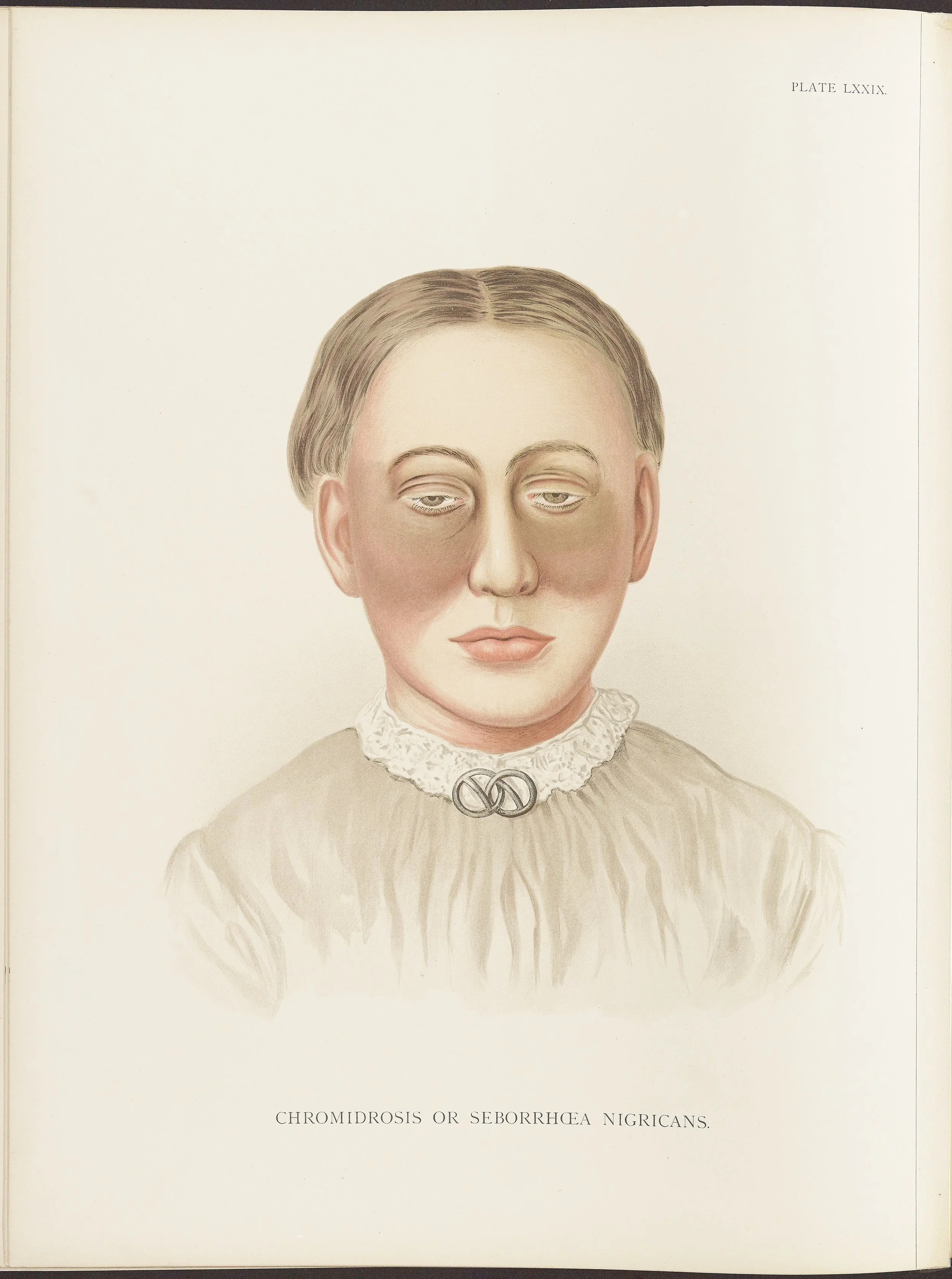
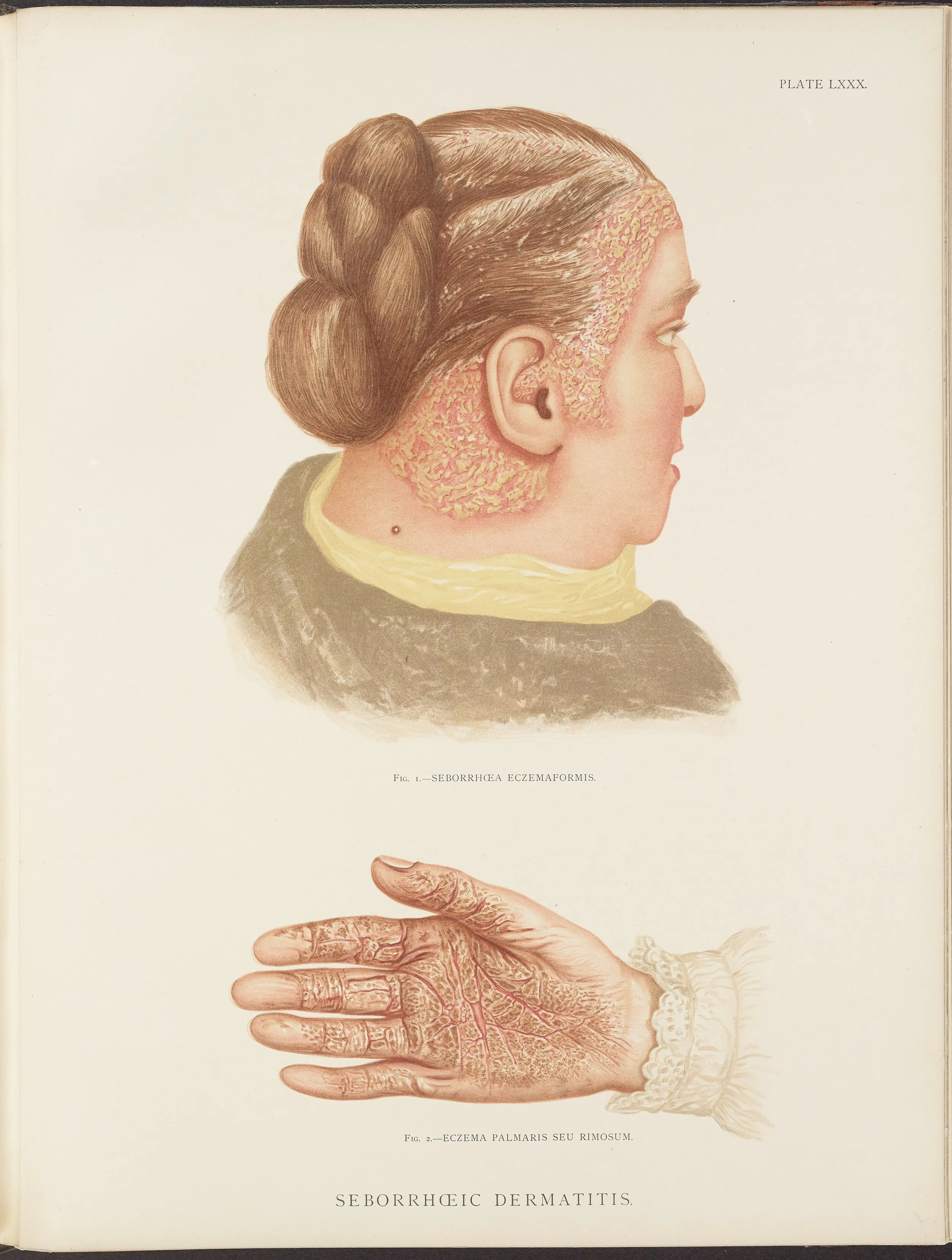
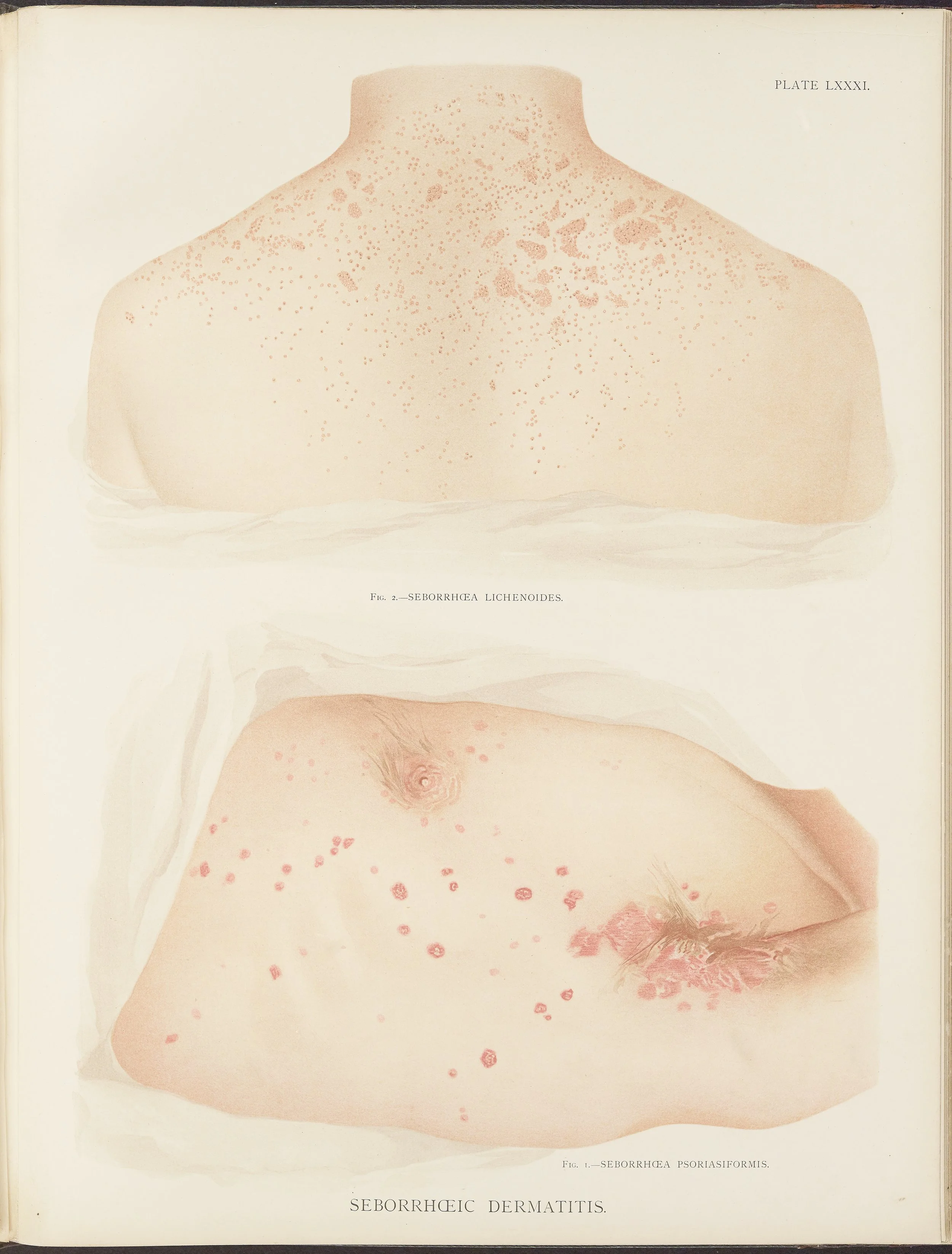
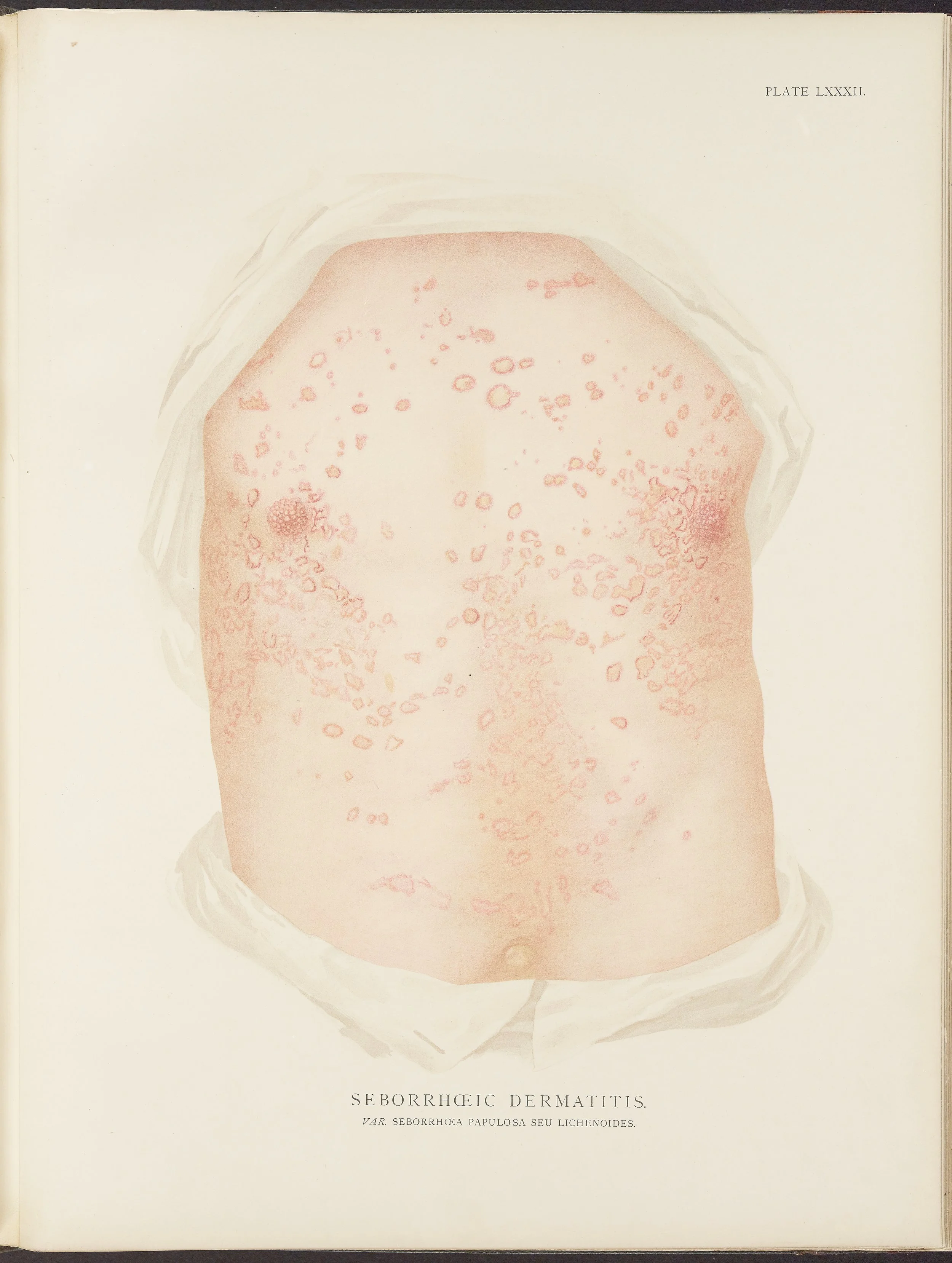
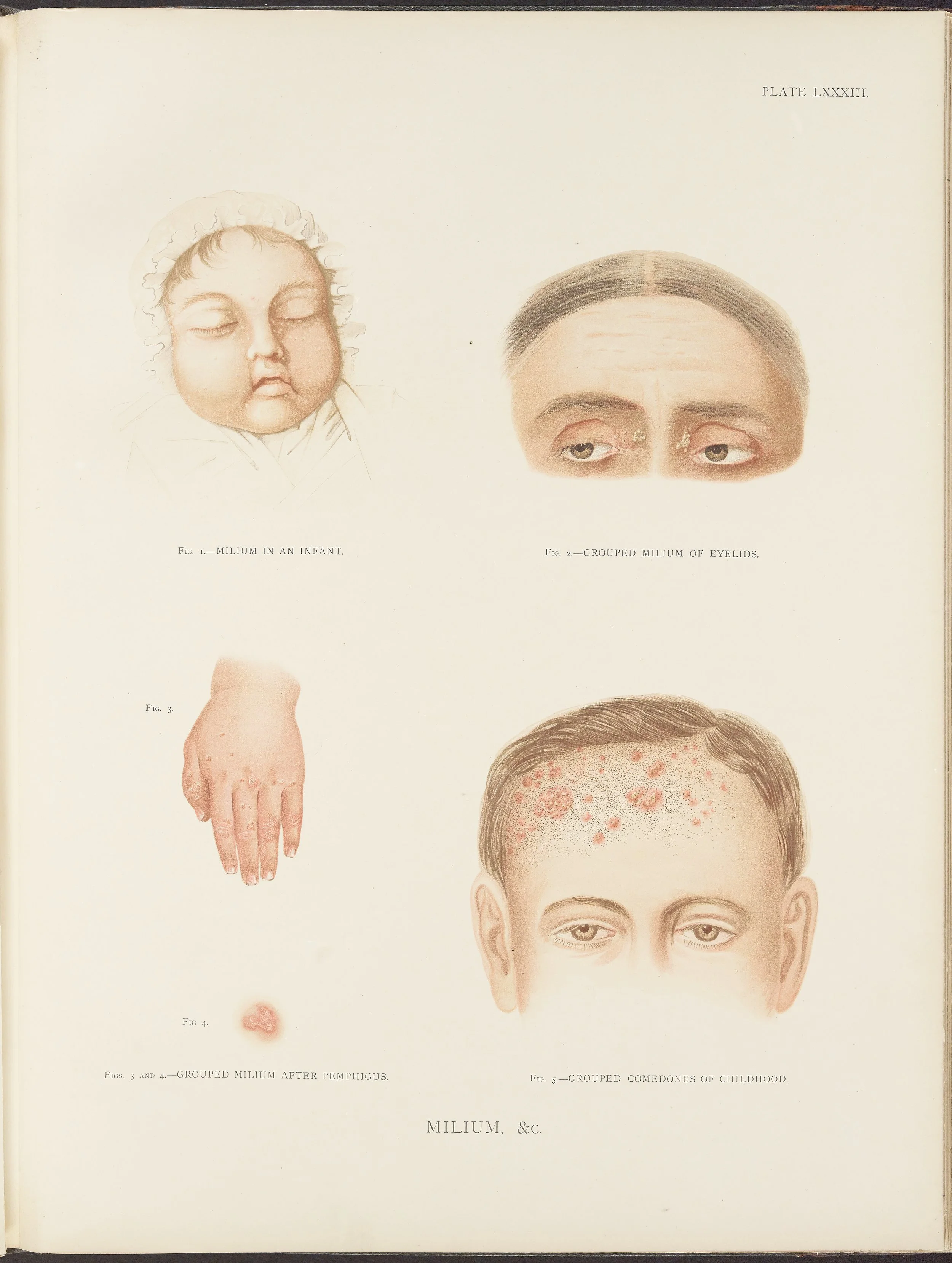
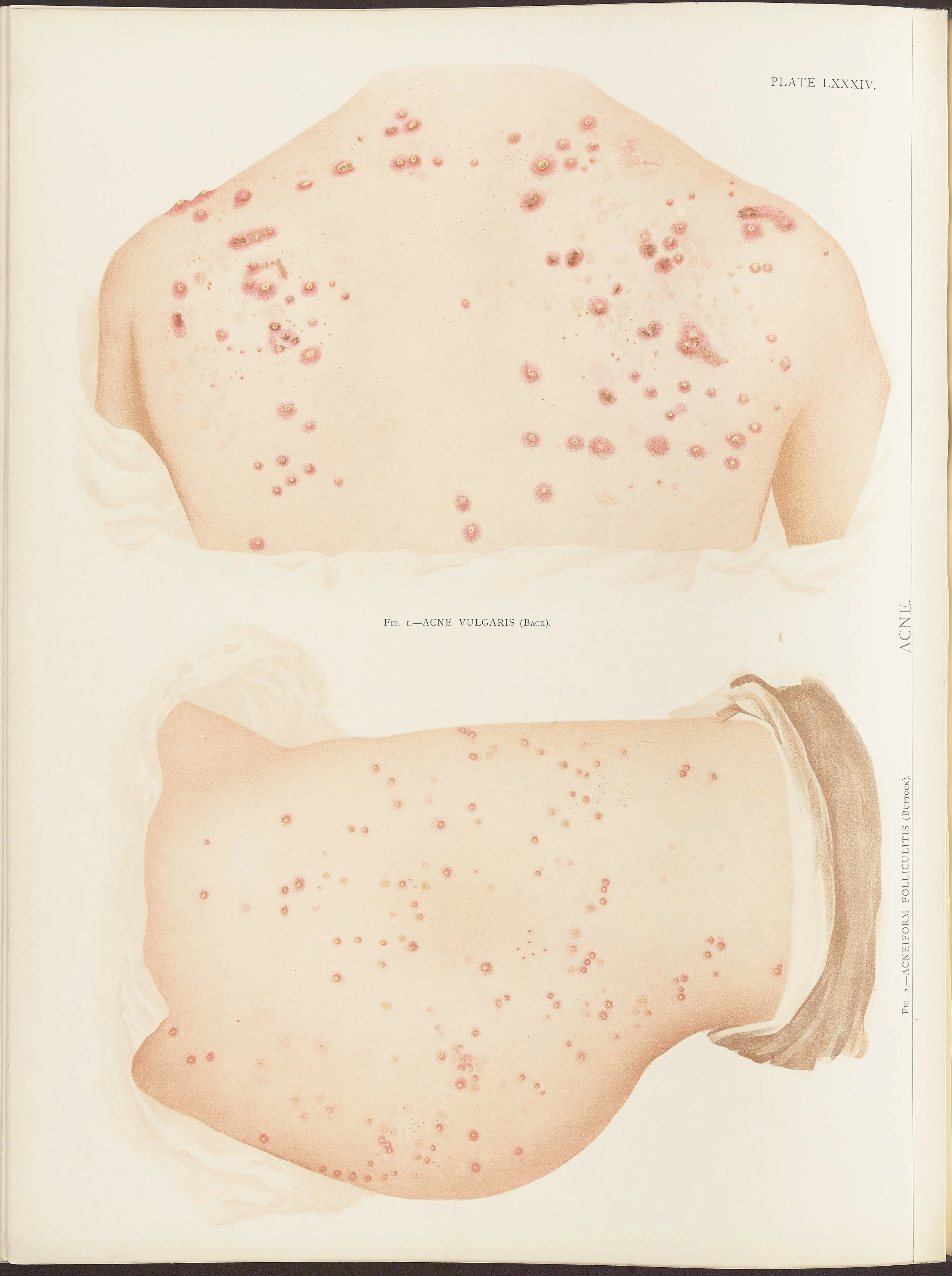
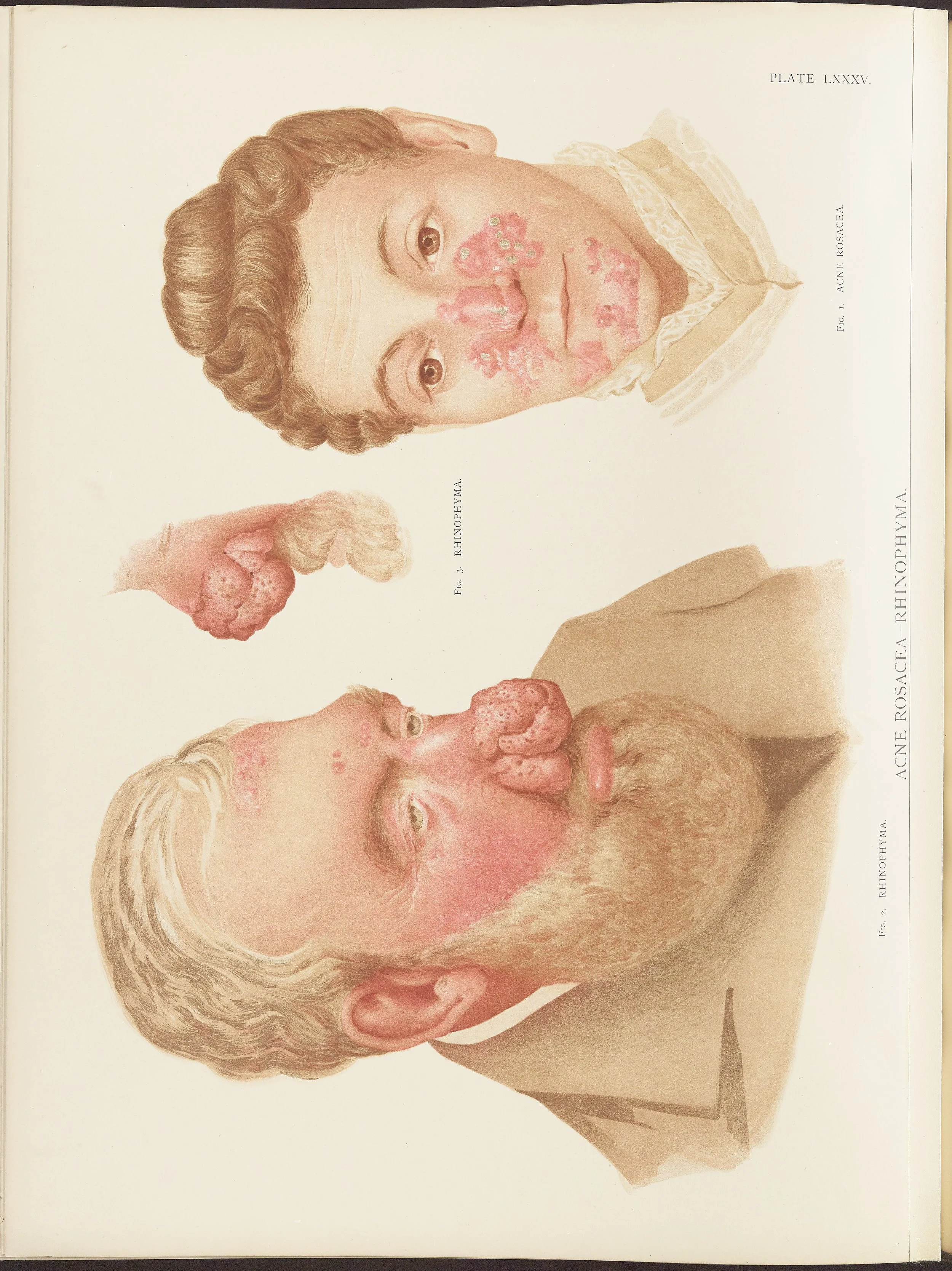
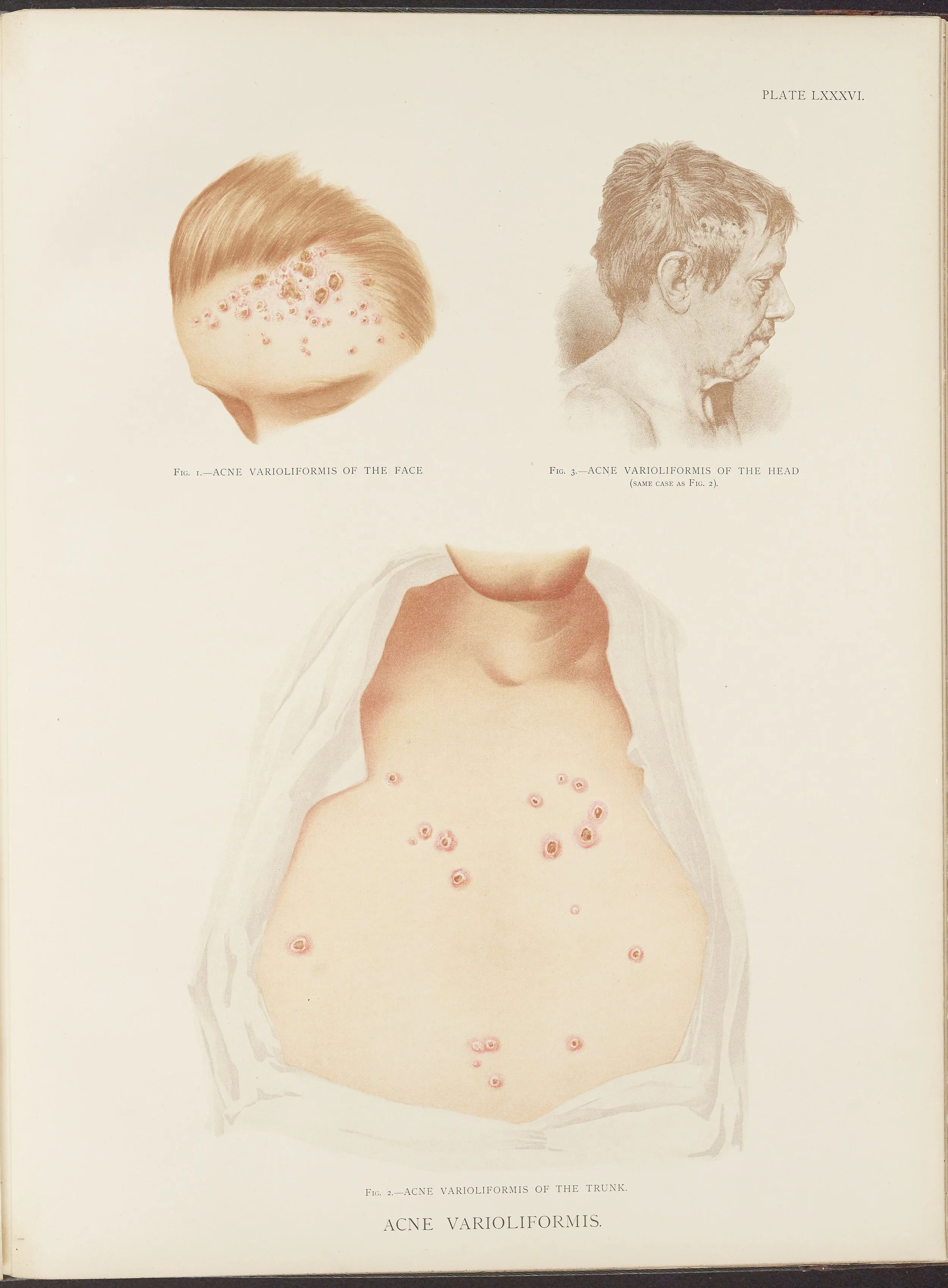
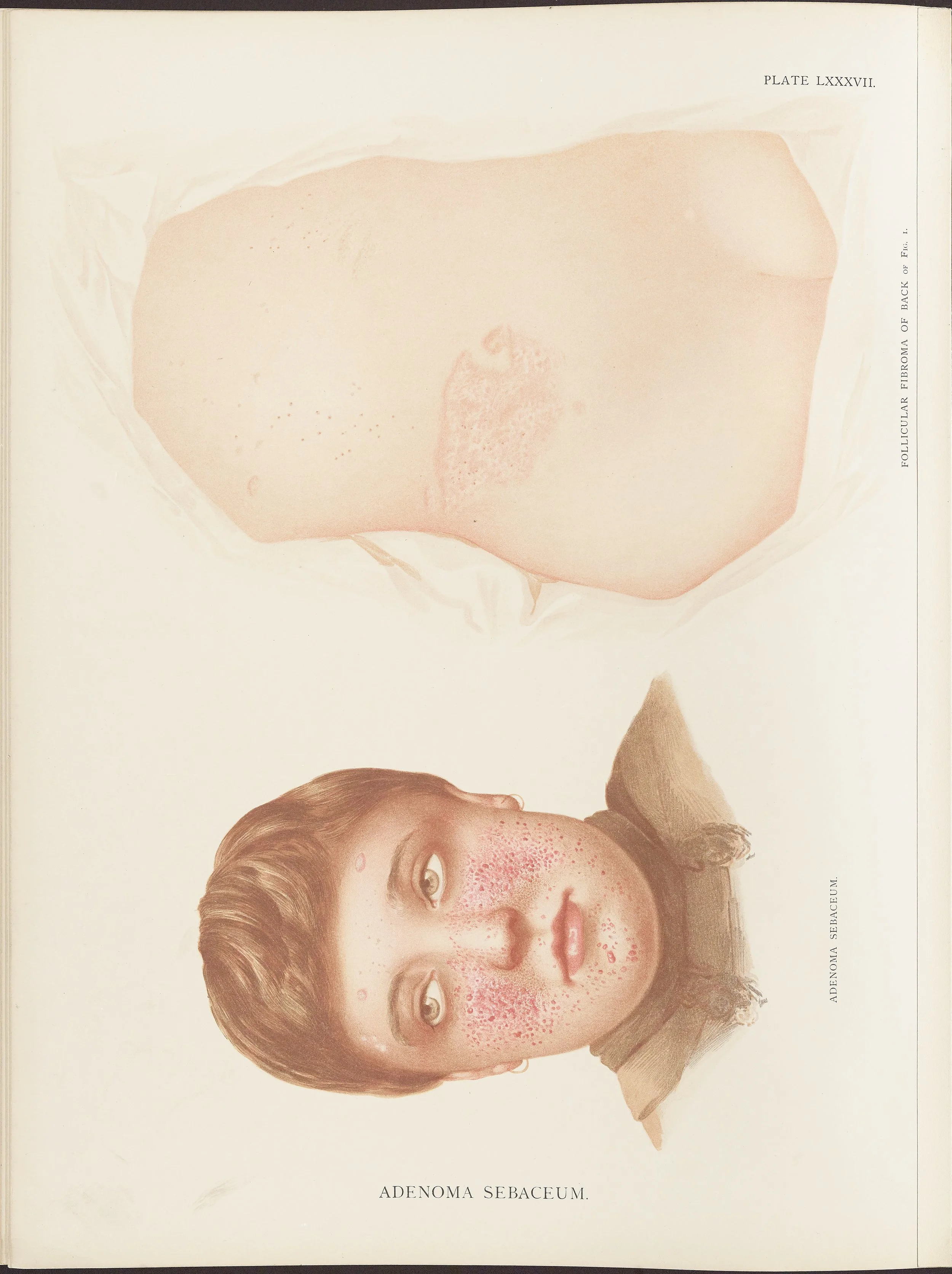
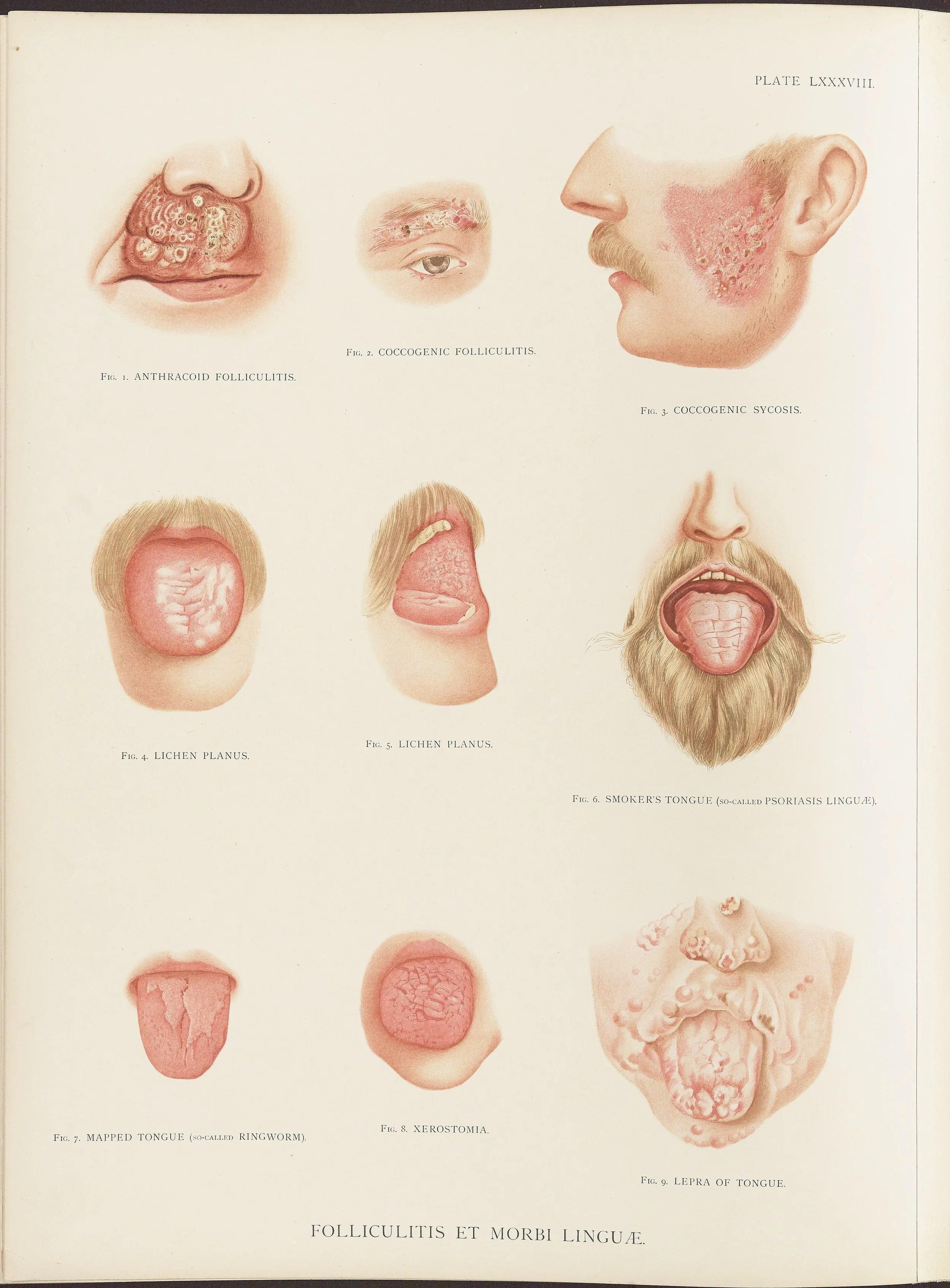
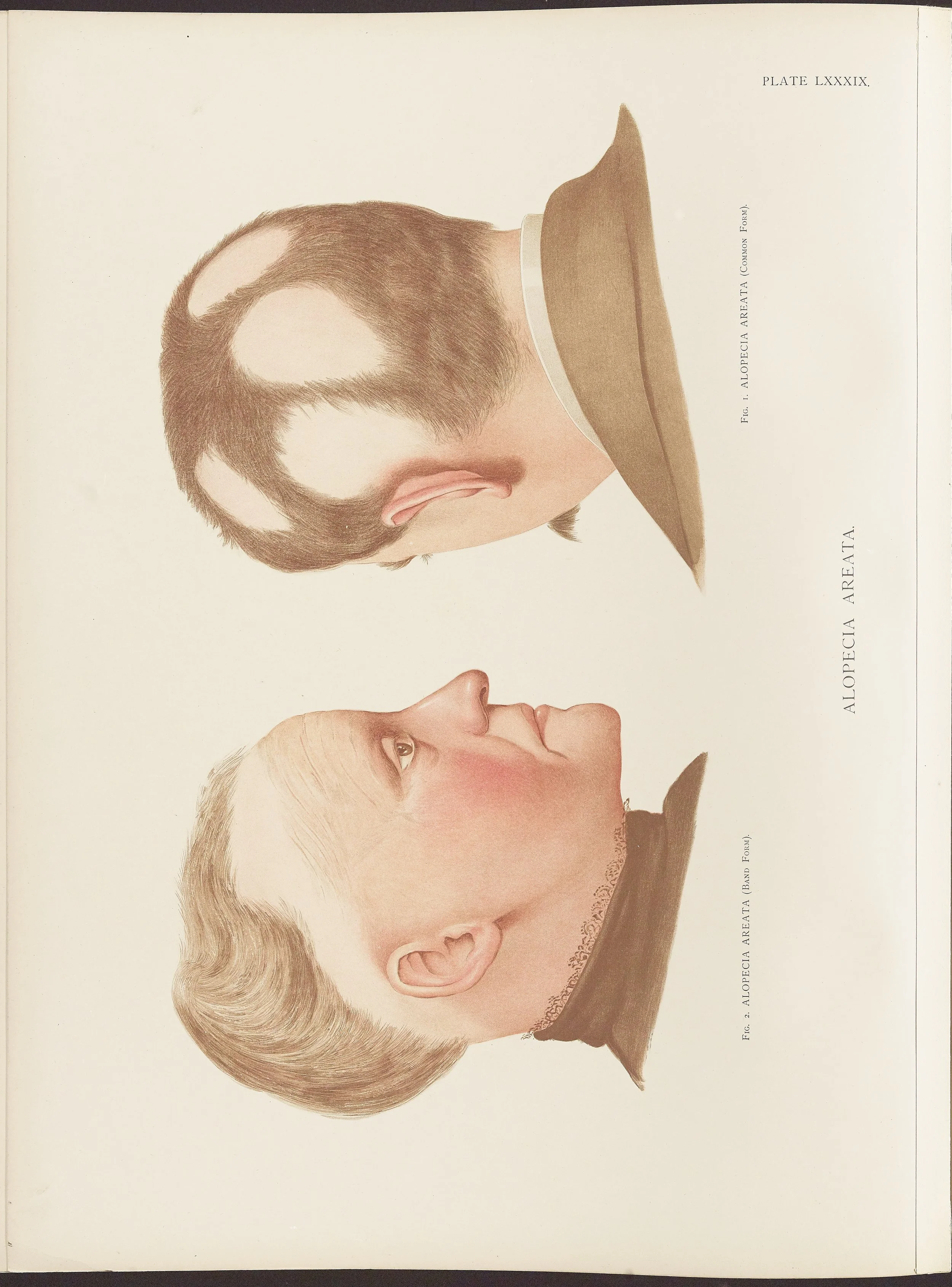
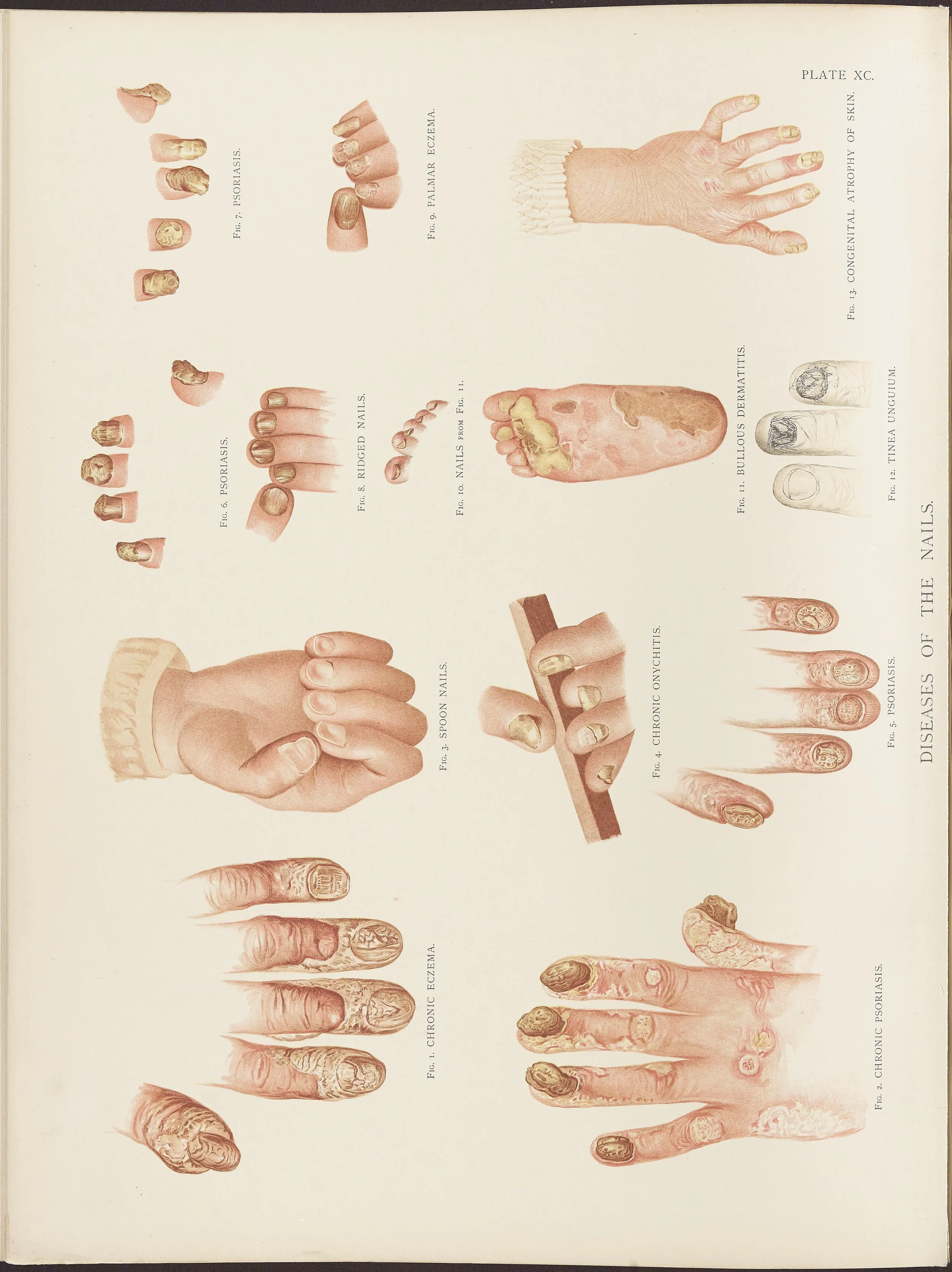
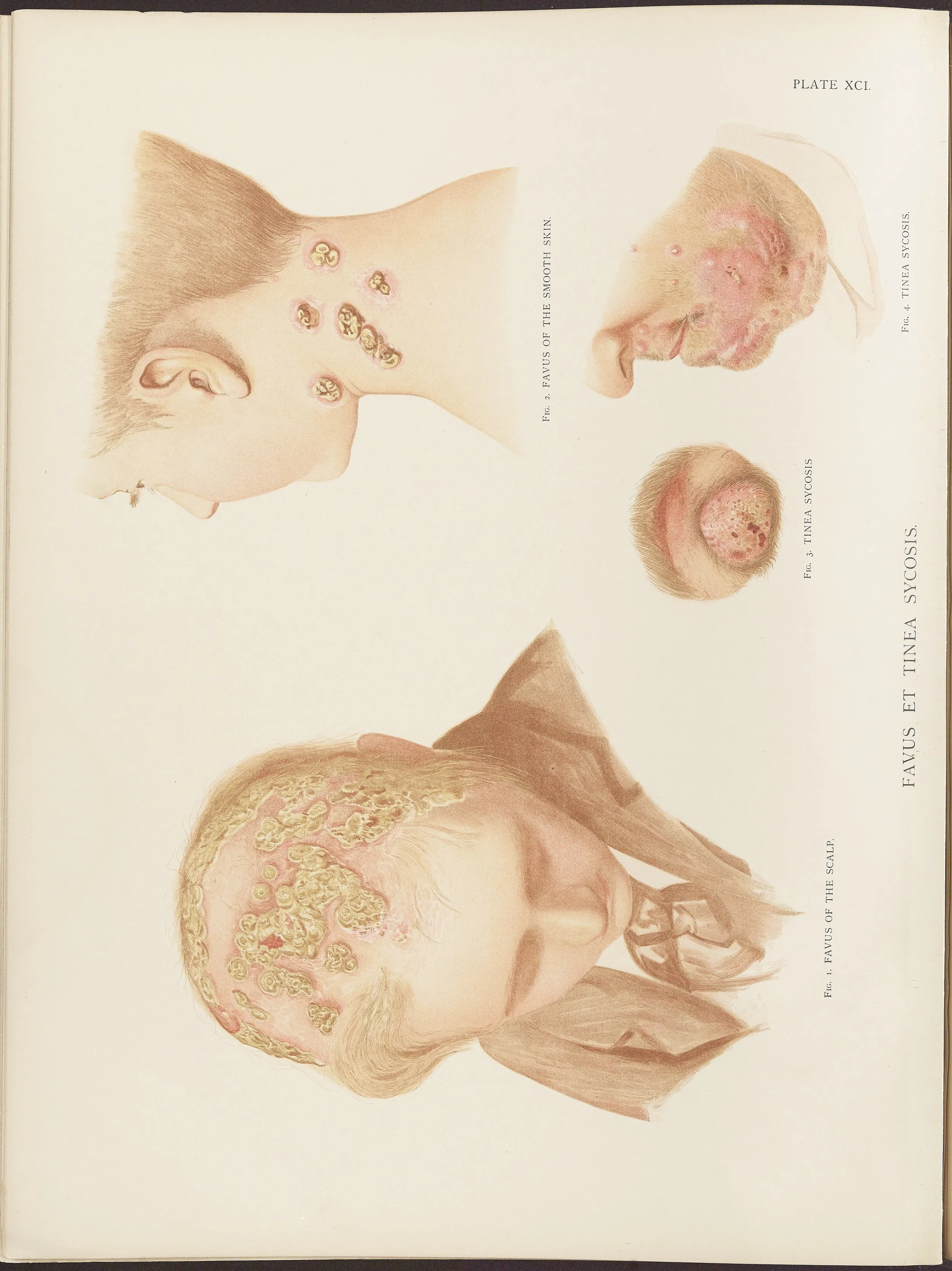
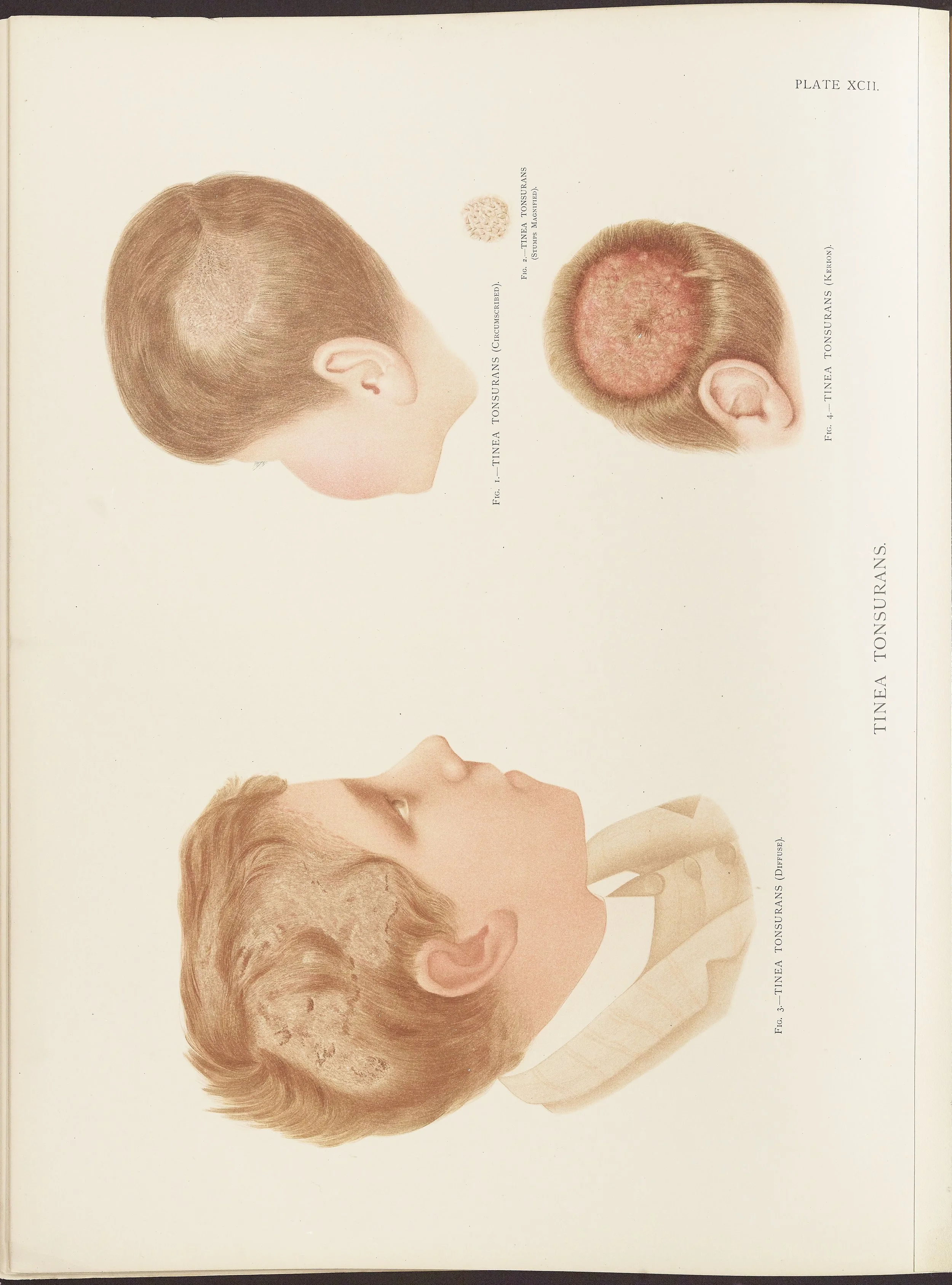
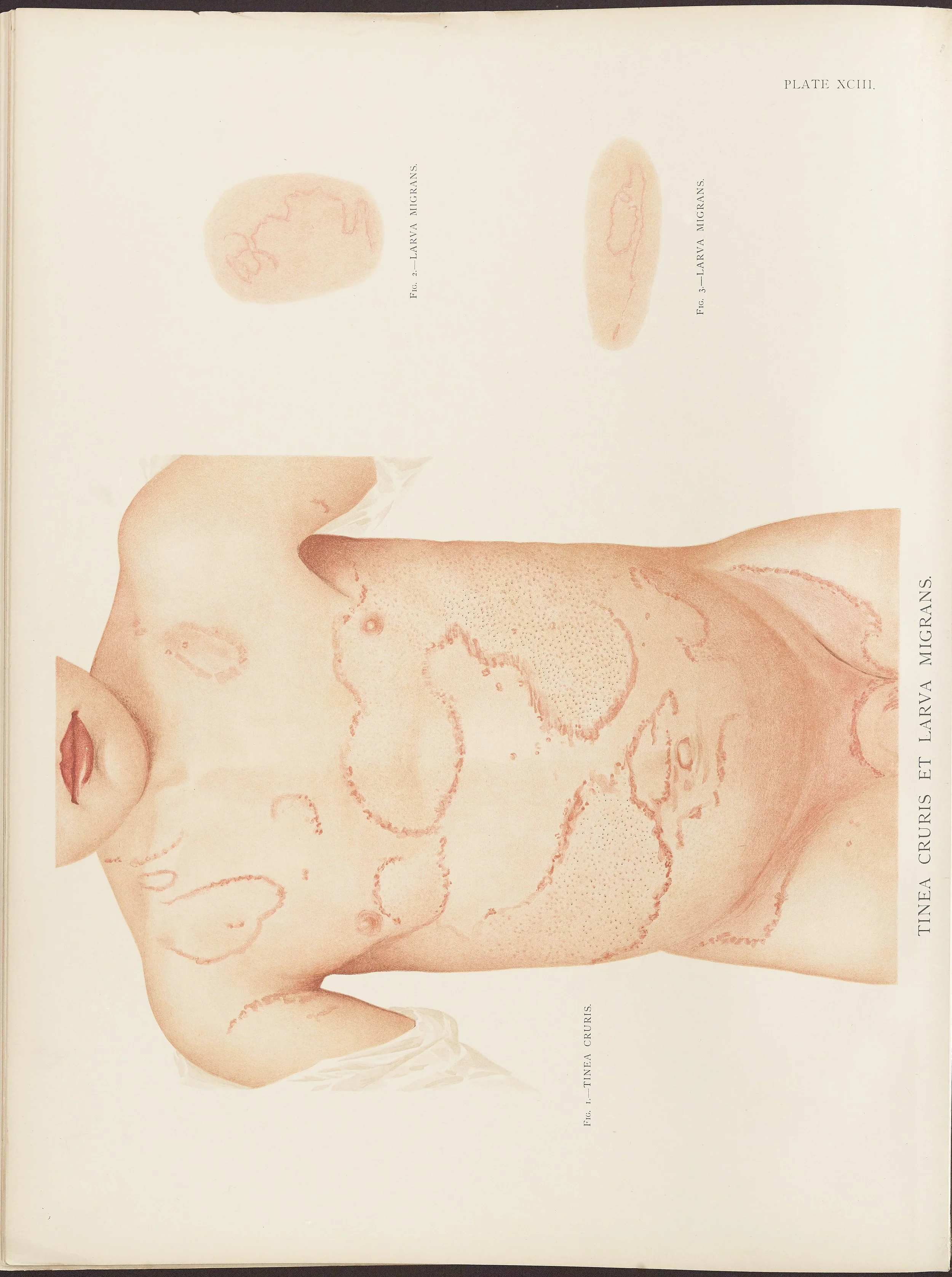
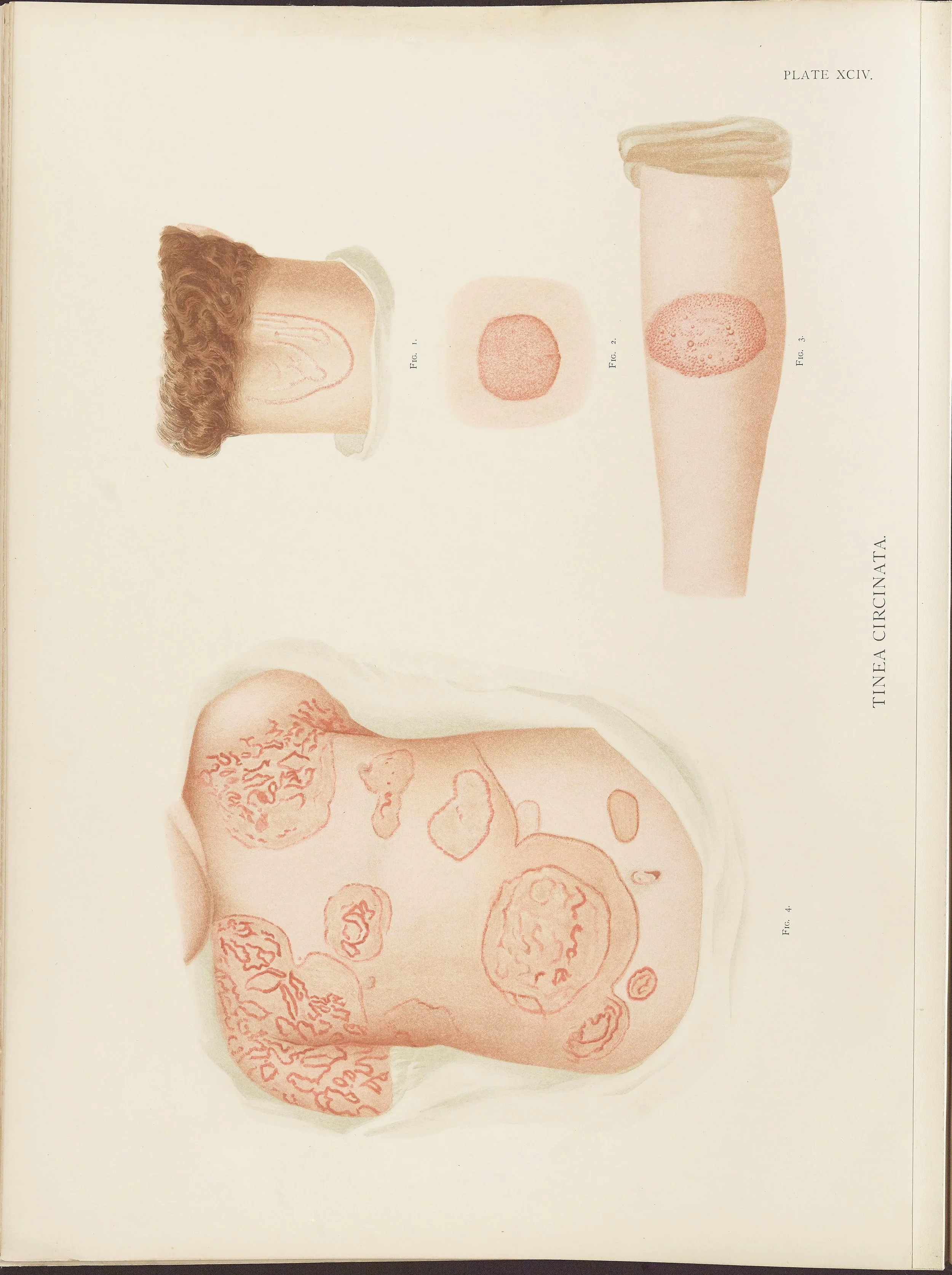
William Toogood Hill
William Toogood Hill was born to parents Thomas George Toogood, a ham dealer, and Mary Hill in c. 1864. The 1881 census notes that at the age of 19, William was working as an architect. Six years later, he married Henrietta Maria Hearn, the daughter of a merchant. The couple lived together in Highgate, and the 1891 census lists William’s occupation as ‘artist’. They had one daughter, Winifred Mary Toogood-Hill, born in 1891. During this time, William and Henrietta simultaneously worked as artists for Guy’s Hospital, as the Guy’s Hospital Gazette described , ‘an interesting display of drawings and water-colours by Mr. and Mrs. Toogood-Hill’ on display at the college Reading Room in 1894. It is also possible that Henrietta took over from William during a period of ill-health; the British Medical Journal noted that:
‘In the consequence of the prolonged illness of her husband, the artist to the hospital, Mrs. Toogood Hill, herself a painter of considerable merit, has been appointed to act as his substitute for a period of six months’
Unfortunately, only seven years later, William died. His daughter Winifred went on to marry Arthur Lionel Walton, who tragically died at the age of 28, serving during the First World War. Following Arthur’s death, Henrietta and Winifred emigrated to New Zealand in 1925. They lived in Christchurch for many years; Winifred died on 8 March 1937, and Henrietta died seven years later on 4 July, 1944.