Creating a Verbatim Performance About Nurses
In our Theatre & Communities module, we looked at and learned about different types of community and verbatim theatre and their purposes. We were given an assignment to create a performance using words and dialogue from nurses, whom our tutor has invited to come in and interview my peers and me.
Verbatim theatre is when a company or a group, etc., creates a performance using words that were spoken by other people. This is used to tell audiences real stories from people who have experienced an event or events, depending on the topic and the types of audiences that the company is aiming for. The dialogue is usually taken from interviews in person or interviews that have been published online.
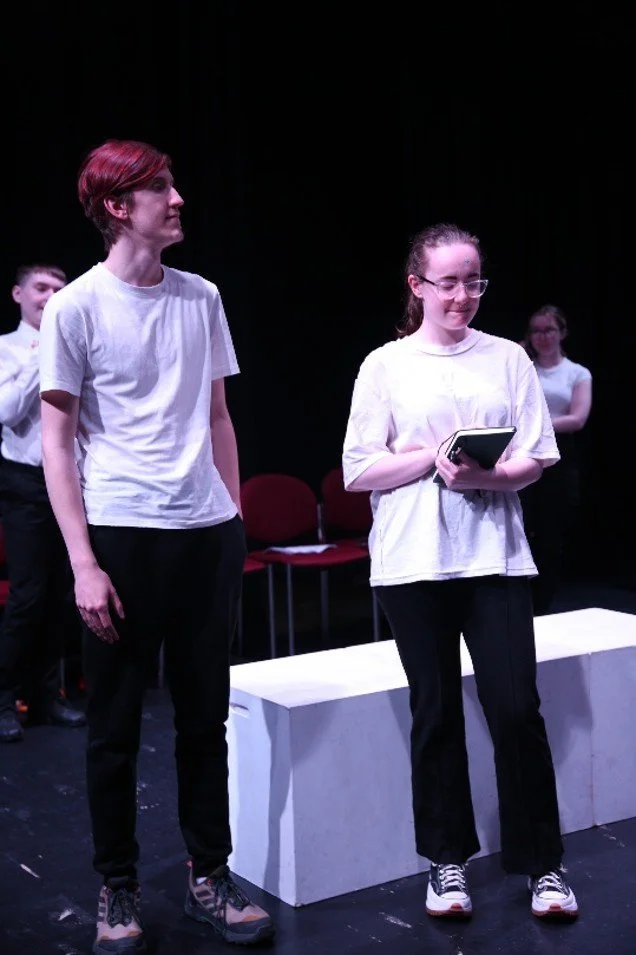
The recordings that they receive from interviews are transcribed into text, which can then be taken and edited for the actors to learn and practice speaking it exactly like the people who were interviewed, including every stutter, every “umm”, and every laughter to make it sound real and more authentic. This creates emotional connections between the characters and the audience.
Researching and Reading About Verbatim Theatre
Before we could do any interviews, we had to do some research because Schweitzer (2006, p. 42) stated that people who don’t do research won’t be able to “understand any of the references in an interviewee’s testimony,” and it would also make them look like they’re not putting in an effort to the work. So, it’s important to have some knowledge of the topic you’ll be talking about. I’ve learnt that there are two ways you could do this: conduct a one-to-one interview or do it with a group. With one-to-one interviews, there are no interruptions by other people, and the flow won’t be ruined. Schweitzer (2006, p. 45) believes that you’ll be able to get more information on “personal experiences and difficult memories” because the interviewee won’t be afraid of talking too much. Whereas, doing interviews with groups, you have shared responsibilities, and sometimes when discussing certain names or locations, it could “trigger a long-forgotten memory for somebody else”. (Schweitzer 2006, p. 44) This makes it feel more like a social event instead of an interview, and remembered memories could spark some more discussion and allow you to get more texts and dialogue for the performance.
Preparation for the Interviews With the Nurses
We’ve been informed by our tutor that five nurses have accepted the invitation and will come in to have interviews with us. Our tutor advised us that it’s best to get into small groups, and each group will have an interview with one of the five nurses. We needed to prepare our questions for our nurses so that we could know what experiences they had and which ones we should use in our performance. We discussed what we should ask them and decided to have some simple questions, such as: “Why did you become a nurse?” or “What was it like to be a nurse?” to get some backstory for our actors who will play the nurses. Then we decided to have some specific questions like “What was it like working during the COVID pandemic?” or “Was there a patient that wasn’t very cooperative?” to get some stories out of the nurses that we can use and put them into our performance. To make it fair, my group and I distributed all of the questions equally so that each of us would ask the nurse the same number of questions.
Meeting and Interviewing the Nurses
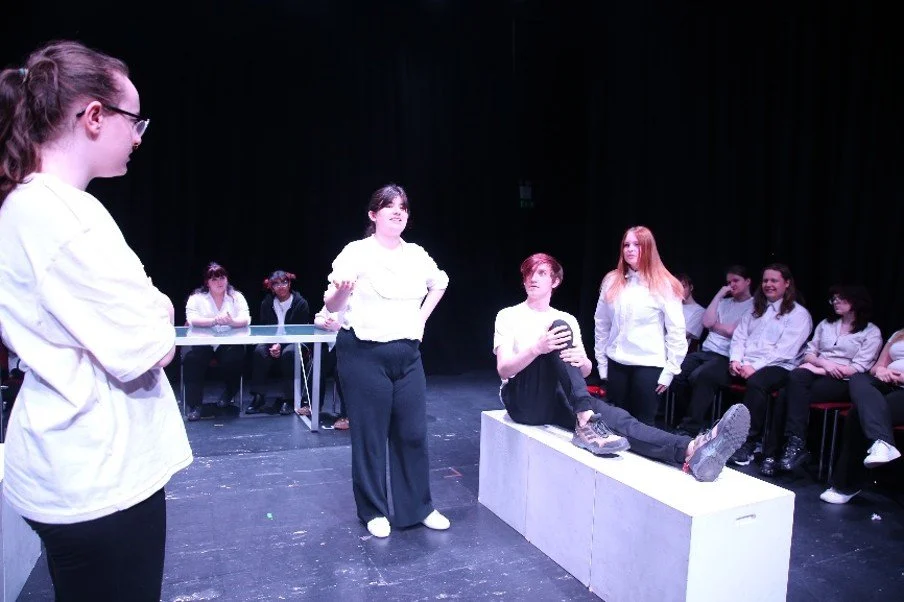
We’ve met Agnes, who we interviewed in one of the podcast rooms that was booked for us. We’ve asked her our questions and found out a bit about how she became a nurse. Then I asked her what it was like working during COVID, and she said that she wasn’t working when we went into lockdown in March, and it was difficult for everyone. This didn’t provide much information to us to create a scene because she wasn’t involved during that time. Later in the interview, I asked her if there was a patient who wasn’t very cooperative, and she revealed that she was attacked by a man who lured her over and hit her on the back of her head. She also said that the man actually used to hit his wife as well. Hearing this has shocked me, but this gave us information and allowed us to create a scene that looks into a negative experience that she had, but she also told us about patients who had dementia. She said that people with dementia become different, and they behave aggressively towards their relatives and family members, which is shocking to them.
Picking Out the Words and Creating Scenes and Scripts
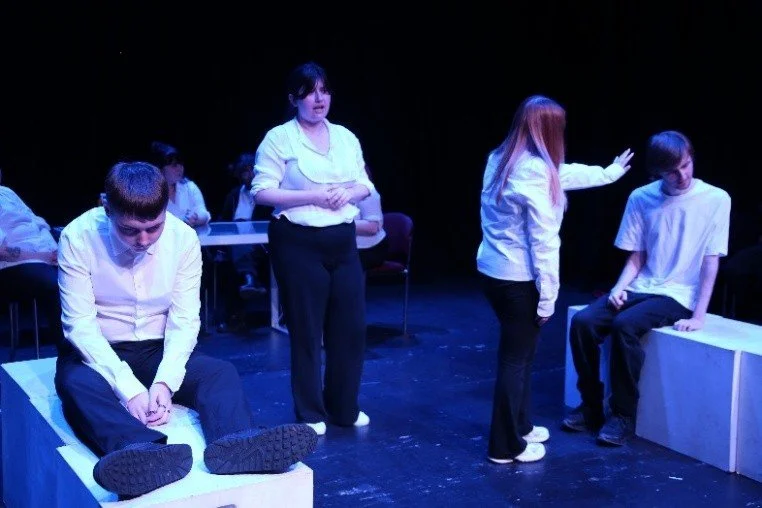
After the interviews and got our transcripts, we’ve picked out stories that sounded intriguing. We’ve picked out three stories: where she got attacked by a man who lured her over, when she met John, who was the first male nurse, and Robbie, who was in hospital for a year after a motorbike accident. Next, we’ve picked out words that we wanted to use, and we removed some repeating texts and texts that made it sound like an interview rather than telling a story. We each then needed to make scripts for the stories that we chose. Each person worked on a story, and I was tasked with scripting the story when Agnes was attacked and when she talks about dementia. Originally, I wrote the scene where we would have a split stage, where Agnes is telling us the story, and then a couple of my peers would act and mime the actions as Agnes is speaking. I’ve also split the scene into parts, in which she will tell us about the shocking experience when she was hit, and then she’ll tell us about the people with dementia and their sudden, violent behaviours.
Putting It up on Stage
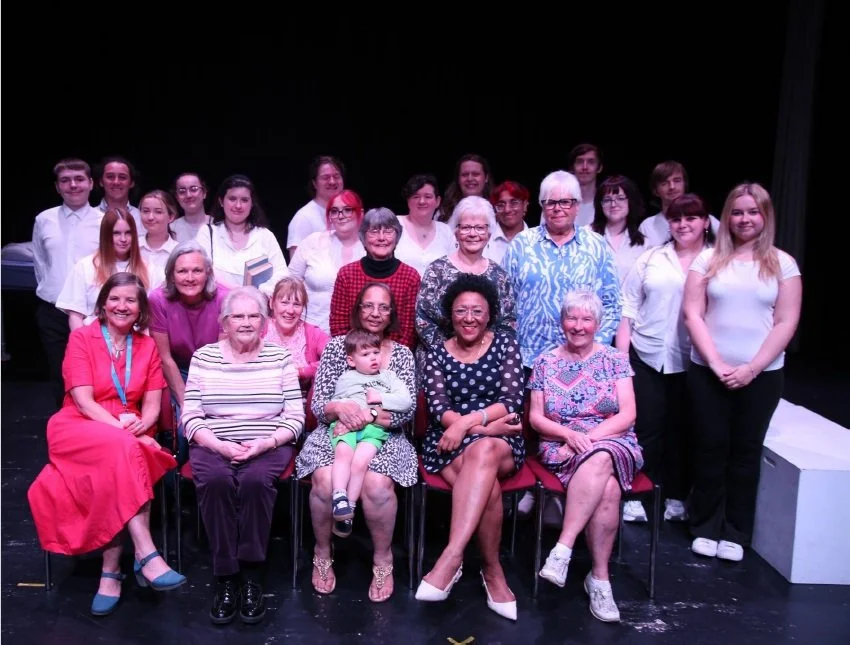
Finally, we started to put all of our scenes on its feet. Everyone who made a script for a scene had to direct it. I directed my scene with one of my peers who played as Agnes and a couple of my peers who played as a man, younger Agnes, a patient with dementia, and their relative. While I was directing, my peer who played as Agnes suggested that she should get up and go to centre stage instead of just staying seated at the table. I agreed with her because I remembered that in almost every scene, someone playing as the nurse gets up and puts themselves in the scene where they're retelling their experiences and stories. We added in lights, music, and sounds, and then we performed it to a small audience, including a couple of the nurses that we’ve interviewed. I’ve quite enjoyed this module, collecting and learning information from other people, and shaping it into a performance was quite intriguing to me.
References:
Schweitzer, P (2006) Reminiscence Theatre: Making Theatre from Memories. Jessica Kingsley Publishers: London.
Bibliography:
Jeffers, A (2017) Culture, Democracy and the Right to Make Art: The British Community Arts Movement. Bloomsbury Methuen Drama: London.
Paget, D (1987) ‘Verbatim Theatre’: Oral History and Documentary Techniques’, New Theatre Quarterly, 3(12), pp.317-335. Available at: https://doi.org/10.1017/S0266464X00002463
Schweitzer, P (2006) Reminiscence Theatre: Making Theatre from Memories. Jessica Kingsley Publishers: London.