Brief overview
Our nursing stories performance was a profoundly moving experience for me from start to finish. I was able to develop and build on many interpersonal skills, such as communication, collaboration, and leadership, which gave me invaluable experience for future projects. This performance was a way for us to not only learn about the lived experiences of the nurses through the interviews we led, but also to take the information and turn it into a performance that helps others understand the impact the nurses had on the community. I hope that with this performance, we have inspired people to look further into the life-altering hardships of nursing staff and show respect for all that they have done. We created this performance using verbatim theatre to show respect for the personal stories that were shared with us, whilst additionally creating the characters we were playing as a direct representation of the people we interviewed, making them easily identifiable by the nurses when we later showcased our performance to them.
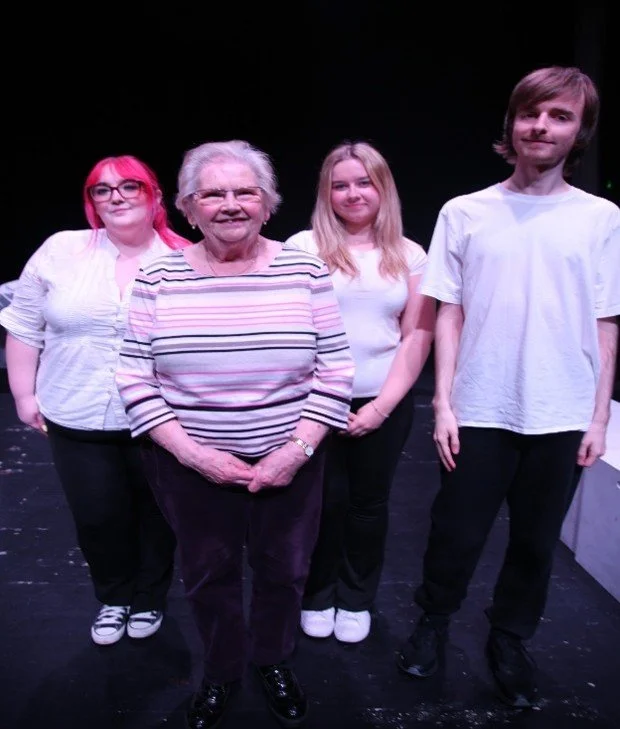
Interview group: Lilly, Millie, Josh
Nurse: Judith
What is verbatim theatre, and how did we use it?
Verbatim theatre is a form of documentary theatre created from real people’s words, which are used to explore themes and events from the people who experienced them. We used verbatim theatre by initially coming up with a list of 25 questions we wanted to ask the nurses to allow them to talk about stories they didn’t mind sharing or experiences they had. My group had the pleasure of interviewing Judith about her time as a nurse, during which we got many stories from her throughout our discussion. The interview was recorded, which allowed us to read through an entire transcript of Judith’s experiences word for word, which we then used while scripting our individual scenes.
Interviewing the nurses
The process of interviewing one of the nurses was engaging and challenging at the same time due to the fact that it was a new experience. The task required us as a group to extract as much information from Judith in a short timeframe after only just meeting her. My group, consisting of Josh, Millie and me, worked collaboratively to prepare our list of questions and evenly distribute them among us. Unfortunately, Millie was ill the day of the interviews, making us re-distribute her questions between the two of us. During a discussion with Josh, we decided that I was the more confident talker around new people, so I took over a large section of the questions at the start of the interview to hopefully create a comfortable environment to share information. The first meeting with Judith immediately settled my worries as we sat and became acquainted by discussing the interview process. When we began our interview, we immediately found that Judith was an amazing person to learn about, as she felt comfortable sharing a wide range of stories and urged us to ask more. She promoted us to adapt specific questions in a way for her to understand and took the time to ask us questions about what we were going to do with the stories and how we were going to bring them to life. At the end of the interview, I felt extremely confident in the range of information we received from Judith, which we could then take from the transcript to help us in the rest of the performance process.
Using our findings to create scripts
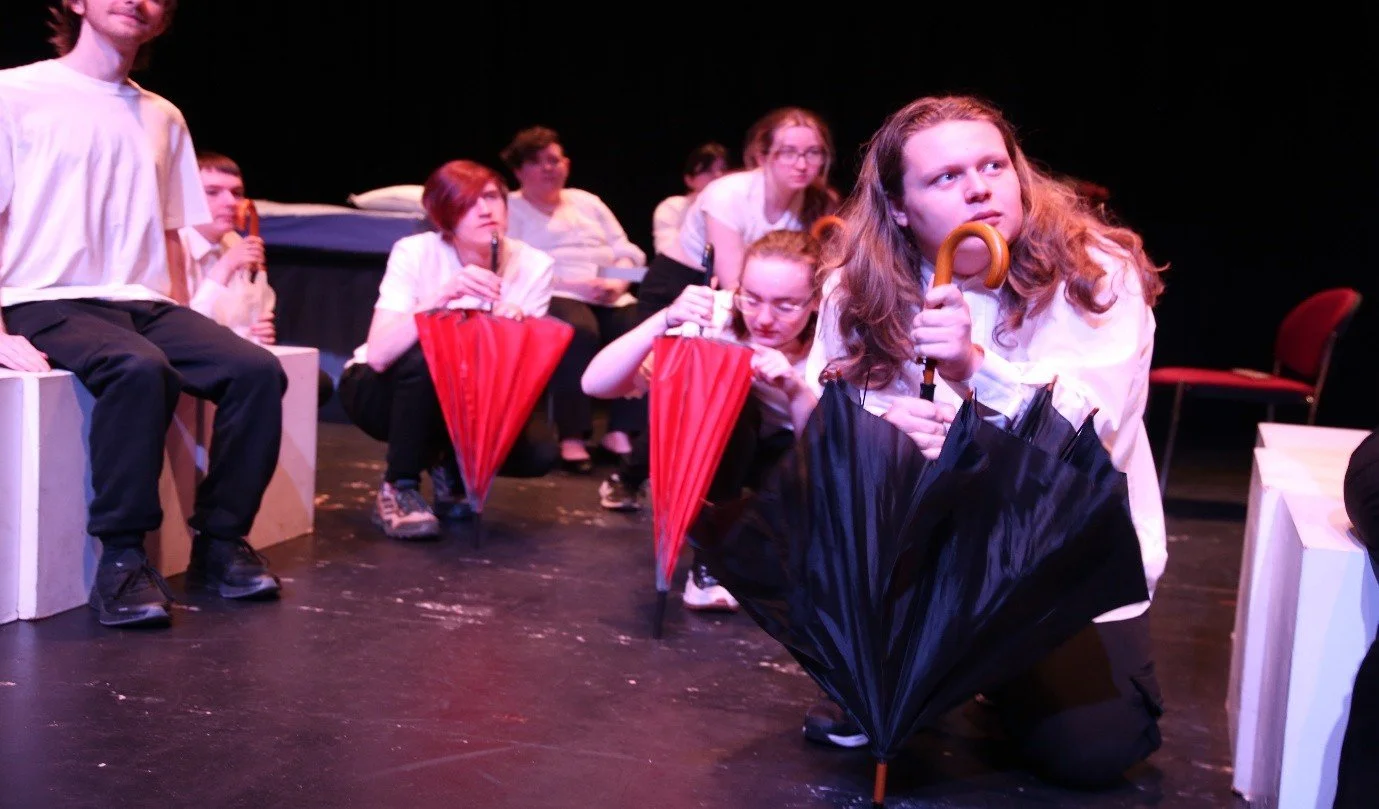
After receiving the transcripts of our interview, we spent time reading through the entire thing and gaining understanding of where stories begin and end. Josh additionally separated all of the potential stories that we could use in devising some scenes, which we looked at and discussed as a group which ones we found would the most impactful or intriguing to share. Initially we picked one scene which was the ‘Lamb and Geese’ scene which josh scripted as verbatim which consisted of only Judiths actual words, in the exact way she said them. Josh took the lead in devising this scene however all of us gave ideas to create a visually effective performance. I stood in as the ‘character’ of Judith alongside a group of other students who played a chorus of geese which umbrellas as a representation of flapping wings, this was a picturesque moment that made the scene even more humorous. The rest of the scene consisted of the ensemble making animal noises such as clucking of hens and meowing of cats and finally Felix as a lamb to further prove the hilarity of the scene. The process of creating this scene from my perspective was extremely straightforward and came together seamlessly whilst also being impactful for an audience.
Devising the ‘morgue scene’
During this performance, I had the opportunity to script and devise my own scene, so I went back to the list of potential stories that we obtained from our interview with Judith and created the ‘morgue scene’ from Judith's experience of taking a dead patient to the mortuary. I picked this story as it was a direct contrast to the ‘Lamb and Geese scene’ in tonality, as I wanted to show the range of experiences that nurses go through and how they dealt with them. This story was an emotional experience for Judith, and I wanted to do this scene as respectfully as I could, which is why I only used sentences directly from the interview. My idea for this scene was influenced by reminiscence theatre, as the character of ‘Judith’, played by me, was almost looking back on the memory as Millie and Josh mimed the entirety of the scene. Additionally, with the completion of all of the scenes from every group, Alfie had the idea that all of the people playing nurses would be sat at a table together at the back, reminiscing about their times as nurses, which brought the entire performance together by emphasising the community that comes from nursing through shared experience.
Final performance
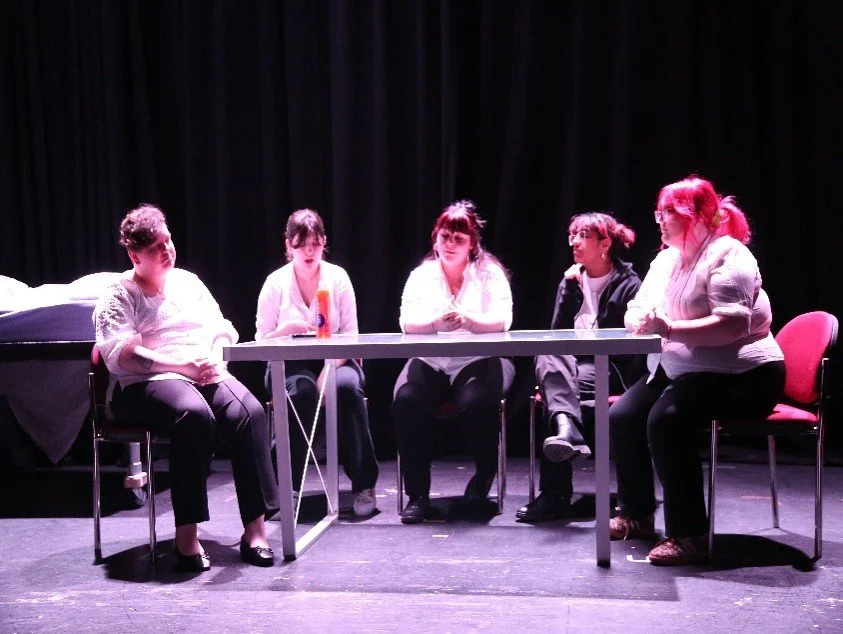
On April 28th, I completed the final community theatre performance, which I believe went extremely well. In the final rehearsal before the performance, everyone had something that didn’t go to plan. I had forgotten one of my lines, so my stress levels were heightened. However, once I sat down in my position and the nurses we interviewed came and sat in the audience, the stress I had was replaced with excitement to show what we had created back to the nurses. During the performance, when it came to my scenes, I got to look at all of the nurses, but when I was performing Judith’s stories, I looked at her, and she had the biggest smile on her face that filled me with so much pride. In my opinion, I found the entire performance went smoothly and came together into a performance to be proud of. However, if I were to do this performance again, I would possibly extend the number of stories we created into scenes and continue to work on my tonality and pronunciation to further meet the brief of verbatim theatre. In conclusion, I am proud of the work I have completed over this performance process, and the feedback we received from all the nurses was extremely positive. Judith even pulled me to the side at the end and told me I did an amazing job, which solidified that this process taught me so much.