Explore the fascinating world of herbal remedies with Amanda Edmiston

Join us for a virtual book launch and discussion on ‘The Time Traveller’s Herbal’ on Tuesday 14 November, 6:30pm.

After the success of previous joint online events, we're pleased to work with herbal storyteller Amanda Edmiston for a very special online launch of her first book The Time Traveller's Herbal. For your ticket price of just £5, you will gain entry to the online book launch and a link to pre-order your copy, along with a very special gift from Amanda - a beautiful handmade sachet of ingredients used in one of the recipes she will share during the evening.*

Copyright John Ritchie, 2023

You will also be able to take part in four FREE meet-up-and-make book clubs to be held on the second Thursday of each month, online (14 Dec, 11 Jan, 8 Feb, 14 March) to help you through some of winter's cold, dark evenings. AND, we're hosting a very special family in-person event at the George Marshall Medical Museum during the Easter holidays 2024.

*Please note orders made (and addresses received for previous orders) after Tuesday 7 November will be too late for your free gift in time for the event. If you're overseas please note this cut-off date is Tuesday 31 October.

MORE ABOUT THE BOOK!

The herbalist has had many names throughout the ages - Cunning Woman, Wise Woman, even Witch - all hiding the truth of what they are... early pioneers of science, and fountains of traditional, nature-based knowledge.

All around us are plants and herbs that can be used to improve our wellbeing and encourage a more nature-focused approach to health. Steeped in history, the herbalist's art paved the way for modern science - but didn't necessarily need to have been replaced by it.

In The Time Traveller's Herbal, the traditional remedies and recipes that were passed down through the ages are offered to the modern reader as a means to reconnect with the natural world, while reaping the benefits. Steeped in the stories through which these remedies have been passed down to us, our connection to the past is fully explored in a romantic and meandering journey through the plants and flowers that have healed and helped us through the ages. Travelling back through the mists of time, the ancient mysteries of the plants and flowers that have saved lives in a world without modern medicine are uncovered.

Comfort, The Breast Quilt

Now on display at The Infirmary Museum is Comfort the Breast Quilt, a project led by Artist Lois Blackburn. It is an artwork abundant in rich and diverse themes. From puberty, to aging, to sexual harassment, breastfeeding, sexualization, transgender experiences, ill heath, operations, body image and acceptance.

Comfort was made by 180 women, teens, trans and non-binary people. It explores our hopes & dreams, embarrassments, pleasure, pain & joy.

 Comfort invites its makers and the audience to slow down, to reflect on difficult or embarrassing subjects, ask questions,  absorb ideas, challenge preconceptions and start conversations.

 You can view the quilt until December 2nd at The Infirmary Museum.

To get your free Comfort catalogue, full of breast stories, observations, words of advice, and photos please visit: https://loisblackburnartist.uk/portfolio/comfort/

The project was supported using public funding from the Arts Council

GUEST POST BY MUSEUM STUDIES MASTERS STUDENT - NAHM (2/3)

Have you ever visited a museum and wondered about the journey behind the exhibit? What inspirations and challenges shape the displays? To be honest, I had never given it much thought until I embarked on one of my own. It began as a student project, an exhibition for the university open day that introduced me to the fun and excitement of curation. Little did I know that this experience would ignite a passion and lead me to the school of Museum Studies, and ultimately, to Worcester medical museums, where I was entrusted with developing a display in the actual museums.

While these displays are obviously small and take no more than five minutes of visitor’s time, it is quite a complex journey requiring much time and effort. In this post, I will reveal the process behind the displays, sharing insights into how I crafted the final results you see in the museums. 

(Disclaimer: While my approach might not be the best practice, it’s a reflection of my experience and how I tackled the task.)

Let’s begin with the “ART & ANATOMY” display at George Marshall Medical Museum. This exhibit resides in a desk case for temporary displays, typically refreshed every few months. I was given a task developing a display there, no specific topics, no particular objects. It was entirely up to me, whatever I wanted to do. It sounds liberating but actually it was very challenging, especially for someone relatively new to medical history like me.

The journey started with extensive research of everything that could be helpful to my tasks. I explored previous displays, went through medical history in general, including what students do for their GCSE, looked over antique and modern medical practice and immersed myself in the history of Worcester city. As a result of this exploration, the theme of ‘anatomy’ caught my interest. It represents a big leap in understanding the human body, advancing medical practice and is now considered as fundamental for every aspect concerning the human body. So I decided to centre my display around the theme of anatomy.  

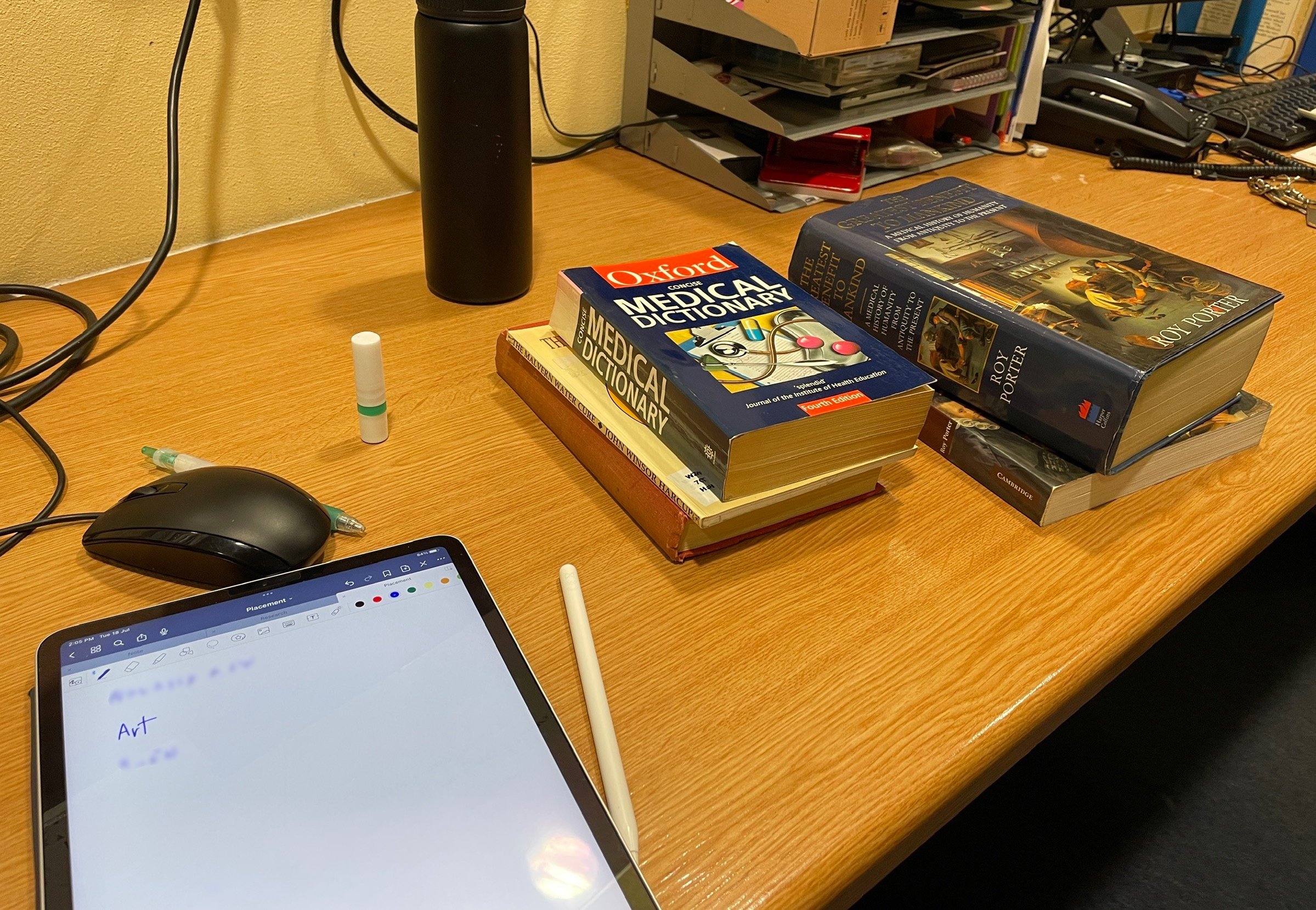
Start off with research and a note of the topics may be useful.

With the theme in place, I went through the museum’s collection, not physically but through the management system, in search of objects related to anatomy. The advantage of working in a smaller museum is that it takes not so long to look through the collection. It was during this process that I came across Alan Mann’s anatomical drawings and the compelling stories that would be great to be shared with a wider audience. I also spent a lot of time in our rare book store, where the old and rare publications are kept. As I went over most of the anatomy books in the collection, I noticed the diverse compositions - some with only text, while others featured simple or complex and detailed drawings, and some contained retouched or realistic photographs. This pointed up the importance of selecting the most suitable type of illustration which is crucial to the author. So basically, illustration, or art, played a vital role in the study of anatomy.

Getting myself comfortable sitting in the museum’s rare book store, going through anatomy books in the collection.

 This discovery prompted a secondary research, focusing on the relationship between art and anatomy. A thread can be traced back to the Renaissance period when anatomy served creating masterpieces of art, and continues to the present day where art is an implement in understanding anatomy.  

As the main concept was settled, it was the time to select objects that would convey the messages I am trying to present. Several items were chosen, each with a unique role, from a textbook of anatomy without illustrations, highlighting the significance of visual aids, to the famous Gray’s Anatomy, well known for its exceptional illustrations but the illustrator were outshined, to the story of a local pharmacist and his unique collection in our museum, and an atlas of the human body with layers that can be lifted and explored to demonstrate the body.  

At the same time, the limited space in the case is taken into account. The display case was smaller than expected which meant I had to be selective about the number of objects on display. I carefully measured the case and tried with various layouts to make the most effective use of the space.

Trying out different layouts to find the best fit.

 When the objects were chosen and the layout was fixed, it was now the time to carry out the plan. Objects were carefully removed from their places and delicately positioned within the case. The primary concern at this stage was to ensure that the objects were arranged in a way that minimises the risk of damage. It is a delicate balance, as museums aim to make their collections accessible to the public while also reserving them for future generations. Fortunately, all the objects in my display are in excellent condition, and the setup was completed without incident. 

Last but certainly not least, I turned my attention to creating interpretation labels. These labels will guide visitors to the main themes of the display, providing descriptions of the object, and sharing the stories and narratives associated with the objects on display. Also the hope is that these labels leave visitors with some thoughtful ideas after their visit. 

And there you have it - the entire process from the beginning to the final result of my exhibit. Though it may be a small display, a significant amount of time and effort has been invested in this work. So, if you have the opportunity, I encourage you to visit George Marshall Medical Museum and explore my display. Discover the tangled connection between art and anatomy and uncover the captivating stories behind anatomical art.

 I cannot be sure how long the display will remain, but it won’t be forever. So please come and experience it for yourself.  

A blog by Kanruthai Chongraks (Nahm)

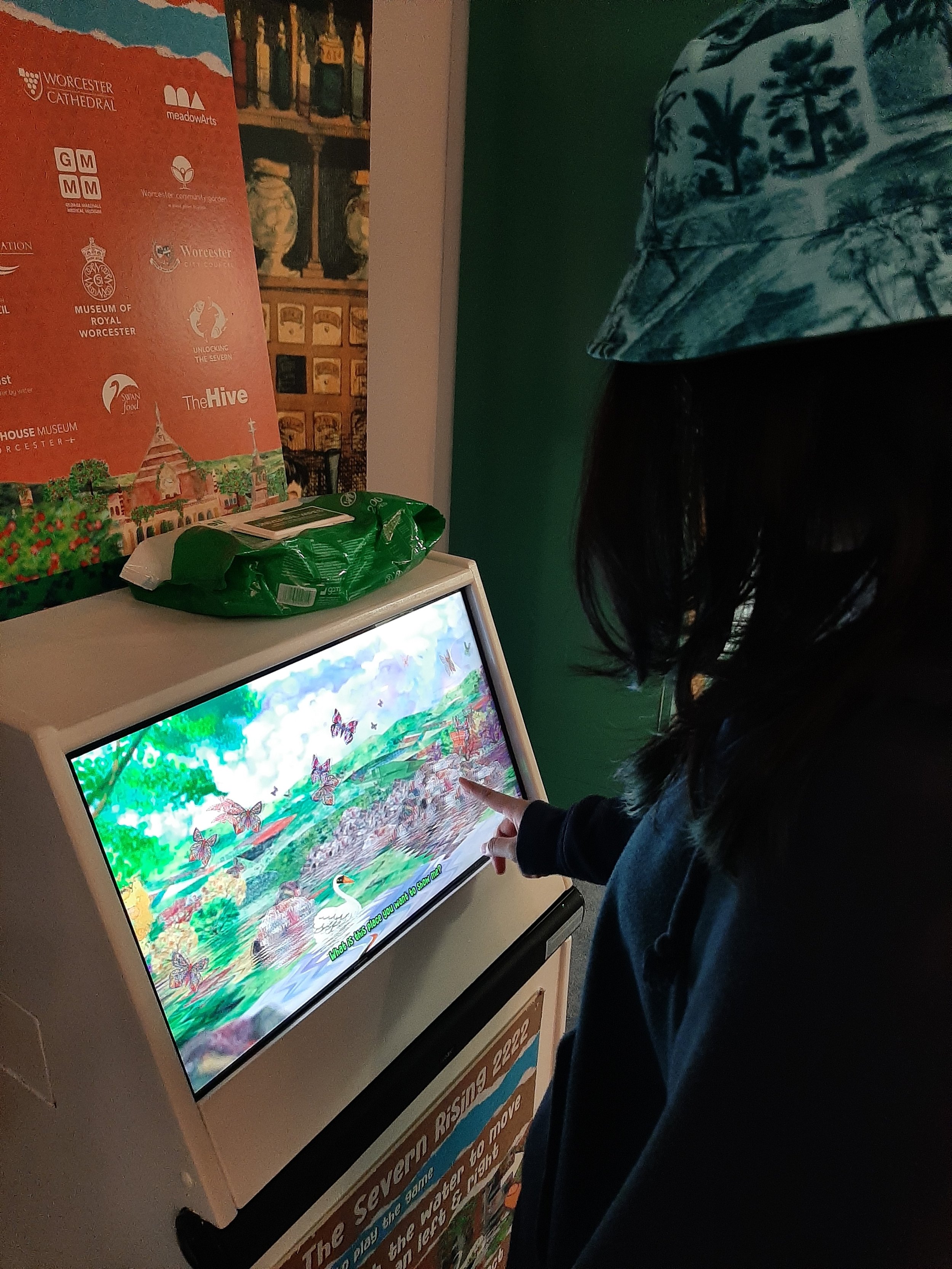
Severn Rising 2222 - Interactive video game at George Marshall Medical Museum

Severn Rising 2222 is an ambitious imagining, through gaming, of what the City of Worcester might look like 200 years in the future, where Worcester has been flooded, humans have left, and the city is consumed by nature.

Dominated by the River Severn which flows through it, Worcester is already at the mercy of nature, and regularly experiences flooding which leads to residents and wildlife alike modifying their lifestyle. The Severn Rising 2222 project challenges the residents of Worcester to learn more about climate change, pollution and the direct impact it will have on their community.


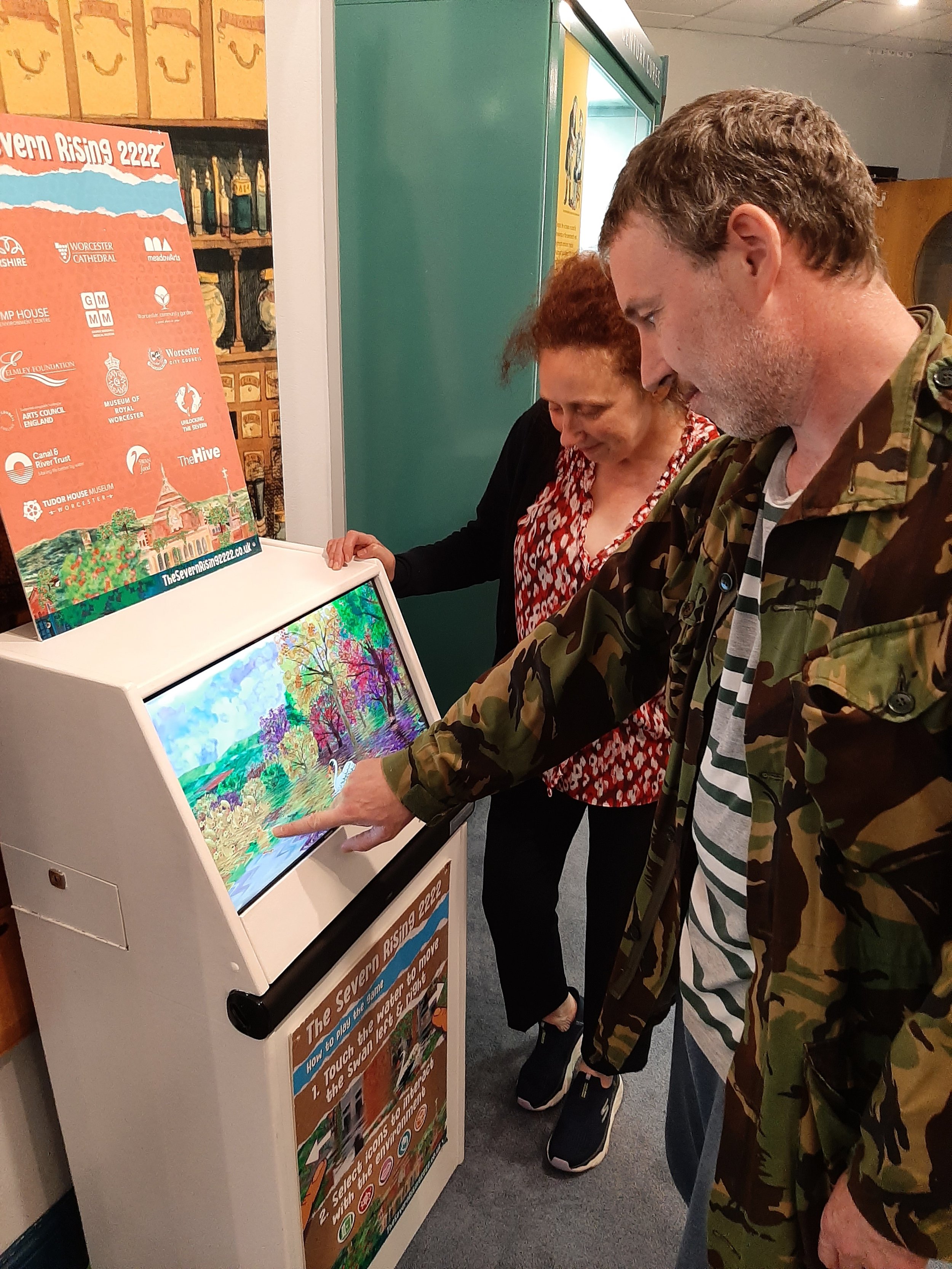
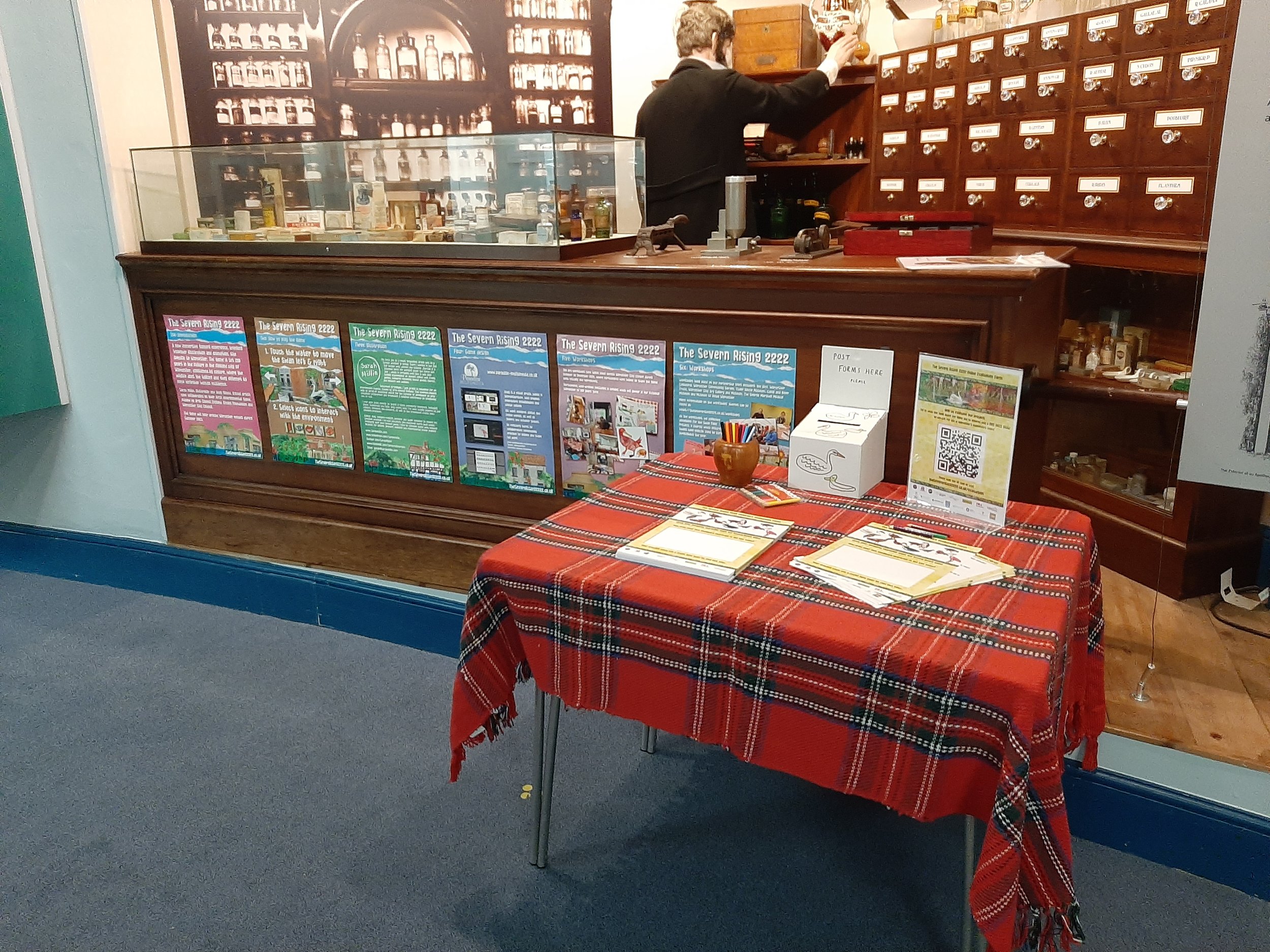
This game can now be played at George Marshall Medical Museum during opening hours (Monday to Friday 9am-5pm) on the last stop of the game’s Worcester tour! Play it until Friday 13 October.

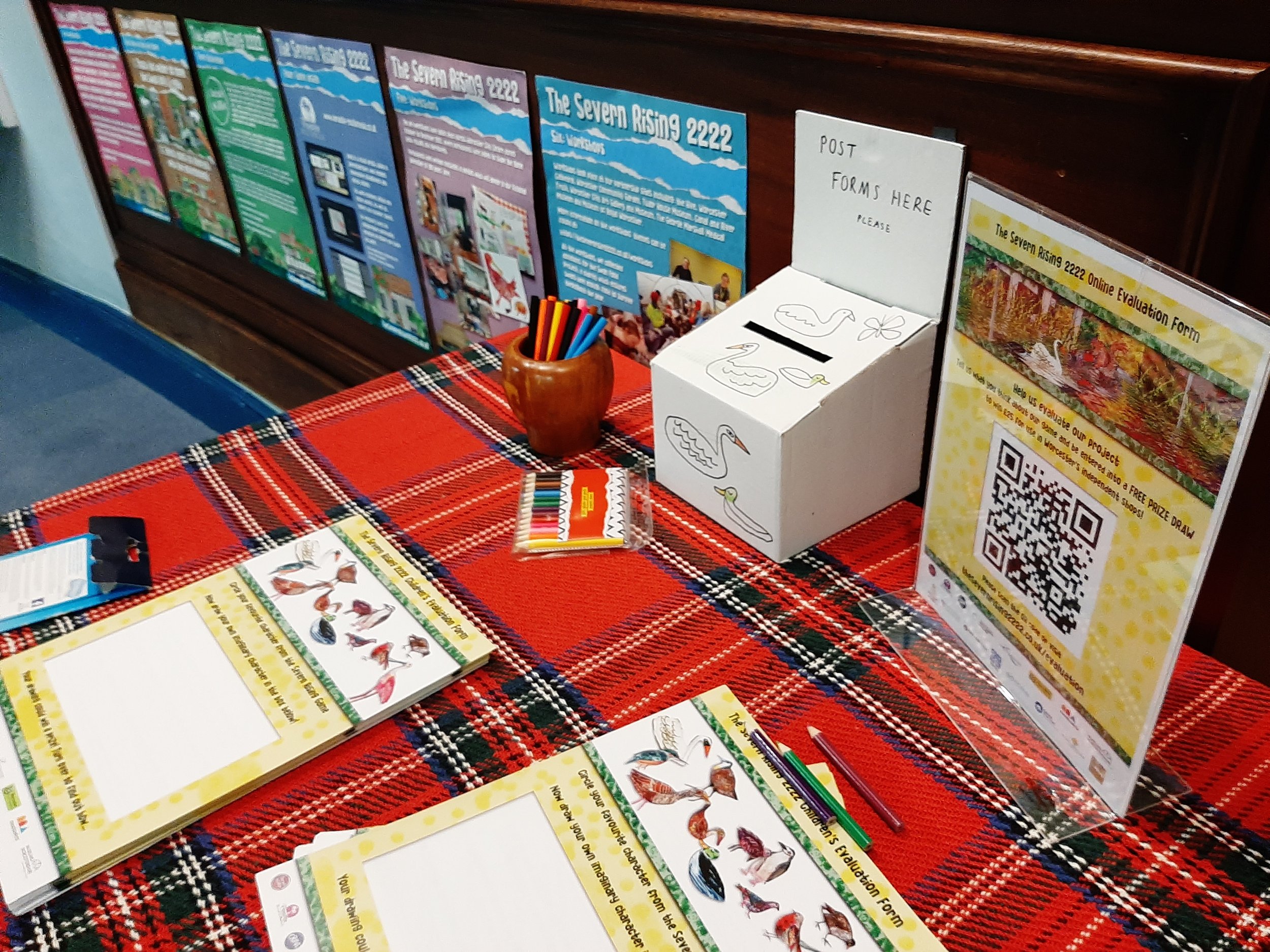
Leave the game designers some feedback to be in with the chance to win some vouchers for Worcester independent businesses.

If you’d like to know what you can do for the environment, check out the game designers’ helpful tips on their website: https://thesevernrising2222.co.uk/environment

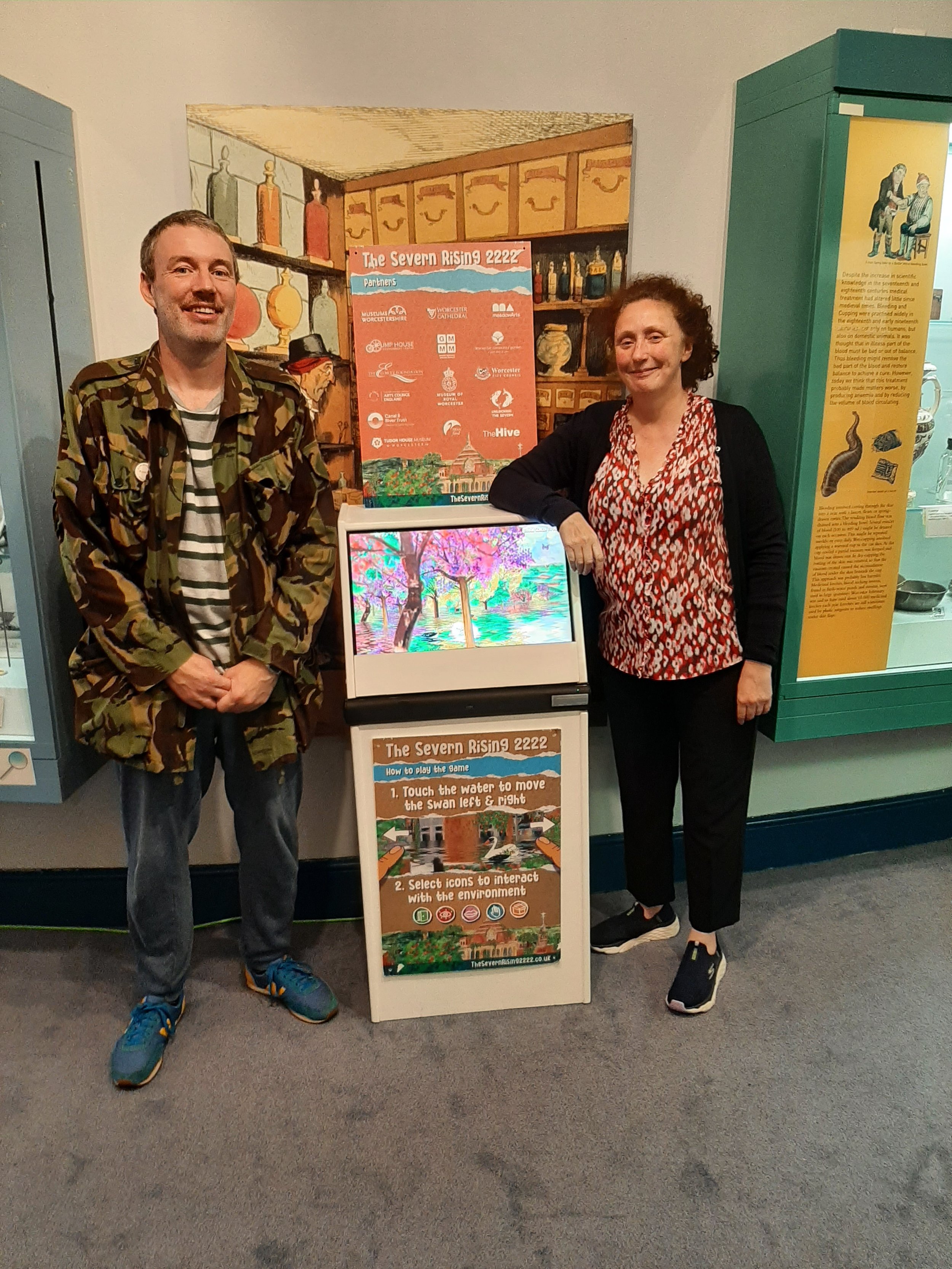
The creators Andy Round and Sarah Millin installing the game.