This short blog explores a unique opportunity where we as students at The University of Worcester created a piece of Verbatim theatre from the stories of retired nurses that previously worked in Worcester. Verbatim theatre is a technique used in theatre crafting where the exact words, speech patterns or transcript of a person’s story is used to create a piece of theatre. The inspirational courage of these nurses fuelled our ambitions to create an authentic, sensitive performance to give back to a community of people that looked after so many other people and communities.
Setting the Scene
To begin the Verbatim process, we needed material and to do this we conducted interviews with volunteer retired nurses who were happy to share some of their experiences as being a Nurse with us. We arranged for use of the voice recording studios at the university campus to interview the nurses and we made sure to introduce ourselves to the nurses with tea, coffee and biscuits while getting know them before the interview. We wanted to reassure them that they didn’t have to share information they felt was too personal or any topics that may have been difficult to describe. Despite this we managed to gain material of a sensitive nature that we really wanted to approach sensitively and as respectfully as we could.
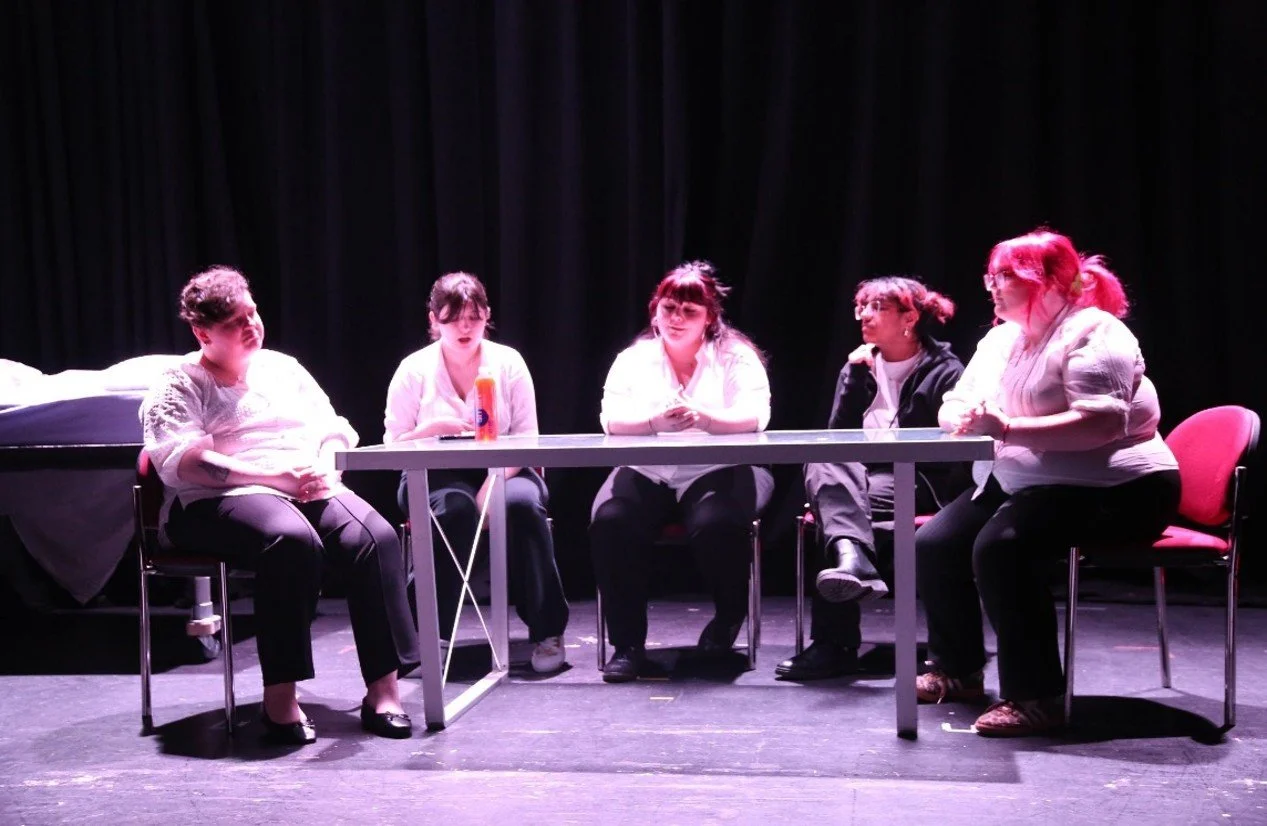
A still from the Opening scene of the performance mimicking the interview process
Me, Humeira and Jay interviewed the nurse Julie shown all together in the photograph beside this passage. The interview process ran very smoothly; my group were able to gather range of stories that varied from Comedic to deep emotional scenes and it was important that we gave Julie the time she needed to tell those stories in her own pace. A key aspect of verbatim theatre is using the exact speech pattern of the person who told the story and the transcript made this easy to see her speech pattern. When we moved into scripting and staging scenes, we were then able to use the exact words from Julie to build her character. This then gave all the puzzle pieces we needed to thread together a story and move into the scripting and staging process.
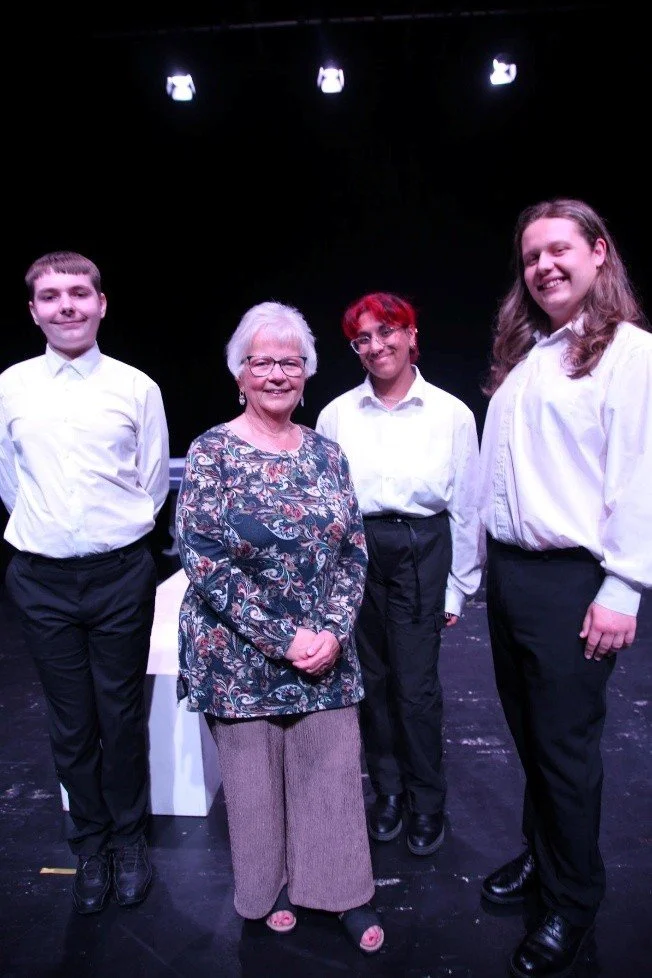
(Jay on left, Julie centre, Humeira centre right and Alfie right side of photograph)
Compiling & Scripting
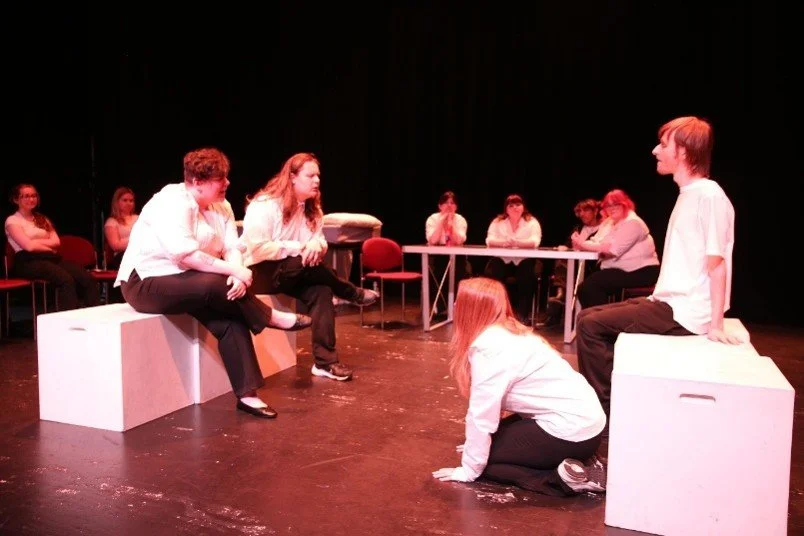
Once we had collated our transcripts from each of the interviews with the nurses meaning we could begin to create and explore different scenes. We were each able to create roughly around three scenes each per group form our transcripts which gave us a range of comedic and emotional storylines. This also allowed us to group together each of the scenes and to create a storyline that followed each of the nurses’ narratives. I came up with the idea of recreating the interviewing process as a scene within the piece having all the nurses sat around a table reminiscing and talking about their experiences while breaking out into the action and physically showing us their memories. (As you can see in the image above this passage). It was also vital that we researched the period so that any music, costume or adlibbed speech we used made sense was and was in keeping with the context of the time. Many of our stories came from the Early 1970’s and 80’s and therefore we decided to keep our music choices to this period and references to the time period (another major aspect to verbatim and reminiscence theatre).
Swanning around onstage
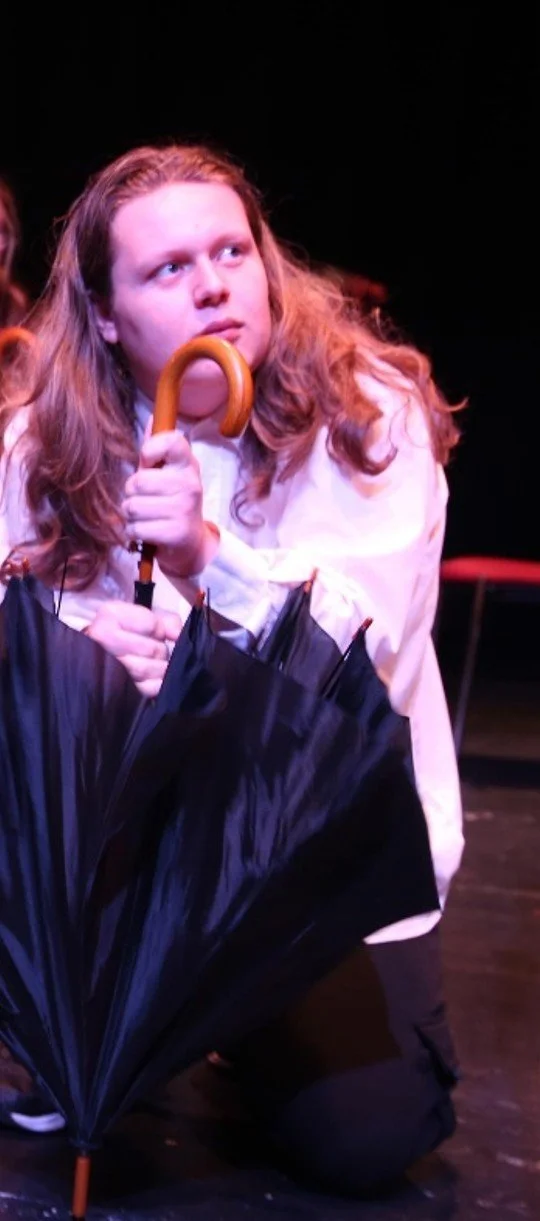
Once we had completed our research and ordering the scenes into a cohesive plotline, we were able to begin to physicalise and rehearse the piece in the performance space. We were able to embody the memories onstage and with the comedic scenes we used creative ways to represent different things. For example, one of the scenes was about dealing with Swans that attacked a friend of the nurse every time she got out of the car. To recreate this, we used umbrellas and honked at the other actors onstage and the melodrama of this onstage created a hilarious image for the audience as they could see the swans attacking but knew they were being played by people.
Another scene that used comedy was the stuffed dog scene, one of the scenes my group gathered from the interview. This scene shows the comedic side to Julie as she was fooled by the stuffed dog and then tricked her colleagues into thinking the dog was vicious which we recreated the phone call and mimed the scene as the actress of Julie (Yasmin) spoke about the scene.
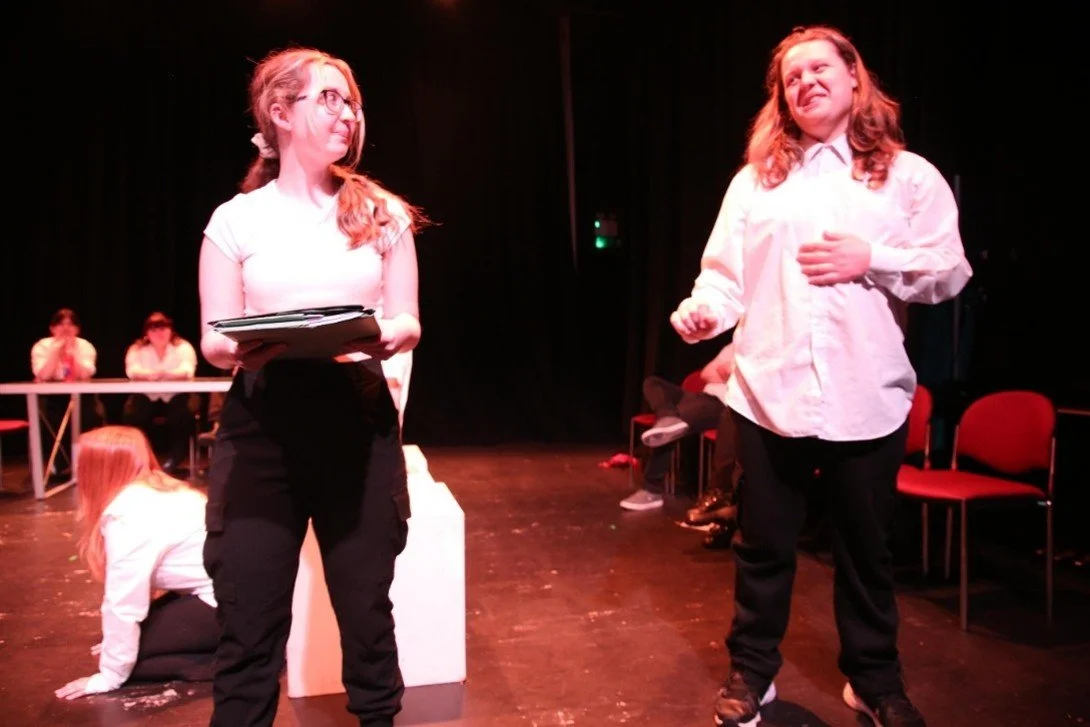
Miming of the stuffed dog trick scene
Curtain call
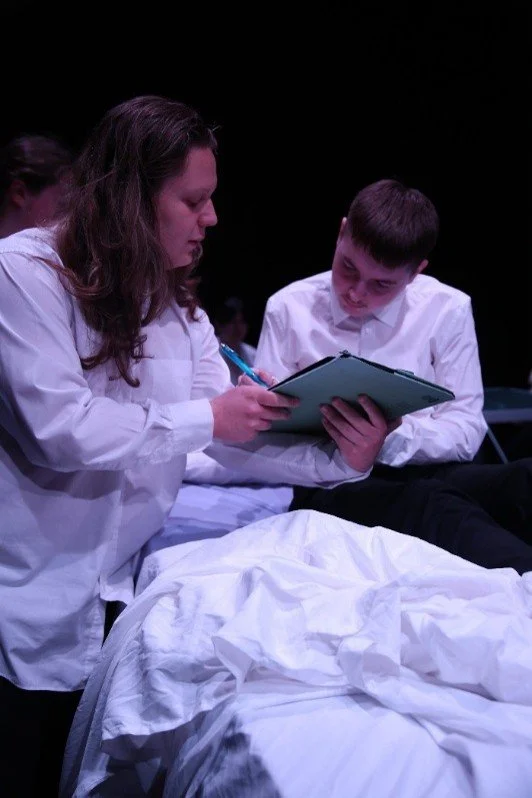
The final performance took place on Monday 27th April 2026 at the Drama studio at the University of Worcester St johns’ campus where the nurses were invited to come and see what we had created from their stories. We were really determined to make sure that we approached every scene with respect and empathy so that we portrayed the nurses’ stories authentically. Many of the scenes explored the difficulties surrounding the Nursing profession without having the support on offer today. We discovered that despite this the support system of each other was extremely strong and the community created by the nurses. That their strength came from the support of each other, and I found this made working on this project more enjoyable and rewarding to be a part of.
Many of the ideas that I had also seemed to have landed and worked really well, my musical suggestions, such as ‘Take my breath away’ at the entrance of the first male nurse added to the comedic effect of the scene and amplified the performance.
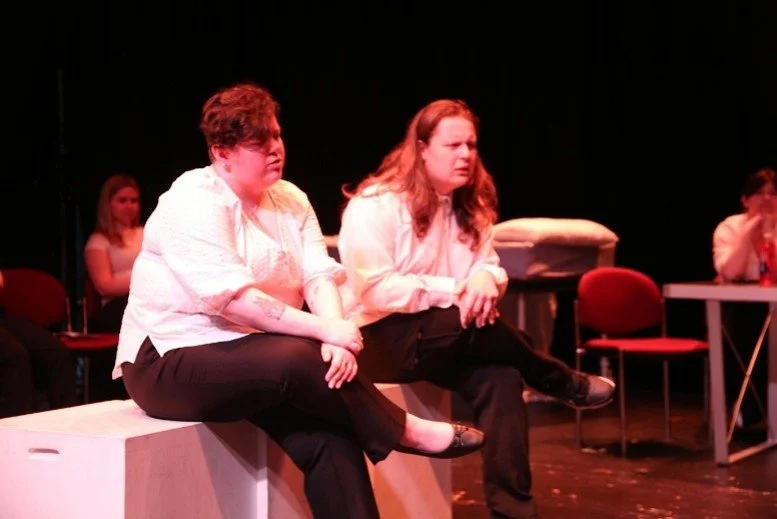
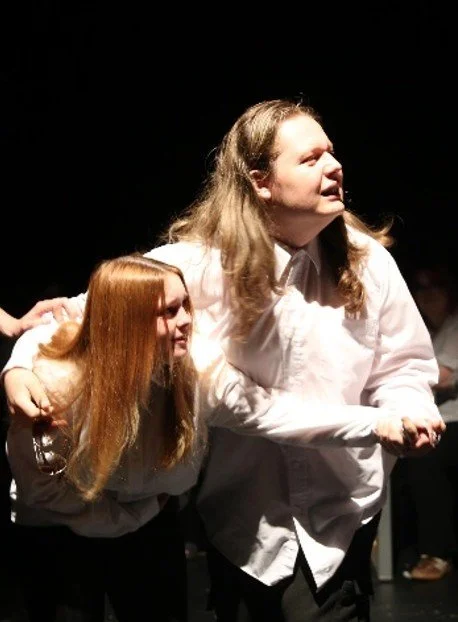
The reaction of the nurses was positive and that they said we had managed to capture the sense of community that they had when they were working in the hospitals. They also said that they recognised each of their stories and that we managed to recreate them almost exactly. They also stated that we did achieve the respectful empathetic approach to the scenes that we were so concerned about in the rehearsal process. This was because we didn’t want the sensitive and personal information to be portrayed incorrectly and based on their response, we portrayed their stories accurately and appropriately. The Performance itself ran very well and all the comedic and emotional moments all seemed to land and that the audience were able to relate to the story. One of the Nurses made the point that many people would resonate with this performance as it was so personal and that everyone can relate to the topics that appeared in the piece, the highs, the lows and all the people involved in the stories.
A final thanks
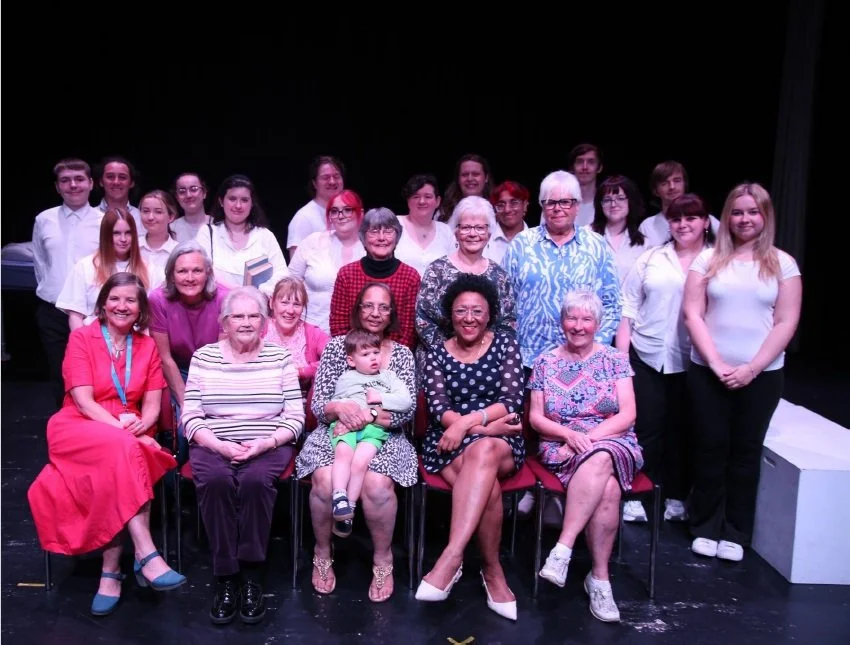
Finally, a special thanks to all the Nurses involved in this process and to our Lecturers, Allison Reeves, Antony Steeple, and Pete Coxhead, for making this process enjoyable and extremely rewarding to be involved in. The process has been rewarding, and it has also allowed me to experience Verbatim and reminiscence theatre and wish to continue working productions similar to this.
Alfie Ray Keirzcek Price, 2026