Guest post by museum studies student Tiffany (2/3)

Time flies, and with only two weeks to go, it’s hard to believe the placement is coming to an end. I am, however, excited to see the final results of the hard work from the previous weeks. I was thrilled and honoured to assist with the setup of the “Outside the Asylum” project and its private viewing on August 12th (See more about the display). It was a wonderful night to see all the hard work from Maddie and all the research volunteers come to fruition. I truly enjoyed spending time getting to know more about the research and these wonderful volunteers.

As my previous blog mentioned, I'm working on the family trail, and it’s almost complete! Through online research and brainstorming activities for families to engage with our objects, I've developed not only new worksheets but also some hands-on activities that will be ready in the apothecary shop. Stay tuned for the launch of these activities, which I hope will help you have a better engagement with our exciting objects.
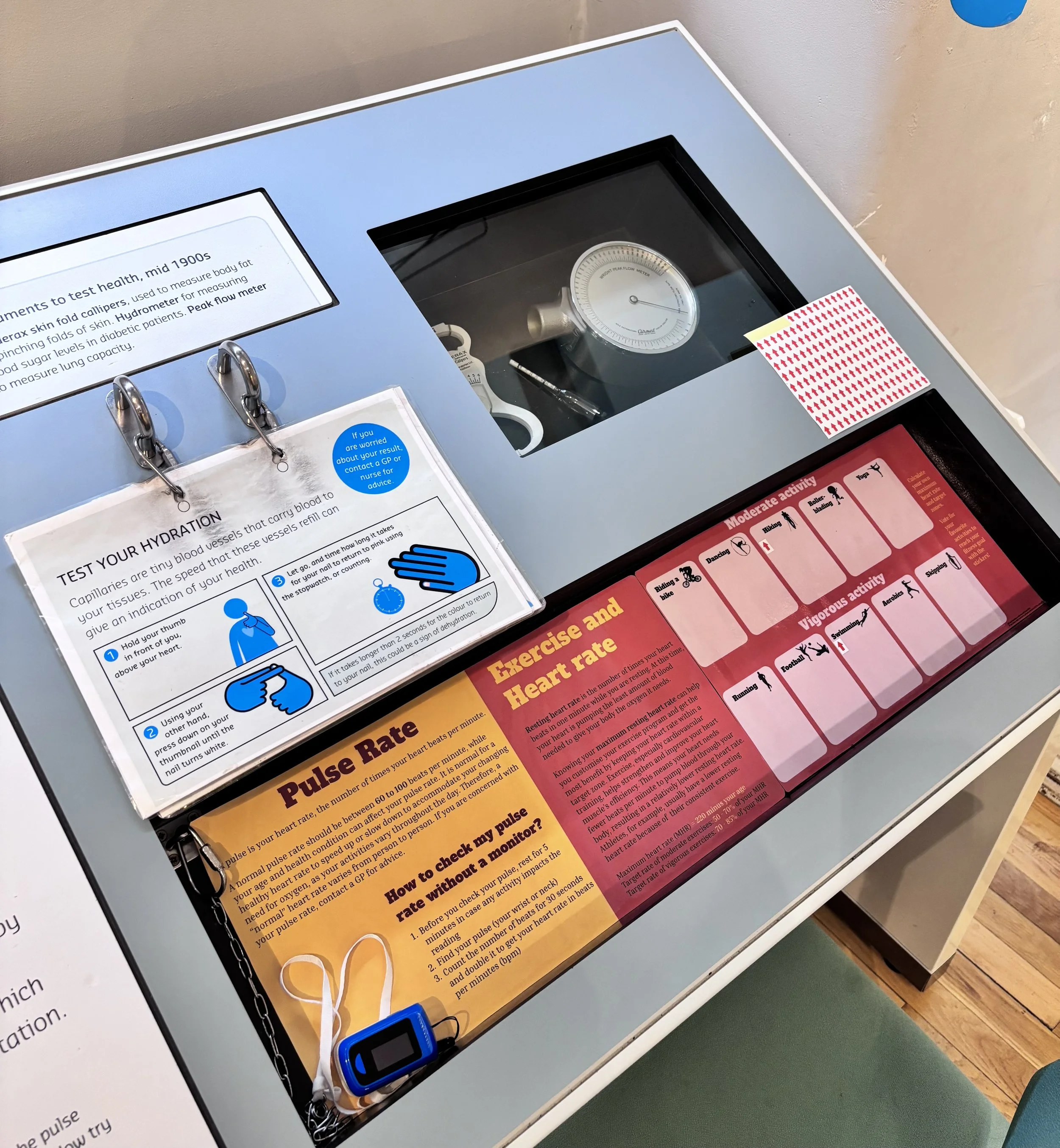
At the Infirmary Museum, I designed and launched a new information panel and interactive activities at the health station. I am excited to see more visitors engaging with and participating in the interactive section—come and have a look when you are around. Cabinet renewals at the Infirmary Museum are going smoothly, and we hope the new objects will be ready by September. More precious objects will be on display, and we believe they will be fascinating and interesting!

In addition to the cabinet and information panel renewals at the Infirmary, I am also working on accessioning objects at both the George Marshall Medical Museum and the Infirmary Museum. I always enjoy marking objects and exploring collections; they always surprise you in an unexpected way! I am still working on the trail, workshop, and object renewals and believe I will be able to show them to you soon!
Outside the Asylum

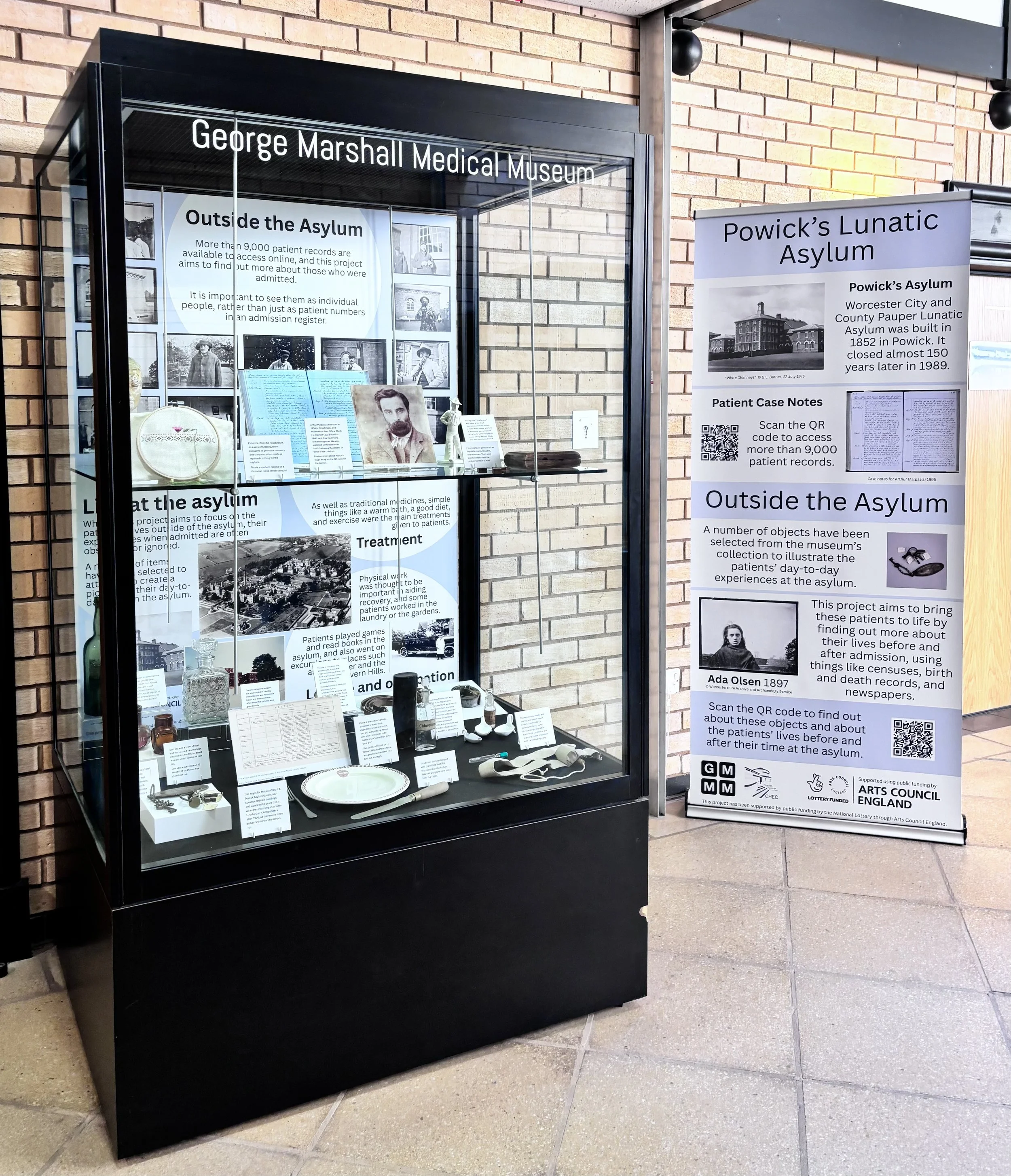
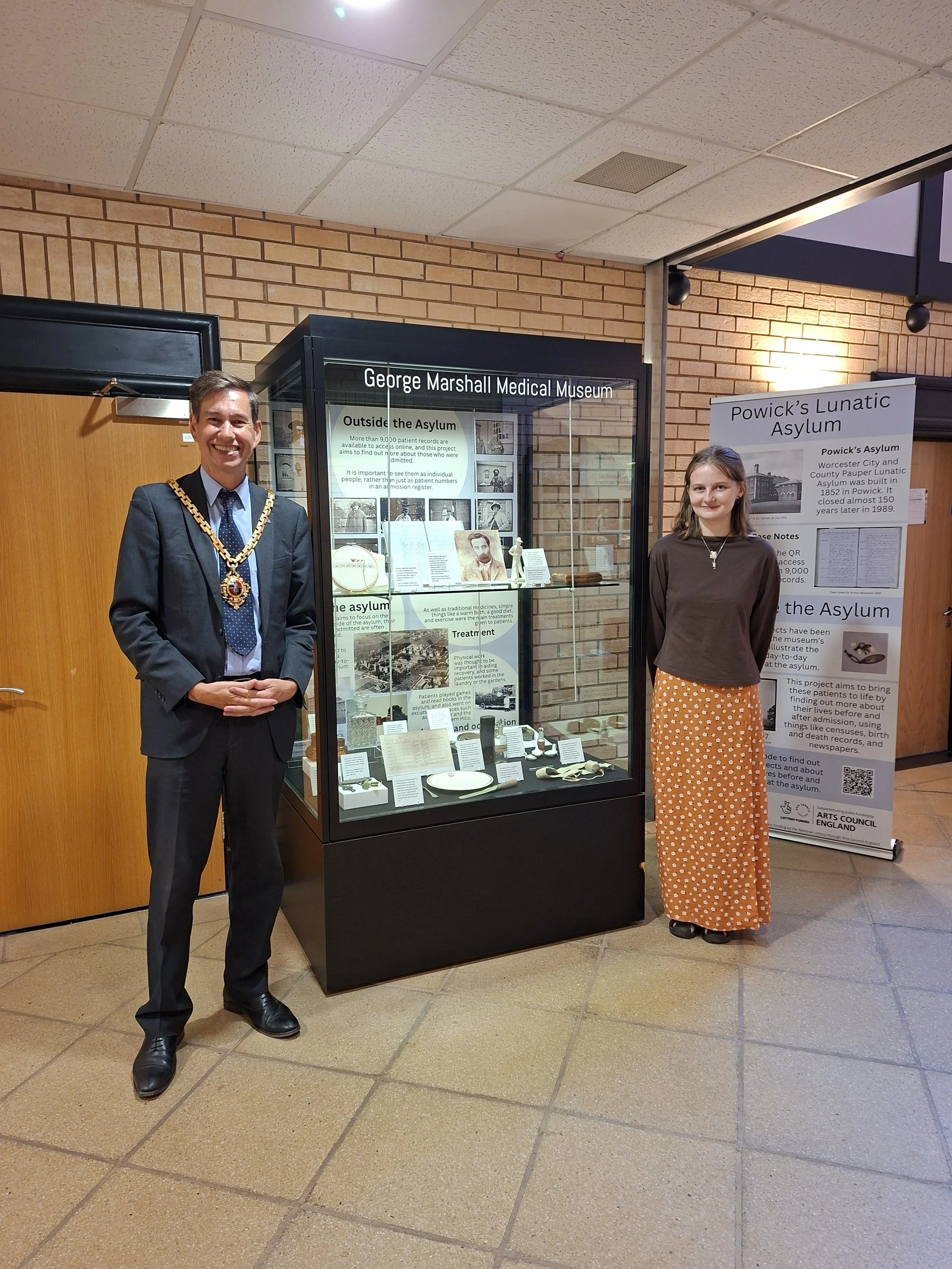
Supported with funding from the National Lottery through Arts Council England, a new museum display and online collections pages explore objects relating to Worcester City and County Pauper Lunatic Asylum at Powick before 1900 and the histories of some of the patients’ lives outside of the asylum.

With free access to the many thousands of patients’ notes available at the medical museum’s website, for the last two years volunteers have been gathering social and family histories of former patients to bring their stories to life. In early 2025, the museum gained funding to appoint an Assistant Curator to focus on this project, pulling together some of the stories so far, as well as creating a small exhibition about the lives of former patients, inside and out of the asylum.

At a private view on Tuesday 12 August, the Mayor of Worcester Councillor Lamb joined staff in thanking the volunteers of the George Marshall Medical Museum, and all heard a talk by Assistant Curator Maddie Hale before enjoying a drink and light refreshments while taking in the new display.

Come along to the museum before August 2026 to enjoy the display, and head over to our linked webpages at any time to find out about both the people and the artefacts that shaped their lives.


Guest post by museum studies student Tiffany (1/3)

Hello everyone, my name is Tiffany and I am originally from Hong Kong. As part of my master’s in Museum Studies at the University of Leicester, I have the incredible opportunity to spend 8 weeks as placement at two of the best medical museums: the George Marshall Medical Museum and the Infirmary Museum. I am now halfway through my placement, and I am excited to share some of my work and insights with you.

Like many Museum Studies students, my academic background is in history. My undergraduate degree was in China Studies, majoring in history. Since secondary school, I have been fascinated by history, so I choose “World history” and Chinese history as my electives (Similar to GCSE or A-Level), which led me to pursue history throughout my education. However, the curriculum in Hong Kong takes a broad and chronological approach, so my knowledge of medical history was limited. To be honest, before this placement, I had a bias that medical history would be dull and difficult to understand. While I found half of it correct after the four weeks I spent here, it is really complicated yet very interesting and fascinating once you dive deeper!

My work at the two museums share similar goals but different focuses. At the George Marshall Medical Museum, my primary role is to develop educational materials for school groups and families, particularly for students preparing for their GCSE exam. This has given me an extraordinary opportunity to better understand the British education system and its curriculum. It is a solid foundation that gives me the freedom to be creative and add engaging elements to make our workshops more interactive. My goal is to not only engage students with the museum collection but also with the learning process itself.

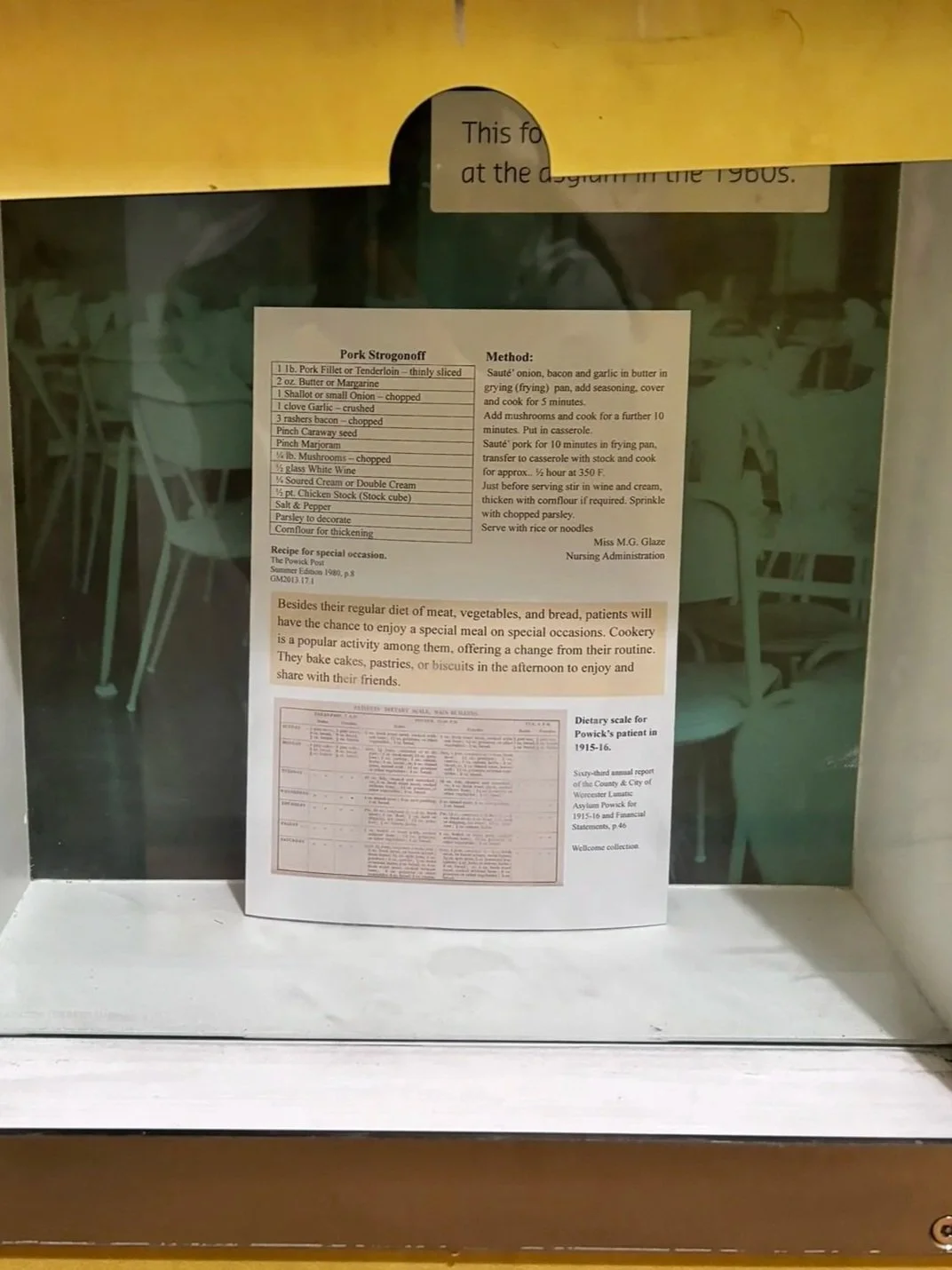
At the Infirmary Museum, I have had the honour of participating in the renewal of objects for the current exhibition. Through archival and collection research, I have discovered many precious and compelling objects that are waiting to be showcased and shine in the display cases. The research is ongoing, so please stay tuned! I also wrote two captions for the Powick display using archives and photos to highlight a more positive side of the asylum. We hope this will challenge common perceptions of asylum as simply “Cruel” and “Inhumane”.

There are four more weeks to go and I look forward to sharing more of my journey with you!

Nursing Stories

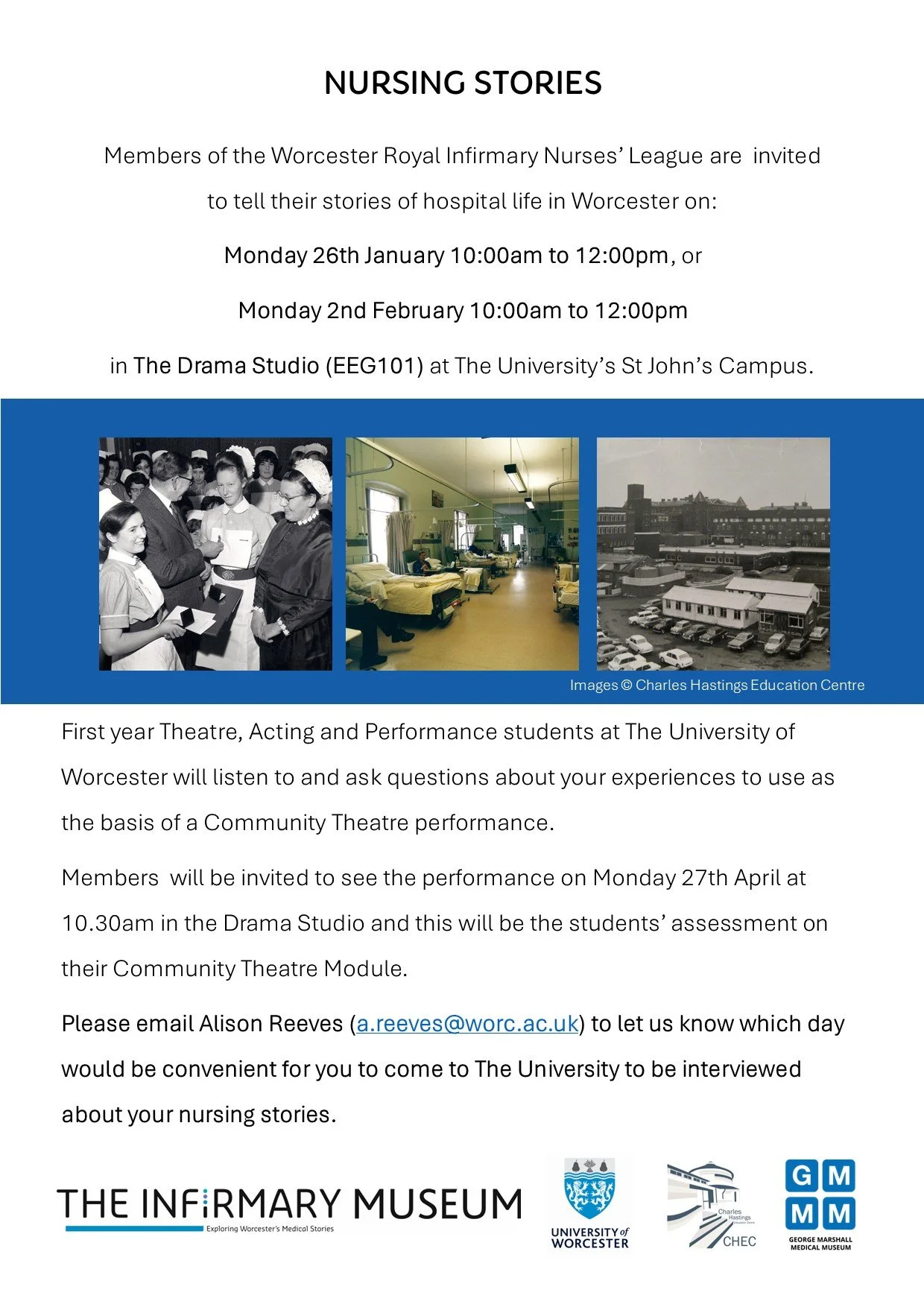
Members of the Worcester Royal Infirmary Nurses’ League are invited to tell their stories of hospital life in Worcester to students of Acting, Theatre and Performance at the University of Worcester.

Please email Alison Reeves to let us know if you would like to take part and which day you would like to come.